Vietnam Weather in February

Select Month

start planning

As February arrives, the weather in Vietnam is transformed. From cool and frosty air in the north to warm and sunny days in the south, Vietnam weather in February beckons travelers to explore the country's diverse landscapes and cultures under comfortable skies. Whether you are drawn to the tranquility of Halong Bay or the vibrant city life of Ho Chi Minh City, February presents a combination of weather and adventure, making it the perfect time to explore the beauty and diversity of this charming destination.

Vietnam in February at a glance

February is one of the more comfortable months to travel in Vietnam, with conditions varying by region.

  • Northern areas stay cooler at around 60 to 70°F (16 to 21°C), while the south sees warmer days closer to 75 to 88°F (24 to 31°C).
  • It’s generally a good time to visit, particularly in central and southern Vietnam.
  • Crowds increase around Lunar New Year, when domestic travel peaks.
  • Prices sit in the mid to high range, with temporary spikes during vacation periods.

What is the weather like in Vietnam in February?

February is one of the best months to travel across Vietnam. The weather stays dry, the skies are clear, and temperatures are comfortable from north to south. In Hanoi, it’s cool and crisp while down in Ho Chi Minh City, it’s warm and dry with far less humidity than later in the year. Central Vietnam, including Hue and Hoi An, gets great beach weather with lots of sun.

Rain is minimal. The north might see 20 to 30mm, and the south barely gets 5 to 10mm. That means Ha Long Bay cruises run smoothly, the Mekong Delta is easy to explore, and beach spots like Phu Quoc are at their best. Around Tet (Lunar New Year), expect busy streets, flower markets, and lots of local celebrations.

The weather in Vietnam in February makes it high season for a reason. It’s a good time for just about everything, from trekking to temples to lazy beach days. This is a great time to plan your Vietnam itinerary

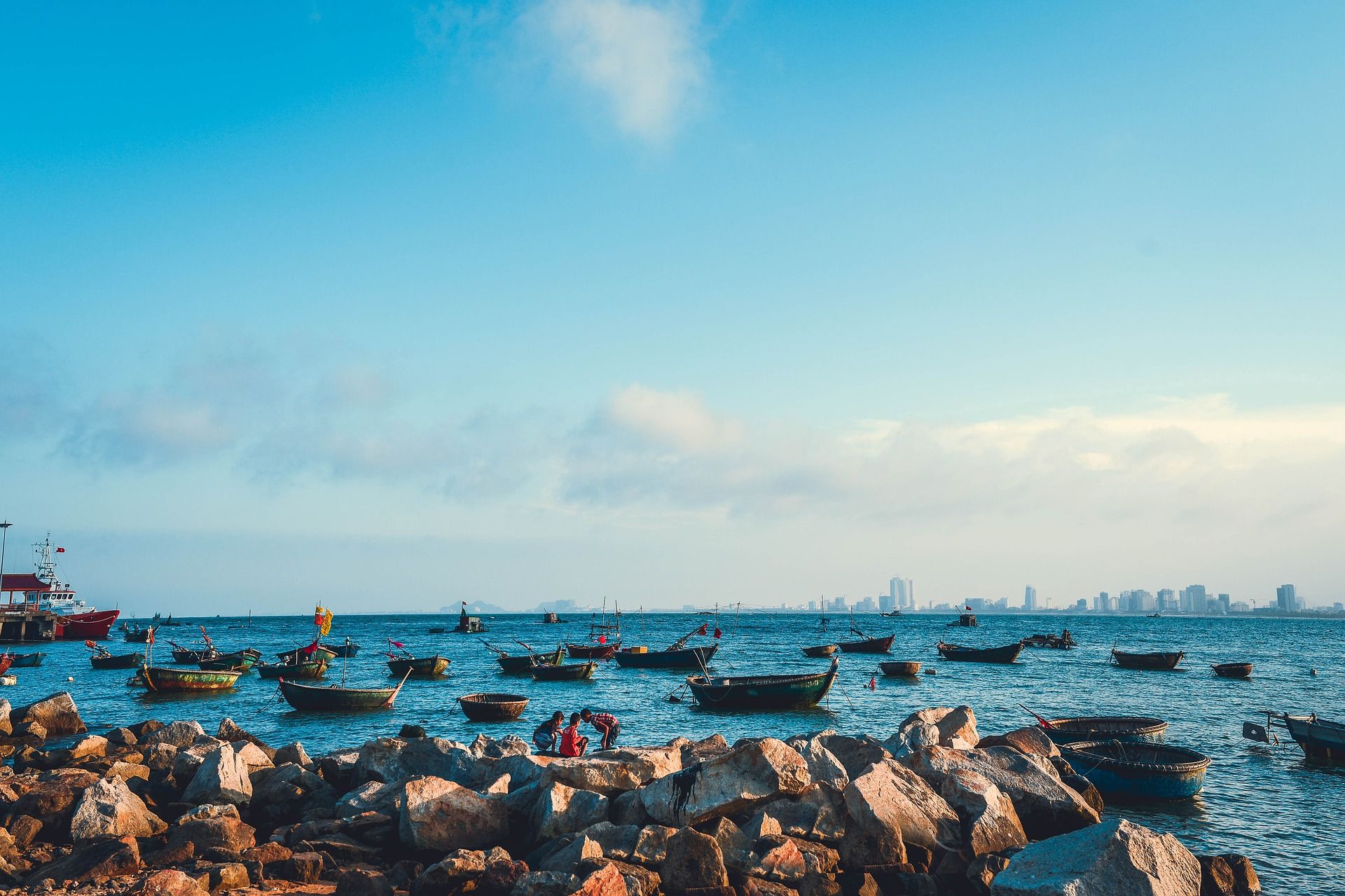
Da Nang, Vietnam

Da Nang, Vietnam

Average daily temperatures in February

Vietnam is at its most comfortable in February. The north (Hanoi, Ha Long Bay) stays cool and dry, with daytime highs around 68 to 72°F (20 to 22°C). In central Vietnam, like you’re looking at, it’s in the mid-70s°F (24 to 25°C), and down south, Ho Chi Minh City and the Mekong Delta hit 82°F (28°C) and are sunny.

Nights are cooler in the north, sometimes dipping to 59°F (15°C), while the south stays warm even after sunset. Humidity is low, and rain is rare. It’s dry season across most of the country, and the water’s warm too. Beaches like Phu Quoc or Nha Trang average 75 to 79°F (24 to 26°C), perfect for a swim.

You’ll get 11 to 12 hours of daylight and solid sunshine across the country. The weather in Vietnam in February makes it easy to pack light, move around, and enjoy everything from cruises to hikes to beach days. Just bring a jacket if you're heading north.

LocationDaytime TemperaturesNighttime Temperatures
Northern Areas (Hanoi)68 to 72°F (20 to 22°C)59°F (15°C)
Southern Areas (Ho Chi Minh City)82°F (28°C)75°F (24°C)
Central Vietnam (Hoi An/Da Nang)75 to 77°F (24 to 25°C)64 to 68°F (18 to 20°C)
Beach Areas (Phu Quoc)79 to 82°F (26 to 28°C)72 to 75°F (22 to 24°C)

Ready to see Vietnam? Have our local Vietnam travel experts create the perfect customized itinerary.

Rice terraces in Vietnam

Rice terraces in Vietnam

 Is February a good time to visit Vietnam?

February is one of the best times to be in Vietnam. It’s dry and sunny almost everywhere, with comfortable weather from Hanoi to Ho Chi Minh City. In the north, the air is cool and clear, perfect for walking around Hanoi or cruising in Halong Bay.

The center of the country stays warm with little rain, and the south is ideal for beaches. Tet, the Lunar New Year, usually falls in February and brings days of celebrations, flowers, and food.

Cities slow down as families gather and businesses close, but the atmosphere is welcoming and festive. You’ll want to book transport and accommodation early if you're traveling around Tet.  For more tips, see our guide to how to plan a trip to Vietnam.

  • Comfortable weather throughout the country
  • Tet brings vibrant celebrations and travel delays
  • Beaches in the south are warm and dry
  • Good time for sightseeing without summer crowds
  • Plan ahead for closures and busy travel days

What about the crowd and cost?

February often coincides with Tết, Vietnam’s Lunar New Year, which brings a surge in domestic travel. During the main vacation period, transport and accommodation can be harder to secure, and some prices rise temporarily. Outside the core Tết dates, international visitor numbers remain manageable, especially in popular areas like Hanoi, Hoi An, and Ho Chi Minh City.

Once the vacation ends, crowds thin quickly and availability improves, while the weather stays favorable across much of the country. March and April bring similar conditions with fewer local travelers and more stable pricing. Summer months see heavier domestic tourism and higher humidity, while October and November can bring flooding in central regions. December and January tend to attract more international visitors. See more in our guide to the best time to visit Vietnam
 

Old Vietnamese man preparing altar with foods for the last meal of year. The penultimate New Years Eve - Tat Nien, the meal finishing the entire year. Vietnam lunar new year © Vietnam Stock Images/Shutterstock

Vietnam Lunar New Year © Vietnam Stock Images/Shutterstock

Where to go in Vietnam in February

February is a great time to travel in Vietnam. The weather is comfortable across most regions, and Tet, the Lunar New Year, brings a burst of color, music, and tradition to cities and villages alike. Here are some of the best places to visit in Vietnam

Hanoi and the Northern Mountains

Hanoi in February feels alive. Tet brings flowers, food stalls, and family celebrations that spill into the streets. It’s a good time to visit markets and pagodas or just wander the Old Quarter. Up in the mountains near Sapa, the rice terraces are dry, but the skies are clear. The cooler weather makes hiking easier, and weekend markets in ethnic minority villages continue with all their color and energy. Halong Bay stays misty in the mornings, which adds a dramatic, otherworldly feel to the limestone cliffs. For more advice, see our Vietnam travel tips.

Hoi An and the central coast

This part of Vietnam balances good weather and cultural activity perfectly. Hoi An looks especially beautiful during the Lantern Festival, and Tet decorations only add to it. You can cycle to the beach in the morning and explore the old town in the afternoon. Tailor stores stay busy making new clothes for the new year, and the local food is fresh and generous. My Son’s ancient temples are quiet, and the coastal breeze keeps everything feeling calm and accessible. 

Mekong Delta

The Mekong Delta is full of life in February. Boats crowd the waterways with flowers and food as locals prep for Tet. Water levels are lower, so floating markets become more focused, which makes them easier to navigate and understand. You can stay in a village home, ride a bike through fruit orchards, and join in New Year celebrations in a way that feels natural and welcoming. The weather is steady and warm, so long days outside don’t feel draining.
 

Tailor Store in Hoi An City in Central Vietnam © Tee11/Shutterstock

Tailor Store in Hoi An City in Central Vietnam © Tee11/Shutterstock

What to do in Vietnam in February

February falls during Vietnam’s dry season, so weather is on your side from Hanoi to the Mekong Delta. Here are some of the best things to do in Vietnam

Celebrate Tet (Lunar New Year)

Tet usually falls in early to mid-February. It’s the biggest vacation of the year, and everything slows down for a few days. If you’re in Hanoi or Ho Chi Minh City, visit flower markets, temples, or family-run restaurants offering Tet dishes like bánh chưng and candied fruit. 

Cruise Halong Bay

The weather in Halong Bay is crisp and calm this time of year. Overnight cruises are running at full schedule, and the misty mornings make the limestone islands feel even more otherworldly. You can kayak through caves, swim if you're brave, or just relax on deck. Some cruises detour to quieter areas like Bai Tu Long or Lan Ha Bay. 

Take a street food tour

Cool evenings and dry sidewalks make February a smart time for a food tour. In Hanoi, you’ll likely stop for pho, egg coffee, and grilled pork over rice noodles. In Ho Chi Minh City, you might try bánh xèo, snails, or sweet soups. Tet snacks like pickled vegetables or sticky rice treats often make an appearance. This is one of the best things to do in Ho Chi Minh City.

Mekong Delta in Vietnam

Mekong Delta in Vietnam

beach at Nha Trang, coastal vietnam.

Beach at Nha Trang, Vietnam

Planning your itinerary

Our Vietnam itineraries are crafted to help you experience the best of the country, stress-free. Think of them as a starting point—perfect for planning but flexible enough to adjust to your own pace and interests. After all, travel is about freedom, but a little planning goes a long way.

  • Vietnam itinerary 5 days: Short on time? Five days is enough for a focused trip—stick to either the north, center, or south. You’ll get a taste of Vietnam’s food, culture, and scenery without feeling too rushed.
  • Vietnam itinerary 7 days: A quick trip to experience Vietnam’s highlights. Expect an introduction to the country’s vibrant culture, rich history, and beautiful scenery.
  • Vietnam itinerary 10 days: Ten days lets you explore multiple regions, giving a good balance of city life, natural landscapes, and cultural experiences.
  • Vietnam itinerary 14 days: With two weeks, you’ll have time to go beyond the basics, discovering a wider range of landscapes and local traditions. 
Olga Sitnitsa

written by
Olga Sitnitsa

updated 08.01.2026

Online editor at Rough Guides, specialising in travel content. Passionate about creating compelling stories and inspiring others to explore the world.