7-day (one week) Tuscany itinerary

Select Month

start planning

Tuscany isn’t the kind of place you rush through. You’ll probably spend more time than planned at a long lunch or pulling over just to take in the view. That’s part of the draw. Between hilltop towns, olive groves, and local markets, it’s less about ticking off sights and more about easing into the rhythm of the region. If you're thinking about a trip, here’s how to plan one that gives you enough structure without losing that sense of wandering.

7 days in Tuscany overview

This week-long route takes you through a mix of cities, small towns, and countryside. You’ll start in Florence, then move through San Gimignano, Montepulciano, and parts of the Chianti region, with a final stop in Pisa. There’s time for short drives, long lunches, and wandering through town centers without needing to rush. Travel distances are fairly short, so you can settle into each place without feeling like you're always on the road.

  • Day 1: Florence
  • Day 2: San Gimignano
  • Day 3: San Gimignano
  • Day 4: Montepulciano
  • Day 5: Castellina in Chianti
  • Day 6: Pienza/Val d'Orcia
  • Day 7: Pisa
Chianti with antipasti © Shutterstock

Chianti with antipasti © Shutterstock

Is 7 days enough in Tuscany?

A week is enough time to get a feel for Tuscany without having to rush. You might spend a few days in Florence, then head out into the countryside for the rest of the trip. Towns like Siena, Montepulciano, and Pienza are close enough for easy day trips. 

The region is fairly compact, but public transport doesn’t reach everywhere, so having a rental car is useful. Most drives are around one to two hours (50 to 100 miles or 80 to 160 kilometers), which makes it easy to settle into one place and explore from there. Here’s how your Italy trip might look, based on your travel time:

ItineraryIdeal forMain highlightsPaceBest forFrom price*
5 days in ItalyShort breakPicking one area, like AmalfiFast-pacedFirst-timers on limited time$908 pp
7 days in ItalyAn extended city break with day tripsRome, Florence, VeniceFast-pacedFirst-timers and culture lovers$1,998 pp
10 days in ItalyClassic routeNaples, Pompeii, Amalfi Coast, Capri, or based in one area like TuscanyBalancedFoodies and couples$2,508 pp
14 days in ItalyExtended journeyMilan, Venice, Bologna, Florence, RomeRelaxedExplorers and art enthusiasts$2,875 pp

*Indicative price per person for a fully arranged tailor-made trip.

View of Montalcino town, Tuscany, Italy © Shutterstock

View of Montalcino town, Tuscany, Italy © Shutterstock

7-day Tuscany itinerary

Tuscany is a region that’s rich in culture, food, and beautiful views. This 7-day Tuscany itinerary is designed to give you a great mix of all that. You’ll start in Florence, head to San Gimignano, explore the countryside, and enjoy some of Tuscany’s best food and wine experiences.

Aerial view of famous medieval San Gimignano hill town with its skyline of medieval towers © Shutterstock

Aerial view of famous medieval San Gimignano hill town with its skyline of medieval towers © Shutterstock

Day 1: Arrive in Florence

Florence is layered with history. It’s the birthplace of the Renaissance, and you can see traces of that everywhere you go. Michelangelo sculpted David here from a piece of marble most thought was unusable, and Galileo observed Jupiter’s moons from the Torricelli gardens.

Walking through the streets, you’re following in the footsteps of people like Leonardo da Vinci, who once tested the Duomo’s acoustics by singing inside its dome.

Beyond the history, Florence feels lively and current. There are plenty of good restaurants, galleries, and small shops to explore. Between museum visits, just take time to walk, stop for a coffee, and get a feel for the city.

Where to stay in Florence

When deciding where to stay in Florence, you have some options—here are some of our favorite parts of town: 

  • Oltrarno: Across the river from the main sights, this area is home to local craftspeople and traditional trattorias. It’s a quieter part of town.
  • Santa Croce: A central neighborhood known for its mix of history and nightlife, with great restaurants and a few of Florence’s best-known churches.
  • Santo Spirito: A good area for food lovers, with a main square full of cafes and markets where locals gather throughout the day.
David of Michelangelo in Accademia Gallery of Florence, Galleria dell'Accademia, Italy © Shutterstock

David of Michelangelo in Accademia Gallery of Florence, Galleria dell'Accademia, Italy © Shutterstock

Day 2: San Gimignano

The drive takes about an hour from Florence to San Gimignano. It’s an easy route through rolling countryside, with vineyards and olive groves along the way. If you have time, stop in Monteriggioni, a small walled town that still looks much as it did in Dante’s day.

Start your morning at Caffè Gilli, a Florentine café that’s been around since 1733. Stand at the marble counter with locals, order a cappuccino, and grab a cornetto. It’s a simple but classic way to begin your day before heading out of the city.

Things to do in San Gimignano

Next, drive to San Gimignano, known for its medieval skyline. The town once had 72 towers; 14 still remain, giving you a clear sense of what a Tuscan hill town looked like centuries ago. The stone lanes, small piazzas, and views over the countryside make it an easy place to wander for a few hours.

Climb Torre Grossa, the tallest of San Gimignano’s towers. From the top, you’ll see vineyards, rows of cypress trees, and the distant Apennines. These towers were once built as a show of wealth, each family trying to outdo the next. Inside, some still show traces of old wooden floors and stairways, reminders of how people once lived stacked above the streets.

Where to stay in San Gimignano

San Gimignano isn’t huge, but there are some options when it comes to areas to stay: 

  • Historic center: Staying in the heart of San Gimignano puts you right near the main attractions, like the towers and medieval streets. Many hotels offer great views of the countryside. 
  • South of town (near Porta SG): If you’re after something quieter, stay near Porta San Giovanni. It’s still close to the center, but you’ll get a more relaxed atmosphere. 
  • Countryside: For a peaceful retreat, look for accommodations in the surrounding countryside. The views are beautiful, and it’s a great spot for unwinding.
City postcard view and towers of San Gimignano, small medieval town in Tuscany, Italy © Vaflya/Shutterstock

Aerial view of famous medieval San Gimignano hill town with its skyline of medieval towers © Shutterstock

Day 3: San Gimignano

Spend your third day in Tuscany getting to know San Gimignano. It’s known for its medieval towers, but it’s also a good place to slow down, stretch your legs, and eat well.

Things to do in San Gimignano

If you're up for a walk, the San Gimignano Ring Trail (Anello di San Gimignano) is an 8-mile (13 km) loop that circles the town. It takes you through olive groves, vineyards, and past old farmhouses and chapels. Another option is the Vernaccia Wine Trail (Sentiero della Vernaccia), which winds through the vineyards where the region’s white wine is produced. Both are scenic and give you a feel for the landscape just beyond the town walls.

Having a Tuscan meal is by far one of the best things to do in Tuscany.

For lunch, try Dal Borgo, a family-run trattoria tucked into the historic center. They serve handmade pici pasta and traditional soups like ribollita. The pasta boards have been used for years, and you can tell—there’s something about the texture of the noodles that just feels right. It’s usually a bit quieter than the restaurants around the main square.

If you’d rather eat with a view, Le Vecchie Mura is set along the town walls and has a terrace that looks out over the countryside. It’s a good place to try something like pappardelle with wild boar ragù, especially with a glass of Vernaccia to go with it.

Annalisa

Tips from Annalisa

Italy Travel Expert

quotes

Cards are fine in big cities, but in smaller towns or local spots, it’s smart to carry some cash. I’d keep 50 to 100 euros in small bills. Some places still charge extra for using a card under 10 euros, which technically isn’t allowed but happens all the time.

How would your perfect trip look? Our local travel experts make itineraries to match it.

italy-Montepulciano-shutterstock_1434554153

Montepulciano is a great addition to your Tuscany itinerary © Shutterstock

Day 4: Montepulciano

Montepulciano is known for its Vino Nobile wine and elegant Renaissance buildings. Unlike many other Tuscan towns built by merchants, this one was shaped by nobles. You can see that in the architecture—wide piazzas, stone palaces, and facades that feel more like statements than homes. Wealthy families were competing with each other, and it shows.

To get from San Gimignano to Montepulciano, take the SR2 south toward Siena, then follow the SR438 through Asciano. It takes around 1.5 hours by car, but allow 2 to 3 hours if you plan to stop. The route passes through the Crete Senesi, a region of rolling gray clay hills that almost look like a moonscape.

Things to do in Montepulciano

To get a real sense of the local wine, head underground. Many of Montepulciano’s wine cellars are built right beneath the old palaces. If you want a full experience, Avignonesi runs tours that include the vineyards and guided tastings. De' Ricci, closer to the center, is known for its medieval cellar carved into the rock. Gattavecchi, near the Church of San Biagio, pairs wines with a view, while Salcheto has a more modern, eco-conscious feel.

If wine’s not your thing, the historic center is still worth exploring. Start on Via di Gracciano nel Corso and walk uphill toward Piazza Grande. The climb is steep, but you’ll pass Renaissance palaces, small shops, and quiet alleyways. At the top, the views across the valley are worth taking your time with.

Where to stay in Montepulciano

Some ideas of where to stay:

  • Historic Center (Piazza Grande): Ideal for being in the middle of it all, with easy access to wine cellars, cafés, and main sights. Many small hotels here come with rooftop or vineyard views.
  • San Biagio Area: A quieter part of town surrounded by open countryside. Perfect if you want peaceful mornings, scenic views, and a short walk or drive into the historic center.
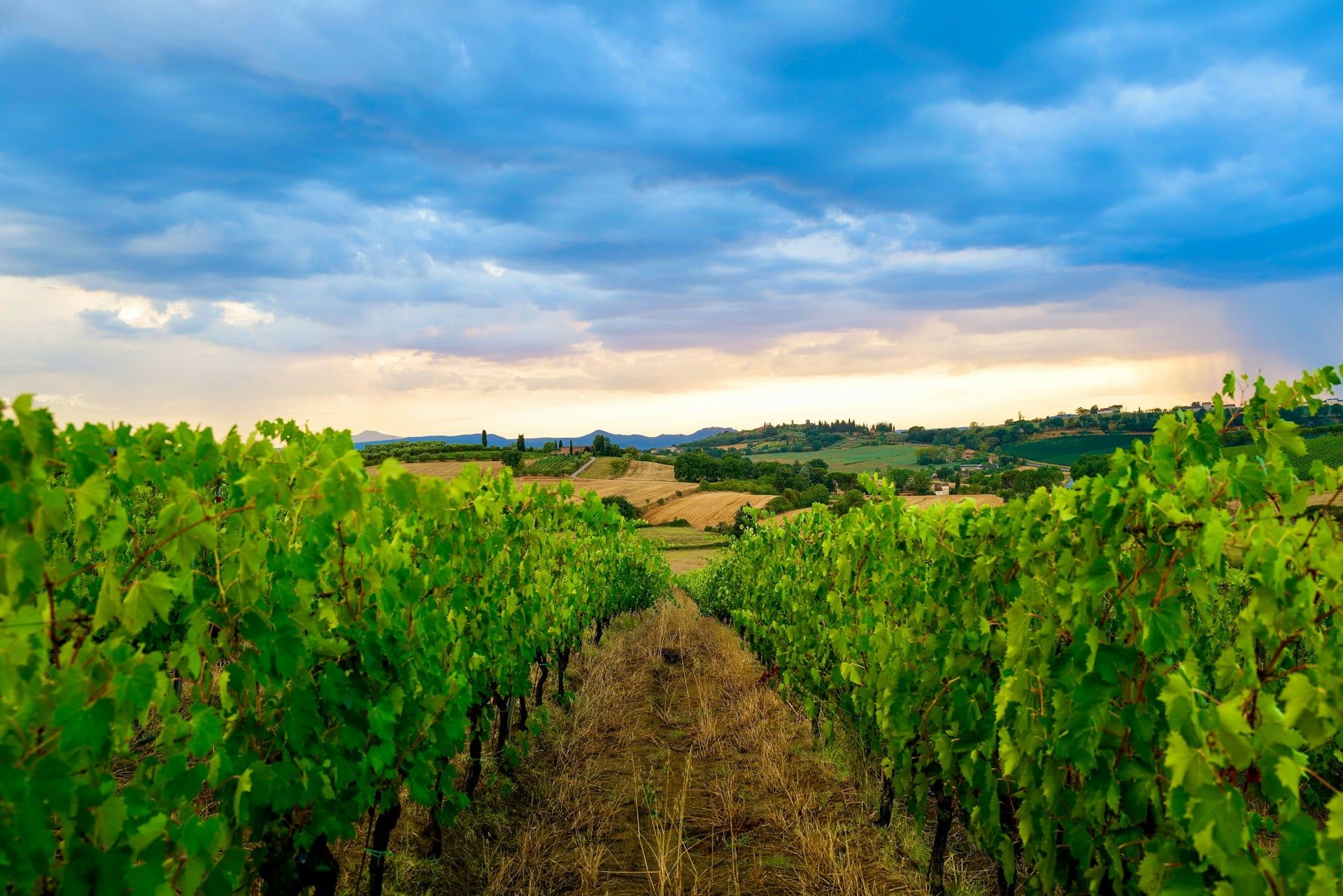
Chianti Region, Tuscany, Italy. Vineyards in autumn at sunset © Shutterstock

Chianti Region, Tuscany, Italy. Vineyards in autumn at sunset © Shutterstock

Day 5: Castellina in Chianti

Castellina in Chianti is a smaller medieval town right in the heart of the Chianti Classico region. It’s quieter than some of the better-known stops, and feels more lived-in than curated. Just keep in mind that many shops and restaurants close for a few hours in the afternoon for riposo, so it’s worth planning your day around that.

Things to do in Castellina in Chianti

The Via della Volte is a covered stone walkway built into the old city walls. It was once used by guards to patrol the town’s perimeter, but today it’s a peaceful place to walk. The arches now hold small shops and cafés, and there are a few openings where you can look out over the countryside.

Since you’re in the middle of Chianti Classico, this is a good place to taste the region’s signature wines on an  Italy wine tour. The area’s elevation, soil, and climate are all well-suited to Sangiovese grapes. Castello di Fonterutoli, just outside town, is run by the Mazzei family and combines modern production with centuries-old cellars. If you’re after something smaller and less polished, Cantina Geggiano is a more low-key option.

If you want to mix things up, Tenuta di Corsano runs tours focused on olive oil. You’ll walk through the groves, see how the olives are harvested, and visit a traditional stone mill to learn how the oil is made. It’s a slower-paced, hands-on experience that gives you a different taste of the region.

Where to stay in Castellina in Chianti

  • Greve in Chianti: A lively and accessible base with a walkable center, great restaurants, and plenty of wine-tasting options nearby. Ideal if you want convenience without sacrificing charm.
  • Radda in Chianti: Smaller and quieter, surrounded by vineyards and rolling hills. Perfect for a slower pace and a more rural, tucked-away experience.
Asciano with Val d'Orcia © Shutterstock

Asciano with Val d'Orcia © Shutterstock

Day 6: Day trip to Pienza and the Val d’Orcia

Start your day in Pienza, then take a slow drive through the countryside of the Val d’Orcia. This area is known for its sweeping landscapes, winding roads, and towns that are easy to explore at your own pace. It's easily one of the most memorable things to add to your Italy itinerary.

Which route to take? From Pienza, take the SP146 toward San Quirico d'Orcia. The drive is about 7 miles (11 km) and takes you through some of the most scenic parts of the region. After San Quirico, follow the SP137 for another 3 miles (5 km) to reach Bagno Vignoni.

Things to do in Pienza

Pienza is a UNESCO World Heritage town that was redesigned in the 1400s by Pope Pius II. The layout is tidy and walkable, with open squares and quiet streets that invite you to wander. Make time for the Via dell'Amore, a short path that runs along the town walls. It has clear views over the Val d'Orcia and is one of the best ways to take in the landscape without leaving town.

Drive through the Val d’Orcia countryside

From Pienza, head into the surrounding hills. The Val d’Orcia has long drawn painters and photographers, and you’ll see why once you're on the road. The hills roll out in all directions, lined with cypress trees and dotted with small chapels. One of the most photographed is the Cappella della Madonna di Vitaleta, just outside San Quirico d'Orcia.

San Quirico itself is a quiet town worth a stop. The gardens at Horti Leonini are open to the public and make a nice break from the road. After that, continue to Bagno Vignoni, a village known for its historic thermal pool. The old stone basin sits right in the central square, fed by natural hot springs that have been flowing since Roman times.

Visiting the leaning tower in Pisa Italy is one best things to do in Tuscany, Italy

Visiting the leaning tower in Pisa, Italy, is one of the best things to do on your Tuscany itinerary © Shutterstock

Day 7: Pisa

Spend your final day making your way to Pisa. The drive from Montepulciano takes about 3 hours, but it’s worth slowing down and making a few stops along the way.

Head west from Montepulciano, passing back through the Val d'Orcia. This stretch is classic Tuscan countryside, with open hills, vineyards, and stone farmhouses scattered along the road. From there, drive toward San Quirico d'Orcia, then continue on toward Siena.

Things to do in Siena (pit stop)

Siena is roughly halfway between Montepulciano and Pisa, making it a good place to pause for lunch or a short walk. The historic center is compact and easy to explore. Piazza del Campo is the main square, known for its fan shape and annual horse race, the Palio. The cathedral is also worth a visit, especially for its black-and-white marble and artwork by Donatello and Michelangelo. Give yourself a couple of hours here if you can.

From Siena, take the SS429 through the Chianti region, then connect to the FI-PI-LI highway (SGC Firenze-Pisa-Livorno) for the final stretch. It’s about 75 miles (120 km) from Siena to Pisa.

Things to do in Pisa

Once you arrive in Pisa, head to the Campo dei Miracoli, a large green area that holds the city’s most famous landmarks. These include the Leaning Tower, the Cathedral, the Baptistery, and the Monumental Cemetery. Together, they represent a symbolic arc: the Baptistery for birth, the Cathedral for life, the Tower as a call to prayer, and the Cemetery for death.

Galileo Galilei Airport (PSA) is just under a mile (1.5 km) from the Campo dei Miracoli. It’s the region’s main international airport and a convenient place to wrap up your trip through Tuscany.

View from the yard of Palazzo Pubblico in Siena © Shutterstock

View from the yard of Palazzo Pubblico in Siena © Shutterstock

Maria

Tips from Maria

Italy Travel Expert

quotes

Puglia’s a great alternative to Tuscany. There are some fantastic baroque towns like Lecce, cone-roofed houses in Alberobello, and some of the clearest beaches in Italy. It’s still affordable and hasn’t been overrun by tourists yet.

Wondering how to plan your trip? Our Italy travel experts design itineraries just for you.

tuscany

Tuscany  © Shutterstock

Italy itinerary FAQ

When is the best time to take a trip to Tuscany?

Wondering when to go? The best time to visit Italy is during the shoulder seasons: April to June or September to October. These months offer pleasant weather, thinner crowds, and more manageable prices. Spring brings green hills and good conditions for walking tours and sightseeing. Fall is perfect for wine harvests and local festivals, especially in regions like Tuscany. Summer is peak tourist season, with high heat and crowds in cities, though the coast is still popular. 

Is this itinerary suitable for a first-time visit to Italy?+

Should I base myself in Florence or split my time?+

What are the must-see hill towns in Tuscany?+

Is Tuscany suitable for non-drivers?+

Can I combine Tuscany with other Italian regions?+

Dre Roelandt

written by
Dre Roelandt

updated 11.11.2025

Dre Roelandt is originally from the United States but lives and works in Berlin, Germany. Dre is a freelance writer and artist with a passion for travelling. They are an in-house Senior Content Editor at Rough Guides.