Travel advice for Iceland
From travel safety to visa requirements, discover the best tips for visiting Iceland

written by
Olga Sitnitsa
updated 16.01.2026
Considering taking a trip to Iceland in April? Read on to find out everything you need to know — from the weather in Iceland in April, to the activities you can enjoy on this unspoiled island.
April is a solid shoulder-season month in Iceland, with longer daylight, fewer crowds, and a nice crossover between winter scenery and early spring travel.
April is a tricky month in Iceland, but not without its rewards. The days are getting longer, and with that comes more chances to explore. You might still wake up to snow or run into strong winds, but you’ll also see signs of spring starting to emerge.
Roads in the south and along the Beltway are usually clear, but access to the highlands is still off-limits. This is a good time for waterfall road trips, short hikes, and soaking in hot springs. You’ll want to keep plans flexible. Weather can shift fast, and it’s not unusual to experience rain, sun, and snow in the same afternoon.
The good news is that it’s shoulder season, so prices are lower and tour groups are smaller. If you’re coming for the Northern Lights, this is one of your last chances until fall. Just bring waterproof everything and don’t over-plan your itinerary. This can be a great time to plan your Iceland itinerary.

Vatnajokull, Iceland © Shutterstock
April in Iceland is when winter starts to back off, but spring doesn’t fully arrive just yet. In Reykjavík and along the southern coast, daytime temperatures usually hover around 40–45°F (4–7°C), with nights dropping to 30–34°F (-1 to 1°C). There’s still snow in parts of the country, especially inland and up north, but it’s mixed with rain, slush, and occasional sunshine. Roads are more accessible than in deep winter, and the days are getting longer fast — by the end of the month, you’ll have around 16 hours of daylight.
The northern lights are still possible early in April, though your chances start to shrink. Some highland roads remain closed, but waterfalls are thundering, and crowds are light. Bring waterproof gear and be ready for changing conditions. It’s not quite peak season, but that’s part of the appeal — Iceland in April feels raw, quiet, and a little wild.
| Location | Daytime temperatures | Nighttime temperatures |
|---|---|---|
| Reykjavík | 39-45°F (4-7°C) | 32-36°F (0-2°C) |
| Interior regions | 34-39°F (1-4°C) | Below freezing common |
| Northern areas | 34-39°F (1-4°C) | Below freezing common |
| Coastal areas | 39-45°F (4-7°C) | 32-36°F (0-2°C) |
Ready to see Iceland? Have our local Iceland travel experts create the perfect customized itinerary.

Akureyri, Iceland © Shutterstock
April is a bit of a transitional month in Iceland, but that’s part of what makes it interesting. The weather in Iceland in April can still be unpredictable—think sun, snow, wind, and rain sometimes in the same afternoon—but the days are getting noticeably longer, and road conditions are improving. You can still catch the northern lights early in the month, but by the end, it’s mostly bright well into the evening.
Many winter tours are still running, including glacier hikes and ice cave trips, while some highland roads are starting to reopen. Waterfalls are full, the landscapes are wild and dramatic, and the crowds haven’t arrived yet. Reykjavík starts to feel more alive after the long winter, and it’s easier to move around the country with fewer closures. Just pack for everything—layers, waterproofs, good trunks—and you’ll be set to explore without the peak-season squeeze. For more tips, see our guide to how to plan a trip to Iceland.

The weather in Iceland in April gives you a chance to see the northern lights before the season ends @ Shutterstock
April sees moderate tourist numbers in Iceland—more than winter but far fewer than summer peak season. Hotel and car rental prices are reasonable, typically 20-30% lower than June-August rates. Popular sites like the Golden Circle remain accessible without overwhelming crowds. However, some highland roads stay closed. March offers similar conditions with slightly lower prices, while May begins the expensive summer surge. Peak season (June-August) brings double the visitors and significantly higher costs across accommodation, tours, and rentals, plus fully booked popular attractions requiring advance reservations. If you're still deciding, see our guide to the best time to visit Iceland.

Humpback whale, Iceland @ Shutterstock
April is a transitional month in Iceland. The snow hasn’t fully melted, but spring is stirring. You’ll still get wintry scenes, fewer tourists, and a shot at the northern lights—plus the roads are starting to open again. It’s a good time to explore while avoiding summer crowds.
Reykjavík makes a great base in April, especially if you’re not keen on navigating snowy roads. You can do day trips to the Golden Circle without worrying about closures. Þingvellir, Gullfoss, and Geysir are all accessible and quieter than in summer. Reykjavík itself stays lively, with cozy cafés, thermal pools, and end-of-winter events still happening across town.
Conditions vary by year, but by April, the South Coast is often driveable. That means black-sand beaches, glacier views, and waterfalls like Seljalandsfoss and Skógafoss. It’s still shoulder season, so accommodation is easier to find. Pack for wind and wet weather—rain is common here, and snow melt can get dramatic near the falls.
This is one of the best areas to visit in April if you want wild landscapes without driving into the remote highlands. The peninsula is known as “Iceland in miniature,” with cliffs, beaches, lava fields, and the Snæfellsjökull glacier. The roads are usually clear, and the peninsula feels quiet and cinematic this time of year.
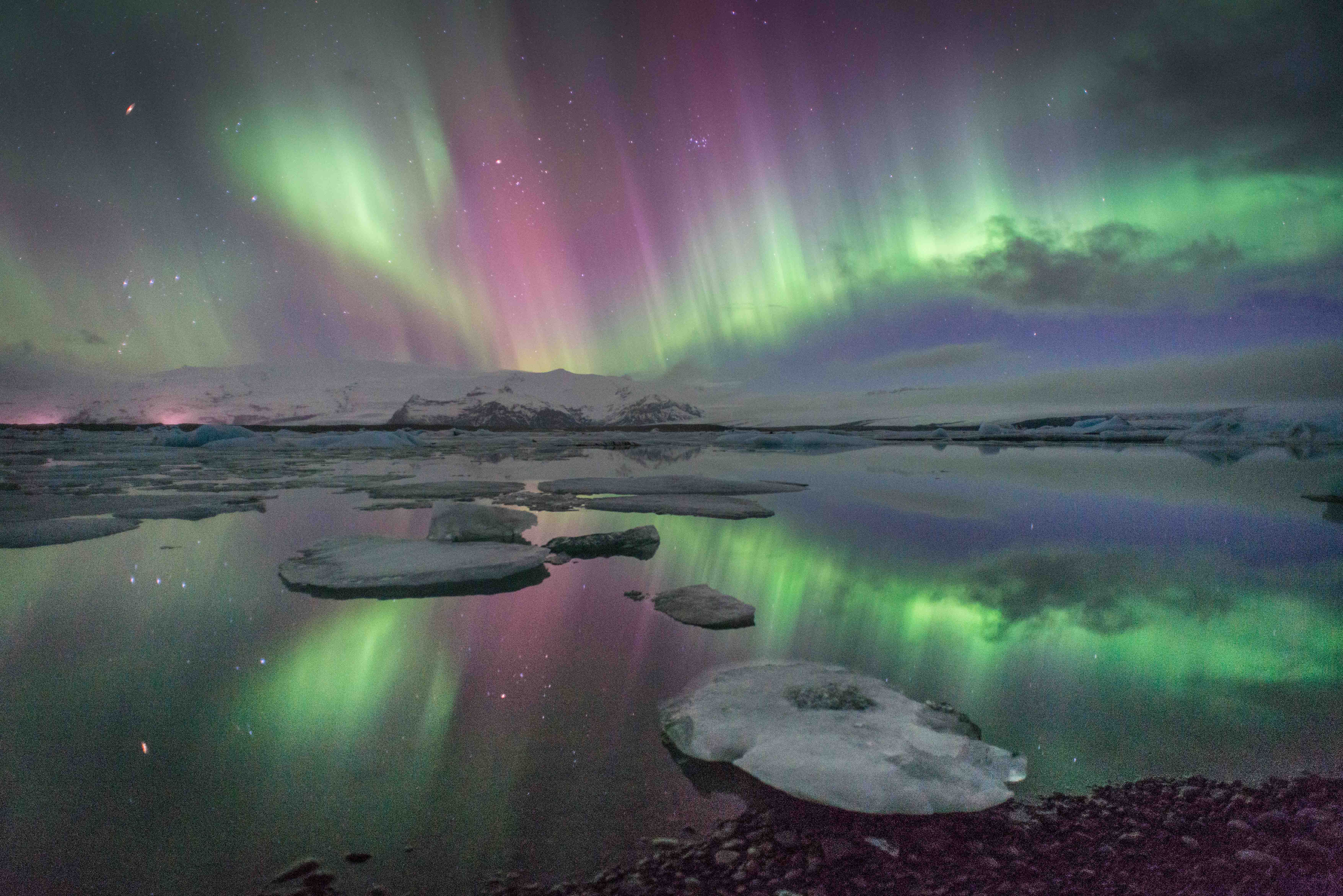
Northern Lights in Jokulsarlon @ Diana Jarvis
April is a bridge between seasons. You can still catch some winter activities but also start to enjoy more daylight, open roads, and wildlife sightings. The weather is unpredictable, so having a flexible plan—and layers—is key.
April is the tail end of aurora season. Skies are lighter, but long nights still make it possible. Head away from city lights and check the forecast. You might spot green waves flickering over the mountains or ocean. Fewer tours run in April, so a self-drive or guided trip adds flexibility.
It’s still cold out, which makes hot water feel better than ever. The big-name lagoons are great, but you’ll also find smaller local pools with a more relaxed atmosphere. April is a nice time to visit these without the summer crowds. Some even have views of snow-covered fields or volcanic hills.
By late April, signs of spring are visible. Puffins start returning to nesting cliffs, and lambing season begins in the countryside. Driving through rural areas, you’ll spot sheep with tiny new lambs roaming open fields. Birdwatchers can head to coastal cliffs or wetlands to catch early migratory arrivals.

Siglufjordur Harbour at dawn, Iceland
Our Iceland itineraries are crafted to help you experience the best of the country, stress-free. Think of them as a starting point — perfect for planning, but flexible enough to adjust to your own pace and interests. After all, travel is about freedom, but a little planning goes a long way.
From travel safety to visa requirements, discover the best tips for visiting Iceland
written by
Olga Sitnitsa
updated 16.01.2026

