14. Djúpalónssandur Beach
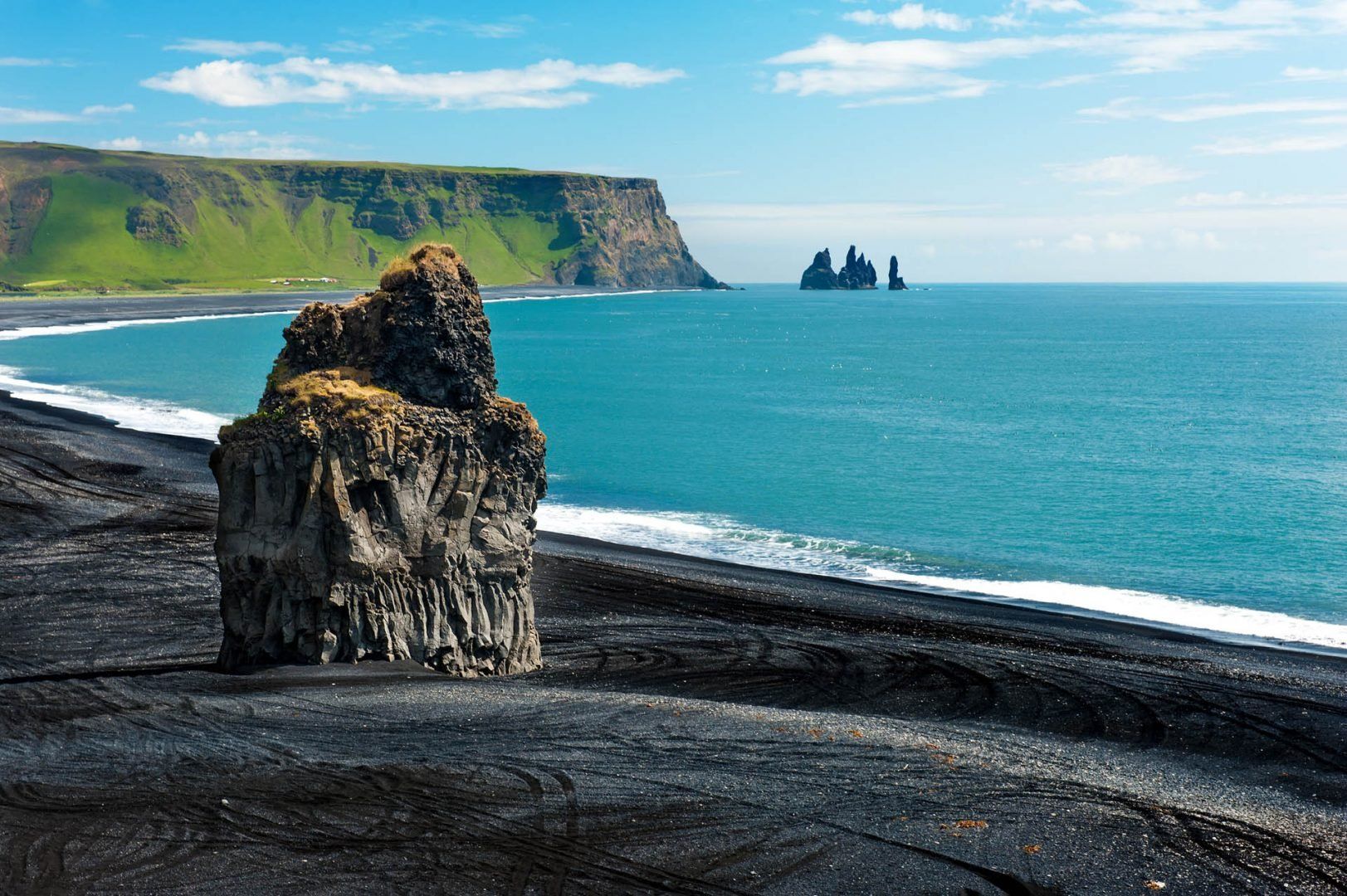
Djúpalónssandur has a moody, wild look—black pebbles instead of sand, old shipwreck pieces rusting on the shore, and lava formations leading down to the water.
This used to be a fishing station, and the remains of the British trawler Epine, wrecked in 1948, are still scattered here as a memorial. Near the beach, you’ll see four large stones once used to test fishermen’s strength—if you couldn’t lift the heaviest, you didn’t get the job.
The lava field around the beach includes features like Gatklettur, a rock with a hole, and Söngklettur, said to sing when the wind hits it right. There aren’t many facilities, just restrooms and info boards, but you can find food and lodging in nearby Hellnar or Arnarstapi.
How to get to Djúpalónssandur Beach
From Reykjavík, drive north to Borgarnes and take Route 54 west around the peninsula. Near Hellissandur, you’ll see signs for Djúpalónssandur. The final road is gravel but well-kept, leading to a small car park. It’s about a 10-minute walk through lava formations down to the beach.
When to visit Djúpalónssandur Beach
Summer is the easiest time to walk here and catch good weather, but the beach has a unique feel in every season. If you're coming in winter, aim for midday between 11 AM and 2 PM to make the most of the limited daylight. Watch for warning signs—waves here can be dangerous and unpredictable, no matter the season. See more in our round up of our favorite Iceland travel tips.