Plan and book your private, tailor-made tour with vetted local experts
When it comes to the weather, there’s no bad time to go to Guatemala. The country has one of the most pleasant climates on earth. In fact, the tourist board refers to it as the “land of the eternal spring” as a result of much of the country enjoying warm days and mild evenings year-round. That said, there are variations, so read on to discover the best time to visit Guatemala (spoiler alert: it depends on your personal preferences).
In short, though, the best time to visit Guatemala largely depends on your preferences for weather and your interests in cultural events.
Generally, the country experiences two main seasons: the rainy season - running roughly from May to October - and the dry season, from November to April.
The dry season (November to April) is often considered the best time to visit Guatemala for most travelers. During these months, the weather is more predictable, with less rainfall, making it ideal for outdoor activities such as exploring ancient Maya ruins, hiking in the highlands, and visiting coffee plantations.
The dry season also coincides with several cultural events and vacations.
In addition to being aware of the two main seasons, also note that the climate in Guatemala is largely determined by altitude. In areas between 1300 and 1600m — which includes Guatemala City, Antigua, Lago de Atitlán and Cobán — the air is almost always fresh and the nights mild.
In addition, despite the heat of the midday sun, humidity is never a problem.
Parts of Quetzaltenango, Huehuetenango and El Quiché are above this height, so have a cooler, damper climate with distinctly chilly nights between early December and late February.
Meanwhile, low-lying Petén suffers from sticky, steamy conditions most of the year, as do the Pacific and Caribbean coasts, though you can usually rely on the welcome relief of a sea breeze.
The rainy season runs roughly from May to October, with the heaviest rain falling in September and October. Most downpours are limited to late afternoon, so they’re unlikely to ruin your plans.
In Petén, however, the season can stretch into December. For that reason, visiting the region’s more remote ruins is best attempted between February and May, as mud can be thigh-deep during the peak of the rains. If you’re planning a trip to Guatemala, keep these seasonal patterns in mind when mapping out your itinerary.
When is peak season in Guatemala?
The busiest times for tourism in Guatemala are between December and March, avoiding the rainy season, and again in July and August.
Language schools and hotels are fullest during these periods, and many of them hike their prices correspondingly.
The best month to go to Guatemala largely depends on what you want to experience while you’re there.
The country has different fiestas and festivals all year round — once a year every village, however small, indulges in a celebration in honor of its patron saint.
In addition, some tours, sights and activities are best experienced at certain times of the year.
Read on for a run-down of what to expect from visiting Guatemala across every month of the year.
In January, the weather in Guatemala is cool and dry. Average temperatures range from 59°F (15°C) at night to 77°F (25°C) during the day in most regions. Just be aware that the highlands will be cooler.
As for the rain, January falls within Guatemala's dry season, which runs from November to April. So you can expect clear sunny skies, sunny days and minimal rainfall.
Offering mostly sunny days and clear blue skies, the weather in Guatemala in February has a mild, dry climate, with temperatures varying from region to region.
In the northern lowlands, temperatures range between 75°F (24°C) and 84°F (29°C), while you can expect a cooler vibe in the central highlands. Namely, a range of 61°F (16°C) to 79°F (26°C).
Meanwhile, temperatures are higher in the southern coastal areas and on the Pacific Coast — they often exceed 86°F (30°C).
April sees Guatemala in the peak of the dry season, so expect sunny, dry weather — we're talking clear blue skies and minimal rainfall.
In the north, temperatures often reach up to 95°F (35°C) during the day, while the central mountainous areas are more moderate, ranging from 68°F (20°C) to 77°F (25°C).
At the same time, the Pacific Coast and southern lowlands have the highest temperatures and humidity in April. Daytime temperatures often rise above 86°F (30°C).
Sitting in the rainy season, like May, June typically sees warm, sunny mornings followed by afternoon showers, though these usually come in short heavy bursts and are quick to pass.
Temperatures at this time range between 72°F (22°C) and 77°F (25°C).
July falls within Guatemala's rainy season, with temperatures ranging from 72°F (22°C) to 77°F (25°C), and slightly cooler temperatures in the highlands.
That said, despite frequent downpours, the weather won't interfere with most travel plans, apart from the trails being muddier — check conditions before heading off on a hike
Also sitting in the rainy season, August in Guatemala is characterised by frequent afternoon showers interspersed with periods of sunshine.
Comfortably warm temperatures can be expected during the day, typically ranging from 72°F (22°C) to 77°F (25°C). Highland areas will be cooler, while coastal areas will be warmer and more humid.
It's still the rainy season, folks, and rainier than the preceding months! While mornings usually begin with clear, sunny weather, expect frequent afternoon and evening showers.
As for the temperature, that'll range between 72°F (22°C) and 82°F (28°C),
October: Best for witnessing the kite festivals on All Saints’ Day
October sits at the end of the rainy season. This means while you can expect showers in the afternoons, mornings are often clear and sunny. So, plan activities with that in mind.
In terms of temperatures, the northern lowlands average 77°F-86°F (25°C-30°C), the central mountainous regions are a little cooler, usually between 60°F and 78°F (16°C and 26°C).
At the same time, the southern coastal regions and Pacific Coast bask in warmer weather, often hitting highs of 88°F (31°C).
In good news, if you're not a fan of liquid sunshine, November marks the end of the rainy season and the arrival of cooler, drier days. Expect sunny skies, minimal rainfall and a drop-off in humidity.
In the northern lowlands, temperatures typically range from 22 to 30 °C (72 to 86 °F), while the central highlands are cooler, with daytime temperatures averaging 64°F to 77°F (18°C to 25°C).
If you prefer it hotter, the southern coastal areas and Pacific Coast often see temperatures of up to 88°F (31°C).
December: Best for experiencing Christmas festivities
Decidedly in the dry season — and also peak season — the weather in Guatemala in December is mainly sunny and dry, with comfortable temperatures ranging from 60°F (16°C) to 82°F (28°C) depending on the region.
As you'll be aware by now, it'll be hotter in the southern coastal areas, and cooler in the northern lowlands.
You’ll find plenty to see and do in Guatemala in winter. December — February are especially packed with big events.
Head to the western highlands from 14th-21st December for the festival of Santo Tomás in Chichicastenango. Expect dancing, bands, and a big procession.
Lívingston holds a big carnival from Christmas Eve through to New Year’s Eve.
The Rabinal fiesta, which runs 19th-24th January in Cobán and the Verapaces, is famed for its dances. One of these — the Rabinal Achi — has UNESCO recognition.
February is the earliest in the year you should attempt to visit the remote ruins of Petén — any earlier and you’ll be thigh-deep in mud.
Thanks to a lack of rain, visiting Guatemala in spring (March — May) is a to time to really immerse yourself in all the county’s ancient sites. Spring is pretty rewarding when it comes to festivals and wildlife, too.
Visiting in mid-March? A famous fiesta in honor of its patron saint is held in San José from 10th-19th March. Take the boat from Flores.
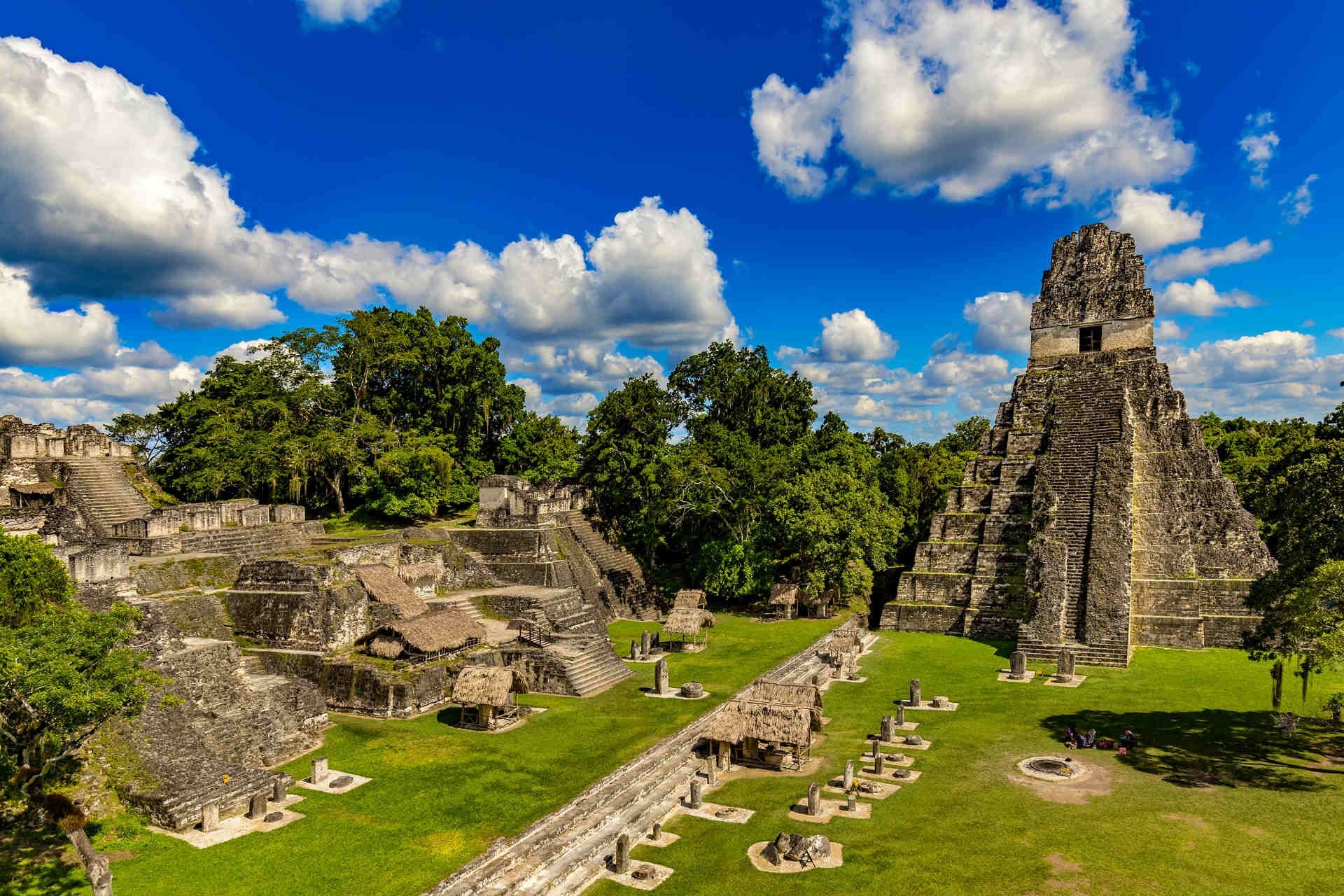
Thanks to the lack of rain, spring is the ideal time to visit Tikal and Petén. The same goes for the El Mirador site — perfect to visit in March and April, when the route is driest.
The nesting season of the elusive quetzal starts in March and lasts until June. Visit the Biotopo del Quetzal in Cobán for the chance to glimpse one.
If you visit Guatemala in summer, between June and August, you’ll have your pick of fiestas.
Visit Cubulco in Cobán and the Verapaces on 25th July for its annual fiesta.
Cobán hosts the National Fiesta of Folklore in August, which is attended by indigenous groups from throughout the country.
July sees turtle nesting season start in Monterrico on the Pacific coast. Pay the charming seaside town a visit and you’ll have the opportunity to spot two types of turtles as they come ashore to lay their eggs.
Love culture and cuisine? Be tantalised by our Unparalleled Guatemala trip — it has a tasty focus on culture and food.
Festivals and events in Guatemala in fall
Pack your umbrellas — the rainy season is heaviest between September and October in Guatemala.
That said, braving the afternoon downpours is a compromise worth making for the cheaper air fares you’re sure to get by traveling in this shoulder season. In addition, fall is stacked with unforgettable festivals.
15th September sees Guatemala celebrate Independence Day with a nationwide public vacation and lots of fiestas.
1st November is All Saint’s Day AKA Day of the Dead. Though celebrated countrywide, the best celebrations include the pagan skull-bearing procession in San José on 31st October, and the kite-flying festival in Santiago on 1st November.
If you’re on the Caribbean coast in November, try to be in Lívingston on 26th November to celebrate Garífuna day.
With a local expert on hand to support you along every stage of your journey, you can create your perfect trip without the hassle out of planning and reservation.
A little concerned about security during your time in Guatemala? In our guide, we provide helpful tips on safety.
The best time to visit a country often depends on the kind of trip you want to take. At Rough Guides, we connect you with vetted Guatemala travel agents who create personalized itineraries from scratch based on your travel style, pace, interests, and preferred season. You can receive up to 3 different trip plans, compare approaches from different local agents, and refine the itinerary further until it fits the way you want to travel.
Travel advice for Guatemala
From travel safety to visa requirements, discover the best tips for visiting Guatemala
Joanne is a Pembrokeshire-born writer with a passion for the nature, cultures and histories of the Caribbean region, especially Dominica. Also passionate about inspiring a love of adventure in young people, she’s the author of several books for children and young adults, hosts international writing workshops, and has written articles on the Caribbean and inspirational community initiatives for Rough Guides. Follow her @JoanneOwen on Twitter and @joanneowenwrites on Instagram.
read more
Arrange your trip, hassle-free, with local travel experts