Sámos

Select Month

start planning

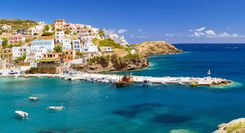
The lush and seductive Sámos seems to swim away from Asia Minor. In its variety of mountainous terrain, beaches and vegetation, Sámos has the feel of a much larger island, and despite recent development and wildfires taking their toll, it remains indisputably among the most beautiful in the Aegean.

Trip ideas for Greece

Crafted with by local experts

Beautiful misty layers of mountains near Meteora in Greece in sunlight. Greece
Crafted by Julia

7 days

view trip ⤍
Milos
Crafted by Julia

9 days

view trip ⤍
Nicopolis
Crafted by Julia

8 days

view trip ⤍
Naxos
Crafted by Julia

9 days

view trip ⤍
Caryatides at Acropolis, Athens, Greece
Crafted by Julia

4 days

view trip ⤍
Athens
Crafted by Julia

15 days

view trip ⤍
Acropolis, Athens
Crafted by Julia

10 days

view trip ⤍
Limeni, Lakonia Peloponnese Greece.
Crafted by Julia

8 days

view trip ⤍
Old venetian harbor with boats in Heraklion, Crete island, Greece
Crafted by Julia

10 days

view trip ⤍
Limeni, Greece
Crafted by Julia

9 days

view trip ⤍
Greek fishing village in Paros, Naousa, Greece
Crafted by Julia

10 days

view trip ⤍
Corfu, Greece
Crafted by Julia

13 days

view trip ⤍
Temple of Poseidon, Greece
Crafted by Julia

11 days

view trip ⤍
Santorini, Greece
Crafted by Julia

9 days

view trip ⤍
Meteora
Crafted by Julia

10 days

view trip ⤍
See all Greece trip ideas

Things to do in Samos

Sámos offers plenty of variety, from relaxed beach days to active time on land and water. Diving centres run trips to nearby reefs, shipwrecks, and uninhabited islands, while windsurfing is popular around Kokkari and Tsamadou on the northern coast, where rental equipment is widely available.

The island’s scenery also makes it rewarding for hiking. Old footpaths lead through varied landscapes towards waterfalls, caves, mountain villages, monasteries, and vineyard-covered slopes. For a slower stay, beaches such as Psili Ammos, Agios Konstantinos, and Tsabou are good options for sun, swimming, and long meals by the sea.

The main towns and villages to visit include Kokkari, Pythagóreio, Heraion, and Karlovassi, where much of the appeal lies in wandering narrow streets and pausing at cafés and tavernas. Heraion is home to the great sanctuary dedicated to Hera, while the Tunnel of Eupalinos offers a fascinating glimpse into the island’s ancient engineering.

In 10-day Greece trips, Sámos can work as a well-rounded island base, combining beaches, hiking, food, ancient sites, and nearby island-hopping to Ikaría or Foúrni without needing to move on too quickly.

Food and drink in Samos

The food in Samos is influenced by both Greek tradition and migrants. The fruitful landscape also makes a prime foundation for a range of foods Samos has become famous for, extra olive virgin oil is a good example. For meat lovers, baby-goat is a local favourite, roasted and stuffed with potatoes and garlic in a tomato sauce. Another common favourite in Samos is stuffed vegetables; peppers, aubergines and zucchini filled with rice or minced meat, sauteed and baked with herbs and spices.

Samos wine heritage dates back to around 1200 BC and boasts sweet wines famous all over the world, made from the muscat grape. The vineyards in Samos make up a great culture for the locals, and wine tasting makes for a pleasant afternoon in the sun.

A brief history of Samos

Sámos was during the Archaic era among the wealthiest islands in the Aegean and, under the patronage of tyrant Polykrates, home to a thriving intellectual community that included Epicurus, Pythagoras, Aristarchus and Aesop. Decline set in when Classical Athens rose, though Sámos’s status improved in Byzantine times when it formed its own imperial administrative district. Late in the fifteenth century, the ruling Genoese abandoned the island to the mercies of pirates and Sámos remained almost uninhabited until 1562 when it was repopulated with Greek Orthodox settlers from various corners of the empire.

The new Samians fought fiercely for independence during the 1820s, but despite notable land and sea victories against the Turks, the Great Powers handed the island back to the Ottomans in 1830, with the consoling proviso that it be semi-autonomous, ruled by an appointed Christian prince. This period, known as the Iyimonía (Hegemony), was marked by a renaissance in fortunes, courtesy of the hemp, leather-tanning and (especially) tobacco trades. However, union with Greece in 1912, an influx of refugees from Asia Minor in 1923 and the ravages of a bitter World War II occupation followed by mass emigration effectively reversed this recovery until tourism took over during the 1980s.

Vathý

Lining the steep northeastern shore of a deep bay, beachless VATHÝ (often confusingly referred to as “Sámos”) is a busy provincial town which grew from a minor anchorage after 1830, when it replaced Hóra as the island’s capital. It’s an unlikely, rather ungraceful resort and holds little of interest aside from an excellent museum, some Neoclassical mansions and the hillside suburb of Áno Vathý.

Mount Kérkis and around

A limestone/volcanic oddity in a predominantly schist landscape, Mount Kérkis (Kerketévs) – the Aegean’s second-highest summit after Mount Sáos on Samothráki – attracts legends and speculation as easily as the cloud pennants that usually wreath it. Hermits colonized and sanctified the mountain’s many caves in Byzantine times; resistance guerrillas controlled it during World War II; and mariners still regard it with superstitious awe, especially when mysterious lights – presumed to be the spirits of the departed hermits, or the aura of some forgotten holy icon – are glimpsed at night near the cave-mouths. Gazing up from a supine seaside position, you may be inspired to climb the peak, though less ambitious walkers might want to circle the mountain’s flank, first by vehicle and then by foot. The road beyond Limniónas through Kallithéa is paved all the way to Dhrakéï.

Climbing Mount Kérkis

The classic route up Mount Kérkis begins from Votsalákia, along the paved but narrow lane leading inland towards Evangelistrías convent. After a 45-minute walk through olive groves, the path begins, more or less following power lines up to the convent. A friendly nun may proffer an ouzo and point you up the paint-marked trail, continuing even more steeply up to the peak. The views are tremendous, though the climb itself is humdrum once you’re out of the trees. About an hour before the top there’s a chapel with an attached cottage for sheltering in emergencies, and just beyond, a welcome spring. All told, it’s a seven-hour return outing from Votsalákia, not counting rest stops.

Inoússes

Inoússes, the closer and more easily accessible of Hios’ two satellite islands, has a permanent population of about three hundred, less than half its 1930s figure. For generations this islet, first settled around 1750 by Hiot shepherds, provided Greece with many of her wealthiest shipping families: various members of the Livanos, Lemos and Pateras clans were born here.

Psará

Remote Psará lies a good 20km west of the northwest tip of Híos and is too far from it to be visited on a day-trip. The birthplace of revolutionary war hero Admiral Konstandinos Kanaris, the island devoted its merchant fleets – the third largest in 1820s Greece – to the cause of independence, and paid dearly for it. Vexed beyond endurance, the Turks landed overwhelming forces in 1824 to stamp out this nest of resistance. Perhaps 3000 of the 30,000 inhabitants escaped in small boats to be rescued by a French fleet, but the majority retreated to a hilltop powder magazine, blowing it and themselves up rather than surrender. Today, it’s a sad, bleak place fully living up to its name (“the mottled things” in ancient Greek), never really having recovered from the holocaust. The official population now barely exceeds four hundred, and, despite some revitalization since the 1980s, it has never seen a tourist boom.

Áyios Efstrátios

Áyios Efstrátios (Aï Strátis) is one of the quietest and loneliest islands in the Aegean, with a registered population of under 400, only half of whom live here all year round. It was only permanently settled during the sixteenth century, and land is still largely owned by three monasteries on Mount Áthos. Historically, the only outsiders to visit were those compelled to do so – political prisoners were exiled here both during the 1930s and the civil war years.

Top Image: Papa Beach, Samos Island © Nejdet Duzen / Shutterstock

Rough Guides combines destination expertise with tailor-made travel planned by vetted Greece local experts. You can use our city and regional guides as a starting point, then receive up to 3 personalized trip plans created from scratch around your preferred pace, experiences, and route through the country. The final itinerary is refined directly with the local travel agent instead of being selected from a fixed package.

For over 40 years, Rough Guides has been a trusted name in travel, offering expert-curated guides, inspiring articles, and tailor-made trips. Our passionate team of writers and local travel specialists provide in-depth insights into destinations worldwide, from iconic landmarks to hidden gems. We help you travel smarter and experience the world authentically.