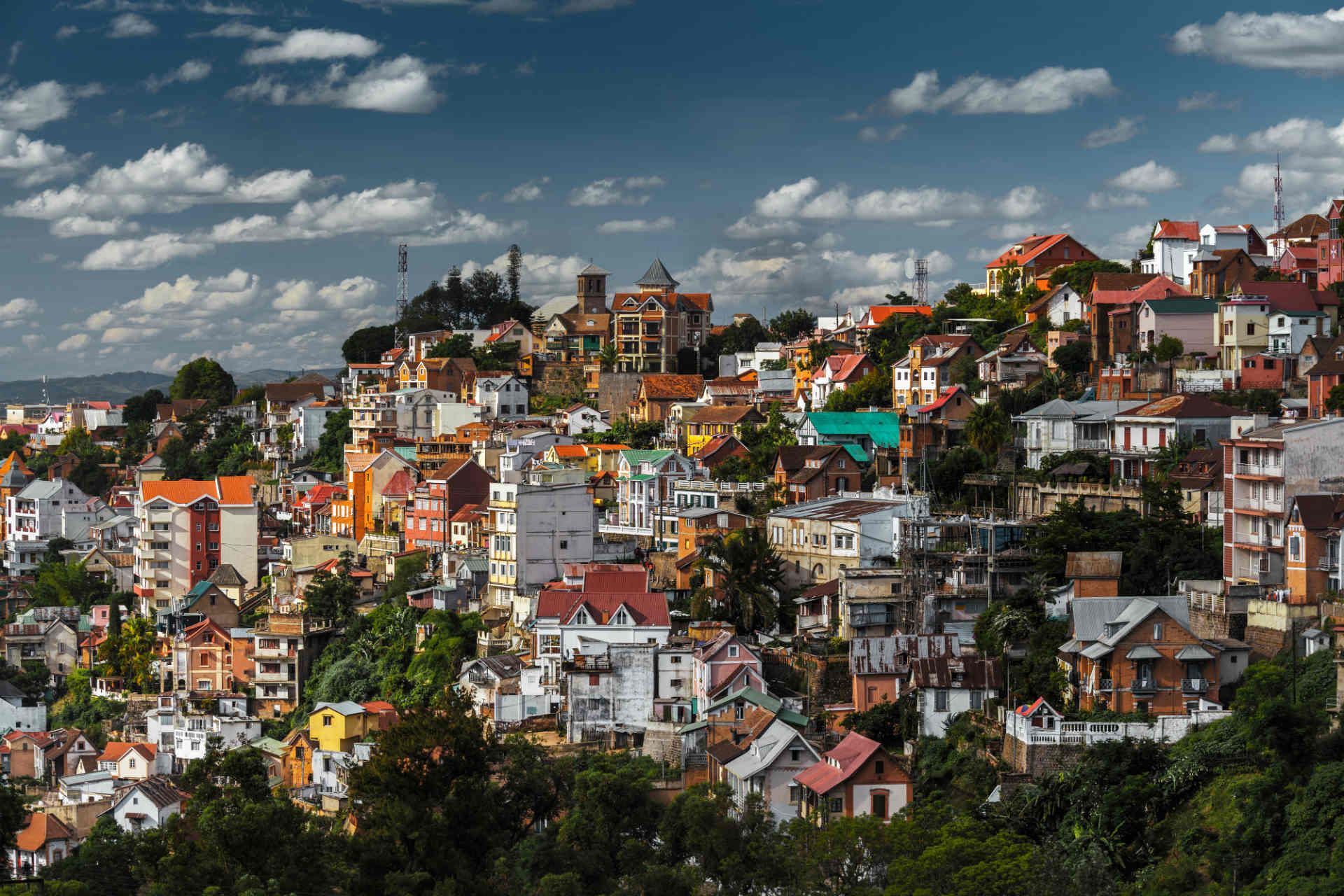
Travel advice for Madagascar
From travel safety to visa requirements, discover the best tips for visiting Madagascar
Plan and book your private, tailor-made tour with vetted local experts
Madagascar feels like nowhere else on Earth. Separated from mainland Africa 160 million years ago, it has wildlife you won’t see anywhere else, from lemurs that move in surprising ways to baobab trees that look like they’re upside down. The landscapes change constantly too, from quiet beaches to highlands that feel a little like Scotland, and communities shaped by African, Asian, and French influences.
Getting around this island take,s some planning. Distances are long, roads can be rough, and each region has a very different feel, which makes putting together a Madagascar itinerary a bit tricky. Here are some our favorite ways to see the “eigth continent”.
Want to skip the planning? Rough Guides’ local travel experts can take care of the logistics, from internal flights to remote lodges, so you can focus on your trip to Madagascar.
Most visitors to Madagascar choose between 7, 10, or 14-day itineraries. You could spend a few days snorkeling with whale sharks off Nosy Be, walk through spiny forests to see ring-tailed lemurs, or catch the sunrise at the Avenue of the Baobabs. How you get between destinations and how long you stay in each place makes a big difference to what you see and experience.

Always leave yourself a little breathing room — Madagascar isn’t meant to be rushed.
Roads here follow their own rhythm: sometimes smooth, sometimes… full of surprises.
But that’s part of the magic. I always tell my travelers that “delays” aren’t really delays — they’re glimpses into everyday Malagasy life. A herd of zebu crossing the road, a spontaneous little market, landscapes that shift without warning… none of that fits into a strict schedule. Just one buffer day can turn a tense journey into a soft, fluid, deeply human one.
Travel should be fun, not frustrating. Our Madagascar travel experts can take care of the details.

Anja Community Reserve in Madagascar © Shutterstock
How to plan a trip to Madagascar that's only a week long? This Madagascar itinerary gives you enough time to split your trip between the capital and the rainforest. You’ll get a feel for city life in Antananarivo and then head east to Andasibe to hear the eerie calls of the indri and see lemurs up close. Seven days isn’t enough for the whole island, but it’s a good first trip.
Welcome to Madagascar!
Your private driver welcomes you at the airport and takes you to your hotel. Depending on your arrival time, you can relax, enjoy a nice dinner, or simply rest after your flight. This first evening is all about settling gently into the Malagasy atmosphere.
Insider tip: Change money at the airport bureau for better rates than hotels. Grab a local SIM card here too, it’ll save you money on data.

Antananarivo, Madagascar @ Shutterstock
Travel time: It’s a three to four-hour drive along Route Nationale 2. Most people hire a driver or go on a tour.
After breakfast, you start your journey toward the eastern rainforests. The road to Andasibe is beautiful, passing through rice terraces, villages, small markets, and eucalyptus forests, a soft and scenic introduction to the island.
You arrive around midday and check in at your lodge surrounded by nature. The air feels cooler and more humid, and the sounds of the forest start to take over.
In the evening, you can join a night walk with a local guide. It’s the perfect time to spot chameleons, tiny frogs, stick insects, and your first nocturnal lemurs.
Insider tip: A headlamp with a red filter helps you see animals at night without disturbing them.
Today, you spend the entire day exploring one of Madagascar’s most iconic rainforests.
In the morning, you visit the Analamazaotra Reserve, home of the Indri Indri, the largest lemur species on the island. Walking through this lush green forest is a beautiful experience, and hearing the Indri’s powerful calls echo through the trees is something travelers never forget.
Your guide helps you spot other lemurs, forest birds, orchids, and medicinal plants during this slow and immersive walk that lets you truly feel the heartbeat of the forest.
In the afternoon, you continue to the Vakona Reserve, where you can observe several lemur species even more closely and learn about local conservation efforts. The famous “Lemur Island” is always a favorite, a wonderful place for gentle interactions and great photos. You end the day back at your lodge, enjoying a peaceful evening surrounded by the calming sounds of the rainforest.

Chameleon in the primeval forests of the Andasibe National Park, Eastern Madagascar © Shutterstock
Travel time: ~6–7 hours total (about 4-5h drive Andasibe to Manambato, then 1.5-2h boat to Ankanin’ny Nofy).
After breakfast, you continue your journey east toward Manambato. From there, a private boat carries you across the calm waters of the Pangalanes Canal. The ride is peaceful and scenic, passing palm trees, tiny fishing villages, and children waving from wooden pirogues, a gentle introduction to a quieter, softer side of Madagascar.
You arrive in Ankanin’ny Nofy, known as “The Nest of Dreams,” a serene peninsula nestled between a freshwater lake and the Indian Ocean. Life slows down here, with sandy paths, a light ocean breeze, and a deeply relaxing atmosphere.
The rest of the day is yours to enjoy: explore the peninsula, stroll along the beach, or simply unwind and soak in the tranquility of this unique place.
In the morning, you visit the Palmarium Reserve, a sanctuary known for its remarkable lemur population. Several species live freely here, moving gracefully through the trees and sometimes coming quite close. It’s one of the best places to observe lemurs in a natural and respectful environment.
Your guide also introduces you to the local flora, the surrounding landscapes, and the unique ecosystem of the Pangalanes.
After dinner, you head out by boat in search of the Aye-Aye, one of Madagascar’s rarest and most intriguing lemur species. Its unusual appearance and distinctive behavior make it truly unique, and seeing it in the wild is an unforgettable moment. This nighttime excursion is often one of the highlights of the entire trip.

Ringtailed lemur carrying twin babies in Madagascar © Shutterstock
Travel time: It’s usually an 8 to 9-hour journey, 1.5 to 2 hours by boat back to Manambato, then 6 to 7 hours by road to Mantasoa.
In the morning, you take the boat back to Manambato, then continue your journey toward Mantasoa. As you get closer, the landscape changes: pine forests, calm waters, small villages.
Mantasoa is a peaceful lakeside town, perfect for resting at the end of your trip. You can enjoy a walk by the lake, go for a canoe ride, or simply relax with a beautiful view.
It’s a day made for slow travel, breathing, resting, and enjoying the moment.
Travel time: about a 1 to 1.5-hour drive from Mantasoa to Antananarivo (Tana).
After breakfast, you drive back to Antananarivo. Depending on your flight schedule, you may have time for a nice meal, a small city tour, or a visit to a handicraft market for last souvenirs.
Your driver then takes you to the airport for your flight back home, ending your journey with beautiful memories of Madagascar’s nature, wildlife, and peaceful landscapes.
Discover the easiest way to travel with itineraries created by local travel experts.

Tropical jungle river at the beach of Masoala National Park in Madagascar
A 10-day Madagascar travel itinerary is enough to give you a real taste of the island. You’ll move from the highlands through rainforest to the coast, with plenty of time to see lemurs, reptiles, and day-to-day Malagasy life. This itinerary moves at a brisk pace, and extra days could be added if you wanted more downtime.
Welcome to Madagascar! Your private driver will meet you at the airport and take you to your hotel. This first evening is simply for resting and easing gently into the Malagasy atmosphere.
Travel time: a 4 to 5-hour drive from Antananarivo (Tana) to Antsirabe along the RN7.
After breakfast, you leave the capital and begin your journey east toward Andasibe. The drive is scenic, passing through rice fields, small highland villages, and stretches of eucalyptus forest that gradually introduce you to the island’s greener landscapes.
You arrive in the early afternoon and settle into your nature lodge. As night approaches, you have the option to join a guided evening walk to spot chameleons, frogs, and nocturnal lemurs, a wonderful first glimpse into Madagascar’s wildlife.
Insider's tip: Pack a light jacket. Andasibe is cooler than you might expect, and showers roll in quickly.

Coquerel's Sifaka (Lemur) in the Andasibe-Mantadia National Park © worldclassphoto/Shutterstock
You spend a full day exploring the tropical rainforest of Andasibe.
In the morning, you head into the Analamazaotra Reserve, home of the famous Indri Indri, the largest lemur species in Madagascar. Hearing their haunting calls resonate through the forest canopy is an unforgettable experience and a true highlight of the trip.
In the afternoon, you continue to the Vakona Reserve and its “Lemur Island,” where several species can be observed up close in a peaceful, green environment.
After this rich day of wildlife encounters, you return to your lodge for a relaxed evening surrounded by the sounds of the forest.
After breakfast, you make your way back to Antananarivo. The afternoon is free for you to relax, explore the city at your own pace, browse local craft markets, or enjoy a quiet moment in one of Tana’s cafés.
You spend the night in the capital before your flight to the north on the following day.

Madagascar Spiny Forest, Anosy © Danita Delimont/Shutterstock
Travel time: Direct flight of about 2 hours from Antananarivo (TNR) to Diego Suarez / Antsiranana (DIE).
After breakfast, you head to the airport for your flight to Diego Suarez, in the far north of Madagascar. Upon arrival, your local driver welcomes you and takes you to your hotel.
The rest of the afternoon is free for you to settle in and enjoy the tropical atmosphere of Diego: the sea breeze, the baobabs, and the vibrant local markets.
Travel time: typically a 4 to 6-hour drive in total, including the stop at Red Tsingy and continuing on to Ankarana.
You set off in the morning toward Ankarana, with a stop along the way to visit the Red Tsingy, an extraordinary landscape shaped entirely by erosion. The red sandstone formations rise like fragile sculptures, glowing beautifully under the sun.
After taking time to explore this unique site, you continue your journey to Ankarana and settle into your lodge for the evening.
You spend the full day exploring the Ankarana Reserve, a remarkable area known for its gray Tsingy, sharp limestone formations, as well as its caves, canyons, and stunning natural viewpoints.
Depending on the season and your interests, your guide may take you to the Tsingy Rary, the bat cave, the lemur canyon, or to panoramic viewpoints overlooking the limestone peaks. Ankarana offers dramatic, surprising, and truly unforgettable landscapes.

Lokobe Strict Reserve beach view in Nosy Be, Madagascar © Shutterstock
Travel time: a 3 to 4-hour drive from Ankarana to Ankify, then a 25 to 45-minute speedboat to Nosy Be.
You start the day with an early drive to Ankify, a charming coastal village lined with ylang-ylang trees, cacao plantations, and views of the turquoise sea. From the small port, you board a speedboat for a short and scenic crossing to Nosy Be.
Upon arrival on the “island of perfumes,” you check in at your hotel and enjoy your first evening on the beach, ideally watching the sun set over the ocean.
You have a full day to enjoy at your own pace, whether you choose to relax on the beach, explore nearby villages by quad or scooter, visit ylang-ylang plantations, go diving or snorkelling, browse local craft markets, or simply unwind while taking in the ocean view.
This final day is all about embracing the gentle rhythm of the island.
Transfer to the airport depending on your flight time. Your northern adventure comes to an end, with memories of rainforests, Tsingy, lagoons, islands, and warm Malagasy hospitality.
Take the guesswork out of travel with itineraries from local travel experts.

Isalo, Madagascar @ Shutterstock
Two weeks in Madagascar gives you enough time to get close to wildlife, spend days in the rainforest, and still connect with local culture without feeling rushed. This is the most popular amount of time that most travelers spend in Madagascar.
You’ll start in the capital, Antananarivo, usually called Tana. Your private driver meets you at the airport and takes you to your hotel for a smooth and comfortable arrival.
Spend the evening unwinding, adjusting to the local rhythm, and getting ready for the adventure ahead.
Travel time: a 4 to 5-hour drive from Antananarivo (Tana) to Antsirabe along the RN7.
After breakfast, you begin your journey south toward Antsirabe.
The scenic drive unfolds through rice terraces, small highland villages, and artisan workshops where locals craft traditional goods.
You arrive in the early afternoon, settle into your hotel, and enjoy a leisurely visit to the city, famous for its cool climate, thermal history, and charming colonial architecture.
Travel time: a 5 to 7-hour drive from Antsirabe to Ranomafana.
Your journey continues as you leave the highlands and head toward the lush, humid landscapes of Ranomafana. The scenery changes gradually, revealing greener hills, tropical vegetation, and misty valleys.
Arrive in the afternoon and check in at your lodge, surrounded by the sounds and scents of the rainforest. Free evening to relax in this serene natural setting.

Tomato frog from Madagascar © Shutterstock
Spend the full day immersed in the tropical rainforest of Ranomafana, one of Madagascar’s most biodiverse national parks. Together with your guide, you follow jungle trails in search of lemurs, vibrant chameleons, towering tree ferns, waterfalls, and rare bird species. The forest is cool, humid, and alive with movement, a true immersion in Madagascar’s wild heart.
In the evening, you may opt for a night walk to observe nocturnal creatures emerging after dark.
Travel time: about a 2 to 3-hour drive.
After breakfast, you travel to Ambalavao, a picturesque town set among granite peaks and vineyards. The region is known for its handmade Antemoro paper, silk weaving workshops, and, on select days, the lively zebu market.
You arrive in the afternoon, check in at your hotel, and enjoy a peaceful evening in this charming highland town.
Travel time: a 4 to 5-hour drive from Anja (near Ambalavao) to Ranohira (Isalo) on the RN7.
In the morning, you visit the Anja Community Reserve, a beautiful sanctuary where ring-tailed lemurs (Maki Catta) thrive among large granite boulders. This short walk offers wonderful wildlife encounters and stunning views of the surrounding hills.
You then continue south toward Ranohira, the gateway to Isalo National Park.
The landscapes become more arid and dramatic as you approach, revealing sandstone formations and open savannas. Arrival in the late afternoon and check-in at your lodge, with time to relax before dinner.

Giant gecko in Madagascar's rainforest © Artush/Shutterstock
Today is devoted to discovering the spectacular canyons, natural pools, and sculpted sandstone landscapes of Isalo. Your guide leads you through impressive rock formations carved by centuries of wind and erosion.
You can cool off with a swim in the natural pool, explore hidden valleys, and learn about endemic plants such as the iconic pachypodium.
The day ends with a breathtaking sunset over the Isalo massif, a perfect moment to remember.
Travel time: a 4.5 to 6-hour drive from Ranohira (Isalo) to Ifaty (typically via Toliara).
You leave the inland scenery behind and continue toward the southwest coast. After passing through the lively town of Tuléar, you drive to Ifaty, a peaceful fishing village on the shores of the Mozambique Channel.
Arrive in the afternoon, check into your seaside hotel, and enjoy your first sunset on the beach.
Three full days to unwind by the ocean and enjoy the coastline at your own pace.
Spend your time exactly as you like: relax on the beach, swim, snorkel, visit the Reniala baobab reserve, or take a pirogue trip with Vezo fishermen.
Ifaty blends gentle coastal downtime with easy adventures, an ideal place to recharge after your journey through the south’s changing landscapes.

Ground-Roller, Madagascar © Shutterstock
Transfer to Tuléar airport and fly back to Antananarivo. Upon arrival, enjoy a free afternoon at your hotel to rest or explore the surroundings.
This day is dedicated to exploring the cultural and historical side of the capital. You can visit the Queen’s Palace, wander through the Upper Town, explore artisan markets, discover local craft workshops, or enjoy a delicious Malagasy meal.
It’s a beautiful and meaningful way to end your journey.
Your driver accompanies you to the airport for your international flight. Your Madagascar itinerary comes to an end with unforgettable memories of rainforests, mountains, canyons, lemurs, beaches, and the warm Malagasy culture.

Masoala National Park, Madagascar @ Shutterstock
Madagascar is large and diverse, and having local knowledge helps make the most of your time. Rough Guides' local experts understand that everyone travels differently. You might be a birder wanting to see all five endemic families, a photographer aiming for the right light on a baobab, or a family planning lemur encounters that are engaging but not exhausting.
Our local travel experts create routes based on your interests, fitness level, and travel style. They handle park permits, arrange lodges months ahead, and plan internal flights to save time. Private guides can turn a walk through the forest into a deeper look at the plants and animals you pass. Reach out today for a free trip plan.

Chameleon in Madagascar © Shutterstock
Madagascar’s landscapes are incredibly varied, so you can shape a trip around rainforests, beaches, or the highlands. You can spend a week exploring the eastern rainforests for lemurs and chameleons, or head west for baobabs, dry deciduous forests, and coastal lagoons. Antananarivo works as a city base if you want markets, local cuisine, and connections to different regions. Here are other ideas for Madagascar itineraries.
This Madagascar itinerary works well if you’re traveling with kids. You’ll keep the pace comfortable while still seeing plenty of wildlife and culture. This is a great opportunity to see lemurs in the highlands, go snorkeling in clear water, while having enough downtime so no one burns out.

Waterfall Amber Mountain National Park, Madagascar © Shutterstock
This two-week trip takes you through some of Madagascar’s most romantic places, with plenty of time for wildlife, beaches, and downtime. You’ll start in the highlands, head into the rainforest, then finish with a stretch on the coast before wrapping up in the capital.

Nosy Be, Madagascar @ Shutterstock
In ten days of this wildlife focused itinerary you’ll see how varied Madagascar really is, from rainforest alive with lemurs to sandstone canyons and a dry coastal plain. You’ll spend your days in national parks, walking trails that change with every region, and your nights close to wildlife you won’t find anywhere else. Along the way you’ll also get a feel for local life in small communities.

The Tsingy Rouge stone formation in northern Madagascar © Framalicious/Shutterstock
Planning a trip to Madagascar means understanding how the island works and what makes it unique. Here are some of the most frequently asked questions and the key points to help you make the most of your Madagascar itinerary.
Most travelers spend 10-14 days to see the main highlights, though 2-3 weeks allows a more relaxed pace. Madagascar is long, almost 1,000 miles (1,600 km), and travel between destinations can take time.
A week lets you explore one region, for example following the RN7 from Antananarivo to Tulear. Two weeks makes it possible to combine the highlands with the eastern rainforests for lemurs or the western dry forests and Tsingy formations.
April to November generally has the most manageable conditions and is generally the best time to visit Madagascar. The dry season from May to October brings cooler temperatures in the highlands (60-75°F / 16-24°C) and very little rain.
Coastal areas are warm all year but can become very humid from December to March during the cyclone season.

Nosy Komba, Madagascar @ Shutterstock
September to November is the main period for wildlife activity. Many lemurs give birth, making them more active and easier to see, with baby lemurs appearing in October and November.
Chameleons are brighter and easier to notice in the warmer months. Birdwatching is best from October to December when migratory birds arrive and residents breed.
Marine life varies by region. Humpback whales pass Île Sainte-Marie from July to September, and whale sharks are near Nosy Be from October to December.
Travel can be slow, so patience helps. Most visitors use a combination of flights, private cars, and local transport. Air Madagascar connects major cities but schedules often change.
Renting a car with a driver is the most reliable way to reach parks and remote areas and usually costs $50-100 per day plus fuel. Taxi-brousses are a cheaper way to travel and give a local perspective but they are crowded and run on irregular schedules. The RN7 is paved, but many other roads vary in quality and some require a 4x4.
A mix usually works best. Flights save a lot of time on long distances. Driving from Antananarivo to Morondava takes more than 16 hours, but a flight takes about an hour.
Driving, however, shows the countryside and lets you stop at markets or viewpoints along the way. The RN7 road trip from Antananarivo to Tulear is typically done over 3-4 days with stops at Ranomafana and Isalo parks. For longer trips, fly to distant regions and explore locally by car.

Tsingy de Bemaraha, Madagascar @ Shutterstock
Remote parks usually have more unique landscapes and wildlife. Tsingy de Bemaraha is 8-10 hours from Morondava, with sharp limestone pinnacles and unusual animals. Masoala Peninsula combines rainforest and coral reefs but needs both road and boat travel.
Ankarana is 2-3 hours from Diego Suarez on rough roads and has dramatic tsingy formations and caves. These areas have fewer visitors and give closer wildlife encounters and cultural experiences. If time is limited, parks like Andasibe-Mantadia, just three hours from Antananarivo, still have a lot of wildlife to see.
Costs vary widely. Backpackers can manage on around $180 per day, mid-range travelers usually spend $280 per day including accommodation, meals, and transport. Park fees are $10-25, guides $15-30 per day.
Domestic flights range from $100-300 per segment. Hiring a car with driver is $50-100 daily plus fuel. Taxi-brousses handle long journeys for $5-15. Package tours simplify travel but cost $400+ per person per day.
Madagascar is moderately expensive compared with mainland Africa due to its remote location and limited infrastructure.

The fossa is Madagascar's largest predator
The Avenue of Baobabs near Morondava is the most visited and particularly striking at sunset. About 25 Grandidier’s baobabs line a dirt road, creating a dramatic landscape. It can get busy at sunset and there are no other attractions nearby.
Alternatives give different perspectives. Baobab Amoureux has two trees that have grown together with a local legend, and Kirindy Forest combines baobabs with wildlife like fossas. The Baobab Forest near Morondava lets you walk among scattered trees more quietly. The Avenue’s ease of access and scenery make it a main destination for many travelers.
Both regions are worth seeing if time allows. The highlands are cooler and have cultural sites like royal palaces and parks such as Ranomafana with dense forests. Coastal areas include beaches, marine life, and ecosystems that differ from the highlands.
The east coast has rainforests meeting the ocean, and the west has dry forests. Wildlife differs: bamboo lemurs and cloud forest species are mostly in the highlands, while the coast has whales, coral reefs, and other lemur species. With two weeks, you can see both. Shorter trips may focus on the highlands for simpler travel and concentrated attractions along the RN7 route.
Ready for a trip that feels easy from day one? Rough Guides’ local travel experts handle the logistics, shape your itinerary, and give you help anytime you need it, so you can focus on the experience. Learn more about our tailor made trips.
From travel safety to visa requirements, discover the best tips for visiting Madagascar
Discover Madagascar's most captivating stories
written by
Dre Roelandt
updated 03.12.2025
Dre Roelandt is originally from the United States but lives and works in Berlin, Germany. Dre is a freelance writer and artist with a passion for travelling. They are an in-house Senior Content Editor at Rough Guides.
Arrange your trip, hassle-free, with local travel experts
Arrange your trip with local travel experts