How to spend a long weekend in Trentino

Select Month

start planning

From mountainside Mozart to exquisite seasonal meals, and from the vivid colours of nature to castles in the sky, Italy’s northern region of Trentino makes an inspiring autumn escape

Val Canali Fototeca Trentino Marketing ph T.Prugnola.jpg

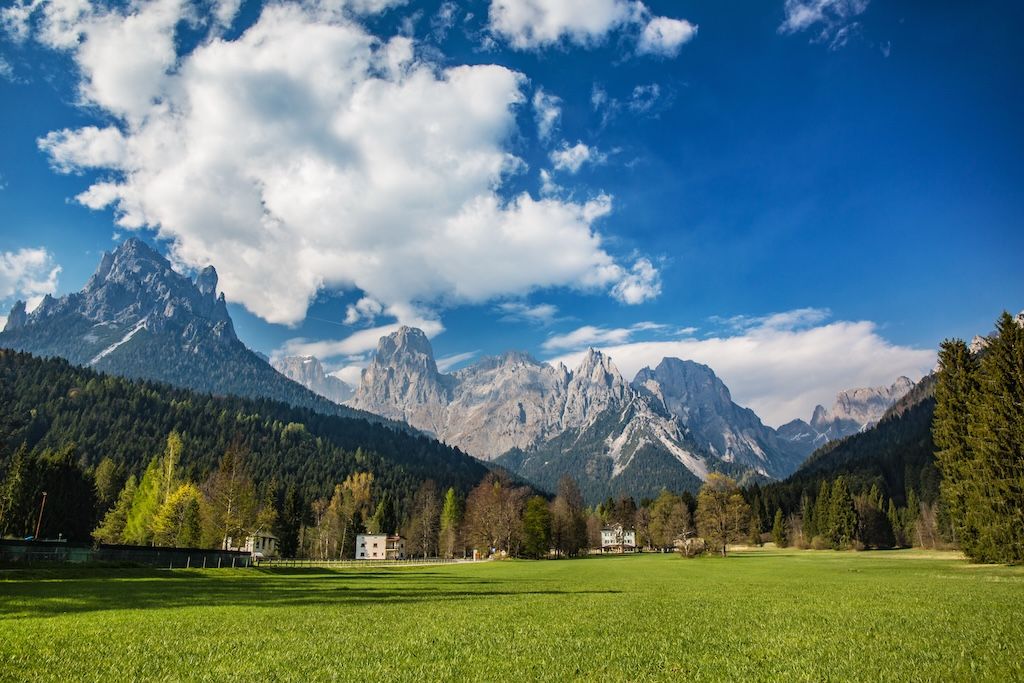
Some of Val Canali's meadows lie more than 1,200m above sea level © T. Prugnola

Day one: Mountain scenery, Mediterranean soul

“The police have been involved,” a local tells me over dinner, in a hushed voice. “You can be fined if you collect more than two kilos.” We are discussing mushrooms. Specifically, porcini – a matter of near-political importance in Trentino, the mountainous province in northern Italy where the Dolomites rise in colossal limestone towers above forests and pastures. Here, autumn announces itself not through decorative pumpkins or cinnamon-flavoured drinks, but through baskets, knives and territorial secrecy. “A Facebook group was shut down,” she adds. “People don’t want everyone to know the best foraging places.”

I spear a ribbon of tagliatelle stacked with a glossy porcino and instantly understand the hysteria. Tossed with garlic, parsley and butter and lavished with shavings of hard cheese, the earthy flavour is elevated to another plane. 

Like every Italian region, Trentino expresses much of its identity through food. Its lightly sparkling wine, Trentodoc, is being increasingly added to wine lists at fashionable restaurants around the world. Local cheeses inspire the sort of loyalty normally associated with football clubs. Don’t even mention gorgonzola, from the neighbouring regions of Piedmont and Lombardy, in the same breath as grana del Trentino. High-quality dairy, from cows that graze the alpine herbs and flowers, is a particular point of glory.

494062420_1209878374479048_7681959007249760735_n.jpg

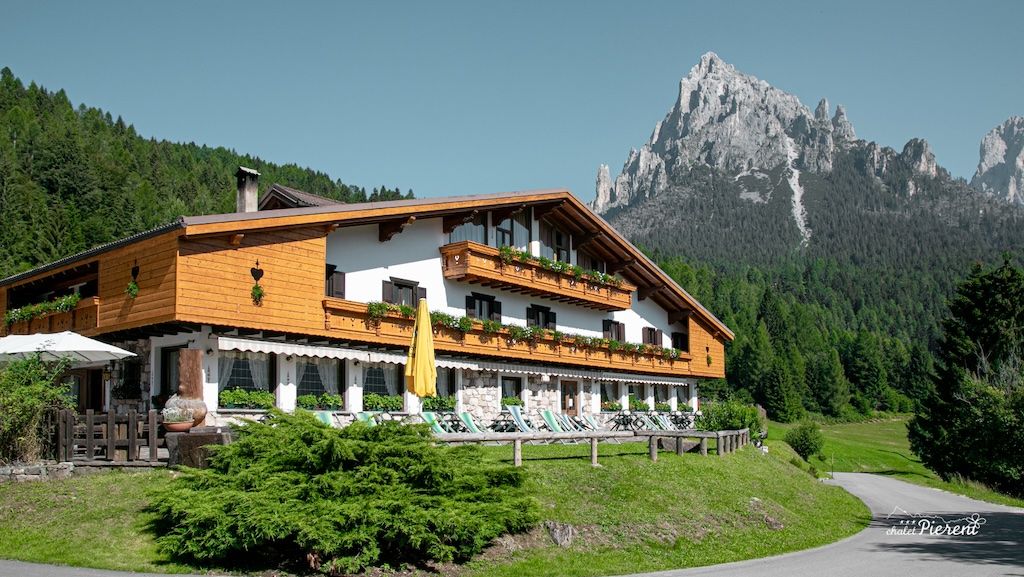
Chalet Piereni offers a warm welcome beside the peak of Pale di San Martino © Chalet Piereni 

I’m with a group of British and Irish tourists, here to experience the soaring drama of the Dolomites, between its peak seasons of high summer and deep winter. Trentino forms half of Trentino-Alto Adige, a pairing of provinces with distinct personalities. To the north lies Alto Adige, or Südtirol as many residents call it, where German is the dominant language. Trentino, which stretches down to the sun-soaked shores of Lake Garda, is culturally Mediterranean: long lunches, aperitivo and homely hospitality.

My base for three nights is Chalet Piereni, deep within Val Canali. Shrouded by the verdant Pale di San Martino Natural Park, this timber chalet is the sole property atop a winding road up through meadows of curious cows. Framed by flower boxes, its glowing windows are a beacon of warmth, whatever the weather.

Primiero-PalediSanMartino-ValCanali-VillaWelsperg_PioGeminiani_20994.jpg

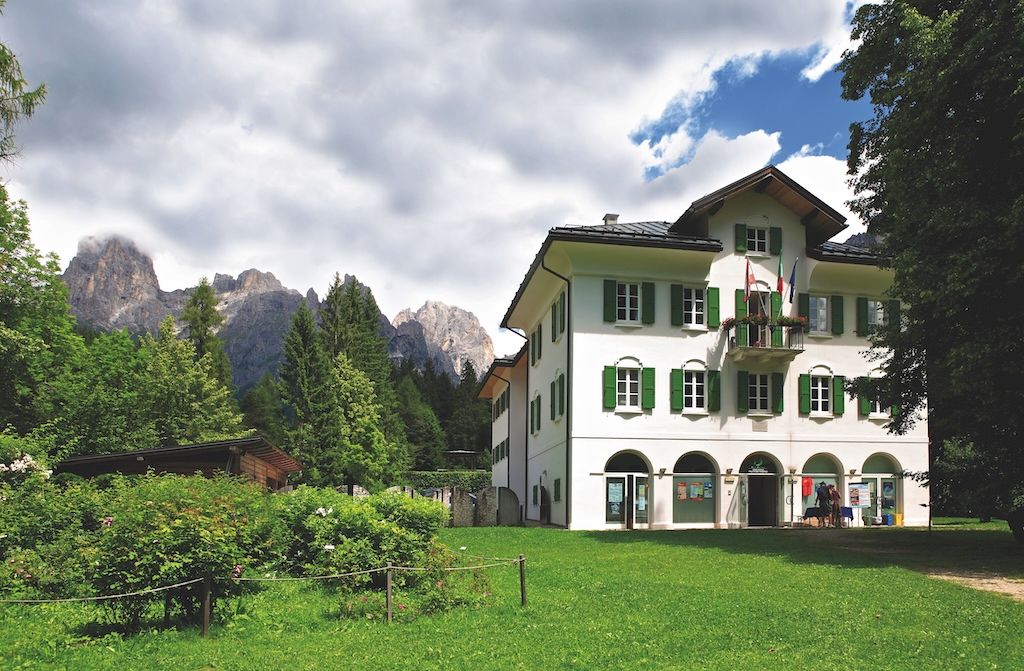
Villa Welsperg, headquarters of the Paneveggio Pale di San Martino Natural Park © Pio Geminiani

Alpine alarm clock

Next morning, I’m woken gently by the stirring of cows, their bells tinkling like windchimes. I slide open the door to my balcony to greet the herd. In the Dolomites, these bells – almglocken – are hierarchical. The dominant cow wears the largest, deepest bell; its lower frequency carries furthest, beckoning the herd to follow. A farmer will often choose an ornately decorated strap and an expensive bell for this chosen cow.

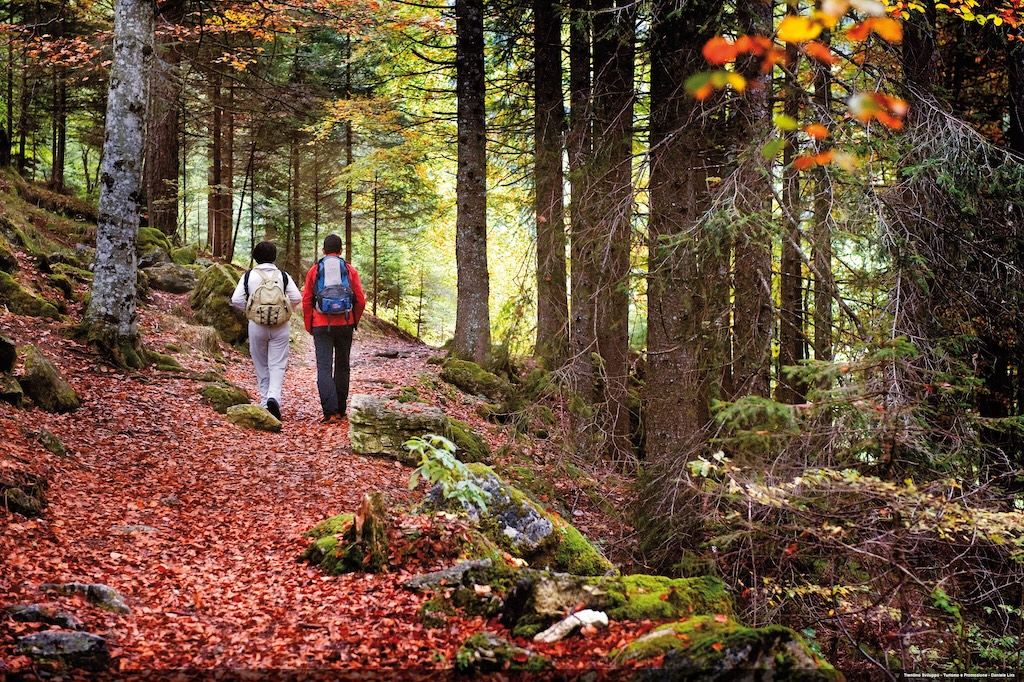
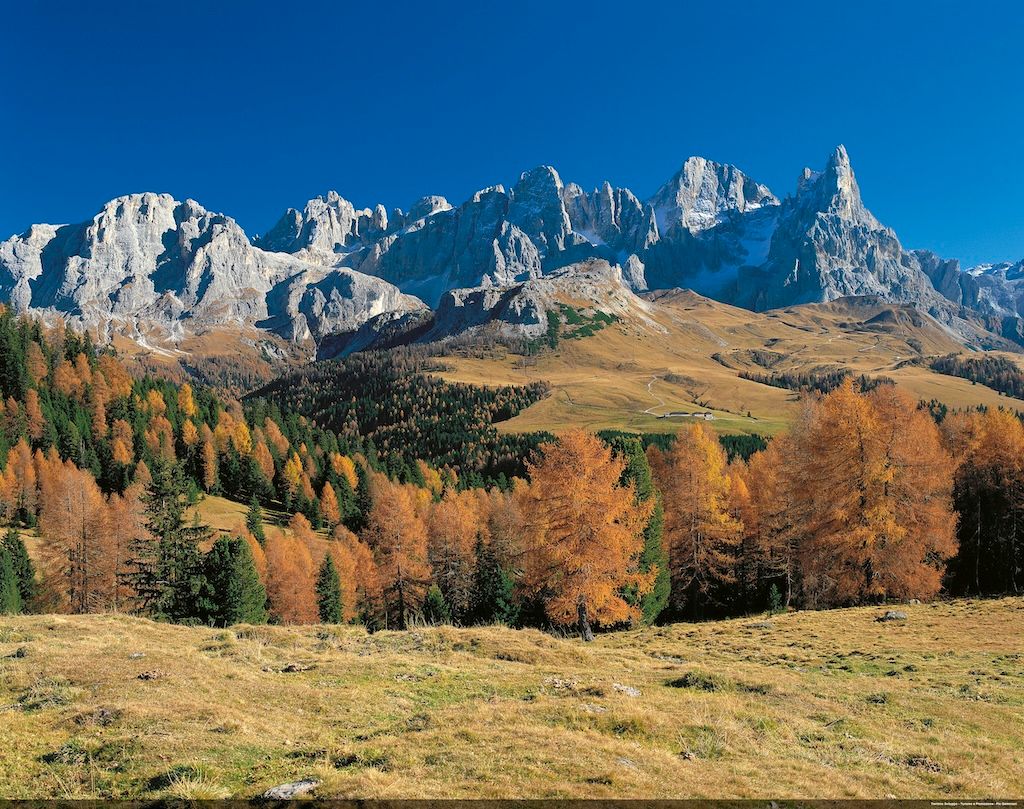
These September mornings arrive crisp, but as the sun rises above the peaks, the weather is often warm enough for shirtsleeves. The first leaves are warming to orange and gold on the birch and the beech, contrasted against swathes of stoic evergreens.

Here in the north, nature dictates the rhythm and routine. Warmer months belong to hikers, cyclists and rock climbers; summer also brings hundreds of lakes, many fed by glacial melt, with motorboats banned to protect the pristine pools. Winter transforms the valleys into ski territory and a frozen playground for ice climbers, with their axes and spikes.

Walking into the Pale di San Martino6.jpg

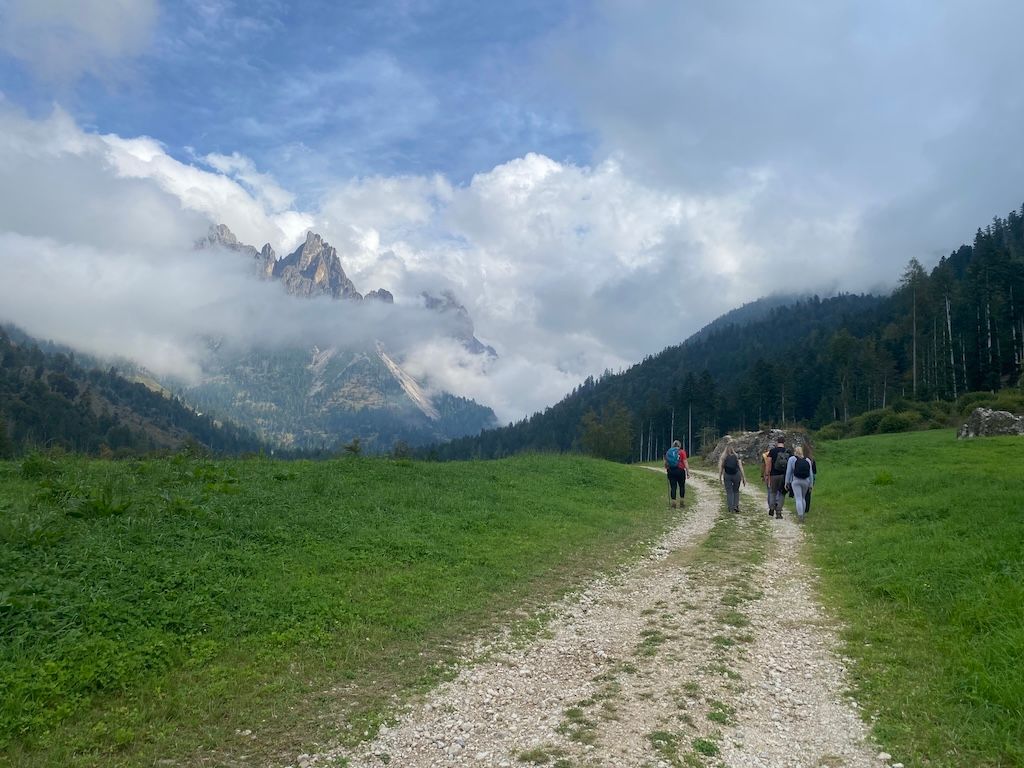
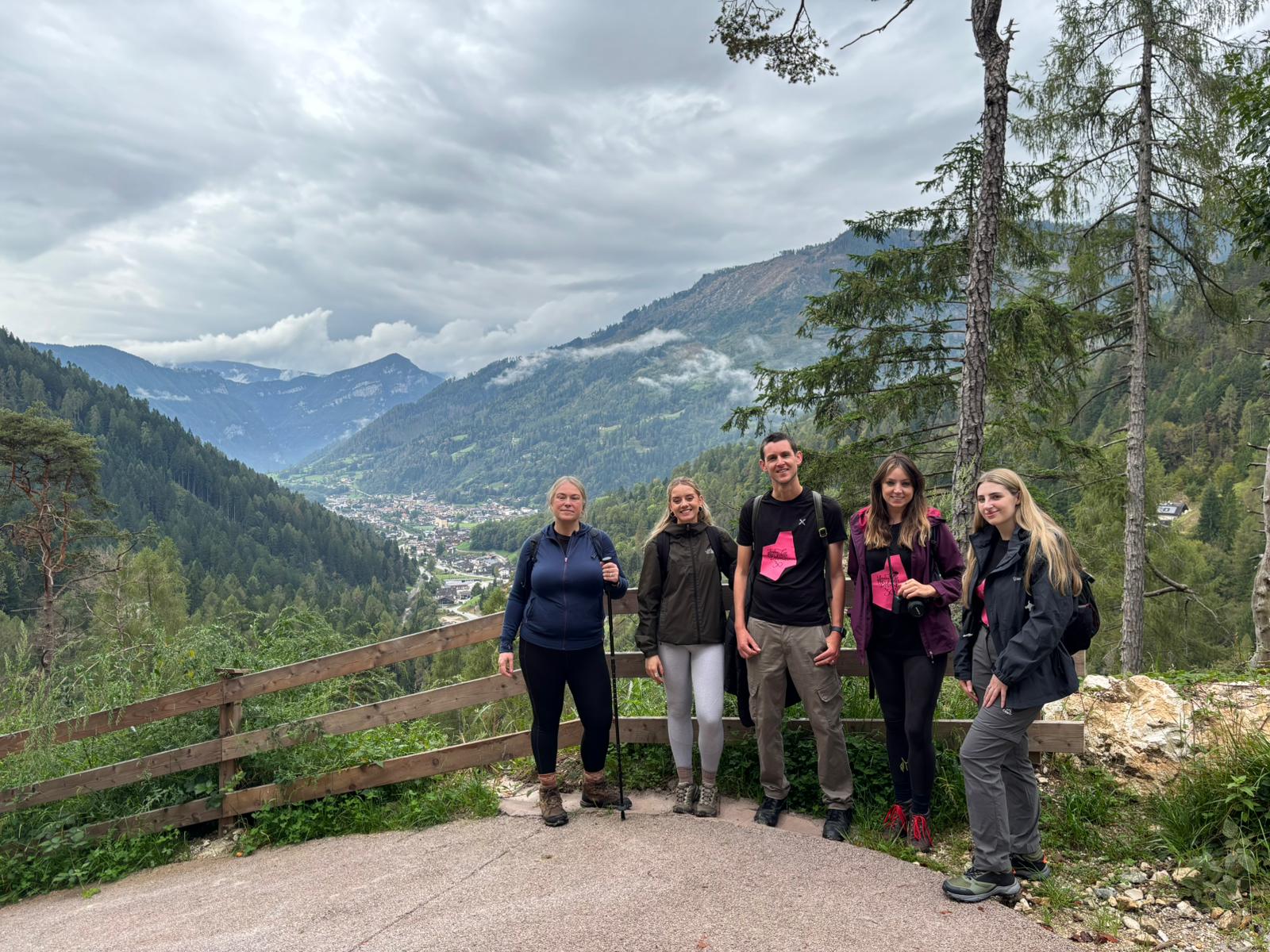
Setting off on the hike through the Natural Park © Siobhan Warwicker

Walking into the Pale di San Martino

After breakfast, we are collected by a local guide, Martino, who looks exactly how you'd picture someone who spends his life defying gravity on rockfaces: both relaxed and extremely fit. Every winter, he joins Trentino's vital mountain rescue team – I can imagine those who’ve fallen foul being reassured upon sighting this mountain man. 

Our route begins near Villa Welsperg, headquarters of the Paneveggio Pale di San Martino Natural Park, and we set off over luminously green turf, glossy from the sun and dew. To our left rises the hulking mass of Monte Cimerlo (2,500m), its summit circled by a heavenly disk of cloud.

More than 1,500 plant species thrive here, alongside deer, wolves, lynx and, in western Trentino, brown bears. As we ascend into the dense forest, firs rise overhead, their trunks straight as cathedral columns. Paneveggio is sometimes called the “Forest of Violins”, thanks to the abundance of spruce once prized by instrument makers. 

Lago Welsperg ph Dolomites Web.jpg

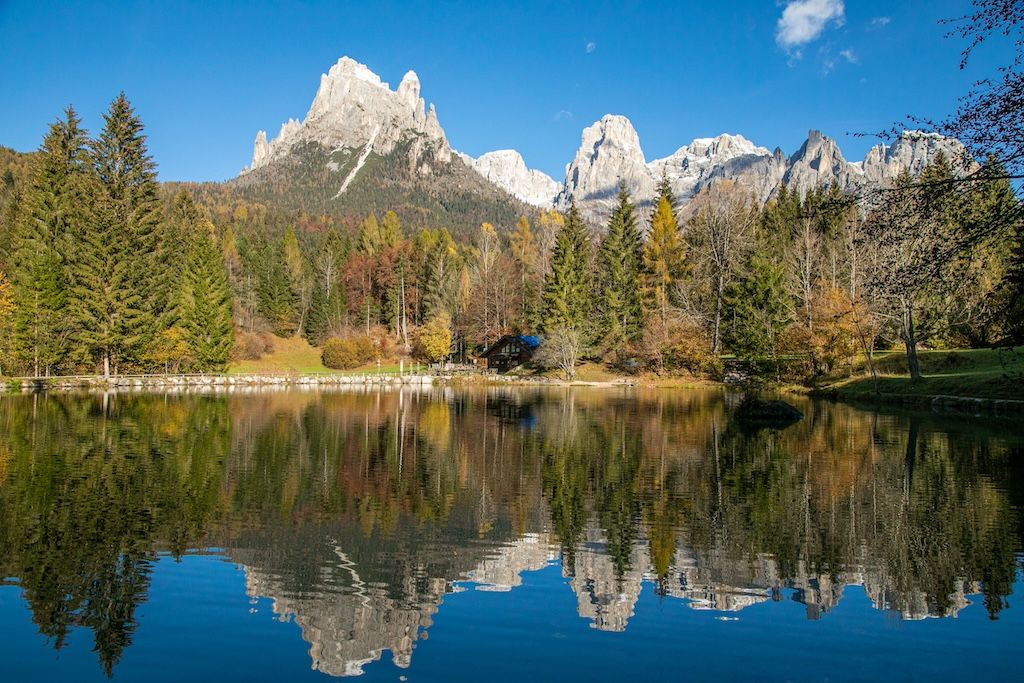
Lago Welsperg and the Monte Cimerlo peak © Visit Trentino

Martino explains that in 2018, a violent storm swept through northeast Italy, including parts of Trentino, with at least 14 million trees destroyed in winds approaching 200km/h. Nature's unsentimental wrath is hard to comprehend on a tranquil day like today. I bring myself back to the present by hunting for porcini between the trees. No luck here – it seems the local mushroom-hunters have beaten us to it... this time.

However, I'm delighted by the ruby-red fly agaric mushrooms, as well as hillside meadows flecked with lilac crocuses. The flowers look innocent, but these autumn blooms can poison cattle, so their emergence marks the moment farmers bring their herds down the valley for the season. Over generations, this annual descent has morphed into a folk celebration known as the Desmontegada – cows are adorned with flowers and paraded through the towns, with prizes awarded to the “best dressed”.

Slow and sustainable

Trentino was one of the first regions in Italy to be granted national parks. However, unlike some European beauty spots grappling with overtourism, the Primiero Valley feels serene and spacious. Visitors disperse naturally across the villages and trails. Part of the appeal is how easy it is to have stretches of landscape to yourself. It's not about ticking off must-see sites, but pursuing a sense of grounding and wellbeing.

A quirky expression of this philosophy is Il Silenzio dei Passi (The Silence of Steps), a movement founded by Andrea Bianchi to encourage barefoot hiking in Italy. It's about reconnection: slowing movement, paying close attention to terrain, learning how landscapes feel beneath your feet. Rain, unfortunately, prevents us from testing our enthusiasm for the practice. My feet are thankful to stay dry and snug in their boots.

26363.jpg

Autumn colours in the Dolomites © Visit Trentino

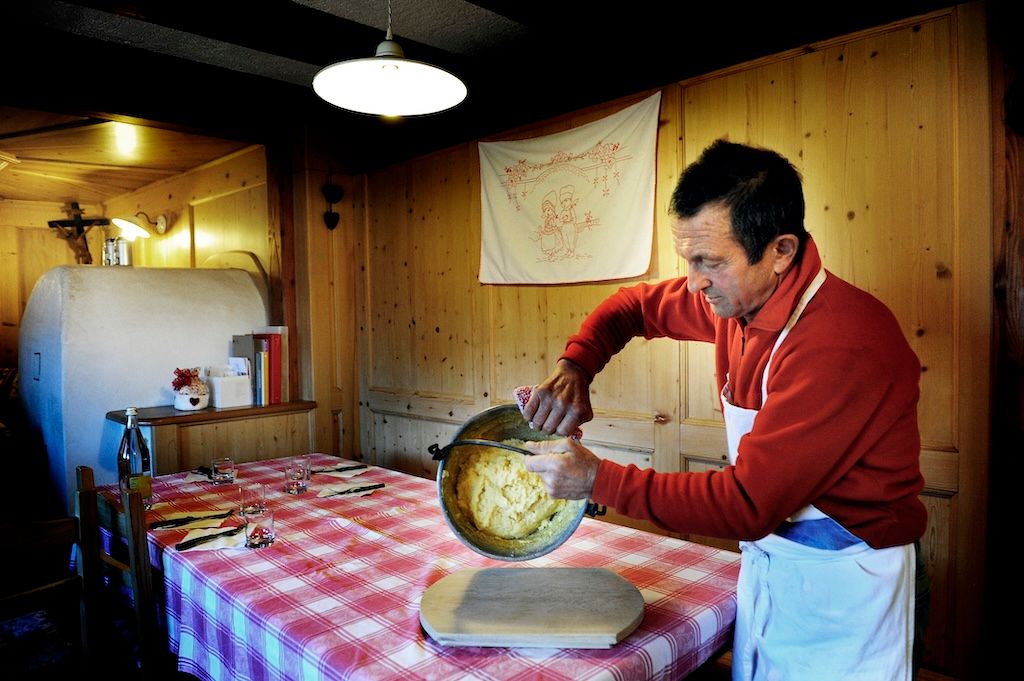
Naturally, for a hike in Italy, our destination is a dining room: the sturdy old farmhouse of Agriturismo Dalaip dei Pape. In their paddocks, horses’ manes flicker in the light breeze of the upper valley. Massimo, the owner, swapped his sheep for a riding school to resolve the constant threat of wolf attacks. The farm is also a supplier of fresh, organic produce for restaurants across the region; its careful stewardship of the land has earned it a Green Way Primiero certification for sustainability. 

The dining room’s rough white walls and pine furniture lull me back to the Trentino of times gone by. A double-height bed frame is boxed above the huge stove in the centre of the room – with harsh winters, traditional houses were built this way to keep children toasty in the warmest spot.

SanMartinodiCastrozzaPrimieroeVanoi-Tonadico-AgriturDalaipdeiPape_DanieleLira_25463.jpg

Homemade cuisine is prepared at Agriturismo Dalaip dei Pape © Daniele Lira

We’re presented with a platter of cheese, although the method of eating isn’t random: we must graze our way from soft to hard, delicate to strong, to savour each flavour at its best. Many traditional Trentino dishes are rooted in workers’ sustenance, with a Tyrolean twist. We try bread dumplings (canederli) and plates of steaming polenta mixed with melting cheese. Samples of more local wine appear – aperitivo hour, it seems, could more sensibly be measured by when it’s not occurring, rather than when it is.

British climbing legacy

Over our long lunch, Martino delves into the region’s history of British explorers. Now a UNESCO World Heritage Site, the Dolomites once lay in the shadow of monoliths in Switzerland and France – those had become the subject of Europe’s mountaineering fever, following the first ascent of Mont Blanc in 1786.

Then, in the 1830s, London publisher John Murray described the Dolomites in a travel handbook with breathless enthusiasm, admiring their serrated forms. “They are unlike any other mountains,” he wrote. British naturalist Sir John Ball became one of the first recorded mountaineers to summit a major Dolomite peak in 1857, further drawing adventurous Victorians southward in the Alps. But it was travel writer Amelia Edwards – a woman who defied the fiercely patriarchal era – who perhaps did most to popularise the region. Crossing Val Canali partly on muleback in the 1870s, she described it wistfully as: “the most lonely, desolate and tremendous scene this side of the Andes”.

29237.jpg

In the 19th-century, British explorers helped put the Dolomites on the map as a desirable destination © Visit Trentino

“Our mountain huts are named after these Brits,” says Martino. “They were the original influencers.” While expert climbing skills are still needed to summit many of the peaks, the range is far more accessible than it was for those pioneers. There are marked trails to suit walkers of all abilities, with most offering easy access back to the valleys by cable car, bus, or pre-arranged pick-up. Rifugi (mountain huts) provide safe and comfortable places to sleep. Still, parts of the valley retain something of the isolation Amelia Edwards admired.

When the Dolomites were underwater

Martino drives us back to the bottom of the valley, and to the edge of Predazzo village. Here, the Geological Museum of the Dolomites compresses hundreds of millions of years into a two-storey contemporary building at the village’s rural edge.

The earth here was once a tropical atoll. That iconic limestone is, astonishingly, fossilised coral reefs. Wind back the clock and the landmass lay far south of here; it took 239 million years for tectonic upheaval to thrust this ancient seabed northward and skyward to this extent.

Autumn in the Dolomites

These great peaks were once a tropical atoll, a history outlined at the Geological Museum of the Dolomites © Visit Trentino

The study of this remarkable environment has helped scientists piece together deep history. Inspecting ammonite fossils (an extinct marine mollusc) revealed that a lunar month used to run faster, as ancient ammonites logged the passage of time through rings of daily growth. The museum also houses footprints of the first reptiles – at around 260 million years old, the creatures predate dinosaurs.

There is also a silver lining in the devastating storm. A "wood library", showing splices of trunk from various species in the shape of hardback books, was made using fragments of fallen trees. A split tree trunk occupies the centre of the room, destruction having been repurposed as an object of beauty.

Castel Pietra @Jess Seymour2.jpg

Exploring the "castle in the sky", Castel Pietra © Jess Seymour

Day two: Castle in the sky

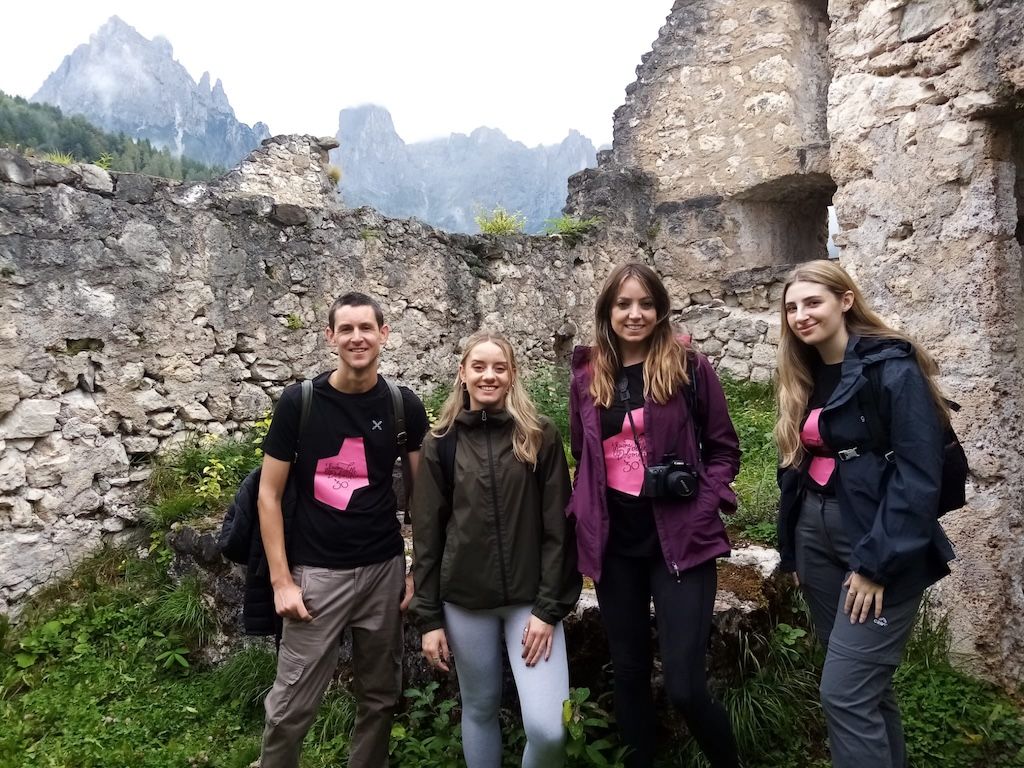
Day two begins in woodland beside the market town of Fiera di Primiero, where history returns to touching distance. Reigning over the town, a crumbling stone fortress balances on a sheer cliff stack. Castel Pietra was first mentioned in 1273, as a place for guarding ancient trade routes from its perch. In 1401, when Venetian rule ended, the castle became the summer and hunting residence for the noble Welsperg clan.

Once a splendid treetop sanctuary of 46 rooms, only ruins remain, open to the elements and only traces of dividing walls protruding from the turf. Out of the windows, you can see the snaking road shrinking towards the town, while missile-like swallows skim the thick stone frames.

Fiera di Primiero @Morag Bootland.jpg

The group hiking down to Fiera di Primiero © Morag Bootland

I’d heard that entering the castle is arranged by appointment only – your local guide must collect the keys personally. Arriving at the base of the cliff, I can see why. The keys are for a vertiginous caged staircase of switchback steps. I thank myself lucky – they used to be a single, rickety ladder.

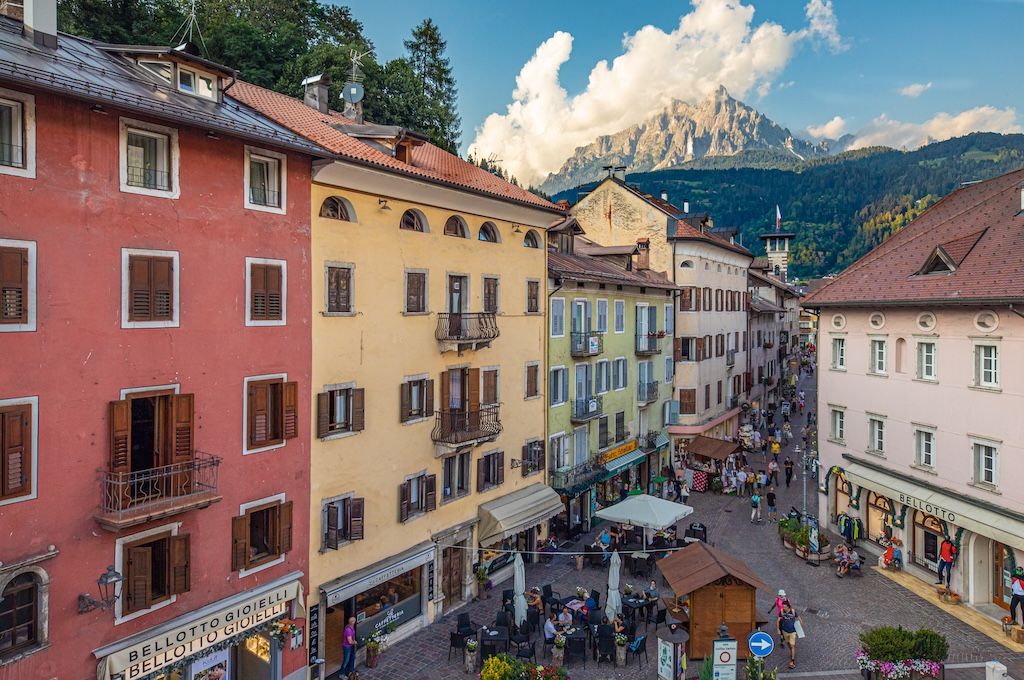
Back in the present day, we take the downhill trail to Fiera di Primiero, which sits at the confluence of the Cismon and Canali torrents. As its name suggests, this town was the main trade centre of the region – and a high-status address for affluent families during the 15th-century mining boom, when local copper, silver, and iron industries brought fabulous wealth to the region.

Today it's a place where locals and transient hikers coalesce, as buses run up to trailheads and the Cereda Pass (1,369m). Sunglasses on and boots still muddy, we settle in for pizza and beer on the riverside terrace of Lanterna Verde, joining small-town life watched over by seven centuries of history.

Fiera di Primiero ph Dolomites Web 8.jpg

The elegant town of Fiera di Primiero was the region's commerical centre in the 15th century @ Visit Trentino

When music meets mountains

There’s another reason why autumn is the ideal time to visit: the annual Sounds of the Dolomites Festival brings top classical musicians to some of Europe’s most extraordinary mountain scenery. The 2026 festival runs from August 24th to October 3rd and is now in its 31st year. 

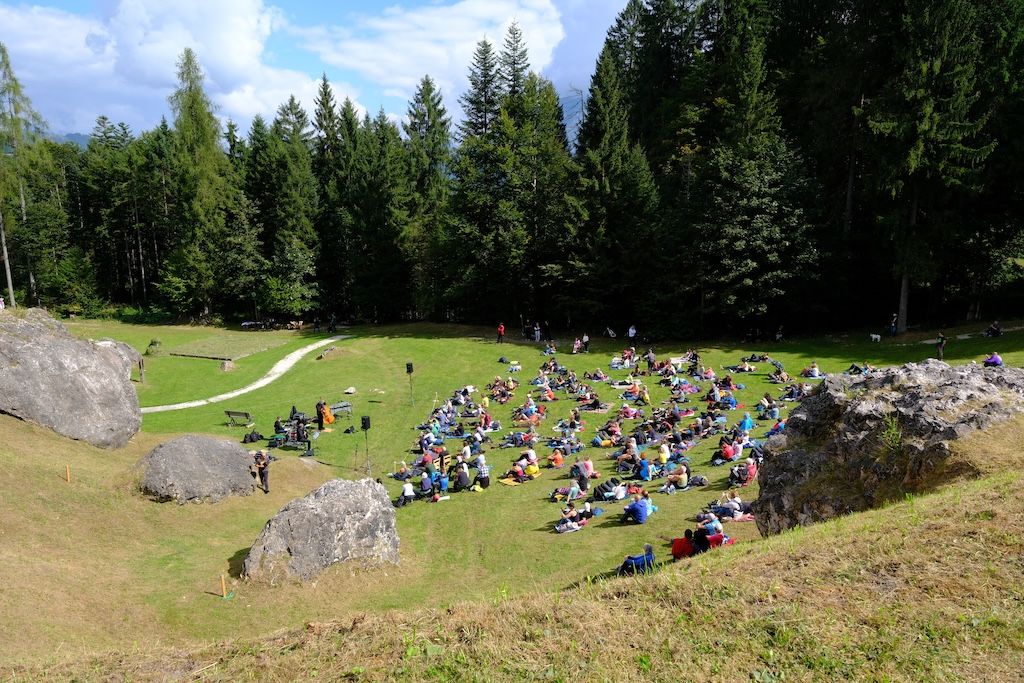
Concert venues range from mountain meadows to alpine refuges accessible only by walking or cycling. Performers hike and ride cable-cars, often hauling instruments, to remarkable natural venues. Audiences walk in too, carrying picnics and blankets. The ideal version of the experience involves sitting on the bouncy alpine grass beneath the Pale di San Martino, while chamber music drifts across the pasture.

©Trentino Marketing_Orlerimages_I Suoni delle Dolomiti_Renaud Garcia Fons Trio_2024_00020.JPG

Concerts at the Sounds of the Dolomites Festival are held in nature when the weather is on-side @ Visit Trentino

During our visit, however, wet weather intervenes – a potential for rain is the payoff for lush mountain regions – and our concert is moved indoors to Fiera di Primiero’s auditorium. A quartet from the Berlin Philharmonic performs selections from The Magic Flute, accompanied by an Italian opera singer. The power and emotion in the singer's voice more than compensate for the absence of outdoor scenery, transporting the audience beyond the four walls. 

Brewery between the peaks

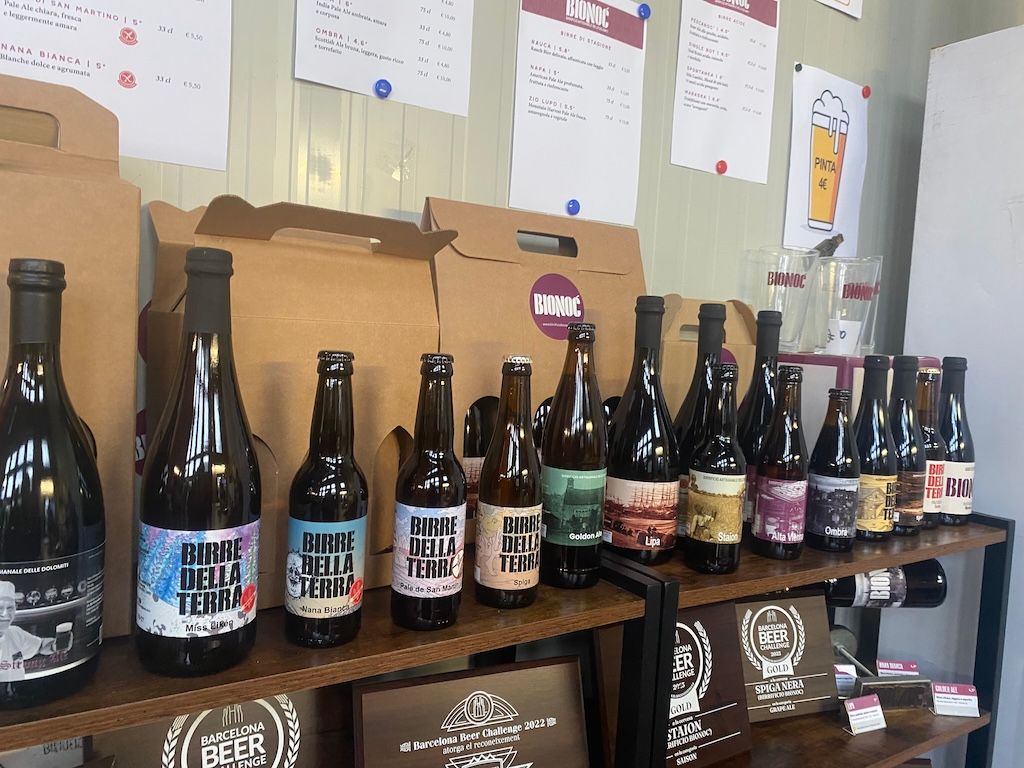
On our way back to the chalet, there’s time to experience a younger side of Trentino – at a warehouse a couple of miles down the river. Marked by a mound of barrels outside, the young brewery of BioNoc has swept a clutch of awards for its experimental beer in just a few years. Our hostess and her partner moved to the mountains via Rome and Berlin, bringing metropolitan instincts to this heritage-rooted region.

BioNoc Brewery.jpg

Offerings from BioNoc Brewery, known for their experimental beers using ingredients from the surrounding landscape © Siobhan Warwicker

 “We try to give value to the area,” she explains. Fibre-film packaging, carbon offsetting and collaborations with neighbouring producers helped earn them a sustainability certificate in 2023.

Mountain water forms the basis of every brew. One sour beer incorporates raspberries from the agriturismo of our previous day’s itinerary. Another, Miss Lichen – not for the faint-hearted at eight per cent alcohol – is infused with lichen gathered from the surrounding forest. “When you drink it, you feel the undergrowth from the woods."

Day three: A village frozen in time

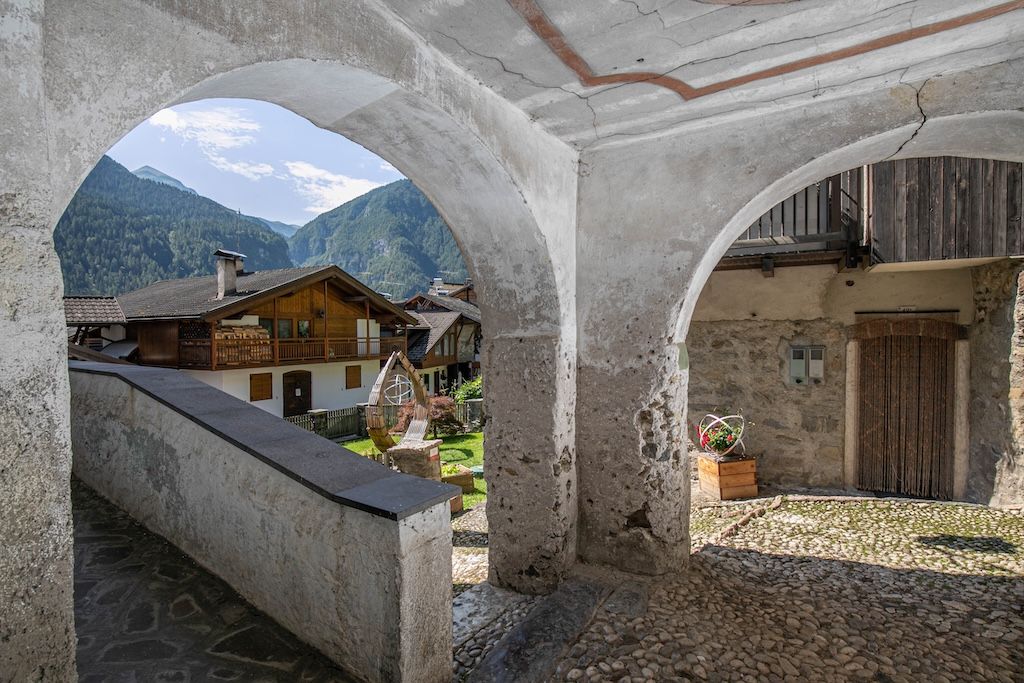
After a send-off from the family running Chalet Piereni, there’s time to explore the village of Mezzano, around two miles south of Fiera di Primiero. Officially designated as one of Italy’s “Most Beautiful Villages” (Borghi più belli d’Italia), it sits at the foot of the Pale di San Martino, its 36m bell tower rising above stone and timber houses where marigolds spring from gardens.

People from the valley say the village is stuck thirty years in the past, and it’s easy to see why. There are bundles of drying maize hanging from balconies, chickens wandering between lanes and relics of once-bucolic lives: community washhouses, open-air water channels and stables built into homes.

However, this thriving neighbourhood is far more than a time-warp. It is renowned among art and music-lovers; creativity seeps from the cracks. Contemporary art installations made from stacked wood, known as cataste & canzei, appear in unexpected in places. Vivid frescoes, including a Marc Chagall-inspired flying scene, bring colour to the streets. Each summer, musicians from the Music Academy International in New York, along with performers from around the world, gather in the village for the “Mezzano Romantica” concert festival.

Mezzano ph Dolomtes Web 3.jpg

Mezzano is officially one of Italy’s “Most Beautiful Villages” © Visit Trentino

At Bar Stella, we order one final aperitivo and a pizza, settling in among local workers who, naturally, make time for a proper communal lunch. I arrived expecting the Dolomites’ inspiring pinnacles to overshadow everything else. Instead, what lingers is the rhythm of life beneath them: alpine windchimes, long lunches in remote places, a devotion to wild mushrooms and Mozart drifting through rural towns.

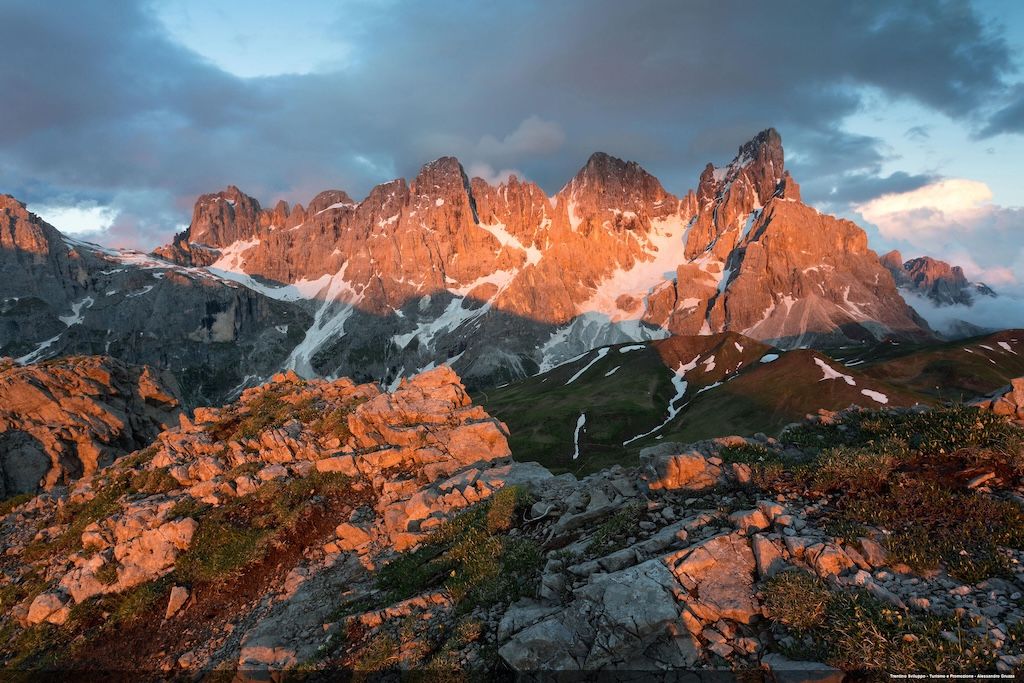
Each evening, for a few fleeting moments, the pale limestone blushes pink in the sun's alpenglow – enrosadira, as it’s known locally – before darkness ushers it from view once more. In Trentino, people seem to accept the surrounding grandeur with ease, turning their attention instead to the simple, essential ritual of preparing the next meal.

FACT BOX

The Sounds of the Dolomites Festival runs from August 24th to October 3rd in 2026 (https://isuonidelledolomiti.it/en)

Chalet Piereni offers double and twin rooms from €46 per person, per night (https://chaletpiereni.it)

Find out more about the Trentino region at https://visittrentino.info/en

Siobhan Warwicker

written by
Siobhan Warwicker

updated 04.06.2026

Rough Guides connects you with vetted Italy travel agents who create personalized trip plans from scratch based on your travel style, pace, interests, and budget. Instead of choosing from fixed packages, you can receive up to 3 different itinerary proposals, compare approaches from different local agents, and refine the preferred trip together until it fits the way you want to travel.