written by
Dre Roelandt
updated 13.02.2026


- Activity
- Authentic Experiences
- History Culture Heritage
- Culture
- Japan
- Partner
- See & Do
- Travel Tips
- Local Guides
- Inspiration
There’s a lot of weight placed on Kyoto and Nara as the keepers of tradition, but if you want to understand where Japan really began, you’ll need to get yourself to a tiny village an hour away from Osaka.
Set among rice fields and low hills, Asuka feels almost impossibly peaceful. Just 5,000 people live here, alongside imperial tombs, centuries-old stone monuments, and archaeological sites that quietly chart the birth of Japan as a nation.
This was the seat of Japan’s earliest emperors, the place where Buddhism first took root, and where diplomatic ties with China were forged. It’s a lot of history for one small village, but that’s part of what makes it so compelling.
And there’s something peculiar about the Asuka of today that gives it an almost magnetic pull. It tends to attract an interesting mix of people (artists, farmers, chefs), and despite its long and visible history, this is not a place frozen in time.
Kyoto’s beautiful. But between the crowds at Fushimi Inari and the queues for that one matcha parfait, it’s easy to feel like you’re on someone else’s itinerary.
Asuka is home to 21 nationally designated historic sites, with 15 more under consideration for UNESCO World Heritage status. Strict preservation laws keep the landscape low and traditional: no tall buildings, no underground development.
But it’s not just about what you see. It’s about how you experience it. Tourism here is intentionally small-scale and community-focused. You’ll find local food, workshops, and people who are genuinely connected to the place.
That approach hasn’t gone unnoticed. In 2025, Asuka was named one of the UN’s Best Tourism Villages, recognized for its commitment to preserving rural culture while developing tourism that genuinely benefits the local community.
It’s not remote or old-fashioned, but it feels (pleasantly) removed from the usual circuit.
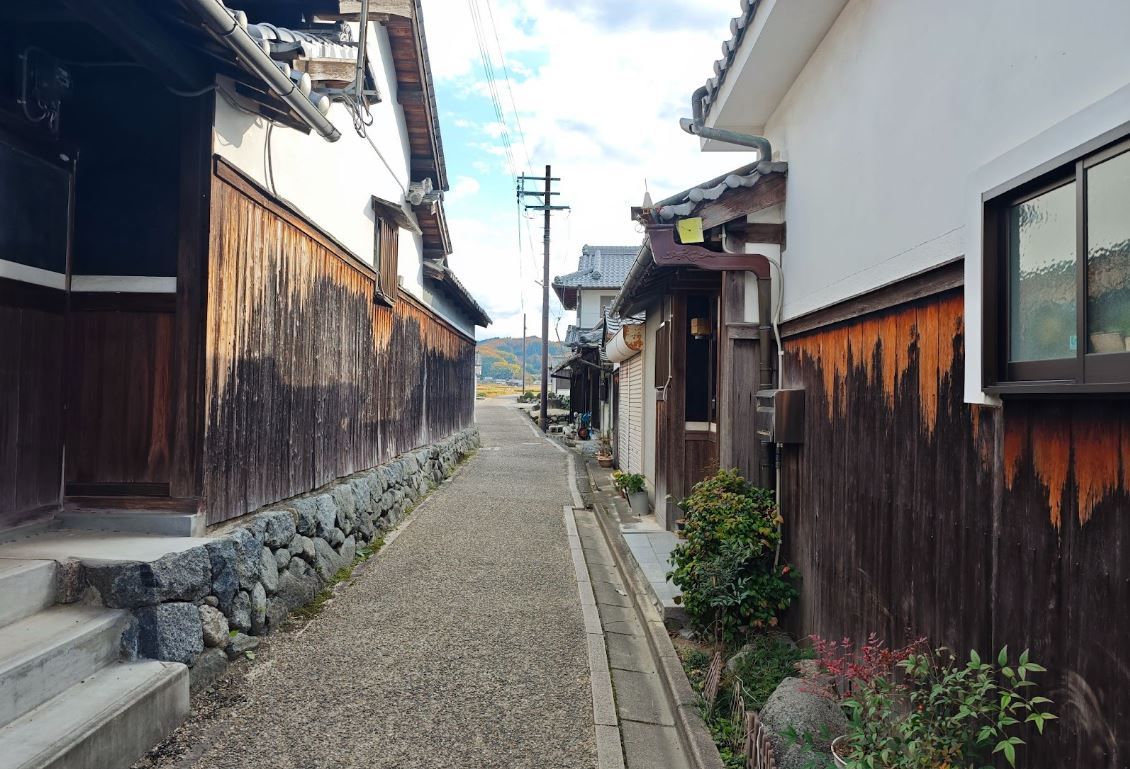
Side street in Asuka © Dre Roelandt
You might not expect a small village in rural Nara to hold the keys to Japan’s earliest history, but Asuka isn’t just anywhere.
While more than 160,000 ancient burial mounds (kofun) are scattered across the country, Asuka has one of the highest concentrations of significant imperial tombs.
This was once the seat of power: Japan’s first permanent capital during the Asuka Period (592–710 CE), when the court stopped relocating with each new emperor and the idea of a centralized state began to take shape.
That shift left its mark. The landscape is riddled with imperial tombs, from small mounds tucked behind fields to monumental chambers carved from stone. Many lie unlabelled, barely signposted: centuries of history lying quietly in the open.
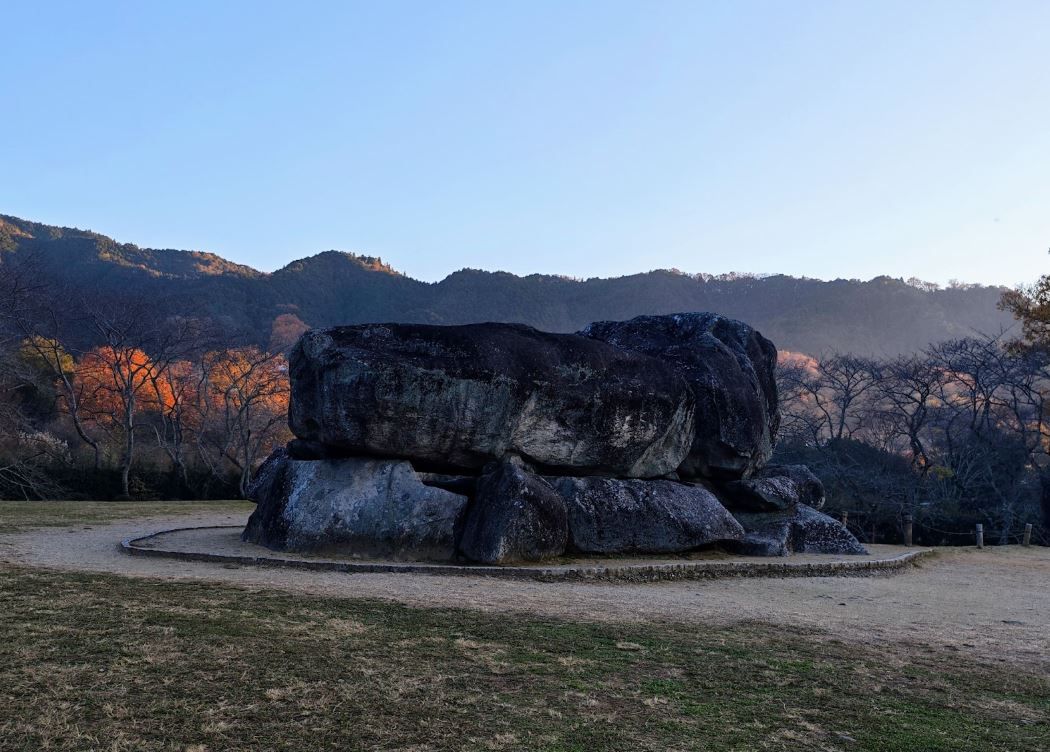
Ishibutai from outside © Dre Roelandt
If you see just one, make it Ishibutai. It’s Asuka’s best-known burial chamber.
The earth that once covered it has long since eroded away, leaving the stone structure fully exposed. It’s thought to be the tomb of Soga no Umako, a 7th-century statesman, though no one knows for sure. What’s certain is the scale: over 30 megaliths make up the chamber, including a 77-ton capstone balanced above your head.
You can walk right inside. The feeling of being under what amounts to 2,300 tons of stone is somewhat uncanny. The fact that this was built over 1,400 years ago, without any kind of machinery, is equally staggering.
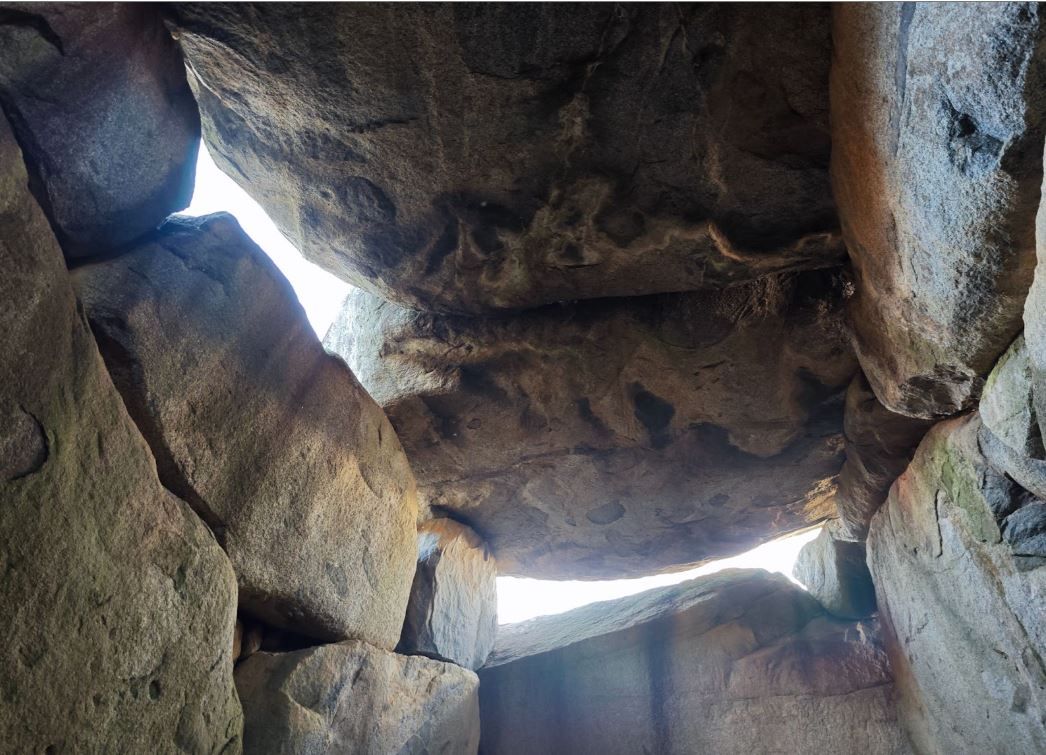
The interior of the burial chamber in Asuka © Dre Roelandt
Kengoshizuka only opened to the public in 2022, but it’s one of the most intriguing tombs in Asuka and one of the most significant. This octagonal tomb dates back to the 7th century and is believed to be the final resting place of Empress Saimei and her daughter, Princess Hashihito. You’ll know it’s high-status by the shape alone: in ancient Japan, octagons were strictly reserved for royalty.
The exterior you see today is a full-scale reconstruction, but it’s not guesswork—archaeologists based the rebuild on the original mound’s exact footprint and materials.
The burial chamber itself is the real thing: a single 80-ton boulder, brought 15 kilometers from Mount Nijō and hollowed out to hold the remains. You can step inside, where a short film plays: a stylized retelling of the lives of the women believed to be buried here, complete with period costumes. A modern tribute to the past.
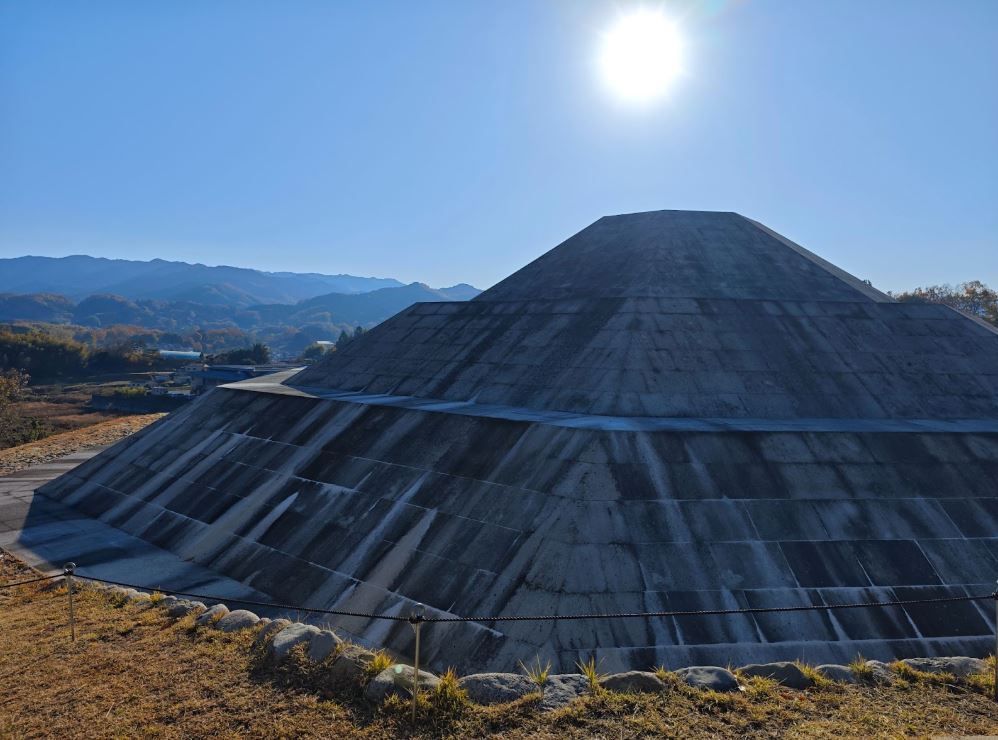
Kengoshizuka in Asuka © Dre Roelandt
There is an odd prevailing feeling in Asuka, and that is of having questions that still haven’t been answered. There is a deep sense of mystery that can be felt here by visitors, archaeologists, and historians alike.
A few stones in a field might not look like much. But at the Asuka Water Clock Site, you're standing where Japan’s first timepiece once kept the capital in sync. Installed in 660 CE, this wasn’t just a clever invention. It was a symbol of imperial power, proof that the court could literally control time
The original two-story pavilion had copper pipes, a tiered water management system, and underground stones to keep the wooden pillars steady. A bell on the top floor rang out across the capital, announcing the hour to everyone in earshot. If you’re wondering where Japan’s obsession with punctuality started, here’s your answer.
Perhaps no artifacts better embody Asuka’s essential mystery than its collection of inexplicable stone monuments. The Monkey Face Stones are four carved figures with distinctly human expressions that now stand at the Kibihime Imperial Tomb.
Each one feels like a character: Sou the Monk, Dansei the Man, Josei the Woman, and Sannou Gongen, a mountain spirit. No one knows who carved them or why. Were they boundary markers? Religious symbols? Early art with a sense of humor? Your guess is as good as the archaeologists’.
What’s clear is that someone 1,400 years ago thought these faces were worth preserving in stone, and they’re still here, staring back.
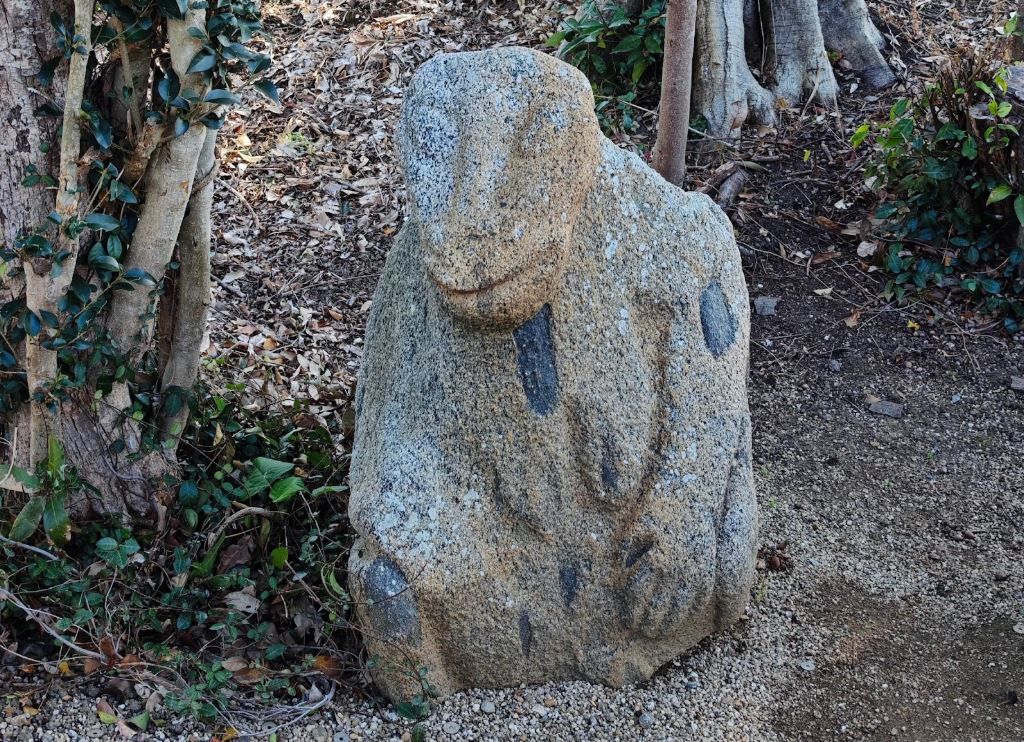
This rock says hello! Asuka, Japan © Dre Roelandt
Hidden in a quiet field past a bamboo grove, the Ne-ishi site holds one of Asuka’s most beautiful enigmas: a turtle-shaped stone fountain, part of a three-level water system built during Empress Saimei’s reign. This isn't merely decorative stonework but a masterpiece of ancient hydraulic engineering. Spring water flowed into a boat-shaped reservoir before reaching the turtle, which once stood inside a royal garden.
The stone itself is massive (over two meters long), and its carved smile is somewhat contagious. Its true purpose is still unknown. What’s certain is that someone went to great effort to make this, and it’s still here, 1,400 years later.
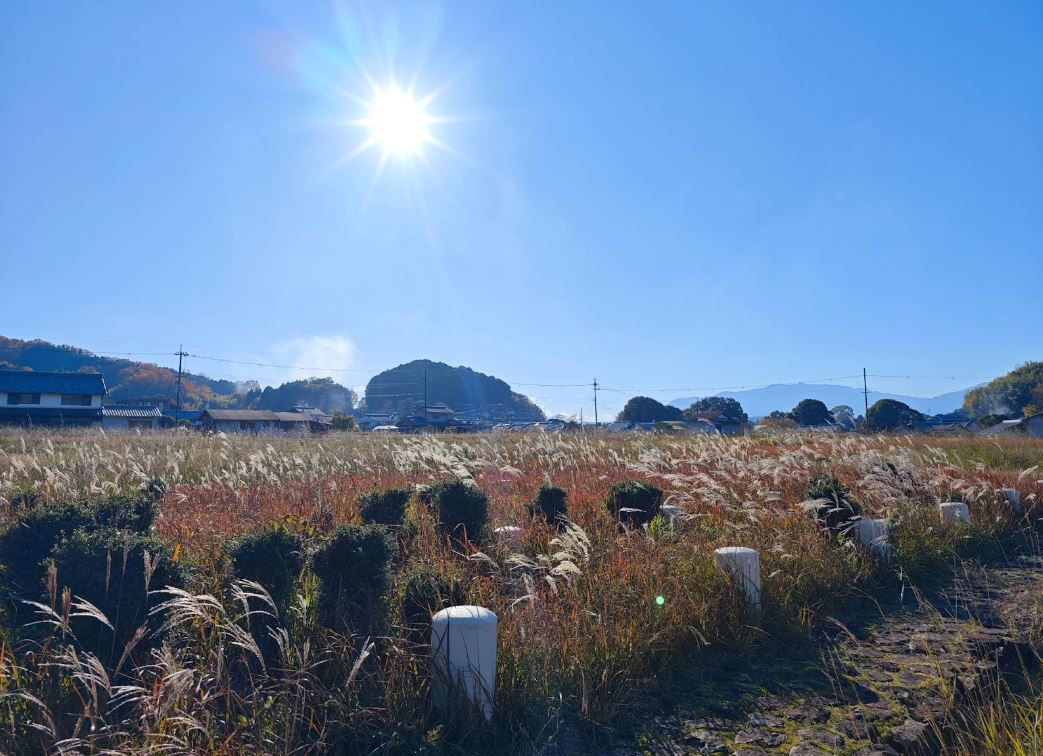
A sunny day in Asuka, Japan © Dre Roelandt
Asuka might be 1,400 years old, but it’s not just the past that keeps people coming back. Today, the village has a quiet pull of its own. A wave of artists, chefs, and makers have found something here worth staying for. Some locals even have a name for it: “the magnet.”
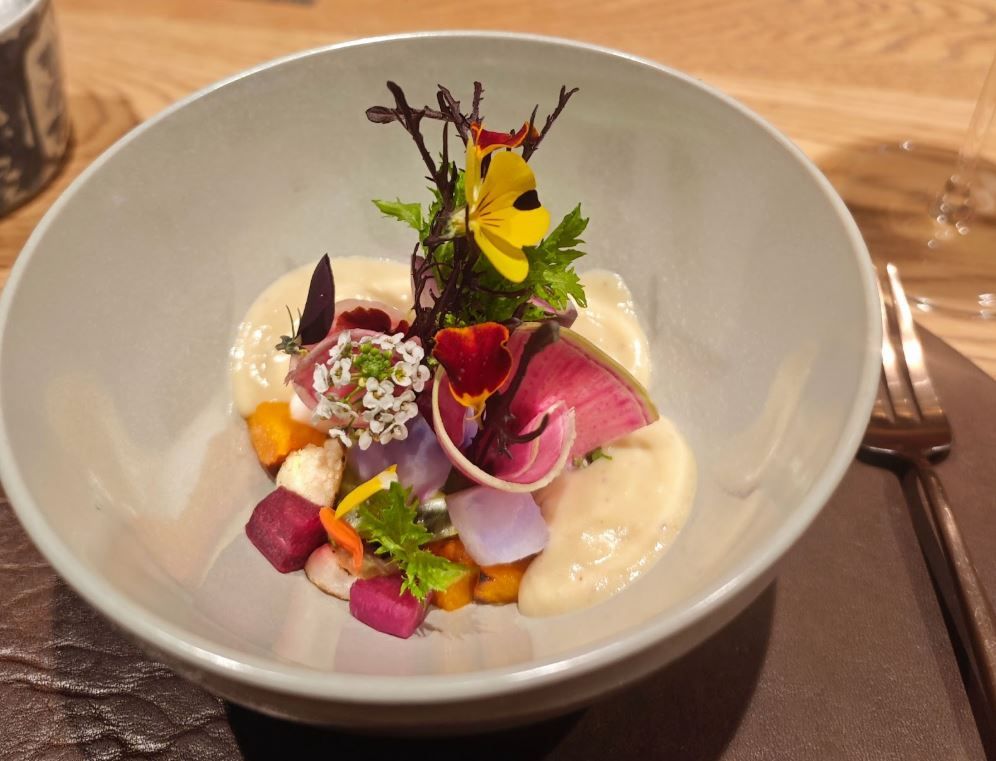
One of eleven fantastic courses at Da Terra in Asuka, Japan © Dre Roelandt
You might not expect a world-class tasting menu in a village of 5,000; however, Chef Hirokazu Nakai and his family are doing just that. In the quiet fields of Asuka, Da Terra lives up to its name, which means “from the earth.”
Opened in 2020, the restaurant earned a Michelin star within just a few years after it opened. It’s a true labor of love and family project: while Nakai leads in the kitchen, his parents help grow more than 100 varieties of vegetables on their nearby farm. Every dish begins with what they harvest.
The result is an 11-course tasting menu served to just one table at a time. Each course is both a meal and an experiment, exploring how flavor changes with different varieties, growing methods, and the timing of each harvest.
You’ll want to book well in advance. Lunch starts at noon; dinner is served from early evening.
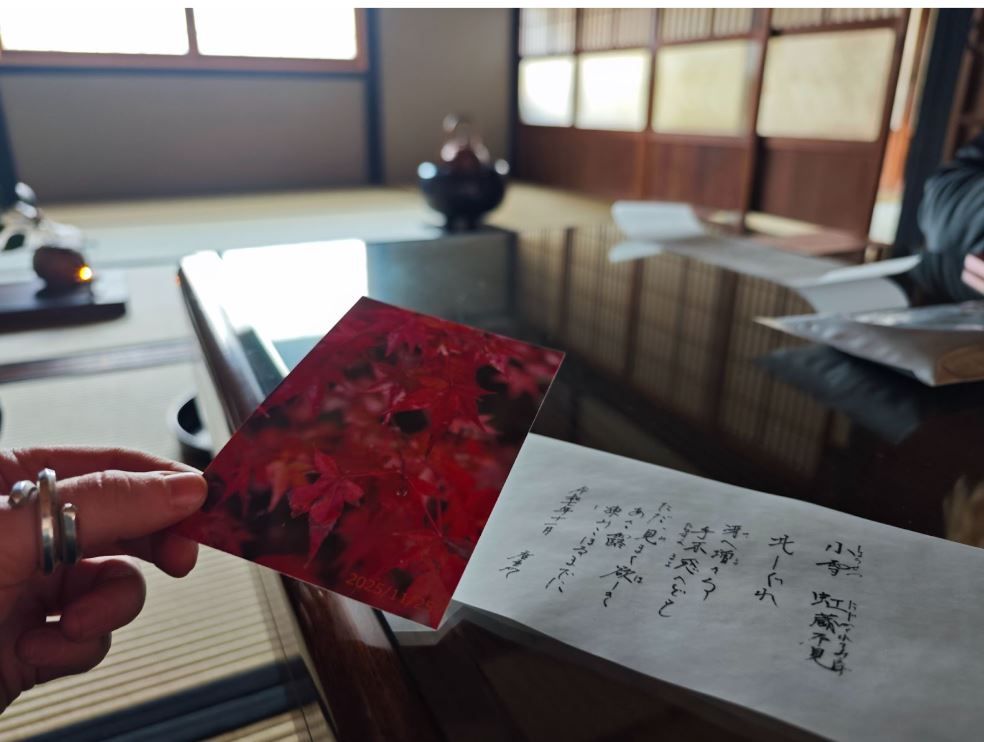
Tobutorino Coffee Roastery, Japan © Dre Roelandt
At Tobutorino Coffee Roastery & Café Kahitsuan, Master Nakajima has created something entirely his own: a contemplative coffee experience inspired by Japan’s 24 seasonal periods (nijūshi sekki).
Served in a minimalist teahouse-style space, the 90-minute experience feels closer to a traditional tea ceremony than your average pour-over. Each roast is aligned with a specific point in the seasonal calendar, and every cup is accompanied by a photograph and a handwritten waka poem, both created by Nakajima on the day of roasting. A delicate, handmade sweet is served alongside.
There’s a quiet pageantry to it all, guided by Zen principles and a deep sensitivity to time and place. It’s thoughtful, exacting, and deeply personal.
To book, contact the Tobutorino website directly.
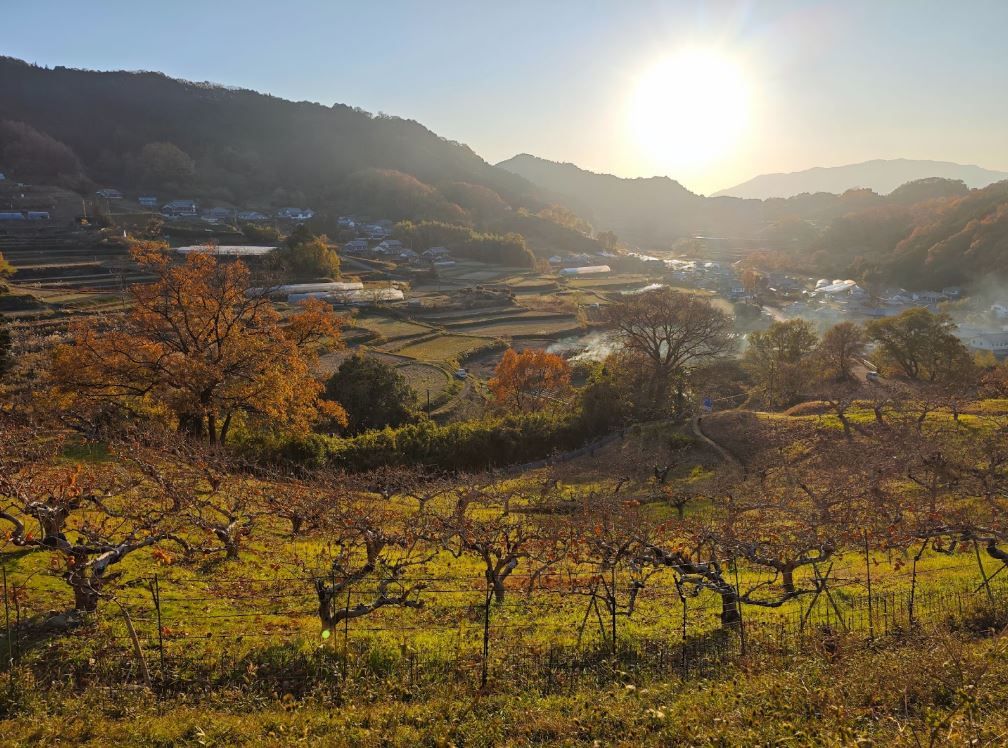
Persimmons trees with rice fields in the distance, Asuka, Japan© Dre Roelandt
On the edge of Asuka Village, the Inabuchi rice terraces curve along the hillsides in neat, layered rows. They're among the most scenic in Japan, but they aren’t just beautiful. They’re also part of a hands-on education system that’s been running since 1992. Through Japan’s Tanada Ownership Program, urban residents can lease a rice paddy here for the season and learn exactly how to grow rice, from planting to harvest.
It’s a full collaboration. Local landowners lease out their fields. City “owners” pay to cultivate them. Supporter groups made up of local farmers and community members provide tools, teach traditional techniques, and help with labor-intensive tasks. Volunteers also assist with maintaining the terraces and surrounding landscape.
For a small village like Asuka, where the number of working farmers is shrinking, it’s a practical way to keep the land productive and the knowledge moving forward. Over 300 paddies are still in use, and the Inabuchi terraces have been recognized as one of Japan’s 100 most scenic rice field landscapes.
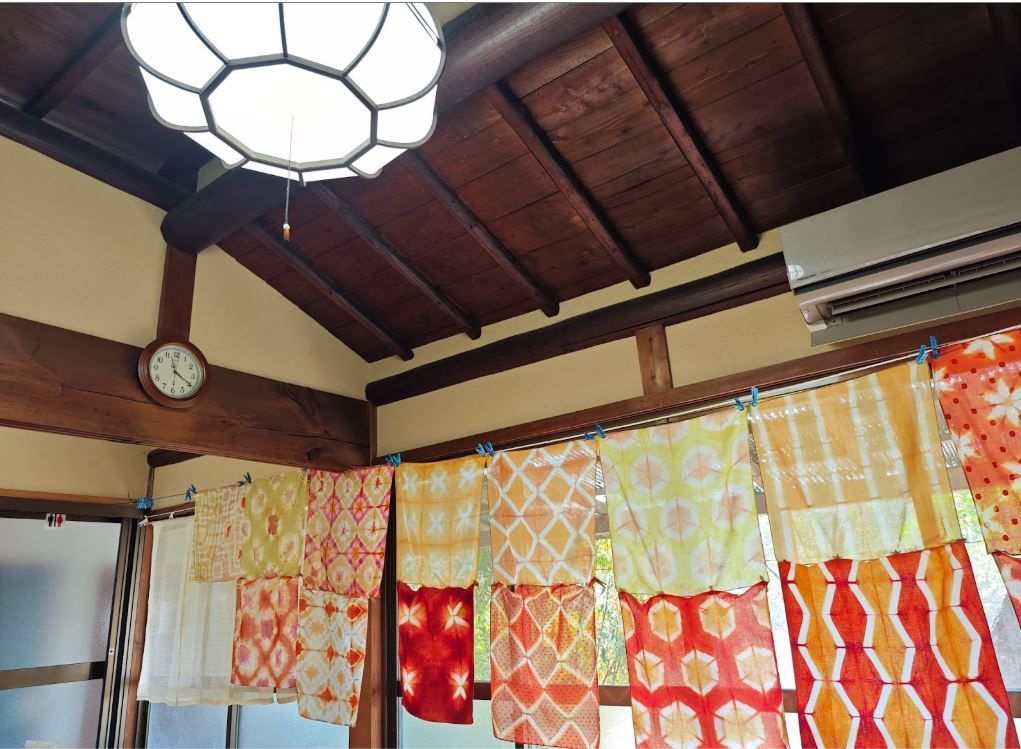
Michiko Mizutani natural dying studio, Asuka, Japan © Dre Roelandt
In the hills of Asuka, where emperors once commissioned robes dyed in celestial shades, Michiko Mizutani is helping keep the tradition of kusaki-zome (plant dyeing) alive. Her path into the craft started unexpectedly. After noticing her clothes had picked up color from the wild leaves when she conserved an area close to the water source of the local river, she began researching historical dyeing practices and experimenting on her own.
Today, she teaches workshops using local plants and centuries-old methods. Participants learn how to extract pigment from leaves, roots, and bark, and how the seasons affect the final color. Many natural dyes fade or change color over time, a beautiful counter to the synthetic hues and instant results of modern life.
It takes effort to keep things going, and you’ll find that in Asuka, people are still doing that work.
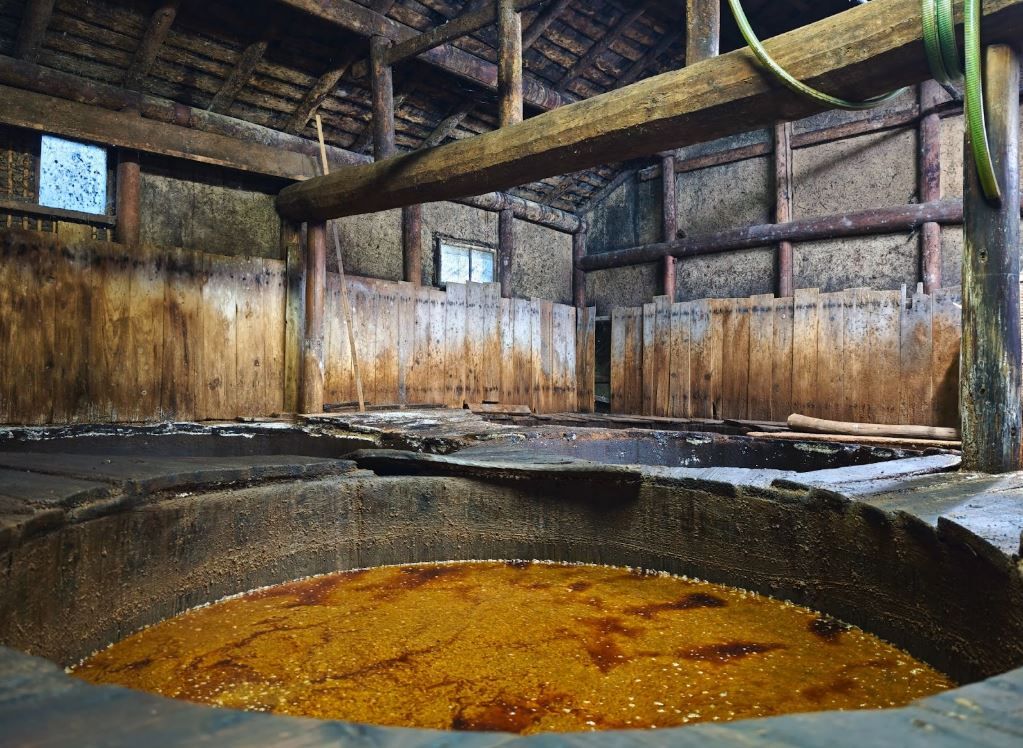
Traditional soy sauce being made in cedar vats, Asuka, Japan © Dre Roelandt
Established in 1918 during the Taisho period, Tokuboshi has weathered over a century of change while maintaining unwavering commitment to traditional methods. Now in its third generation, the brewery operates much as it did when it first began fermenting soybeans in the shadow of ancient imperial tombs.
The real defining feature is Tokuboshi’s century-old cedar vats. Over decades of use, the wood has absorbed bacteria and yeasts that drive fermentation, creating conditions that can’t be reproduced in modern stainless steel tanks.
These seasoned vats impart subtle flavors and aromatic complexity that develop only through generations of use.
Tokuboshi welcomes visitors for tours, tastings, and hands-on experiences. You can see the vats up close, learn the fundamentals of shoyu fermentation, and taste the finished soy sauce in the simplest (and best) way possible: on locally made tofu.
The Namode-odori is one of the oldest recorded rain rituals in Japan, first performed in 642 CE by Empress Kogyoku during a severe drought. After Buddhist prayers led by Soga no Emishi failed to bring relief, the empress is said to have knelt by the Asuka River and prayed. Rain followed within hours, lasting five days.
The ritual survived in fragments: the name, a few details recorded on wooden votive plaques, and the memories of older residents who recalled seeing it decades ago. It had not been widely performed in recent generations until recently. Today, the dance survives as a community tradition.
Local efforts to revive the dance have led to it being reintroduced in schools. Today, children are once again learning its steps, alongside older residents who still take part in performing it. Visitors are welcome to watch and, in some cases, to take part.
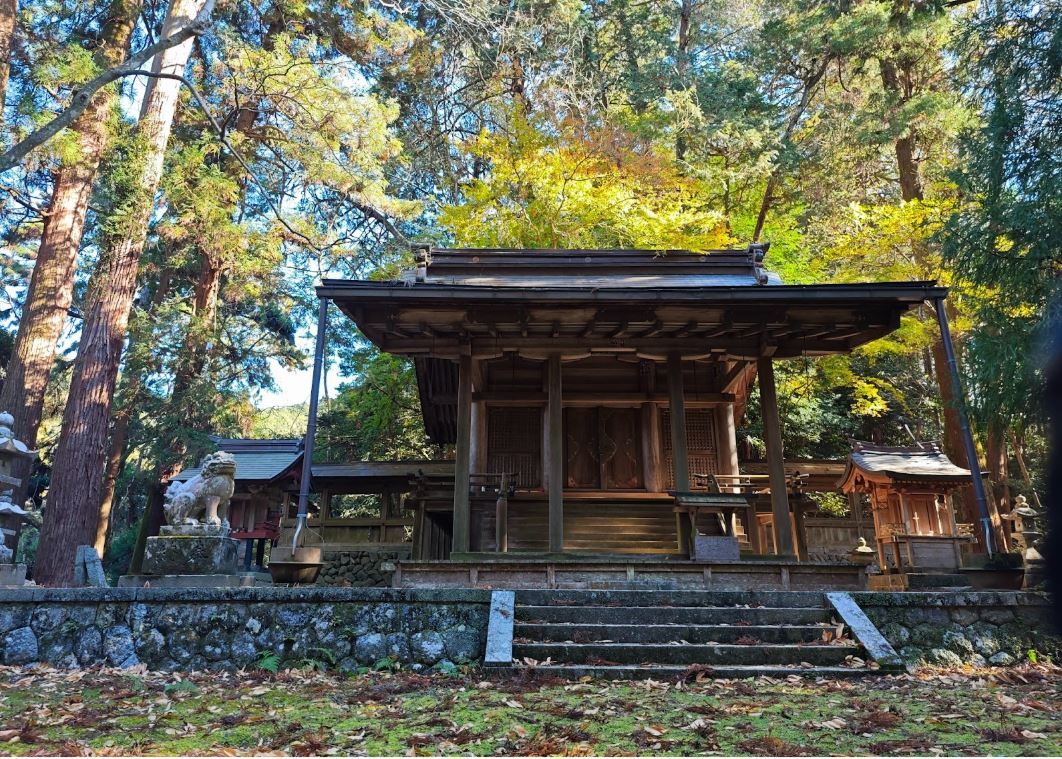
Where the Namode-odori had been dedicated, Asuka Kawakamini Imasu Usutaki Himenomikoto, Japan © Dre Roelandt
Held every February at Asuka Niimasu Shrine, the Onda Matsuri isn’t your average rice-planting ritual. This is one of Japan’s oldest fertility festivals — and yes, it gets a little cheeky.
The ceremony starts with a masked Tengu and a cow performing a stylized plowing and planting scene on stage. Then Okame joins in, and things escalate into a humorous (and very symbolic) act of mimed intercourse, all in the name of encouraging a good harvest and healthy births.
It’s loud, lively, and full of playful rituals. Worshippers get tapped on the bum with bamboo sticks for good luck, and the whole thing is wildly entertaining. These days, it draws visitors from all over, but the spirit remains deeply local.
Though many travel to Asuka for a day trip, these newer accommodations make staying for a bit longer seem like a very inviting idea.
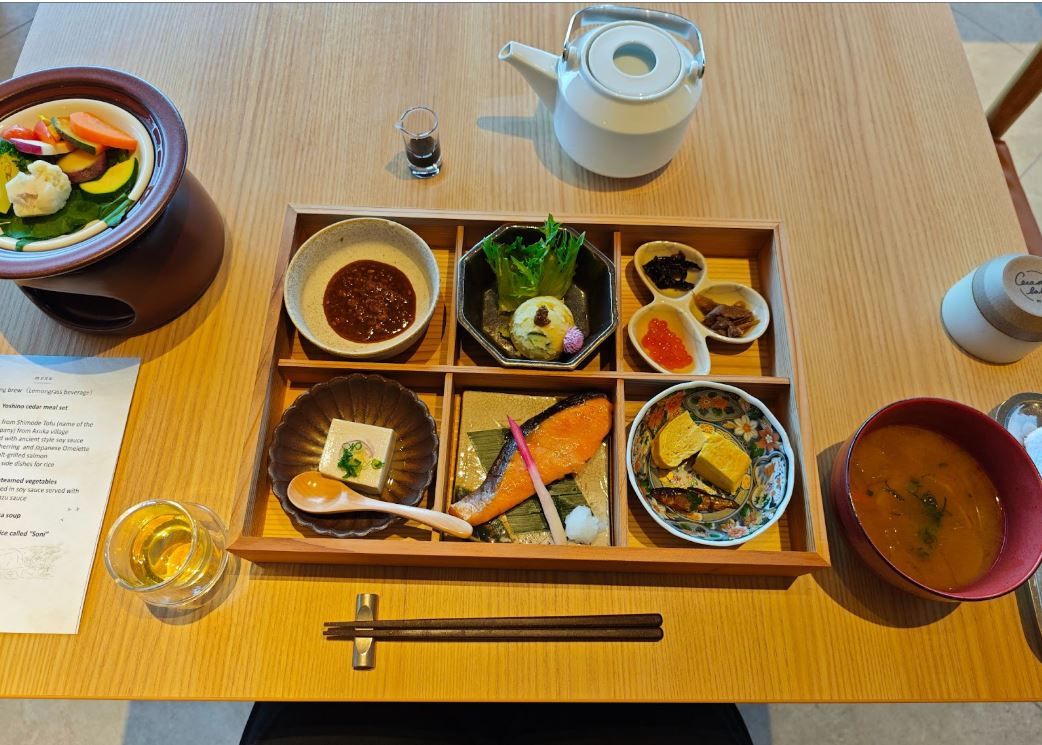
Breakfast at the Branchera Ishibutai Terrace Hotel, Asuka, Japan © Dre Roelandt
Just a short walk from the Ishibutai Tumulus, Branchera Ishibutai Terrace is a low-slung modern resort that sits comfortably in the landscape.
Each of its five rooms is pleasant and luxurious: bright, open spaces with double-height ceilings and generous terraces overlooking the surrounding rice fields. The design is minimalist but warm, from the long views to the careful attention to detail.
The restaurant on the ground floor focuses on Nara's seasonal ingredients and local culinary culture, featuring an experiential dinner where guests can compare different local meats. The restaurant successfully balances its role as both a hotel amenity and a community gathering place.
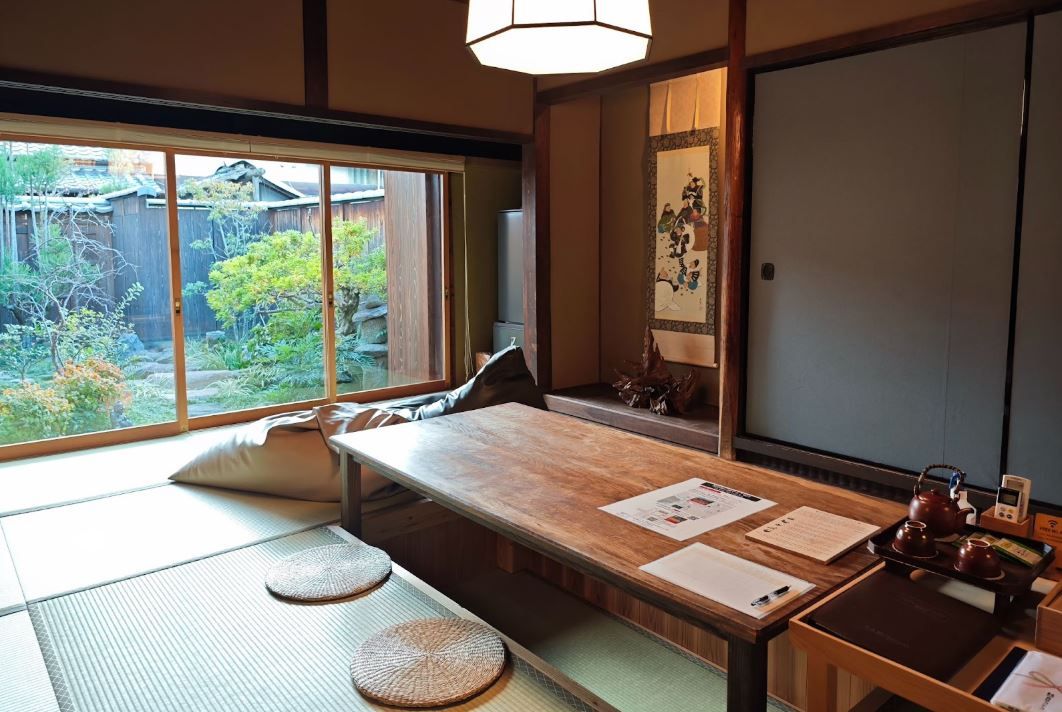
Branchera Villa Asuka gives you the opportunity to sleep in a registered national tangible cultural property. This 150-year-old traditional farmhouse (or kominka) was newly renovated in 2022 into accommodation while preserving many of the original materials and details.
Each guestroom features a private garden courtyard and shigaraki-ware bathtub. You’ll also find that collections of rare out-of-print historical books and photography/art books line the shelves.
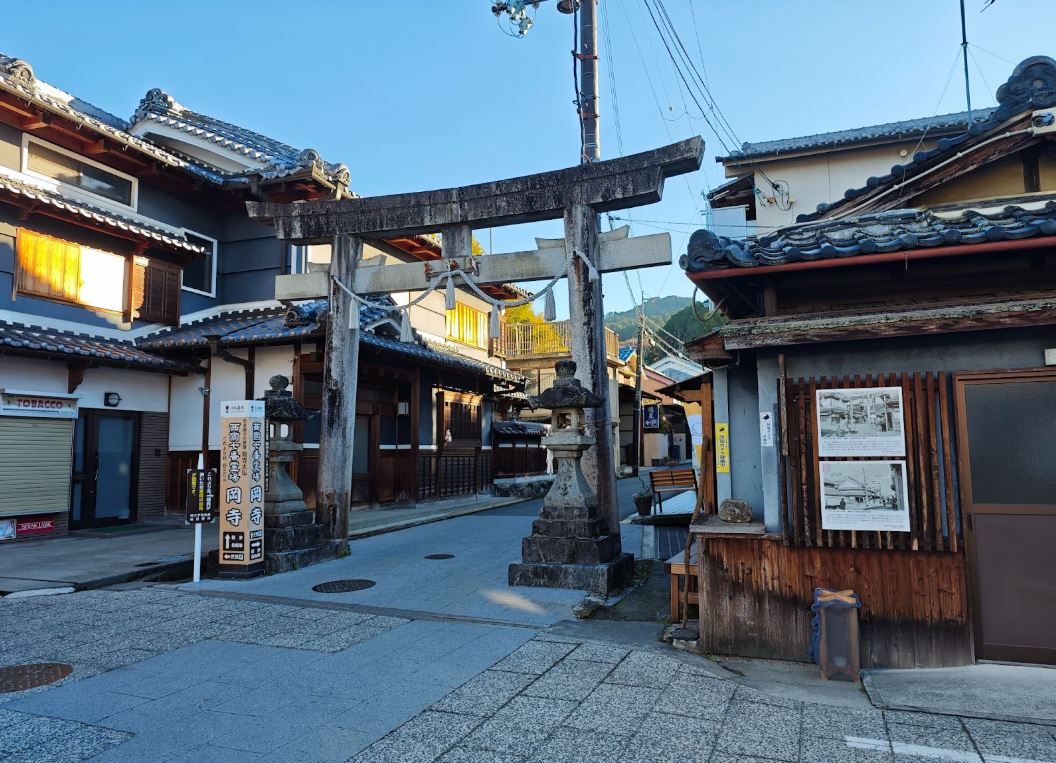
Asuka, Japan © Dre Roelandt
Asuka is located south of Nara City and southeast of Osaka. The village is compact enough that many will find the area to be completely walkable. Getting here is very easy by train:
With quiet, level roads and gentle hills and slopes, cycling is a fantastic way to spend time in Asuka. The village has many well-developed bicycle paths leading to major sites and through scenic areas.
Where to rent bikes in Asuka:
The Asuka Tour Bus (nicknamed "Aka Kame") travels in a continuous circuit from Kashihara-Jingu-mae Station to Asuka Station, passing the village's major sightseeing destinations. It generally comes once an hour. Perfect for travelers who prefer not to cycle or walk, with fixed routes stopping at major sights. The drivers are noted for wonderful driving skills.
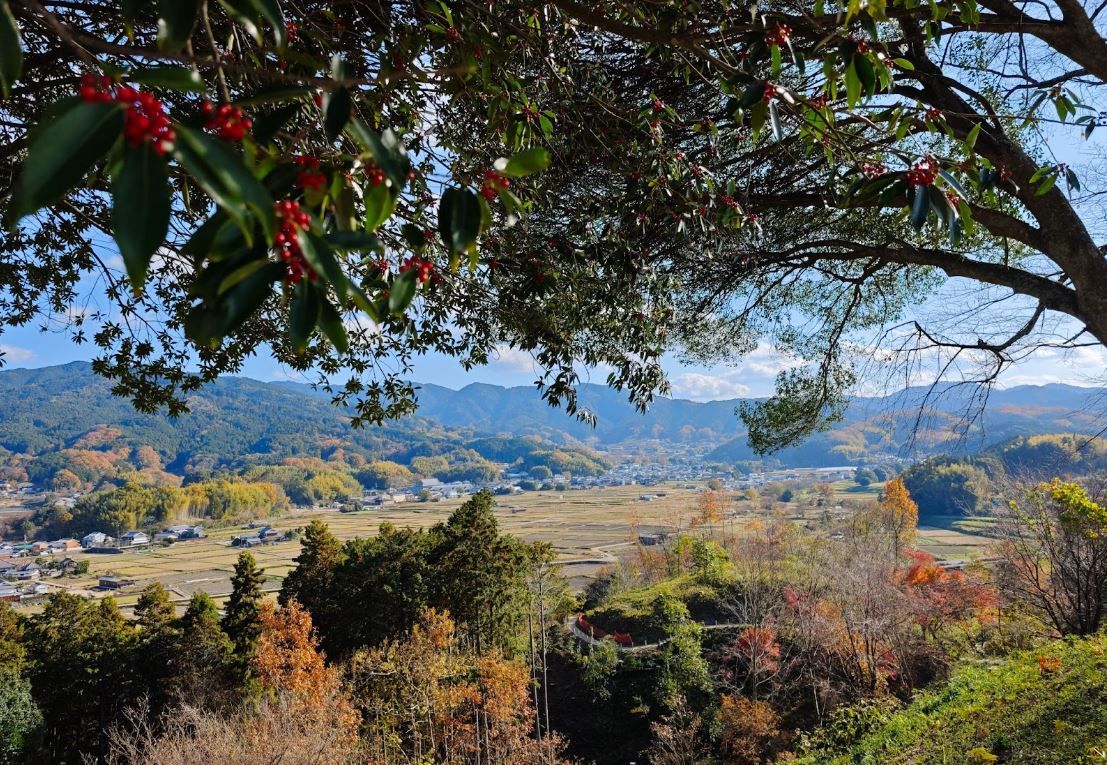
The view from Amagashi Hill, Japan © Dre Roelandt
Many will say that spring is the best time to visit Asuka in order to catch the cherry blossom season. Autumn is also a fantastic time to catch the fall foliage and golden rice terraces.
The Onda Matsuri festival happens every February. There is also a fantastic scarecrow contest that happens every year from September to October. Winter is beautiful but will be cold for many.
You can definitely do Asuka as a day trip and have a great time. That said, 2-3 days will definitely make for a nicer and slower pace, which feels right in a place like Asuka.
You’ll definitely want to book Da Terra months ahead if you're serious about the Michelin experience. For the coffee ceremony, email well in advance—philosophical coffee experiences aren't walk-in affairs.
Most tourists leave Japan thinking they understand the culture after visiting a few temples and eating great sushi. Asuka is where you can experience something a bit different and what feels a bit realer. It’s an interesting place to see how a civilization's values can survive and adapt for 1,400 years without losing their essence.
Here, ancient imperial tombs coexist with Michelin-starred innovation, century-old soy sauce breweries host modern workshops, and farmers create modern solutions while maintaining agricultural traditions that fed emperors. It's not preservation for its own sake; it's living culture that knows how to evolve without forgetting its roots.
This article was created in collaboration with the Asuka Tourism Association. For more information, reservations, or general inquiries about Asuka, please visit the official Asuka website.
written by
Dre Roelandt
updated 13.02.2026