Plan and book with vetted local experts
Trekking through the awe-inspiring Andes to the world-famous Inca citadel of Machu Picchu is the main draw for most who travel to Peru. But this takes in only a fraction of the country’s treasures. Peru is home to a staggering array of landscapes – puzzling geoglyphs in the arid plains of Nazca, two of the world’s deepest canyons outside the colonial town of Arequipa, the lush Amazon jungle in the east and excellent surf in the northwest.
Andean culture is thriving in Peru. Tucked-away highland towns explode into colour on market day, and vibrant local fiestas are celebrated with unbridled enthusiasm. In recent years, the country is widely hailed as one of the world’s culinary hotspots. There’s a particular buzz of excitement over Lima’s laidback, vibrant dining scene, ranging from backstreet cevicherías to gourmet restaurants. And in the big cities, you can expect lively nightlife too.

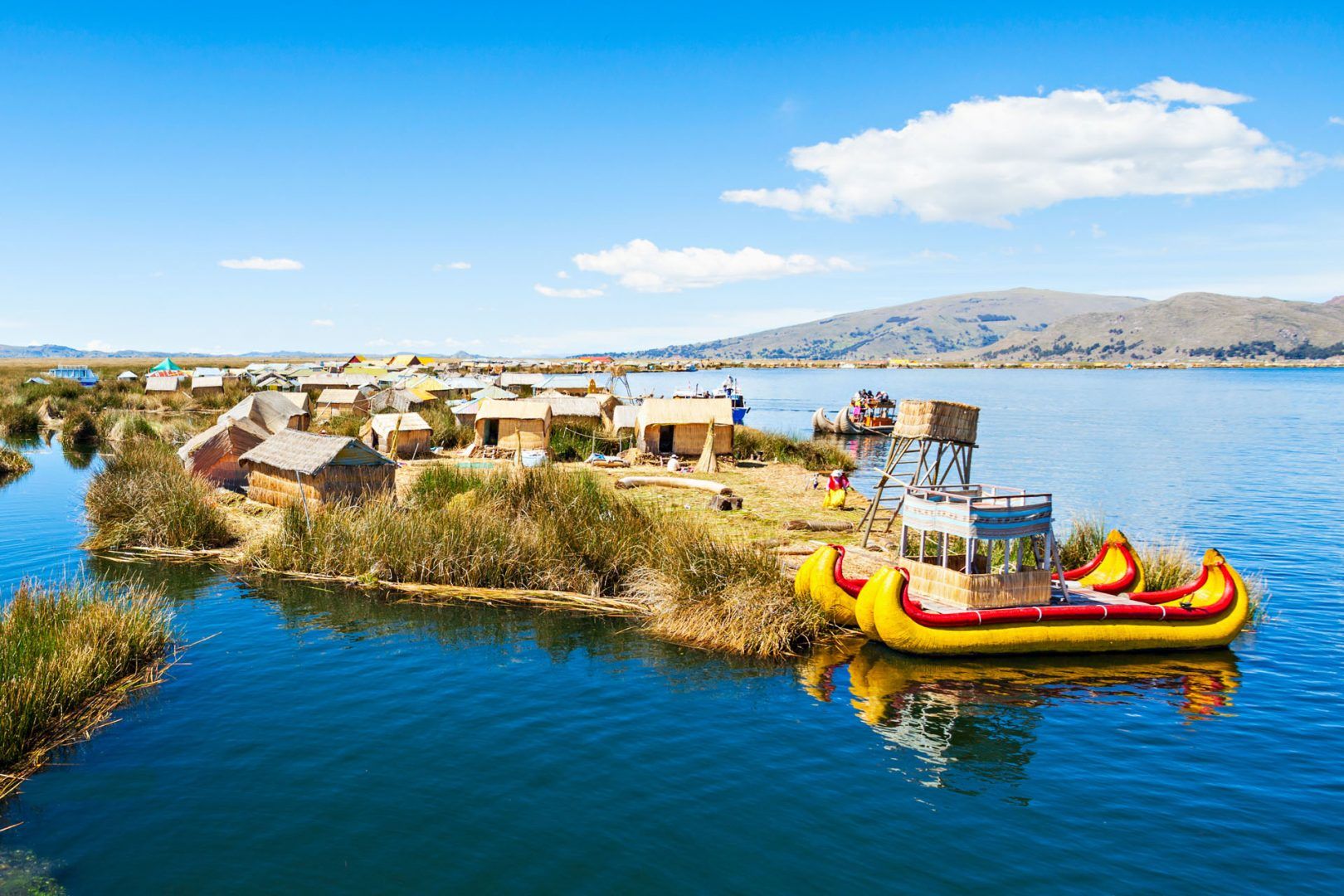
Lake Titicaca is a scenic destination to visit in Peru / shutterstock
For those looking for adrenaline-fuelled fun, a host of outdoor activities are on offer, from trekking ancient trails and whitewater rafting to paragliding and hurtling through the desert on dune-buggy rides. The potential for adventure and discovery in Peru is boundless. Packed with practical information and inspiring ideas, our Peru travel guide has everything you need to make the most of your trip. If you'd like to be more hands-on with a travel guide book, check out the Rough Guide to Peru.
Cusco holds a wealth of wonderfully preserved Incan architecture, and an abundance of colonial treasures and flourishing Andean culture. Add to this a buzzing nightlife for an unmissable highlight of any Peru trip.
It is also the gateway to Machu Picchu, the country’s greatest archaeological attraction and a must-visit for all of those travelling Peru. The intriguing Inca citadel with its sprawl of temples and palaces is perched high up in the forested mountains of the Andes. If you have the time – and the legs for it, trekking the Inca trail is the most rewarding way to reach Machu Picchu.
Further south is Arequipa. Peru's second city and UNESCO World Heritage site has wonderful colonial mansions and churches fashioned from white and pale pink volcanic rock – hence the city's moniker, La Ciudad Blanca, or, The White City. This colonial gem is positioned against an extraordinary backdrop of volcanic peaks.
Colca Canyon (Cañon del Colca) is within easy reach of Arequipa and is one of the most visited attractions for those travelling in Peru. Twice the depth of Arizona’s Grand Canyon, it’s a trekker’s delight. Trails pass cascading falls, hot springs, herds of llamas and traditionally dressed farmers – while majestic condors glide silently above.
Further inland is Lake Titicaca (Lago Titicaca), the world’s largest high-altitude body of water. It’s an undeniably calming and magical sight, the deep blue water reflecting the vast sky. The islands of Islas Taquile and Amantani on the lake offer a fascinating glimpse of what life must have been like five hundred years ago.
If you’re making a beeline for the desert coast and stopping off in Lima, you’re best off going between December and March, when the sun is shining and it’s hot. Between April and November it’s cooler and misty. There are occasional showers over Lima, although the north generally is mostly dry.
The Andes, on the other hand, is under heavy rains from December to March, yet warm and pretty dry from June to September. The jungle is simply hot and humid throughout the year, with heavier rainfall from December to March. Find out more about when to go to Peru.
When arriving in Lima, we strongly advise that you take an official Taxi Green service, or use the bus transfer to Miraflores. Local taxis have a reputation for robbing passengers.
It is possible to travel overland to Peru via South America; you can get a bus from Brazil, Ecuador, Colombia, Bolivia or Chile. Our Peru travel guide has more detailed information on getting to Peru: flights into Peru, buses and boats from neighbouring countries.
To travel overland by bus, there are a plethora of companies to choose from. For intercity rides, it’s best to buy tickets in advance direct from the bus company offices.
Taxis can be found in almost every town, and any car can become a taxi. In smaller towns, you’ll also find mototaxis which are like motorcycle rickshaws. Colectivos (shared taxis) are also an option. Beware though that in the cities colectivos do not have a good safety record.
Peru has some awe-inspiring train journeys with spectacular viewing opportunities. Remember to book train tickets at least a week or two before travel.
Many of Peru’s major attractions, such as Machu Picchu, can only be reached on foot, so a good pair of walking boots are essential too. Find out more about how to travel around Peru.
For additional inspiration, check out some of the best experiences when travelling in Peru.
We cover Peru’s principle historical and archaeological sites, as well as lesser known attractions off the beaten track, stunning beaches, desert terrain, jungle landscapes – and more.
The Grand Tour covers the main highlights and attractions in the south of Peru, including beaches and islands, a desert oasis, major cities – and the Incan citadel, Machu Picchu. It’s ideal for those who want a taster of everything with two to four weeks travel time.
The Northern Circuit takes in the surfing towns and beaches in the north and the ancient mountain citadel of Kuelap. You can also travel by river to get a taste of the Peruvian rainforest.
Or finally, choose the Top Ancient Sites tour in which you’ll seek out a collection of incredible historical sites. See all Peru itineraries.
In the jungle, you can find Tambo lodges which can be quite luxurious, or open-sided palm-thatched huts.
Camping is possible almost everywhere in Peru. There are few organised campsites in the country, but you can choose to pitch a tent almost anywhere, and you can easily camp along the coast. Find out more in the Peru guide to accommodation.
Common dishes of Peru
Mountain food can be fairly basic, and it’s usually a staple of meat, potatoes and rice. If you head into the jungle, you’ll find dishes are often made with banana, plantain, yuca, plenty of fish and rice. Try these 6 Peruvian recipes.
Peru is also well-known for its infamous Pisco sour, a white-grape brandy with a unique, powerful and very palatable flavour. Find out more about Food and Drink in Peru.
Ecotourism is very much alive in the Peruvian Andes too. Many operators offer tours on foot or horseback into the high Andes and cloudforest regions.
With the highest tropical mountain range in the world, extensive areas of wilderness and a long Pacific coastline, Peru’s varied terrain makes it ideal for all kinds of active adventures.
There are numerous reputable tour operators offering guided trips and adventure expeditions. For more comprehensive listings we recommend purchasing the Rough Guide to Peru.
The largest of these protected areas is the Reserva Nacional Pacaya-Samiria, an incredible tropical forest region in northern Peru. Closely following in size is the Manu Biosphere Reserve, another vast and stunning jungle area.
Reserva Nacional Tambopata and Parque Nacional Bahuaja-Sonene are areas of the Amazon with possibly the richest flora and fauna of any region on the planet, including many exotic and colourful birds. Smaller, but just as fascinating, is the Parque Nacional Huascarán in the high snowcapped mountains of the Andes, near Huaraz – a popular trekking and climbing region. The lesser-visited Reserva Nacional Pampas Galeras, close to Nasca is also worth exploring.
There’s usually a small charge to visit the national parks or nature reserves.
From travel safety to visa requirements, discover the best tips for visiting Peru
Check out the travel essentials section for all the Peru travel advice you need to make sure your trip runs smoothly. It covers tips on travelling in Peru, including staying healthy and safe, costs and insurance. It also includes tips on travelling with children, customs, etiquette, and more.
If you travel into Peru overland from a neighbouring country, be sure to get your passport stamped with a Peruvian entry stamp at the local immigration office. Find out more about the travel requirements for Peru for the UK or check with your local embassy for more information.
Cusco in particular is a great place for holidays that involve some sort of Inca ritual, Puno is renowned as the capital of Andean music and folkloric tradition, and in the hills around Huaraz, it’s common to stumble across a village fiesta, with its explosion of human energy and noise, bright colours and a mixture of pagan and Catholic symbolism. Costumed processions, eating and drinking are the core activities of village celebrations, and gatherings are an excuse for locals to show off their musical talents and dance moves.
Cuy (roast guinea pig), an exotic local speciality, is also worth a try, even if the thought may be off-putting. Street snacks are tasty and good value – grilled meats and empanadas are available almost anywhere, alongside delicious tropical produce. Finally, don’t leave without sampling the national tipple, pisco sour: a mix of Peruvian pisco, lime, syrup, egg white and bitters – delicious and surprisingly potent.
Top image © Stefano73/Shutterstock