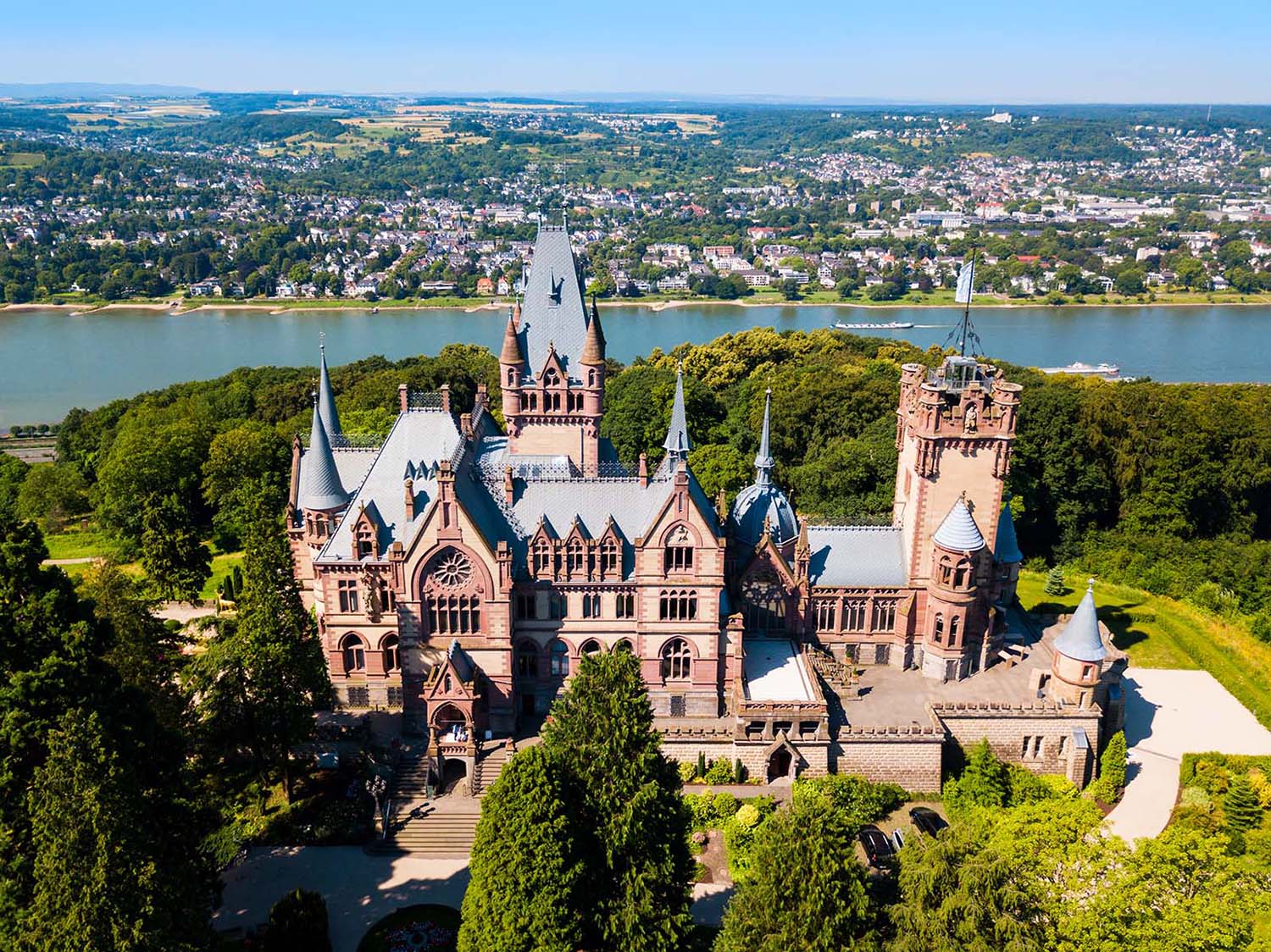
5. Wartburg Castle, Thuringia
Wartburg Castle is one of Germany’s most important historical sites – and a rare case where the legends match the location. Founded in the 11th century, it’s a real medieval fortress, complete with timber galleries, high towers, and thick stone ramparts. It’s also where Martin Luther hid out in 1521, under threat of execution, and translated the New Testament into German. That alone gives it serious historical weight.
Inside, the castle is part museum, part time capsule. Highlights include the richly decorated Festsaal (banquet hall), the private quarters used by Luther, and a Romanesque chapel. Some of the castle was restored in the 19th century, but it still retains a medieval atmosphere without tipping into kitsch.
This isn’t just another hilltop lookout – it’s where religion, language, and politics collided in a way that shaped German identity.
How to get to Wartburg Castle
Take the train to Eisenach, which is well connected across central Germany. From the station, it’s a steep 30-40 minute walk or a short bus or taxi ride up to the castle.
When to visit Wartburg Castle
Spring through autumn offers the best views and hiking weather. It’s open year-round, but winter can be icy and gray.