Plan and book with vetted local experts
Iceland is a place where nature reigns supreme - find out how to make the most of your time with our Iceland travel guide. Aside from the modern and cosmopolitan capital, Reykjavík, population centres are small, with diminutive towns, fishing villages, farms and minute hamlets clustered along the coastal fringes. The interior of the country, meanwhile, is a starkly beautiful wilderness of ice fields, windswept upland plateaux, infertile lava and ash deserts, and the frigid vastness of Vatnajökull, Europe’s largest glacier.
Iceland’s location on the Mid-Atlantic Ridge also gives it one of the most volcanically active landscapes on Earth. It is peppered with everything from naturally occurring hot springs, scaldingly hot bubbling mud pools and noisy steam vents to a string of unpredictably violent volcanoes, which have regularly devastated huge parts of the country.
Travel to Iceland and you can visit intriguing museums, take part in good old-fashioned rúntur pub crawls, seek out puffin colonies, marvel at the Northern Lights, or go whale-watching. It’s the kind of country that has to be seen to be believed. Our Iceland travel guide will give you the tools you need to plan your trip and find unique things to do, but you’ll have to experience it for yourself to truly understand its allure.

Gullfoss, the Golden Falls - one of the sights to include in your trip to Iceland © Thomas Lusth/Shutterstock


To see the wild side of Iceland, travel on Route 1, the Ringroad, where you’ll see brilliant green wide spaces, red and black sands on pristine coastlines, and brooding hills and mountains.
Travel to Iceland’s most dramatic scenery, the West Fjords, where little fishing villages sit snugly below table-top mountains. Ísafjörður's proximity to the wilds of the Hornstrandir peninsula makes for fantastic hiking opportunities. However, if you want the least touristy part of Iceland, head for the East Fjords.
Make time for a stop off in Akureyri, Iceland's second largest town. Known as the capital of the north, it's a relaxing place to spend a couple of days, with cafés and restaurants and a wonderful botanical garden. It's also a good jumping off point for visits to Lake Mývatn, the island's most visited attraction after Reykjavík, as well as Húsavík and the Jökulsárgljúfur National Park.
For puffin spotting you can't go wrong with Heimaey, the largest of the Westman Islands and the location of one of the largest puffin colonies in the world. It's also the site of a solidified lavafield, the result of a huge eruption in 1973 which destroyed much of the town below.

Isafjordur in the West Fjords is one of the best placese to go in Iceland - © Shutterstock
Your Iceland travel plans might also need to take into account the sun patterns. Although almost all of Iceland lies south of the Arctic Circle and therefore doesn’t experience a true Midnight Sun, nights are light from mid-May to early August across the country; in the north, the sun never fully sets during June. In winter, temperatures in Iceland fluctuate at 7–8°C either side of freezing point and daylight is limited to a few hours – in Reykjavík, sunrise isn’t until almost 11am in December; the sun is already sinking slowly back towards the horizon after 1pm.
If you want to make the most of the tourist attractions, then the best time to visit Iceland is between late May and early September, when most museums and attractions are open. Travelling around Iceland is easier at these times, too, as this is when buses run their fullest schedules. However, if your main reason for travelling to Iceland is to see the Northern Lights, or Aurora Borealis, then you’d be best off going between September and January – this is when the natural phenomenon can often be seen throughout the country.

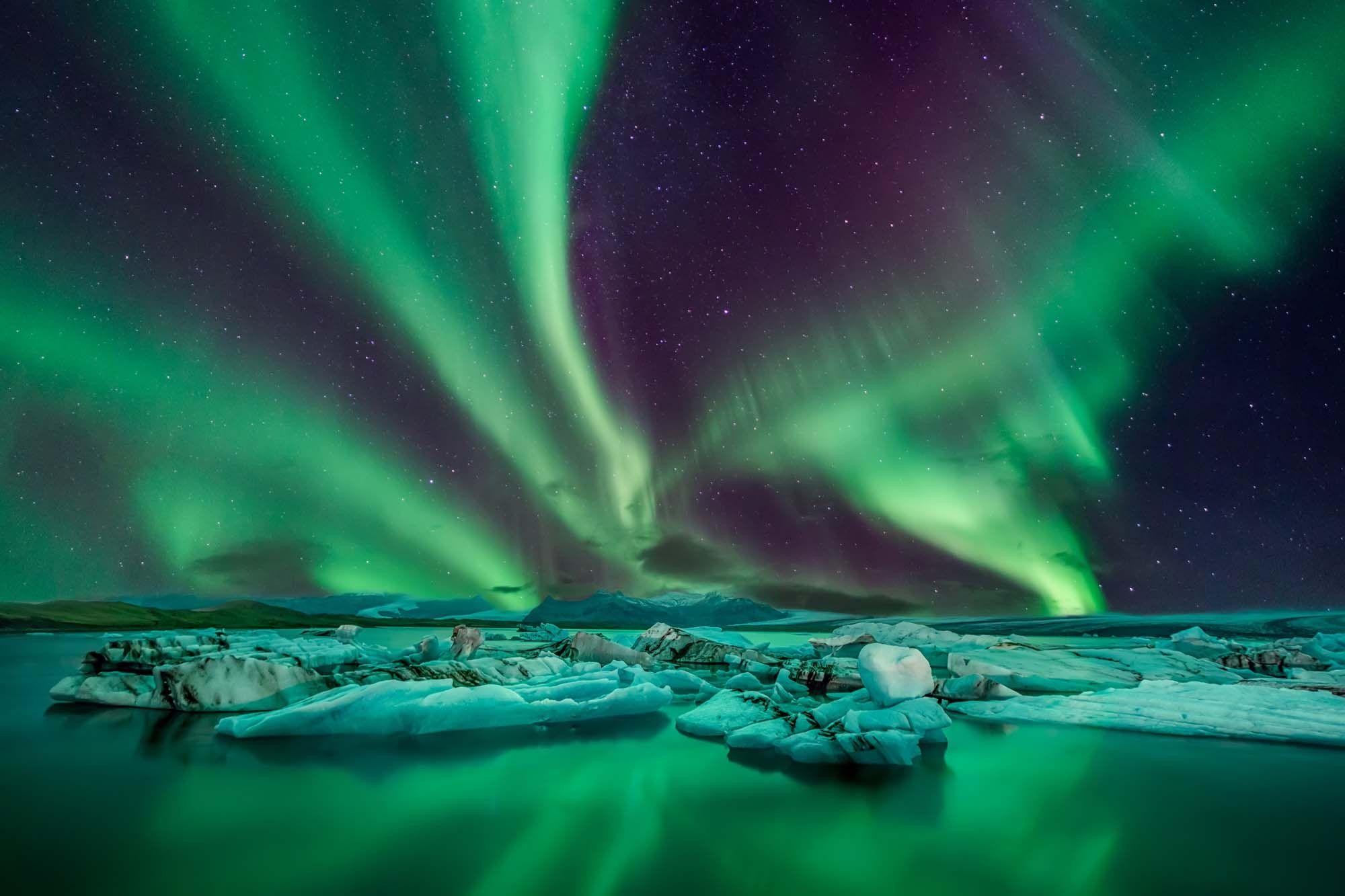
Check the best time to travel to Iceland for seeing the Norther Lights - © Shutterstock
It’s also possible to travel to Iceland year-round by sea via the Faroese super- ferry Norröna, which performs a regular crossing of the North Atlantic.
Once you’re there, Iceland’s small scale makes getting around fairly straightforward – at least during the warmer months. From Reykjavík, it’s possible to fly or catch a bus to all major centres, and in the summer there are even scheduled buses through the Interior.
On the ground, you’ll probably spend a good deal of time on Route 1, or the Ringroad (known in Icelandic as the Hringbraut), which largely follows the coast in a 1500km circuit of the country via Reykjavík, Akureyri, Egilsstaðir and Höfn. Virtually the entire Ringroad is sealed, and in winter snow ploughs do their best to keep the route open to all vehicles.
Elsewhere, while stretches around towns might be surfaced, the majority of Icelandic roads are gravel. While many of these are accessible to all vehicles, some – such as most roads through the Interior – are only negotiable in high-clearance four-wheel-drives.

Whale watching at Húsavík © SasinTipchai/Shutterstock

Auror Borealis or Northern Lights © MikeDrago.cz/Shutterstock
Our Grand Tour concentrates on Iceland’s main sights, while our other Iceland routes focus on two fascinating regions, the island’s west and north, and the south and east.
You can travel our suggested itineraries independently, but you can also book your Iceland trip through the Rough Guides Tailor-Made Trips service. Use the suggested itineraries as inspiration and let us know what exactly you’d like to do. Our Iceland travel expert will plan a bespoke trip especially for you, which you can modify until you are completely happy.

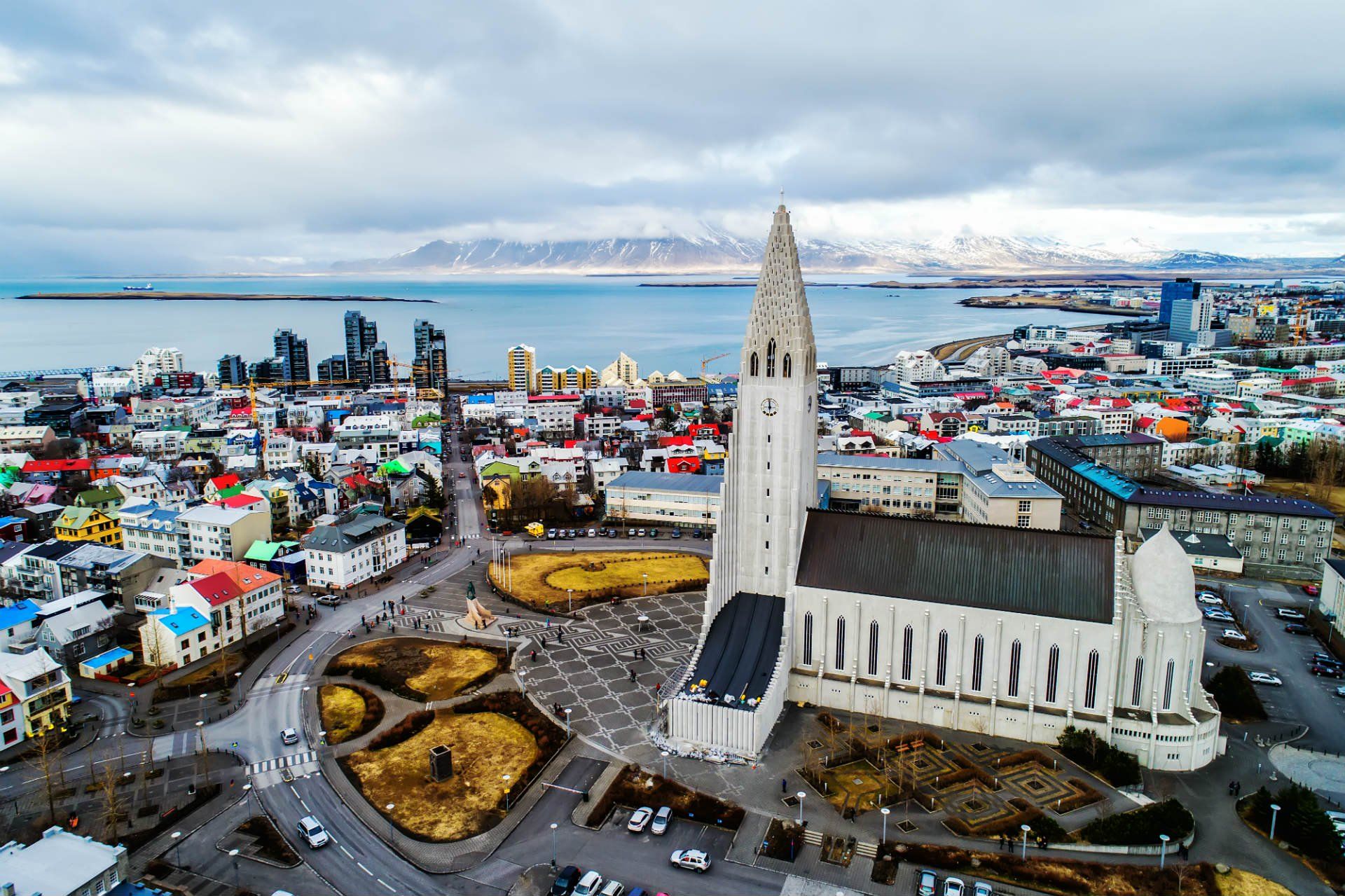
Hallgrímskirkja Cathedral, Reykjavik © Ververidis Vasilis/Shutterstock
Whether you’ve come for wildlife or to hike, ride, ski, snowmobile or four-wheel-drive your way across the horizon, these activities are all on offer. Further information is always at hand in local tourist offices, while you can find out more about the few national parks and reserves from the Department of Forestry or various Icelandic hiking organizations.
Many activities can be undertaken as part of an organized tour, sometimes with the necessary gear supplied or available for rent. Check out our list of favourite activities in Iceland here.
Out in the wilds, hot pots are replaced by natural hot springs – a welcome way to relax trail-weary muscles.
Icelandic swimming pools have their own etiquette that you need to follow. Remove your shoes before entering the changing rooms (there will be a rack in the pool lobby); leave your towel in the shower area between the changing rooms and the pool, not in your locker (this is so you can towel off before returning to the changing rooms, keeping them dry); and shower fully, with soap and without swimwear, before getting in the pool. Note that though there are always separate male and female changing rooms, very few pools have private cubicles.
You always need a permit to fish. Those for char or trout are fairly cheap and easy to obtain on the spot from local tourist offices and some accommodation, but permits for salmon are extremely expensive and often need to be reserved a year in advance, as there is a limit per river. For further information, contact the Federation of Icelandic River Owners, whose website has a huge amount of English-language information.
However long you’re hiking for, always carry warm, weatherproof clothing, food and water (there are plenty of places where porous soil makes finding surface water unlikely), as well as a torch, lighter, penknife, first aid kit, a foil insulation blanket and a whistle or mirror for attracting attention. The country is carpeted in sharp rocks and rough ground, so good-quality, tough hiking boots are essential – though a pair of neoprene surf boots with thick soles are useful to ford rivers.
One of the beauties of Iceland is that you can walk just about anywhere, assuming you can cope with local conditions, though there are, of course, highlights. Close to Reykjavík, the Reykjanes Peninsula offers extended treks across imposingly desolate lava rubble; there are some short, easy hikes along steaming valleys near Hveragerði, while trails at Þingvellir include historic sites and an introduction to rift valley geology. Further east, Laugavegur is an exceptional four-day trail; and Þórsmörk is one of the most popular hiking spots in the country, a wooded, elevated valley surrounded by glaciers and mountain peaks with a well-trodden network of paths.
Along the west coast, the Snæfellsnes Peninsula is notoriously damp but peaks with the ice-bound summit of Snæfellsjökull, the dormant volcano used as a fictional gateway into the centre of the earth by writer Jules Verne. Further north there’s Hornstrandir, the wildest and most isolated extremity of the West Fjords, a region of twisted coastlines, sheer cliffs and rugged hill walks.
Those after an easier time should head to Mývatn, the shallow northeastern lake where you can make simple day-hikes to extinct craters, billowing mud-pits, and still steaming lava flows; longer but also relatively easy are the well-marked riverside trails around nearby Jökulsárgljúfur National Park, which features some awesome canyon scenery.
Over in the east, the best of the hikes take in the highland moors and glaciated fringes of the massive Vatnajökull ice cap: at Snæfell, a peak inland from Egilsstaðir; Lónsöræfi reserve near Höfn; and Skaftafell National Park, another popular camping spot on Vatnajökull’s southern edge.

The Blue Lagoon © Jacksoo999/Shutterstock
Icelandic horses are sturdy, even-tempered creatures which, in addition to the usual walk, trot, gallop and canter, can move smoothly across rough ground using the gliding tölt gait. The biggest breeding centres are in the country’s south, but you can hire horses from farms all over Iceland, for anything from an hour in the saddle to two-week-long treks across the Interior. To organize something in advance, contact Íshestar or Eldhestar, which run treks of all lengths and experience levels right across the country.
The possibilities for cross-country skiing are pretty limitless in winter, though you’ll have to bring in your own gear. Downhill skiing and snowboarding are the most popular snow sports, with winter slopes at Bláfjöll only 20km from Reykjavík.
Plenty of tour operators offer glacier trips on snowmobiles or skidoos, which are like jet-skis for snow – the only way for the inexperienced to get a taste of Iceland’s massive ice fields, and huge fun. Several of southwestern Iceland’s larger rivers have caught the attention of whitewater rafting enthusiasts, while Iceland also has surprisingly good scuba diving potential, the prime sites being in Þingvallavatn’s cool but amazingly clear waters, at various shipwrecks, and at seal colonies around the coast. Dive Iceland can sort out the details, though you’ll need dry-suit skills.
Though Iceland’s calendar is essentially Christian, many official holidays and festivals have a secular theme, and at least one dates from pagan times. Some are already familiar: Christmas, Easter Monday, and New Year are all holidays in Iceland.

Route 1, or the Ring Road © Mathias Berlin/Shutterstock
From travel safety to visa requirements, discover the best tips for visiting Iceland
Whilst visiting Iceland, be prepared to spend a fair bit of money on your expenses. If you plan transport and accommodation ahead of arrival and research all your Iceland travel essentials, it is a relatively easy place to travel.
To keep costs as low as possible try to be self-sufficient. If you're opting for budget self-catering accommodation bring a sleeping bag – and food, if possible. If you're intending to camp, bring the camping equipment you'll need. To get a few hundred krónur a night off youth hostel rates get a Hostelling International Card. And invest in a bus pass to keep transport costs down.
Mid-range travel still means using a bus pass to get around, but favouring hostels and eating out cheaply most of the time will set you back about 18,000kr a day. Staying only in guest-houses or hotels and eating in restaurants for every meal means that you’re looking at daily expenses of upwards of 30,000kr.
Alcohol is also expensive – pick up a bottle on arrival (Keflavík airport’s duty-free is the cheapest place to buy alcohol in the country) – and, with the exception of beer, it’s only sold in bars, clubs, restaurants, and state-owned liquor stores known as vinbúð.
If you plan to stay in Iceland for over 90 days then you must apply for an Iceland residency permit. This can be done at the Embassy, Consulate, or VAC of Iceland in whichever country you live. However, always double-check the most up-to-date visa requirements before planning your trip to Iceland.
As regards customs regulations, all visitors to Iceland can bring in the following: camping gear and other travelling equipment for their own use in Iceland (including foodstuffs and other supplies, but no uncooked meat of any sort); and either 1 litre of spirits and 1 litre of wine, or 1 litre of spirits and 6 litres of beer, or 1.5 litres of wine and 6 litres of beer or 3 litres of wine. In addition to this, 200 cigarettes, or 250g of other tobacco products, are also permitted.
Most incidents involve petty crime and are largely confined to Reykjavík. Many criminals are drug addicts or alcoholics after easy money; keep tabs on your cash and passport (and don’t leave anything visible in your car when you park it) and you should have little reason to visit the police (lögreglan). If you do seek them out, you’ll find them unarmed, concerned and usually able to speak English – remember to get an insurance report from them if you have anything stolen.
As for offences you might commit, drink-driving is taken extremely seriously, so don’t do it: catch a taxi. Being incoherently drunk in public in Reykjavík might also get you into trouble, but in a country campsite you probably won’t be the only one, and (within reason) nobody is going to care. Drugs, however, are treated as harshly here as in much of the rest of Europe.
On lava, watch out for volcanic fissures, cracks in the ground ranging from a few centimetres to several metres across. These are easy enough to avoid when you can see them, but blanketed by snow they’ll be invisible, so use a hiking pole to test the path ahead.
Another hazard is river crossings, which you’ll have to make on various trails all over the country. Glacier-fed rivers are at their lowest first thing in the morning, and rise through the day as the sun melts the ice and snow that feed into them. When looking for a crossing point, remember the river will be shallowest at its widest point. Before crossing, make sure that your backpack straps are loose so that you can ditch it in a hurry if necessary. Face into the current as you cross and be prepared to give up if the water gets above your thighs. Never attempt a crossing alone, and remember that some rivers have no safe fords at all if you’re on foot – you’ll have to hitch across in a vehicle.
Top image: The village of Vík © Nido Huebl/Shutterstock