Rough Guides combines destination expertise with tailor-made travel planned by vetted Colombia local experts. You can use our city and regional guides as a starting point, then receive up to 3 personalized trip plans created from scratch around your preferred pace, experiences, and route through the country. The final itinerary is refined directly with the local travel agent instead of being selected from a fixed package.
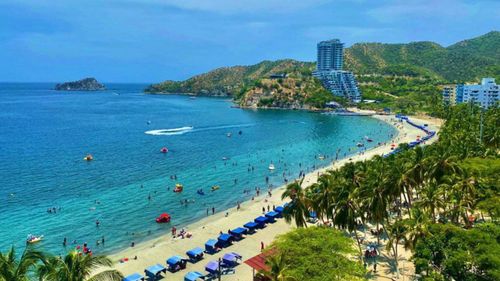
Although no longer as pristine as it used to be, the lively fishing village of TAGANGA, 4km north of Santa Marta (between it and Parque Nacional Tayrona), is where backpackers come to party, both before and after they tackle the Ciudad Perdida hike. Built on the side of a mountain, the town has an uncanny Mediterranean feel, with incongruously pleasant unpaved dirt streets, busy beach, and arid hills surrounding the horseshoe-shaped bay. For budget travellers, it’s a great alternative to Santa Marta when exploring the surrounding area’s attractions.
Everything here is pretty much water-related, whether diving, or hitting the beach. Fishermen ply an easy alternative access route to Tayrona National Park’s southern beaches, the most popular being the crystalline waters of Bahia Concha, about an hour away by boat. Costing at least COP$120,000, this is a good excursion for small groups. Accessible by boat (5min, COP$5000) and foot (20min) is the much closer Playa Grande, which is modestly sized, heavily touristed and a bit pebbly, but still has the makings for a day of sun and sea. Taganga’s main beach is awash with small boats, many available for hire, though you’ll find people swimming at the southern end.
Conveniently, Ciudad Perdida treks and a whole manner of adventure travel options are on offer too at bigger shops on the main drag, along the beach.
Diving in Taganga
One of the cheapest spots in the world for scuba certification, both PADI and NAUI, Taganga has so many dive shops that the prices and services offered by each are pretty competitive. If diving is a priority on 11-day Colombia trips, it’s worth allowing several days here for a certification course, which often includes basic accommodation, English- or Spanish-speaking dive masters, and a mix of open-water and pool dives. Quality-focused dive centres offer the best service, with higher standards of professional instruction and a greater awareness of the needs of both new and experienced divers. Don’t just be tempted by cheap deals: check PADI or NAUI accreditation, your instructor’s credentials, the instructor-to-student ratio, and ensure that equipment is well maintained.
