Travel advice for Brazil
From travel safety to visa requirements, discover the best tips for visiting Brazil
Brazil stands out in a few areas: it’s got the most types of primates in the world, a huge variety of parrots and macaws, and some of the most diverse large mammal populations in South America. You’ll probably see more species than you expect—especially when it comes to birds, reptiles, and amphibians. Here’s a quick guide to what Brazil wildlife is out there and how to actually spot it.
Crafted with by local experts

5 days
view trip ⤍
6 days
view trip ⤍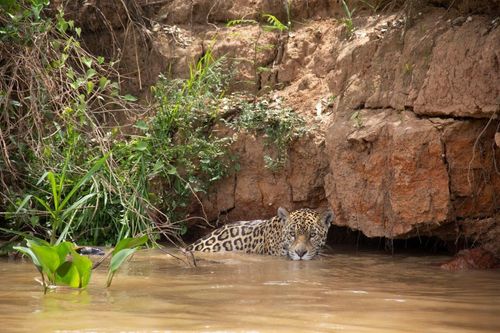

5 days
view trip ⤍
8 days
view trip ⤍
10 days
view trip ⤍
9 days
view trip ⤍
12 days
view trip ⤍
5 days
view trip ⤍

11 days
view trip ⤍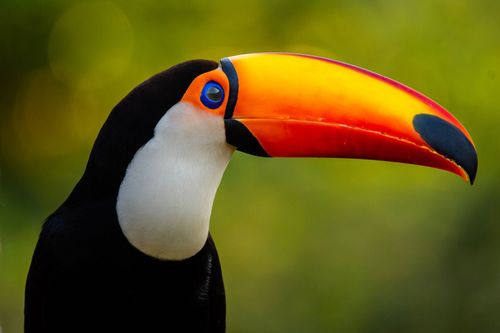
13 days
view trip ⤍Wildlife watching in Brazil doesn’t work the same way it does in places like Africa. You’re not sitting in a jeep scanning the horizon. A lot of the time, you’re on a boat. In the Amazon and the Pantanal, rivers are often the best way to reach areas where animals stay well away from roads and people. One of the key Brazil travel health tips to keep in mind for these regions is to protect yourself against mosquito-borne illnesses—long sleeves, insect repellent, and sleeping under a net are just as essential as your binoculars.
There are six main ecosystems across the country, and each one works a little differently. Some are easier to explore in the dry season, others come alive when it’s wet. The timing of your visit can really shape what you’ll see—and how you’ll get around. If it's your first time in the country, you might want to check out our guide to how to plan a trip to Brazil.
Going with a local guide makes a big difference. It’s not just about spotting animals hidden in the trees. A good guide can point out the less obvious stuff—like signs of animal activity or how different species interact with the environment—that you might miss on your own.
Brazil is home to around 170,000 known species, which is close to 10% of all the animals identified on the planet. And that number keeps growing—researchers are still documenting new ones each year.
One thing that makes wildlife watching here a bit different is how spread out everything is. You’re not just looking at one waterhole or clearing. In a place like the Amazon, you’re scanning multiple layers—from the ground all the way up to the canopy, and sometimes even underwater.

Chapada dos Guimaraes, Mato Grosso, Brazil © Fred Cardoso/Shutterstock
Brazil wildlife includes 700 species of mammals, making it one of the most mammal-rich places on Earth. You’ll find them everywhere—from the dense Amazon to the open grasslands of the cerrado. These animals have adapted in all kinds of fascinating ways to survive in such varied landscapes. Some help spread seeds, others keep prey populations in check, and many are key players in maintaining healthy ecosystems.
Jaguars live in a range of environments across Brazil, from the Amazon to the wetlands of the Pantanal. Their rosette-patterned coats and stocky build make them easy to recognize, but what really sets them apart is how they hunt. Jaguars kill with a single bite to the skull—a move that’s as efficient as it sounds. They’re also excellent swimmers, which is why some Indigenous groups call them “river wolves.” Jaguars are some of the most sought-after Brazil wildlife sightings.
The giant anteater looks like it belongs in another era—and in some ways, it does. This strange-looking creature has been around in more or less the same form for 25 million years. With no teeth but a 2-foot sticky tongue, it can eat tens of thousands of ants and termites in a single day. Its powerful front limbs and sharp claws make it surprisingly tough—even predators like jaguars approach with caution. When they feel threatened, anteaters rear up on their hind legs and use their forelimbs to defend themselves—a pretty impressive move for an animal that can weigh up to 90 pounds. They’re one of Brazil’s most distinctive mammals, both in looks and behavior.

Anteaters are a fun example of Brazil wildlife © Andrea-De-Cairies-1-1
If you spend any time near water in Brazil, chances are you’ll run into a capybara or two—or twenty. These are the world’s largest rodents, and they live in big, social groups that graze together and chat using clicks, purrs, and whistles. Built for semi-aquatic life, they’ve got webbed feet, eyes and ears placed high on their heads, and nostrils that close like valves—perfect for hanging out in the water for several minutes at a time. In the wild, you’ll often spot birds perched on their backs, picking off insects.
If you’re anywhere near a troop of howler monkeys, you’ll probably hear them before you see them. Their calls can travel miles through the forest, especially around dawn. These monkeys are built for life in the trees—with strong, prehensile tails that work like extra arms and specialized throats that help them produce their deep, rumbling calls. They don’t move around much, spending most of their time resting and eating leaves, which are tough to digest.

Ibera Wetlands capybara seemingly saying hello to each other © Shutterstock
The maned wolf looks a bit like a fox on stilts but isn’t closely related to foxes or wolves. It’s its own species, mostly found in Brazil’s cerrado—a grassy, open region that’s been shrinking due to agriculture. With its long legs and reddish fur, it’s easy to spot if you’re lucky. These animals are mostly solitary and cover large areas in search of food, which can include small animals and fruit. One fruit in particular, known as the “wolf apple,” actually depends on the maned wolf to spread its seeds. They’ve got a distinctive bark-like call that carries across long distances, especially at night. In rural areas, they’ve traditionally been seen as good luck.

Not a fox or a wolf © Shutterstock
Brazil’s one of the best places on Earth to see birds—no exaggeration. With over 1,900 species across wildly different habitats like the Amazon, the Pantanal, and the Atlantic Forest, it’s a paradise for birdwatchers. Some birds, like the Araripe manakin or those ridiculously bright tanagers, are found nowhere else.
In the Pantanal, it’s hard to miss the hyacinth macaw. They’re huge—like, four-foot wingspan huge—and that electric blue color is unreal. Locals call them arara-azul, and they’re smart, loud, and super social. These parrots mate for life and communicate with a whole range of calls. Their beaks are strong enough to crush coconuts, but around people they trust, they’re surprisingly gentle. They were in real trouble a while back thanks to habitat loss and the pet trade, but conservation programs have helped their numbers bounce back—though they’re still not totally in the clear.
Toco toucans are probably one of the most recognizable birds around, mostly because of their huge orange-yellow bills. You might think the bill is heavy, but it’s actually pretty light and helps regulate their body temperature. They also use it to grab fruit that’s a little out of reach. Toucans move in short hops and make bark-like calls that carry through the forest. You’ll find them in the Pantanal and parts of southeastern Brazil (see our guide to why everyone should spend more time in Southern Brazil).

Toco toucan © Shutterstock
The Jabiru is Brazil’s tallest flying bird, and it stands out with its black-and-white feathers and red neck pouch. You’ll mostly see them in the Pantanal, walking through shallow water looking for fish or amphibians. They use a slow, steady approach and then strike quickly when they find something. They usually build huge nests high in isolated trees, and some pairs return to the same one year after year. Their breeding is tied to the flood cycles, so their presence says a lot about the health of the wetland.
The harpy eagle is one of the more powerful birds you’ll find in Brazil’s forests. They live deep in the Amazon and Atlantic Forest, gliding through the canopy and spotting prey from impressive distances. The females are larger than the males and are strong enough to carry off monkeys and sloths from the treetops. People in many Indigenous communities see them as a symbol of strength or protection. Harpies raise just one chick every few years, so any disruption to their habitat can have long-term effects. Tracking their nests has become a way for researchers to gauge how intact the forest is.
Along Brazil’s northern coast, you might catch sight of scarlet ibis gathering in the mangroves around dusk. Their bright red color comes from eating lots of crustaceans, and in flight or against the greenery, they’re easy to spot. They’re social birds, and during mating season, they move in sync with one another in a kind of group display that’s pretty fun to watch. When they feed, they use their curved bills to feel around in the mud rather than relying on sight.

Scarlet ibis © Shuttersock
Brazil’s coastline stretches for over 4,600 miles (7,491 km), and it covers a huge range of ecosystems—from the Amazon River’s murky outflow to the warmer waters in the northeast and the cooler southern coast. Across all of it, marine life is incredibly varied. You’ll find hundreds of fish species, dozens of shark types, and plenty of marine mammals.
Locally called the boto, the Amazon river dolphin lives in freshwater and is known for its pink coloring—especially in males. That pink comes from scar tissue built up over time, mostly from scuffles with other dolphins.
They’ve got a few unusual traits. Their neck vertebrae aren’t fused, so they can twist their heads side to side, which helps them steer through the tight spaces of flooded forests during the rainy season. People have seen them carrying branches, possibly to help stir up fish or communicate with others. They also play a big role in local folklore. Some stories say the boto can turn into a man at night to seduce women, then slip back into the river by morning.
Brazil’s northeast coast is one of the most important nesting spots for green sea turtles. You’ll recognize them by their smooth, heart-shaped shell and serrated beak. As adults, they mostly eat seagrass, which is where they get their name—their body fat has a greenish tint because of their diet. They’re long-distance travelers, using Earth’s magnetic field like a natural GPS to return to the same beaches where they were born. Some can live up to 80 years.

Green sea turtle hangs out at the beach © Shutterstock
Every winter, humpback whales head north from Antarctica to breed off the coast of Brazil—especially around the Abrolhos Bank. It’s one of the few times you’ll see them in such large numbers here.
These whales are easy to spot with their long pectoral fins and knobby heads. The males are known for their songs—long, complex sounds that can travel for miles underwater. Each group has its own “version” of the song, and it changes slightly from year to year.
Spinner dolphins get their name from what they’re known for—leaping out of the water and spinning in the air. You can sometimes see them twisting up to seven times in a single jump. Around the Fernando de Noronha archipelago, they gather by the thousands in calm bays, and it’s one of the best places to watch them.
They’ve got a tri-colored look: dark gray on top, lighter gray on the sides, and white bellies. They usually travel in big, social pods—sometimes with more than a thousand dolphins moving together. Scientists think the spinning has a few purposes. It might help shake off parasites, get the attention of other pods, or maybe it's just fun for them. Researchers in Brazil have identified over 70 different vocal sounds they use, which points to pretty advanced communication.
Oceanic manta rays glide through Brazil’s offshore waters with slow, steady movements. They’re huge—some reach up to 22 feet across—but they’re gentle filter feeders. They swim with their mouths open, collecting plankton as they go. They also have one of the largest brain-to-body ratios among fish, and have shown signs of problem-solving and self-awareness, including recognizing themselves in mirrors.
Marine biologists in Brazil use the unique spot patterns on their bellies to track individuals. Many of them come back to the same spots again and again—places known as cleaning stations, where small reef fish clean off parasites. They reproduce slowly, which makes them more vulnerable. Females only give birth every few years, and it takes nearly a decade for them to mature.

Tail of Humpback whale © Shutterstock
Brazil is huge—it's the largest country in South America and covers a massive range of landscapes. You've got the dense Amazon Rainforest in the north, the world’s largest tropical wetland (the Pantanal) to the west, stretches of dry savanna in the interior, and a long Atlantic coastline lined with beaches, cliffs, and islands. The terrain shifts a lot as you travel: rainforest gives way to mountains, then grasslands, then forest again. That variety in geography is what makes Brazil wildlife so rich. That said, it can be hard to fit all of these places into one single Brazil itinerary.
The Pantanal is one of the easiest places to actually see wildlife in Brazil. It's a massive wetland, and because the landscape is so open, spotting animals here is a lot more straightforward than in the jungle. Most people come hoping to see jaguars, and your chances are higher here—especially along the riverbanks where the big cats tend to hunt. You’ll usually head out by boat, which also means good chances of seeing capybaras and caimans along the way. Birdwatchers tend to love it here too, with hundreds of species around, including hyacinth macaws. See our guide to visiting Pantanal.
The Amazon covers a huge chunk of Brazil and is home to more species than you’ll find just about anywhere. It’s not the easiest place for spotting animals—there’s just so much forest—but that’s part of what makes it interesting. Early mornings bring out toucans and macaws, and at night you might hear howler monkeys in the distance. Some travelers glimpse pink river dolphins or catch sight of a poison dart frog on a guided walk. You’ll want a good local guide here—it really helps. Many tours are connected to local conservation work, so visiting also supports the communities and ecosystems that keep the forest going.

Pantanal in Brazil is stunning and home to a lot of Brazil wildlife © Shutterstock
The Atlantic Forest stretches along the coast, but only a small portion of it is still intact. That said, the areas that remain are packed with wildlife and it is one of the best places to visit in Brazil. It’s one of the only places where you can see golden lion tamarins in the wild—bright orange and hard to miss when they’re nearby. There’s also the maned wolf, which doesn’t really look like a wolf at all—more like a long-legged fox. Birders love this region for the number of endemic species, and there are plenty of parks and reserves with trails that make it easy to get out into nature. A lot of work is being done here to reconnect isolated patches of forest, and tourism helps support that.
This remote island group sits off Brazil’s northeastern coast and is one of the best spots for marine life. There’s a cap on visitors each day at Fernando de Noronha, which helps keep things in balance. You can snorkel in shallow bays and see sea turtles, reef sharks, and bright schools of fish. Spinner dolphins are a regular sight, especially in the mornings when they pass through the area in large groups. If you're there between December and June, it’s also turtle nesting season.

Fernando de Noronha, Brazil © Kcris Ramos/Shutterstock
Bonito is known for its crystal-clear rivers, thanks to natural limestone filtration. You can snorkel through what feels like an aquarium—schools of colorful fish swimming below as you float along. It’s a peaceful way to see aquatic life up close, without needing any diving experience. Around town, there are also caves with unusual species like blind catfish, and the surrounding forest is home to toucans, monkeys, and sometimes tapirs. The area has strict limits on visitor numbers and is seen as a model for how tourism and environmental care can work together in practice.

Brazil wildlife: the jaguar © Shutterstock
Brazil’s seasons make a big difference when it comes to planning a wildlife trip. The high season—December to March—is summer in the Southern Hemisphere. It’s hot and humid in many parts of the country, with more rain than usual in some regions. Beaches are busy, Carnival takes over the cities, and hotel prices tend to go up.
If you're looking for fewer crowds and milder weather, April to June and September to November are usually a good bet. You’ll still get plenty of sun without the peak-season rush. For more details, see our guide to the best time to go to Brazil.
This is the heart of the rainy season in the Amazon, and the landscape completely changes. Rivers rise fast—sometimes over 40 feet—flooding the forest floor and turning it into a network of waterways. Canoeing through these flooded forests gives you a close-up view of life in the treetops.
Animals like sloths, monkeys, and a huge variety of birds tend to stick to the canopy when the ground below is underwater, which makes them easier to spot from a boat (more on that in our guide to getting around Brazil). In the Pantanal, things get wetter too—some parts become hard to reach—but the northern region is usually still accessible. Across the country, flowering plants respond to the rain, drawing in pollinators and bringing bursts of color
As the rain starts to ease, March and April are good months for spotting birds. In places like the Atlantic Forest, you'll hear a lot of activity in the early mornings—birds calling, feeding, and nesting. With around 900 species, including many that are only found in Brazil, it’s a pretty rewarding time to slow down and listen.
In the Amazon, the water level begins to drop, and that shift brings new kinds of sightings. You might see young animals out and about—baby monkeys sticking close to their parents, river otters learning to hunt, or caimans fresh out of their eggs. Fewer mosquitoes also make this time a bit more comfortable to be outdoors

Brazil wildlife: Aquario Natural, Brazil © Vanessa Rung/Shutterstock
This is one of the easier times to spot wildlife in the Pantanal. As the dry season sets in, water sources start to shrink, and animals gather around what’s left. Jaguars are more active along the riverbanks There’s a lot going on beyond the big cats, too. You’re more likely to come across giant river otters, tapirs, and even anacondas.
Trails are easier to navigate when it’s dry, so getting around by foot, on horseback, or in a 4x4 feels pretty doable. At night, you might spot more elusive animals like maned wolves or ocelots. The temperatures are mild, and the humidity drops, which makes it more comfortable during these months going after caiman and capybara.
By the end of the dry season, things get intense. Animals are packed into the best remaining spots, and some days it feels like everywhere you look, there’s something moving. You might see jaguars still hanging around the rivers, but also big gatherings of caimans, and all kinds of birds and mammals sharing the same space. It’s an active time, especially as everything starts gearing up for the rainy season.
Meanwhile, over on Brazil’s east coast near Bahia, humpback whales show up around this time. They migrate here to give birth and stay close to shore with their calves. If you're out on a boat, you’ll often see them breach or slap their tails.

Exploring the Amazon by boat, Brazil © Shutterstock
If you're planning to visit places like Chapada dos Veadeiros or Jaú National Park, check the rules before you go. Some areas limit how many people can enter each day, and certain trails require a certified guide. It’s not about being restrictive—it’s about protecting fragile ecosystems that can’t handle too much foot traffic.
There have been some meaningful steps forward in conservation here. Jaguars are showing up more often in the Pantanal, and golden lion tamarins are being protected in parts of Rio state. If you’re hoping to spot animals in the wild, keep your distance—IBAMA recommends staying at least 30 meters away from larger mammals. Avoid flash photography, especially around sensitive species like poison dart frogs, and don’t feed any wildlife. Even the friendliest-looking monkeys can get too comfortable around people, which usually doesn’t end well for them.
When booking a tour, look for operators certified by responsible travel organizations like ABETA. Many work with local and Indigenous guides who know the terrain and have deep ties to the land. Supporting these guides helps keep traditional knowledge alive and creates jobs that are tied to conservation instead of deforestation.
If you'd like us to do the planning and booking for you, we're here to help. Our tailor- made vacations are created by local travel experts who know the area in and out. We strive for sustainable trips that benefit local communities.
From travel safety to visa requirements, discover the best tips for visiting Brazil


