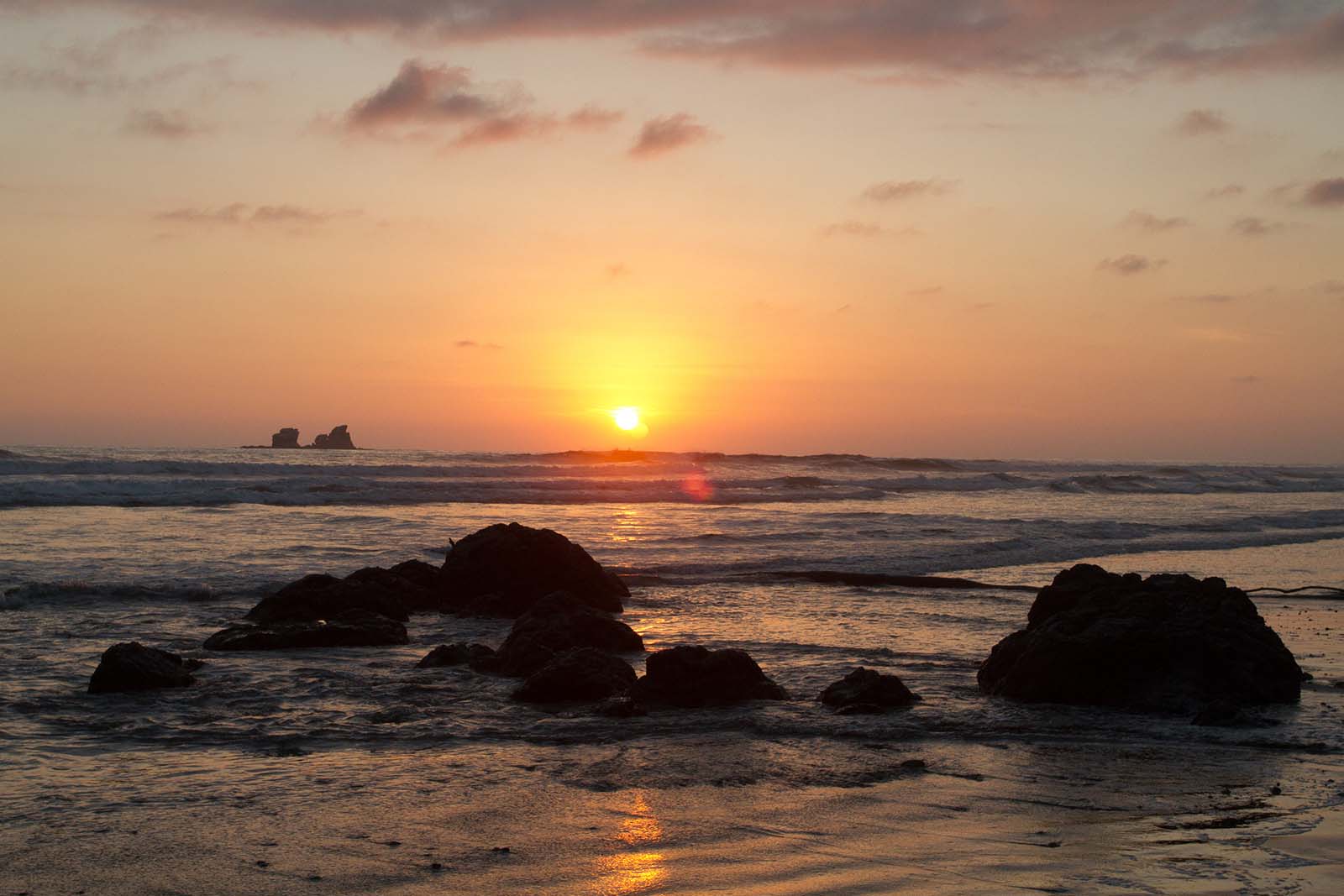
When is the best time to visit the beach?
The dry season — June through November—is usually the most comfortable time to be on the coast, with more sun and less rain. If warm water is more important to you, December through April is better for swimming, though afternoon showers are more common during those months.
The busiest period is also between December and April, with January and February especially packed, particularly around Carnival. If you’re hoping for fewer crowds and lower prices, May and November tend to fall right between high and low seasons. Weather can shift depending on the area—southern beaches generally stay drier all year, while northern beaches see more rain even during the dry season. If you’d like to know more, see our guide to the best time to visit Ecuador.
How to choose the best beach?
Ecuador’s coastline stretches for around 1,400 miles, and things really shift as you move from north to south — not just the beaches themselves, but the weather, landscape, and local feel.
Up in Esmeraldas, near the Colombian border, the beaches like Mompiche and Atacames have darker volcanic sand and are surrounded by thick jungle. It rains more often here, so everything stays green year-round.
Central areas start to feel more balanced — not as rainy, with golden sand and river estuaries feeding into the sea. It’s a mix of ecosystems, with both coastal and inland influences. Down south, things get drier and sunnier. The landscape opens up to cliffs, clearer water, and longer stretches of dry weather. It feels more like a classic beach scene.
The coastline’s microclimates mean that weather, scenery, and water conditions can vary a lot. If you want greenery and don’t mind some rain, head north. For dry heat and sun, the south’s a better bet. If you're not sure how to fit beaches into your trip, sometimes seeing a sample Ecuador itinerary can help be a great starting point.