The gift of the off-season - a walking holiday in the Algarve

Select Month

start planning

Nature and culture combine to create an authentic Algarve experience, away from the summer heat and crowds

Birdwatching in a saltwater lagoon

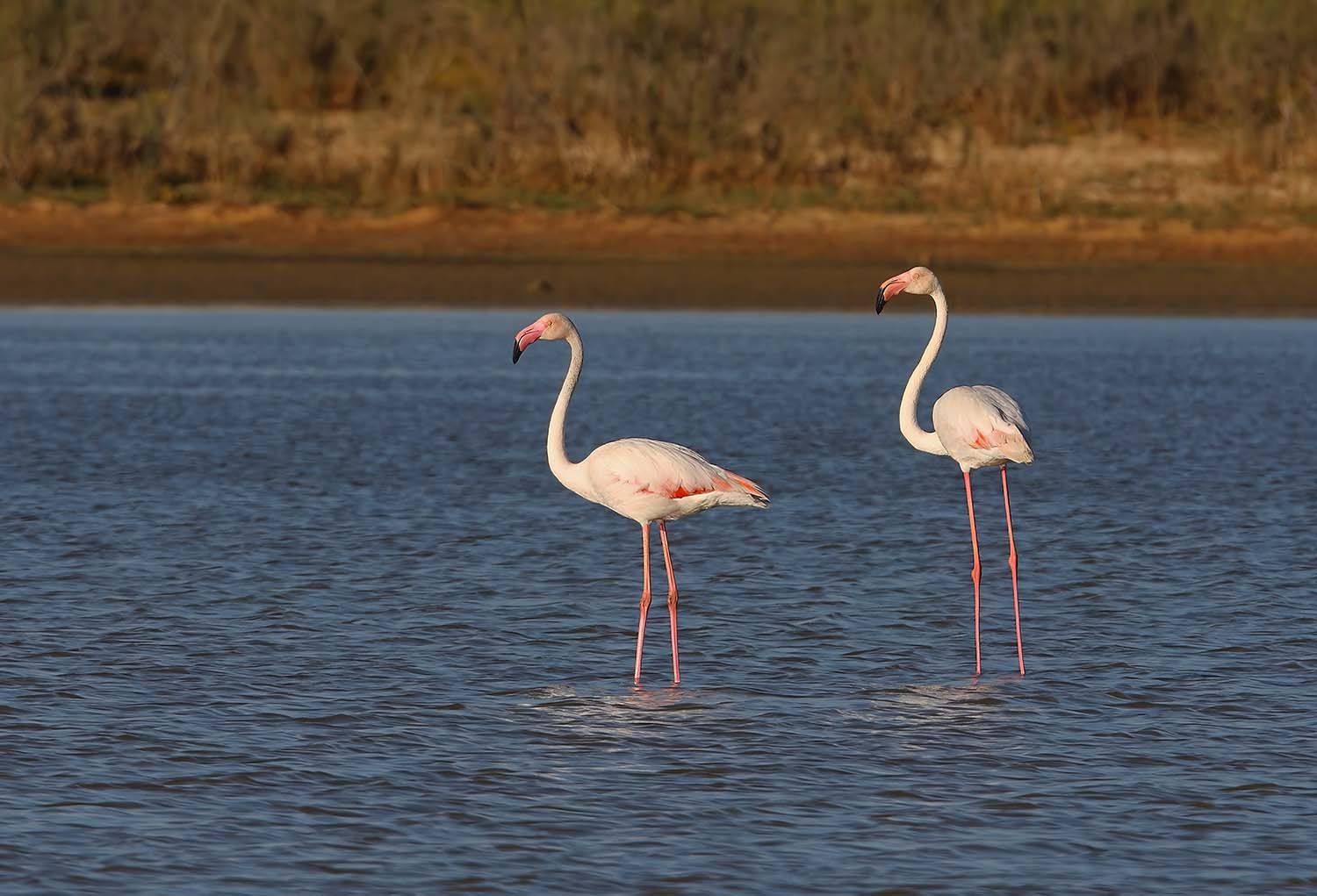
The purple swamphen, a bird that could be described as a plump moorhen with a baroque sense of style, is proving elusive. Its bluish iridescent plumage and oversized pink legs should make it easy to spot – and we’re in the right place: the reeds and rushes of the 50-hectare Lagoa dos Salgados (saltwater lagoon), a protected habitat in the Algarve.

Our guide, João Ministro of the responsible tourism company ProActiveTur, is a passionate figurehead of bird conservation zones such as this. With a tripod-mounted telescope slung over his shoulder, João leads our small group through these dense grassy wetlands, excitedly plonking down the huge lens at frequent intervals.

I’m often clueless as to what’s caused his sudden animation, until I bend down to the eyepiece and the magnifier reveals a splendour of feathers and webbed feet. We run out of luck in our search for a swamphen; but flitting around the marshes are a clutch of other delightfully named fowl: Kentish plovers, a Richard’s pipit, little bitterns and a ferruginous duck.

The swamphen is just one example of the Algarve’s wildlife success stories. These birds were almost wiped out in the 20th century by hunting and habitat destruction – but thanks to legal protection, the population made a bountiful recovery in the 90s. Around 350 species of birds call the Algarve home for at least part of the year: its crucial position on migration routes, diverse habitats and a landscape that’s 40 percent protected biodiversity zones, meld to create an avian paradise.

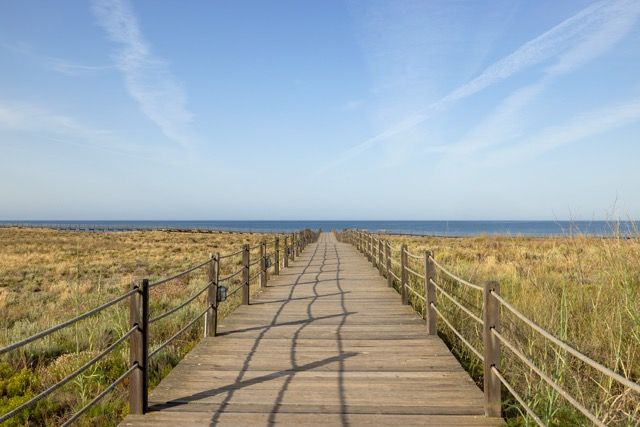
Roaming the boardwalks raised over these wetlands feels like levitating – especially when the resorts for which Portugal’s south coast is best known shrink behind the marshy expanse. Sheltered from the wrath of the Atlantic by a strip of dunes, the walkways eventually spit us out on the sands of Praia dos Salgados, where cormorants dry their wings as prehistoric-looking silhouettes in the winter sun.

The Algarve's off-season credentials

I’m here to sample the off-season delights across this southern strip of Portugal, on a small-group tour of outdoors enthusiasts. “It can be so hot in summer now – that’s one reason we’re promoting off-season travel, like birdwatching,” explains João. Winter (NovemberMarch) is sedate and slow-paced, while the mild temperatures – around 15–18°C in the day – are perfect for exploring on foot. The tilt towards eco-tourism was evident at Faro airport, where chino-wearing golfers were interspersed by those of us sporting outdoor gear.

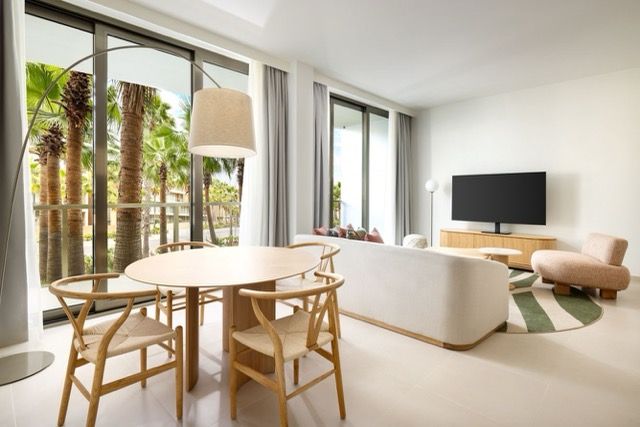
If all this conjures a rustic image, there’s hardly a better place than the Algarve to address the comfort balance. The Lagoa dos Salgados boardwalks lead directly to the grounds of the Westin Salgados Beach Resort, a design-led hotel that’s a stark contrast to the salty wilds on its doorstep. Stepping inside the atrium, I’m dazzled by a multi-story chandelier comprised of lanterns suspended at varying heights. Lower prices and a relaxed, intimate atmosphere are additional bonuses of travel outside of summer.

Spanning 155 km (96 miles) east-to-west and 50 km (31 miles) north-to-south, the Algarve is big enough to provide a sense of discovery, but small enough to explore all its corners in one trip. This compact size belies the diversity of landscapes – sea cliffs and caves to shady forests, agricultural plains to verdant mountains – another key reason for its popularity among feathered residents and passers-by.

Hiking the Seven Hanging Valleys

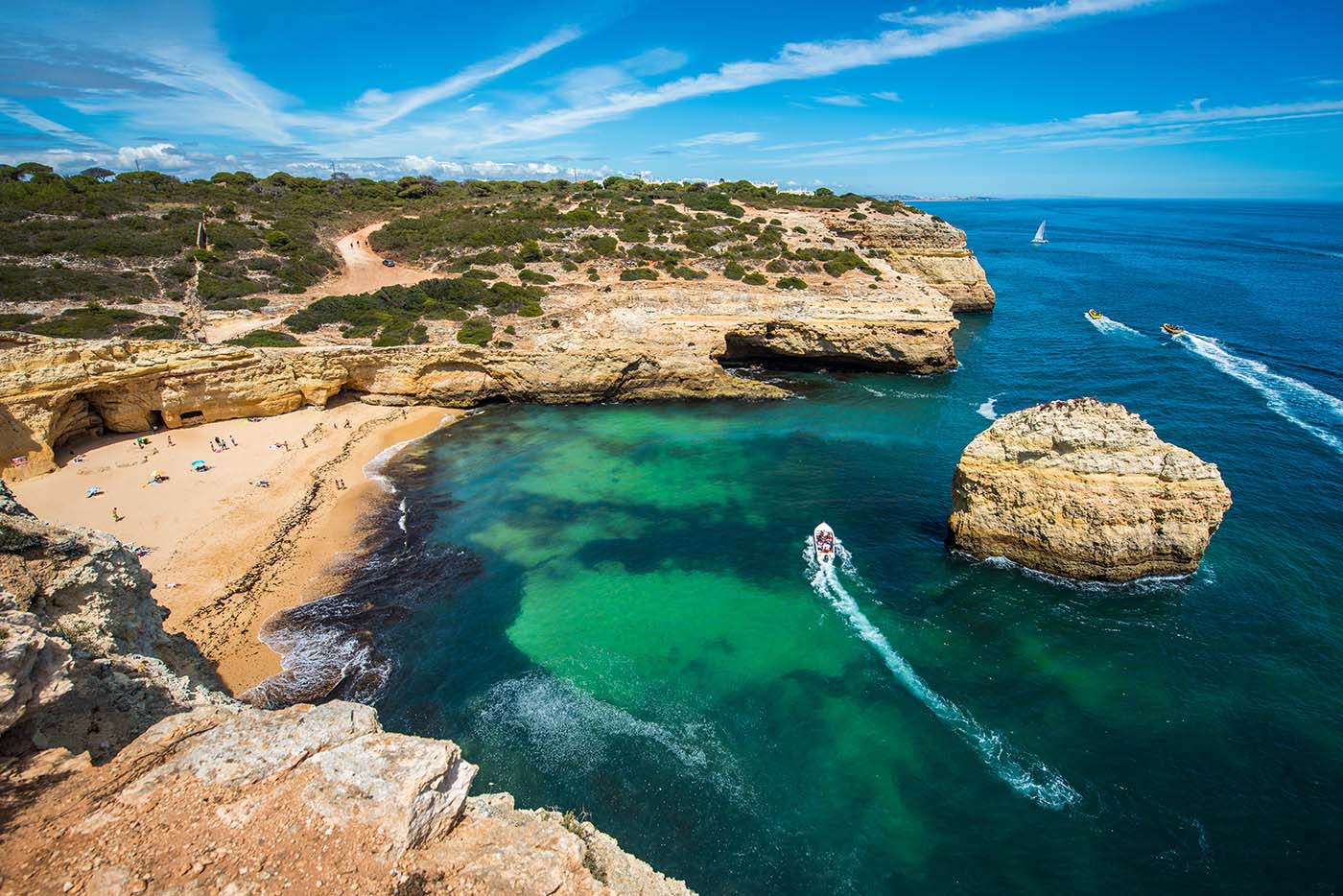
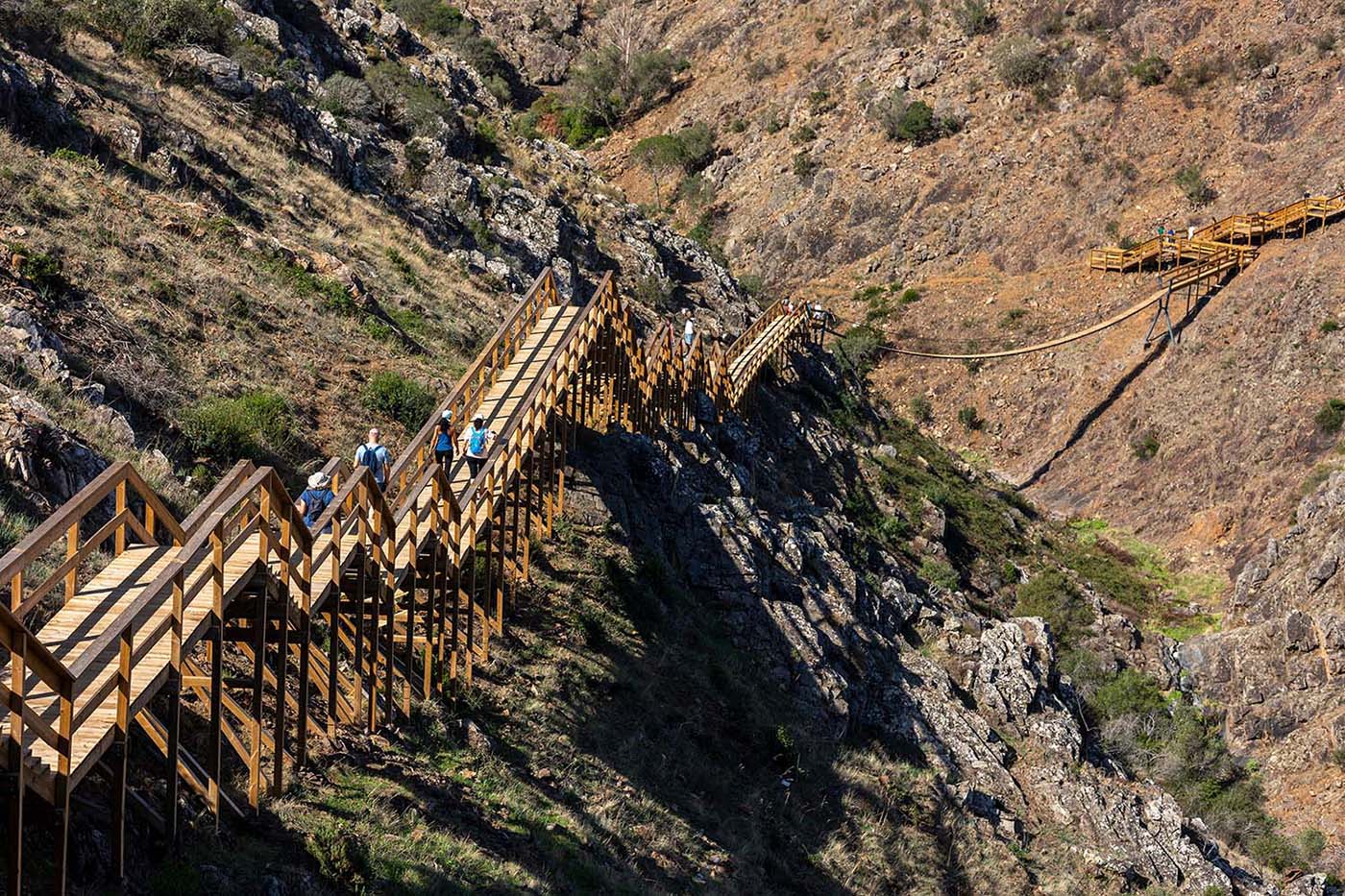
Half an hour’s drive west the next morning brings us to the Lagos coast, where iron oxide-red cliffs are encrusted with spiral shells and the plunging shoreline has been carved into sea stacks and arches. Led by guide Miguel Rodrigues, from a young responsible tourism outfit Algarvian Roots, our plan is to trace a 4-mile (6km) route high above the crashing whitewater, between the golden coves of Praia de Marinha and Praia de Vale Centeanes.

Running at right angles to the coast, seven long-gone streams have funnelled valleys into the limestone cliffs, earning it the name, the Seven Hanging Valleys. The speed of erosion, geologically speaking, is lightning fast. “The sea stacks give you an idea of where the coastline was a hundred years ago,” explains Miguel. They already look distant, like sentinels guarding these shores at continental Europe’s southern edge.

This stretch harbours a storied past. During the Portuguese dictatorship of Estado Novo ("New State"), between 1926 and 1974, the Algarve was a hive of clandestine migration and smuggling – the pockmarked coast naturally abundant in hiding places. We pass Praia do Carvalho, also known as Smuggler's Cove, a small beach accessed through a tunnel in the cliffs. The passage is believed to have been hand-carved by pirates, to hide contraband and launch attacks: in the 16th and 17th centuries, raids by North African (Barbary) corsairs were a constant threat.

Back in the present day, the shapeshifting nature of the landscape is all around us. Sinkholes have appeared around the path, created by thousands of tiny cracks that trigger a vertical collapse. “Imagine a big drill working really slowly – that would be the rain,” says Miguel.  The most curious example of this is Benagil Cave, where a crescendo of waves beckons us closer to its twin openings of sea and sky.

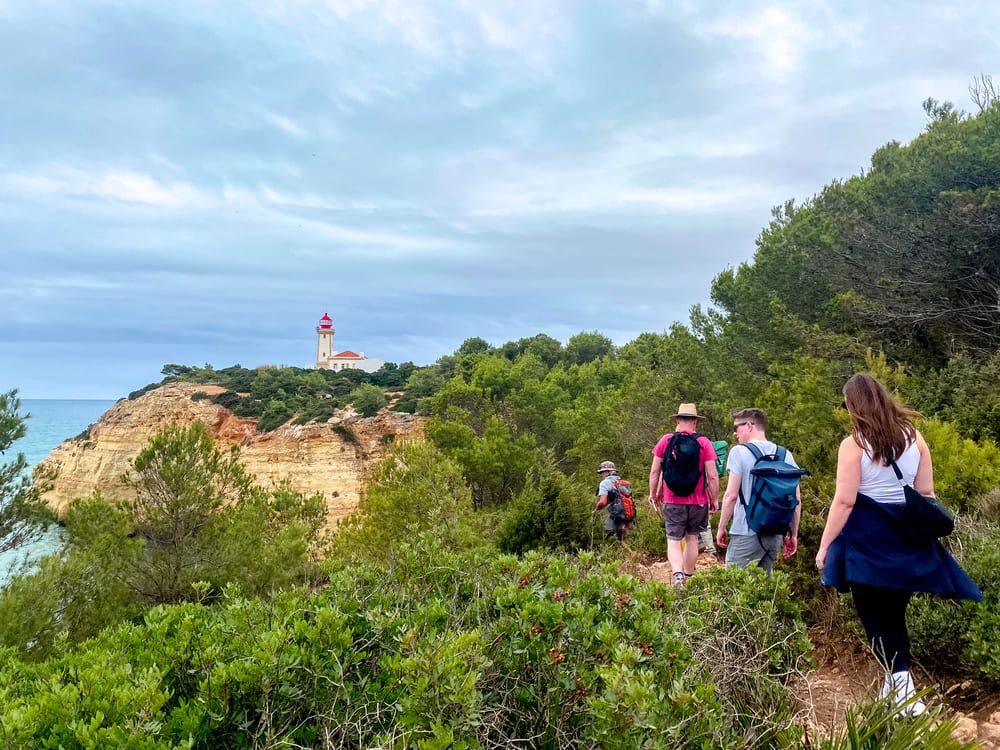
You don’t need to be an experienced hiker to navigate the Algarve. The coastline is linear, and across the region, day hikes are signed by yellow-and-red markers (red-and-white mark multi-day treks, of which there are three). The jewel-like red lantern of the Alfanzina lighthouse, 23m tall and 63m above the sea at Praia do Carvoeiro, ushers us towards our destination, after we pause to breathe in the briny air and snack on fig-and-almond cake.
Seven Hanging Valleys hike.jpg

Meeting local makers

Walking is key to the off-season boost that companies such as Algarvian Roots and ProActiveTur are bringing to the region. However, their approach to responsible tourism acknowledges that nature and culture are inexorably entwined: experiencing the landscape is to understand the makers and producers that shape it, too. 

So, we head away from the glossy coast and drive 15 minutes into the green interior. Here, basking in a microclimate between the Monchique mountains and the Lagos shore, is the historical vineyard of Morgado do Quintao. Established in the early 1800s by the first Count of Silves, it remains in the family line: a restoration in the last ten years has created a chic interior, filled with contemporary art and curious heirlooms.

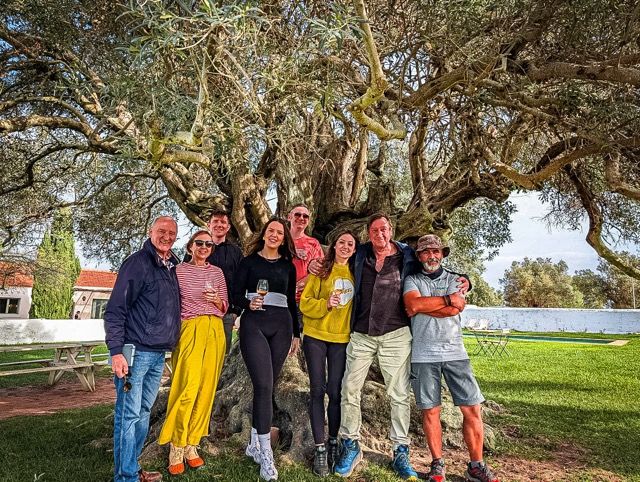
Lunch is a “farmers’ table” experience of rustic sharing plates, paired with wine samples from the estate. The Algarve’s first female winemaker, Joana Maçanita, describes her vision for sustainability and prioritising indigenous grapes, as she paces and swirls each glass. We step outside into the sun to stroll among estate’s organic vines, which stretch from an enchanting 2,000-year-old olive tree. It’s the perfect location to embrace natural processes: a maritime breeze tempers heatwaves, while keeping the insects at bay. 

Further still inland brings us to the ancient capital of the Algarve, dominated by a Moorish castle made of reddish military mudstone – the best-preserved of its kind in Portugal. It’s in this evocative town of Silves that we meet another artisan: Margarida Palma Gomes, who hosts us in an azulejo tile ceramics painting class – the blue-and-white, hand-painted square tiles synonymous with Portuguese artistic tradition. A lifetime of practise allows Margarida to rescue my juvenile effort, scratching my heavy-handed lines into elegant swoops.

Barão de São João Walk & Arts Fest

Reunited with Miguel the following day, we venture to the heart of the inland slice of Portugal’s western tip. Since 2018, this part of Lagos has hosted an annual Walk & Arts Fest, combining trails and guided hikes with a hub of creative events and music. For three days in the first week of November, an events hub is set up at the edge of Barão de São João (Baron of Saint John), a beguiling, sandy-hued village wrapped by farmland. The festival coaxes visitors away from the classic tourist trail, to an array of beautiful walking routes and workshops run by experts with a passionate niche, from spray-painting to moth inspections. 

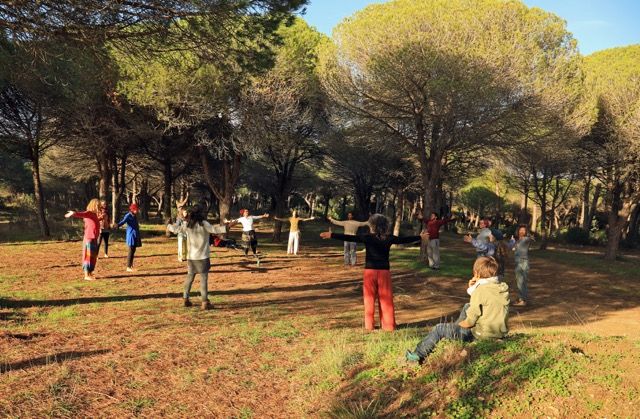
We set off on a gently undulating hike, where pine trees dapple light over the needle-dusted trail. This 6km path is named the PR1 Pedra do Galo (Rooster Stone), after the ancient monolith found at the end of the route: legend says a cockerel used to crow in the spot where it originally stood. It’s thought the stone was carved some 6,500 years ago, a number so deep in history it gives me a sense of vertigo.

Sculptures are placed around the trail during the festival. The theme for 2025 year was “fire”, a reminder of the increasingly extreme weather across Europe. Some wildfires are normal and healthy, but they are becoming more rampant and devastating. Charred earth and branches scar this otherwise lush trail. Thankfully, life is bouncing back. Our guide Joana Almeida, from eco-tour company Loulé Rural, breathes a sense of reverence into the hike: resin dripping from a split in a tree; the pine processionary caterpillar’s warning signs of its toxicity (orange stripes and thorny-looking hairs that sting); wild boar “spas”, where the earth is churned to mud. Overnight, she tells us, little snowdrops had bloomed from nowhere. 

The Monchique mountains

Arriving at the Monchique Resort & Spa in the cloak of darkness, the only clue to our terrain is the elaborate lift system, which accesses a series of blocks built on a steep hillside. This elegant resort was designed to minimise environmental impact, but hasn’t compromised luxury, with its hammam treatments and modern-Portuguese cuisine at the Serra restaurant. All 190 rooms have French doors and balconies, ideal for taking in the fresh air and viewing the mountain peaks.

For much of the world, the Algarve is synonymous with Portugal, yet the Portuguese will tell you the opposite: the region has little in common with the rest of the country. Here in the realm of altitude – the Serra de Monchique – local identity feels almost entirely distinct from the Algarve itself. Separating the Algarve from the Alentejo, its slopes are rich with deciduous oaks and chestnut woods, making it one of the few areas of Portugal that shows off dazzling autumn colours. 

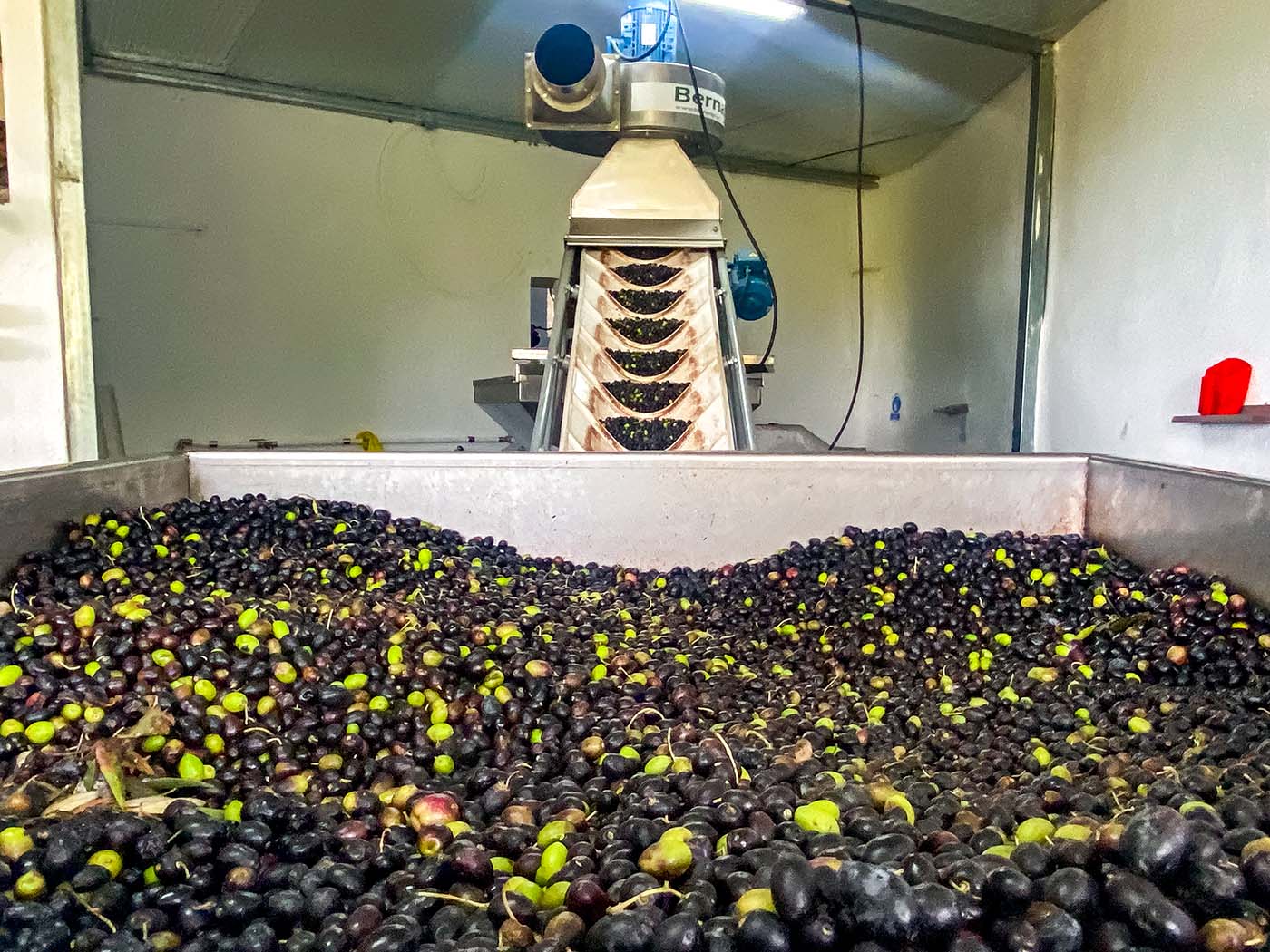
Francisco Simões, founder of Algarve Roots, picks us up to drive north, weaving some 300 metres (980ft) up to the village of Alferce. At a rambling stone farmhouse overlooking the valley, we are greeted by an enthusiastic, smartly dressed man and his even more enthusiastic chocolate-coloured dog. Miguel Gonçalo Oliveira Santos Bigodinho, aged just 24, is a traditional olive oil producer, running Pardieiros Olive Mill, a business started by his grandfather.

“You can go to a supermarket, and the bottles say, ‘cold press’, but they’ve never seen a machine like this,” he says, as we enter the chilly room that contains a sprawling manual press system. The machine requires three people to operate and draws up water from the well, 30 metres (100ft) underground. Granite stones used for grinding are carved from the mountains of Monchique. There were seven of these in Monchique alone when it started running in 1952; now there are three in Portugal. This family enterprise is helping keep the tradition alive.

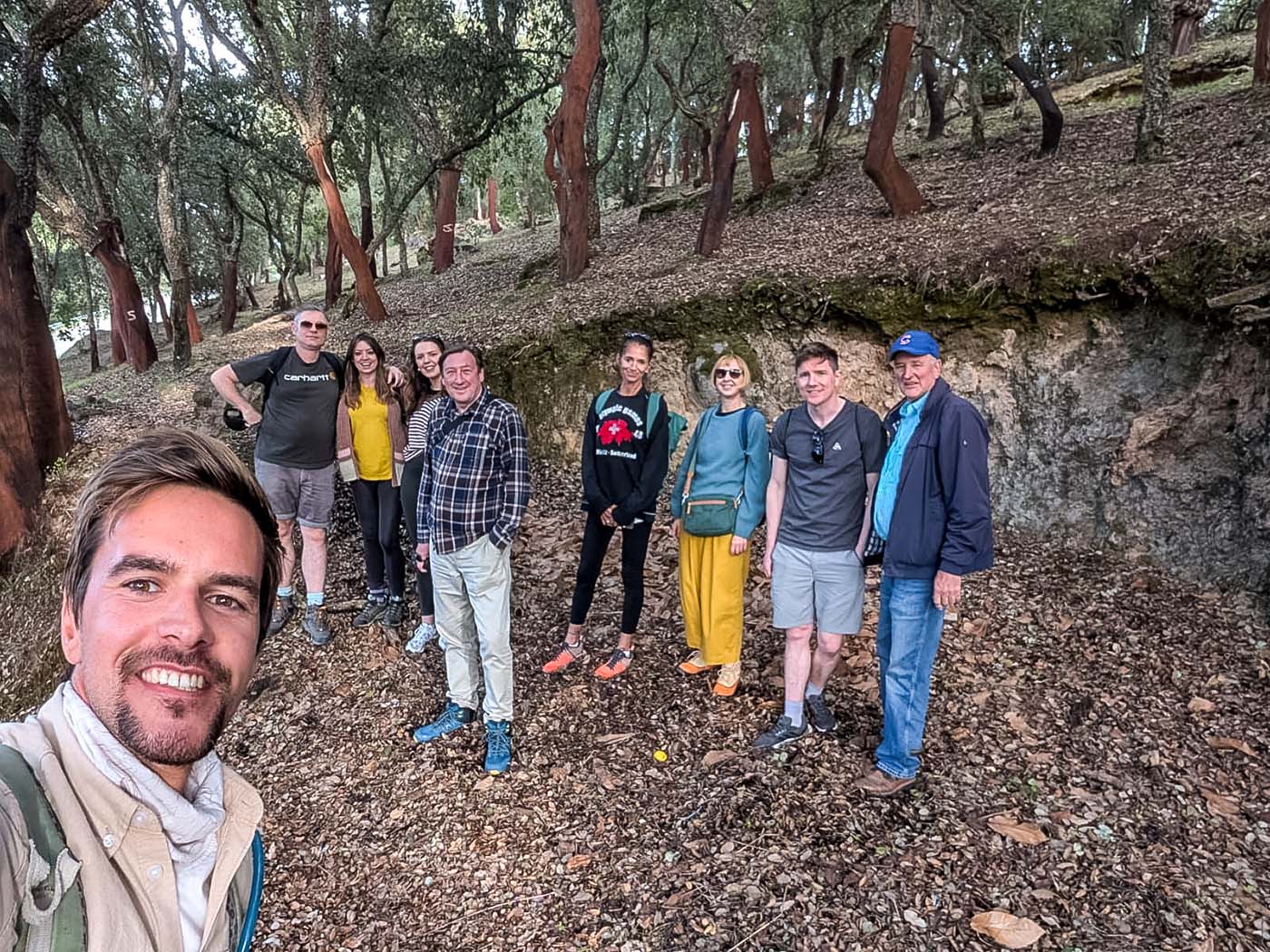
Silvery-green foliage of olive trees is a familiar sight in the Serra, as well as the region’s other precious natural resource: cork. Over half the world’s supply is produced in Portugal, and you won’t have to drive far in the Algarve to spot the cork oak, usually identifiable by the harvesting technique of semi-stripping the bark. 

Exploring Monchique on foot

Such half-suited trees line the trail as we walk the PR7 MCQ Percuso das Hortas (Vegetable Garden Path), a hike of 7.9km – although we do a shortened version by scooting around the market town of Monchique, happy to slow down for our final afternoon. It’s one of a trio of short-distance walking routes of this mountain range, in addition to the long-distance Via Algarviana (GR13), which spans inland Algarve. “Eco trails were something people were fighting for, but now it’s an established thing. We can do this year-round,” says Francisco.

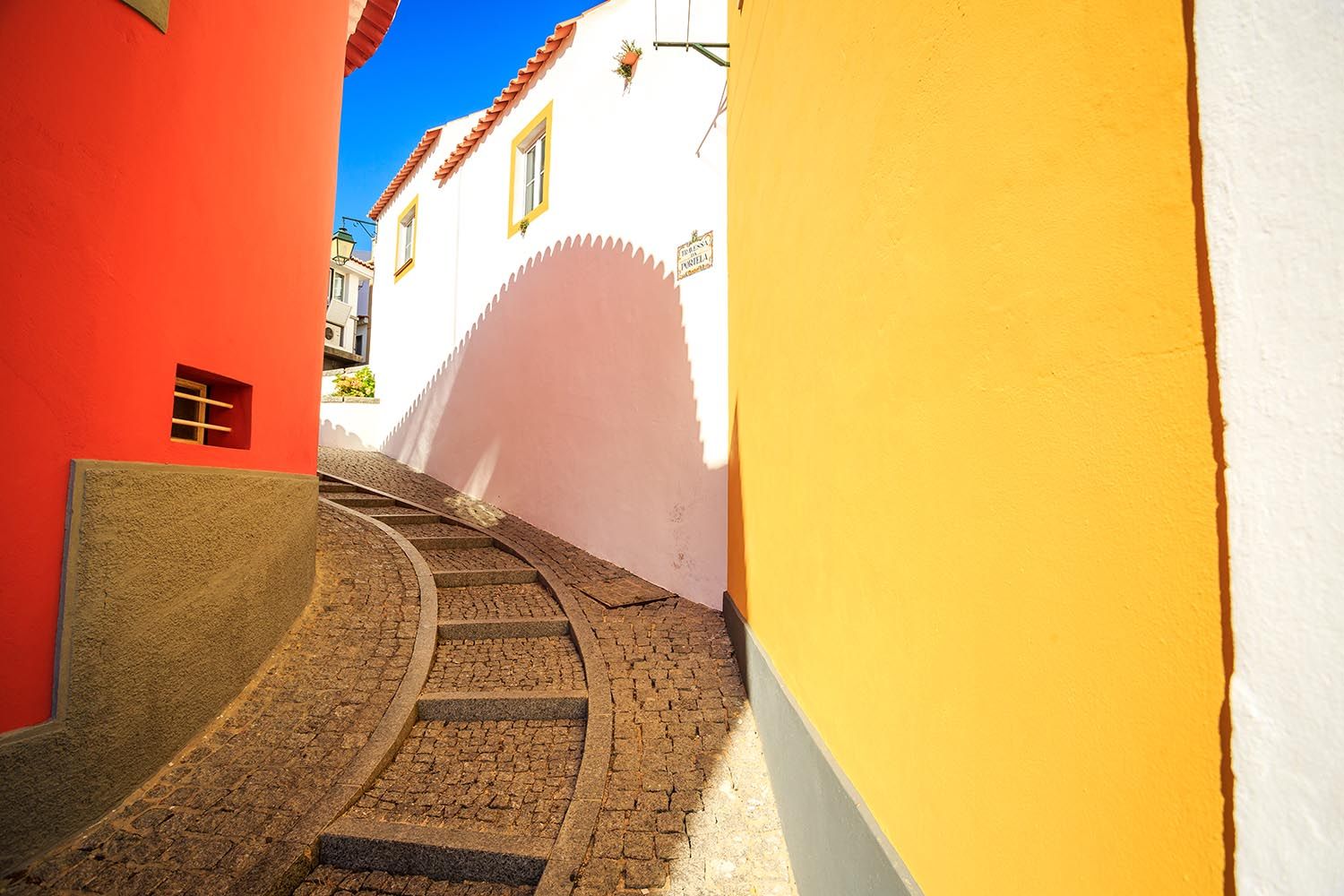
Wandering around the heart of the town, artisans busily work on their crafts, handmaking shoes and carving walking sticks at their workshops along the hilly backstreets. As our walk comes to an end, the sound of riotous fun and music bounces off the pastel-rendered buildings. It is November, and this can only mean one thing: chestnut harvest festivities – the Festa da Castanha. With its abundance of chestnut trees, Monchique is the main location for this tradition of bonfire-roasting in the streets.

In a courtyard perched above an expansive view, hundreds of people from all generations have arrived to dance to live music, while a writhing crowd gravitates around a ground-level bonfire. Cutting through this scrum is to be rewarded with hot, freshly fired chestnuts. We clink shots of medronho (berry liqueur), blowing on our chestnuts until they’re cool enough to bite – fresh and full of Monchique-grown flavour.

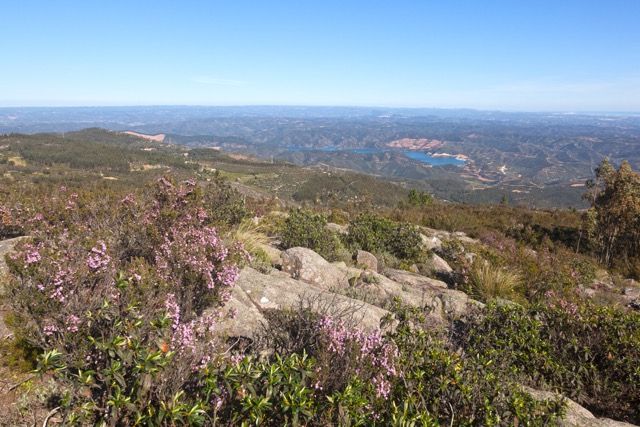
Francisco drives us up to a viewpoint, the ceiling of the Algarve, Foia, at 902 metres (2,959 ft). We look out over the spectrum of landscapes, from the Seven Hanging Valleys to the capital Faro and deep green mountain foothills. Watching the broad wingspans of birds circling high over the valley, I remember something Miguel told us: griffon vultures spend the mornings in the mountains, then ride down to the coast on thermal streams as the sun warms the air. Like the vultures, I’ve gained an appreciation for the diversity of environments, and I’ll strive to seek them all when I visit again.

By embracing the temperate off-season climate, you can access the entire region at its best, while proving that habitat conservation is a worthwhile investment to future-proof tourism. As I’ve discovered, exploring on foot also slows you down – perfect for discovering the local traditions that express the authentic identity of the Algarve. 

FACT BOX

For more information on visiting the Algarve, visit the Algarve Tourism website (https://visitalgarve.pt/en). 

The Westin Salgados Beach Resort (https://marriott.com/en-gb/hotels/faoaa-the-westin-salgados-beach-resort-algarve) starts at £128/ €145 per night based on two adults sharing a Deluxe King Room with a Resort View in March 2026. The Monchique Resort and Spa (https://monchiqueresort.com) starts at £163/ €185 per night based on two adults sharing a Balcony Patio Suite with breakfast included in March 2026.

Book Algarve eco-tours and local experiences through:

ProActiveTur (https://www.proactivetur.pt

Algarvian Roots (https://algarvianroots.com)

Loulé Rural (https:// loulerural.net)


Siobhan Warwicker

written by
Siobhan Warwicker

updated 04.02.2026

Planning your own trip? Prepare for your trip

Use Rough Guides' trusted partners for great rates