1. To explore the charming Plovdiv Old Town
Plovdiv Old Town offers arguably the best preserved collection of traditional architecture anywhere in southeastern Europe. If you want to know what Balkan towns looked like before the twentieth-century, then this is the place to find out. It was here that Plovdiv’s rich Bulgarian, Greek and Armenian merchants built large walled and gated houses, their overhanging upper storeys jutting out above narrow cobbled streets.
Furnished in an opulent mixture of eastern and western styles, many are now open to the public as museum houses. If you only have time for one of them, visit the ornate Kuyumdzhiev House, now home to the Ethnographic Museum.
2. To visit Roman remains
Not every city has a Roman stadium bang in the middle of its main shopping street, and while only one end of Plovdiv’s stadium is actually visible (the rest is still underground), it’s still a pretty dramatic sight, with its curve of terraced seating sitting in a hollow beneath a busy pedestrian precinct.
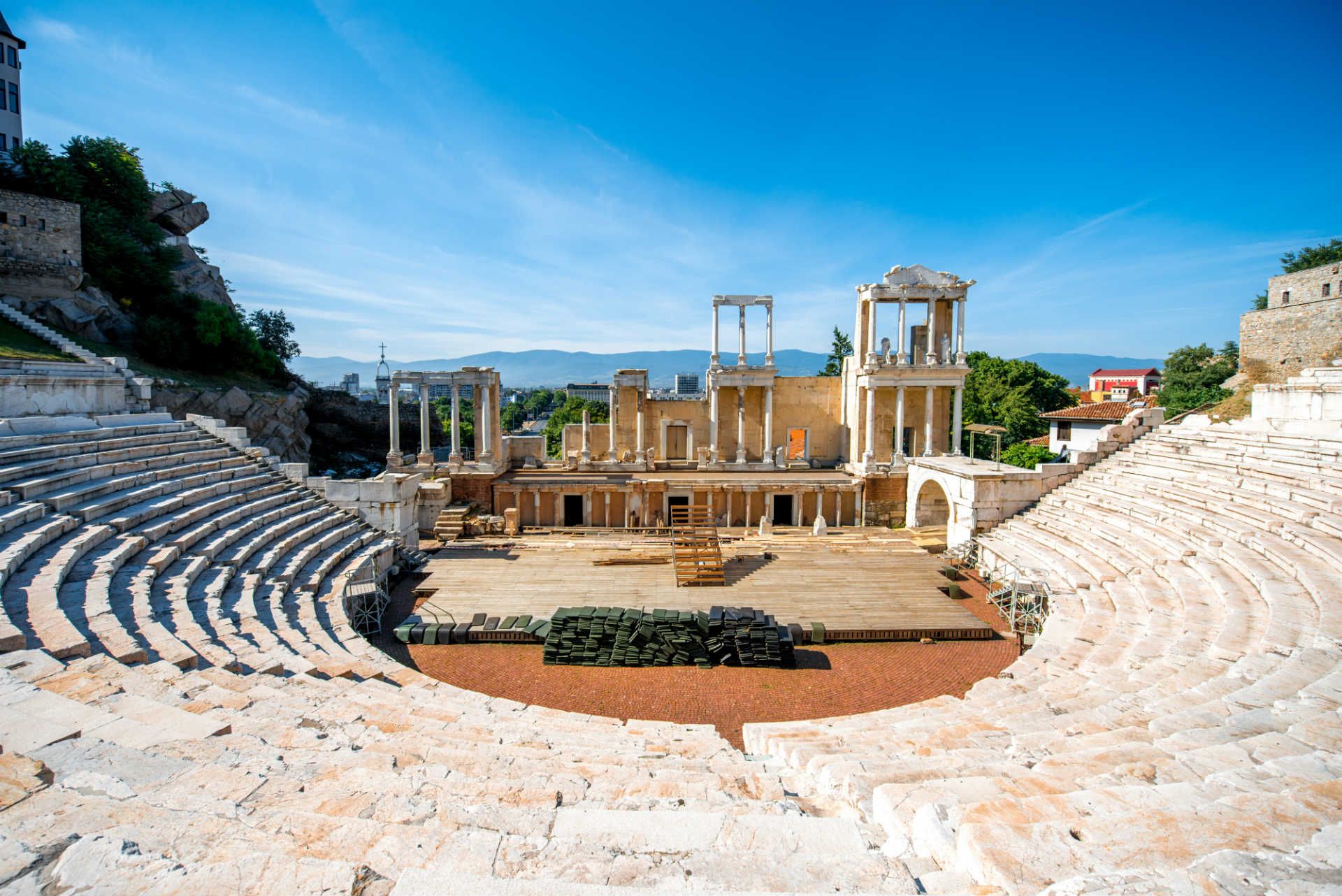
Recently re-landscaped to form an attractive archeological park, it's the perfect place to start your stroll of discovery through Roman Plovdiv. A little way uphill, on the fringes of the Old Town, is a Plovdiv's Roman theatre, a beautifully preserved amphitheatre that is still in use as a spectacular open-air performance venue. Roman streets and mosaics can still be seen in situ thanks to ongoing excavations around the forum, next to today’s Central Post Office.
It’s the kind of historical depth that works brilliantly for tailor-made holidays, where you can pair ancient ruins with modern city life, and dive deep into Bulgaria’s layered past at your own pace.