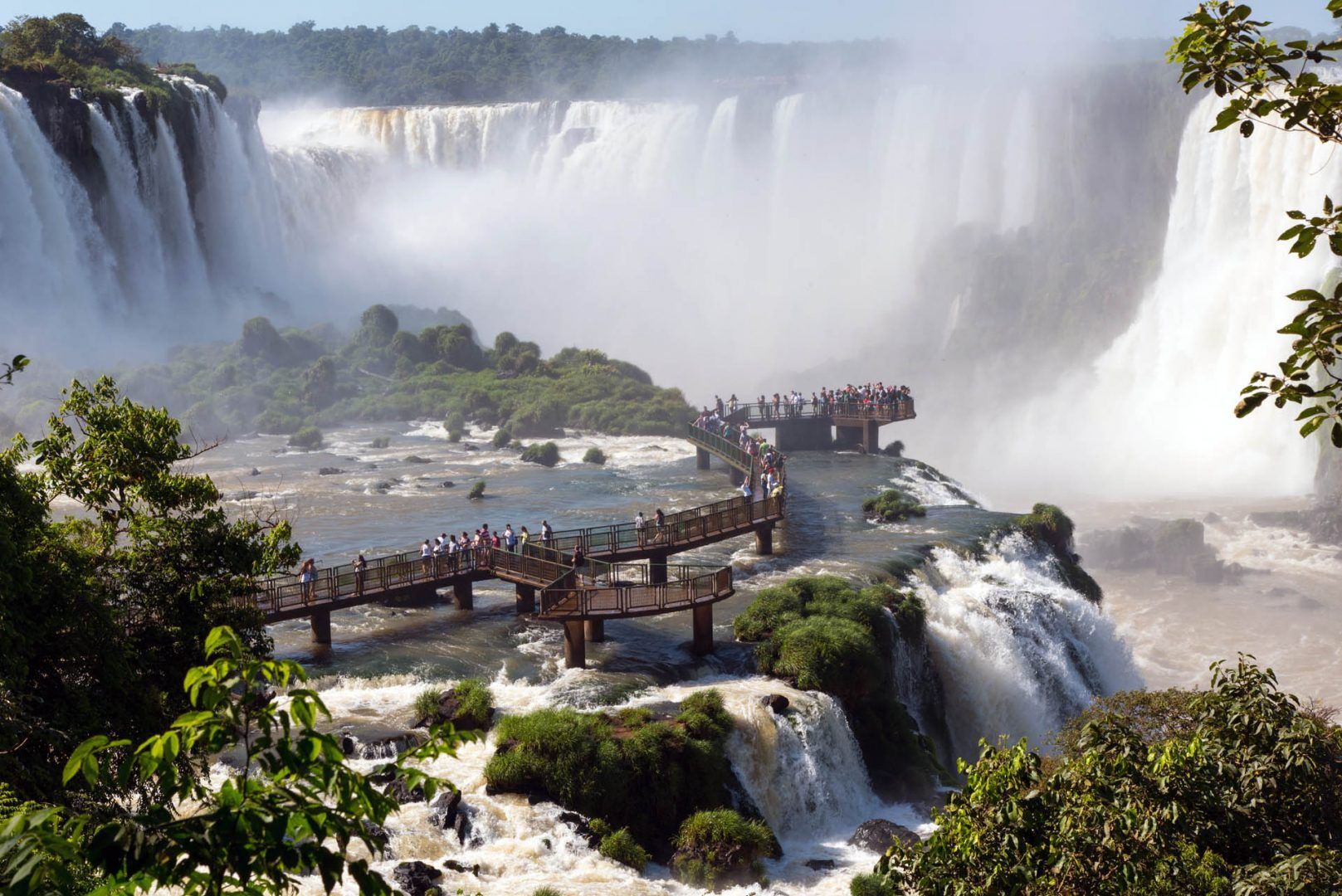
How to get to Iguazú Falls
Knowing how to visit Iguazu Falls starts with understanding your transportation options, which are easier than you might think. It’s worth noting that the surrounding region isn’t especially well-connected by rail. Nearly all travel here happens by road or air.
From Buenos Aires
Flying is the easiest way to get to Iguazú Falls from Buenos Aires. You’ll find regular flights from both Aeroparque and Ezeiza to Puerto Iguazú (IGR), and it takes about 1 hour and 45 minutes. After landing, it’s around a 20-minute drive to town or about 30 minutes if you’re heading straight to the park. The travel is short enough that many consider this a great thing to do in while in Buenos Aires.
Overland options from other parts of Argentina
If you're already in the north, getting to the falls by road works well. From Posadas, it’s about a 4-hour drive on Route 12, with jungle views and mate plantations along the way.
The drive through Misiones Province is interesting, and you can make stops at places like the San Ignacio ruins. Just watch out for patchy road conditions and avoid driving at night outside major towns.
Entry from Brazil or Paraguay
Coming from Brazil is pretty straightforward. From Foz do Iguaçu, you can catch a local bus to the Argentine side. You’ll go through immigration at the border, then continue on to either Puerto Iguazú or the park itself. The whole thing usually takes between 1 and 2 hours.
If you're coming from Paraguay, the route involves crossing into Brazil first—usually from Ciudad del Este over the Friendship Bridge—then crossing again into Argentina. It's two borders, but manageable in half a day. There are also a few river crossings straight into Puerto Iguazú, depending on where you’re starting from.
Best time to visit Iguazú Falls
You can visit any time of year, but each season has its pros and cons. The best time to visit Argentina will matter a bit on your travel style. The wet season (December to February) brings the highest water levels, but it also gets hot and humid, and some trails may close if the river rises too much.
Spring (September–November) and fall (March–May) are usually a good time to go—decent water flow, mild weather, and fewer crowds. It’s easier to walk the trails comfortably, and the views are still impressive.
In winter (June–August), there’s less water, but you’ll get clearer views and cooler temperatures—around 65–75°F (18–24°C). It’s a quieter time to visit, and better if you prefer to hike without the heat or mist. If you can, try to avoid holiday periods like Easter or Christmas, when things get much busier with local visitors.