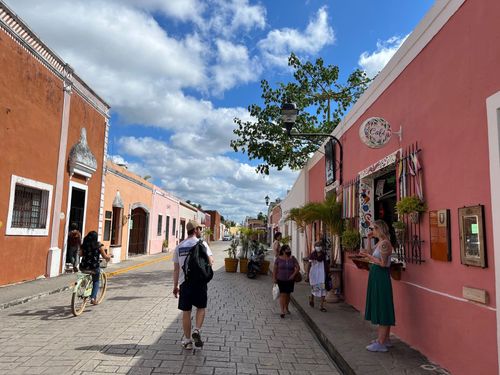
La Paz
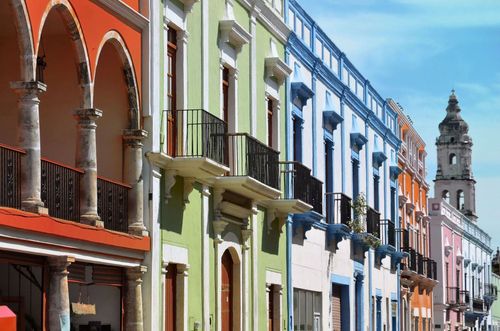
Everyone ends up in La Paz eventually, the state capital and largest city of Baja California Sur. While the outskirts may sprawl, the old town center near the languid malecón still preserves its sleepy provincial charm, even after modern updates. During the last week of February, La Paz bursts to life with a boisterous carnival filled with colorful parades and cultural events that transform the town. Eating here is a pleasure year-round, with fresh seafood and local specialties at every turn.
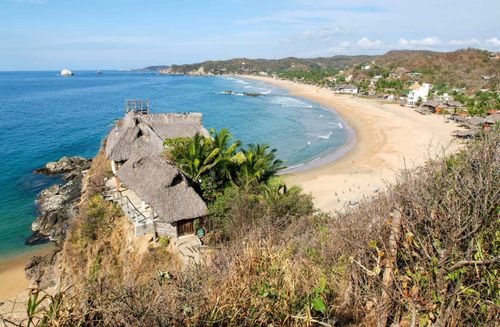
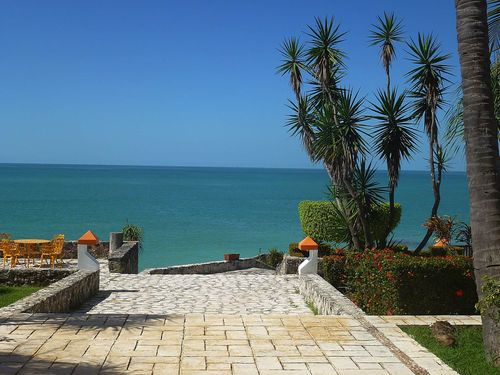
There isn’t much sightseeing within the city itself, but the surrounding beaches are a highlight of any Baja coastline trip, offering calm waters, soft sands, and easy escapes into nature. And a boat trip to Isla Espíritu Santo, rich in marine life and stunning coastal scenery, is an experience not to be missed.
South to La Paz
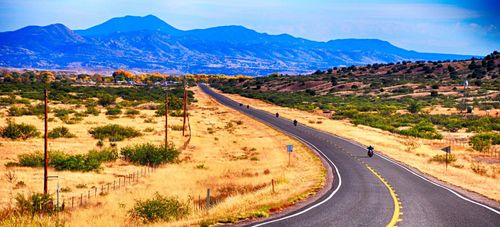
South of Ensenada, most travellers follow Hwy-1 as it shifts from suburban sprawl to farmland and then into curvy, hilly passes that eventually drop into the Santo Tomás valley. From here it’s around 1375km to La Paz, a journey which can take twenty hours direct or preferably several days, taking in the entrancing landscapes and small towns along the way – you’ll see far fewer tourists on this stretch of the Transpeninsular Highway. The alternative (if you have your own transport) is to detour via Hwy-3 and Hwy-5 to San Felipe, then take the rugged route along the Sea of Cortez to rejoin Hwy-1 north of Guerrero Negro.
Bahía Concepción
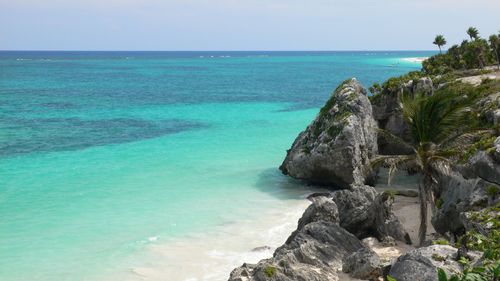
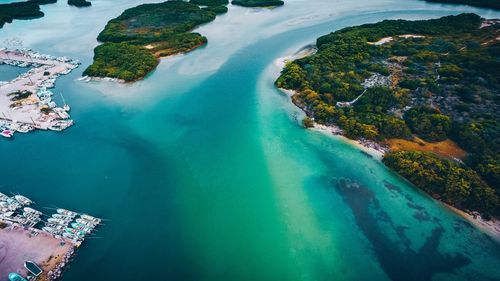
There is good diving and fishing immediately around Mulegé, but the best beaches are between 10km and 50km south of town along the shore of Bahía Concepción, for once easily accessible from Hwy-1 – the drive down to Loreto along this stretch of road is truly spectacular. The bay ranges from 3km to 6.5km wide, is 48km long and is enclosed on three sides and dotted with islands. The blue-green waters, tranquil bays and white-sand beaches are spellbinding and relatively undeveloped – though you will at times find teams of RVs lining the waters – and it’s a good place to break your journey for a day or so before travelling south. As far as kayaking goes, there are few places better than Bahía Concepción.
Whale watching from Guerrero Negro
Whale-watching is the principal reason people visit Guerrero Negro, as hordes of friendly California grey whales (up to two thousand at a time), which spend most of their lives in the icy Bering Sea around Alaska, can be observed (at remarkably close quarters) from within the nearby Laguna Ojo de Liebre (aka Scammon’s Lagoon), thrity minutes south of town. It’s a magical experience – and many visitors actually get to touch the whales, which sometimes come right up to bobbing vessels after the engines are switched off.
Organized tours begin in Guerrero, but you can also drive to the lagoon and hire a cheaper panguero (boat) yourself. Take Hwy-1 south for 9km and look for the sign to the Parque Natural de la Ballena Gris. From here it’s 6km along a rough dirt road to a gate (which someone will open, but only during the whale-watching season Jan–March), and another 18km to the lagoon. You’ll probably be asked to pay the park entrance fee here.
San Ignacio
Leaving Guerrero Negro, Hwy-1 winds 142km inland for the hottest, driest stage of the journey, across the Desierto Vizcaíno. In the midst of this landscape, SAN IGNACIO’s appeal is immediate, even from a distance. Gone are the dust and concrete that define the peninsula, replaced by green palms and a cool breeze; despite being hammered by Hurricane Odile in 2014, it remains an oasis any desert traveller would hope for, and another excellent base for whale-watching and cave art tours. There are no banks in town and few places accept credit cards – it’s best to come with a supply of cash.
Tours and trips from San Ignacio
Whale watching
Although whales are most in evidence in January and February, whale-watching tours to the nearby Laguna San Ignacio (around 50km from town, on mostly paved road) are offered from December to April. If you have your own car you can cut your expenses considerably (allow 1hr to be safe).
Cave art
Cave-art tours from San Ignacio focus on the Sierra de San Francisco about 45km north of town, where 320 sites exist, dating back some eight thousand years; tour operators usually pass through the little town of San Francisco de la Sierra and head for the easily accessible Cueva del Ratón, or remoter caves such as the Cueva Pintada and Cueva de las Flechas in Cañón San Pablo, which require a minimum of two days.
The Tides of San Felipe
The upper reaches of the Sea of Cortez experience the world’s third largest tides – fluctuations of 6–7m are common. You’ll soon realize why tide calendars are so common in San Felipe; water that laps lazily against the beach in the morning can recede a kilometre into the hazy distance by mid-afternoon.
El Boleo
Legend has it that while walking in the hills around Santa Rosalía in 1868, rancher José Villavicencio chanced upon a boleo, a blue-green globule of rock that proved to be just a taster of a mineral vein containing more than twenty percent copper. By 1880, the wealth of the small-scale mining concessions came to the notice of the Rothschilds, who provided financing for the French Compagnie du Boléo (or “El Boleo”) to buy mining rights and to build a massive extraction and smelting operation in 1885. Six hundred kilometres of tunnels were dug, a foundry was shipped out from Europe, and a new wharf built to transport the smelted ore north to Washington State for refining. Ships returned with lumber for the construction of a new town, laid out with houses built to a standard commensurate with their occupier’s status within the company.
By 1954, falling profits from the nearly spent mines forced the French to sell the pits and smelter to the Mexican government who, though the mines were eventually left idle, continued to smelt ore from the mainland until the 1990s. Starting in 2004, Canadian-listed Baja Mining Corp worked hard to reopen the mine – despite running into financing problems in 2012 (Korean Resources Corp is now the main shareholder) and damage caused by Hurricane Odile, production of copper, cobalt and zinc finally began in 2015, with the new El Boleo expected to have a minimum life of 22 years. Minera y Metalúrgica del Boleo has promised to work with local authorities to develop housing, infrastructure and utilities, and so far has created around a thousand new jobs in the area (with 65 percent local hires).
Cave art around Mulegé
Other than as a springboard for the beaches to the south, the main reason to stop at Mulegé is to take one of the cave art tours out to the Sierra de Guadalupe. This range boasts the densest collection of rock art in Baja, as well as some of the most accessible at La Trinidad (29 km west of town), requiring as little as five hours for the round trip (including 6.5km on foot). Getting a group together to cut costs shouldn’t prove a problem in high season, but you still need to shop around as the tours differ considerably. Overnight excursions are possible too, including a night at a 260-year-old ranch and two different cave locations. Head to Las Casitas in Mulegé (615 153 0019), which also acts as an informal tourist office for information on other local attractions and tours. They can connect you with Mulegé Tours, run by Salvador Castro Drew (615 153 0232) – Salvador grew up in the area and is one of the most knowledgeable local guides.
Sea lions, whale sharks and Isla Espíritu Santo
There are plenty of opportunities for fishing, diving and boat trips from La Paz, but it would be a shame to leave without visiting the azure waters of uninhabited Isla Espíritu Santo, a short boat ride north of the city. Protected within the Parque Nacional Archipiélago de Espíritu Santo (including the nearby Los Islotes, a small group of islands that hosts a colony of sea lions), snorkelling trips invariably encounter dolphins, manta rays, and depending on the time of year, fin whales and whale sharks (Nov–March) – the sea lions are a sure bet and always the most entertaining.
Loreto
Another popular escape for fishing and diving enthusiasts, LORETO was the site of the earliest permanent settlement in the Californias. Founded in 1697 by Juan María Salvatierra as the first Jesuit mission to the region, Loreto served as the administrative capital of the entire California territory until a devastating hurricane struck in 1829 and La Paz took on the role. Today Loreto is booming again; much of the centre is given over to craft shops and galleries, many selling silver, while the seafront malecón and central Plaza Cívica have been spruced up in recent years.
Some 8km south of town lies the largely expat community of Nopoló (aka Villages at Loreto Bay), one of the most ambitious residential developments in Mexico, and the posh Villa del Palmar resort. Construction has provided a massive economic boost to the entire region, but critics claim that the project threatens to overwhelm the already limited water supply and Loreto’s delicate natural assets: Mexico’s largest marine park, Parque Nacional Bahía de Loreto, lies just offshore, while the weathered landscapes of the Sierra de la Giganta provide a stunning backdrop.
Los Cabos
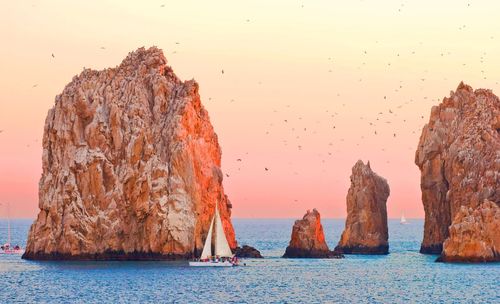
South of La Paz, Baja California finally runs out of land where the Pacific Ocean and the Sea of Cortez come together in spectacular fashion. The ocean and sea meet at the sister towns of Cabo San Lucas and San José del Cabo, known collectively as Los Cabos – easily the most exclusive parcel of land in Baja California. Undeniably beautiful and home to the lion’s share of the peninsula’s lavish resorts, golf courses and oft-photographed beaches, the area is one of the fastest-developing regions in Mexico (despite being hammered by Hurricane Odile in 2014), supporting a sizeable North American expat population and hordes of time-share owners.
But Los Cabos is just a tiny part of the cape. Many of its most remarkable areas still require a great deal of time and preparation to access, and many travellers rent cars to drive the loop north of Cabo San Lucas: via the fast Hwy-19 running straight up the Pacific coast through historic Todos Santos; the older Transpeninsular Highway (Hwy-1) trailing north from San José del Cabo to La Paz; and the third, most exhausting route along the East Cape.