Museu Nacional d’Art de Catalunya (MNAC)
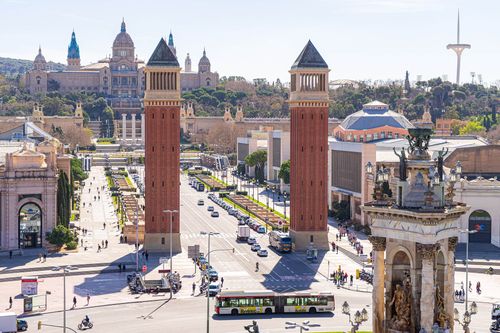
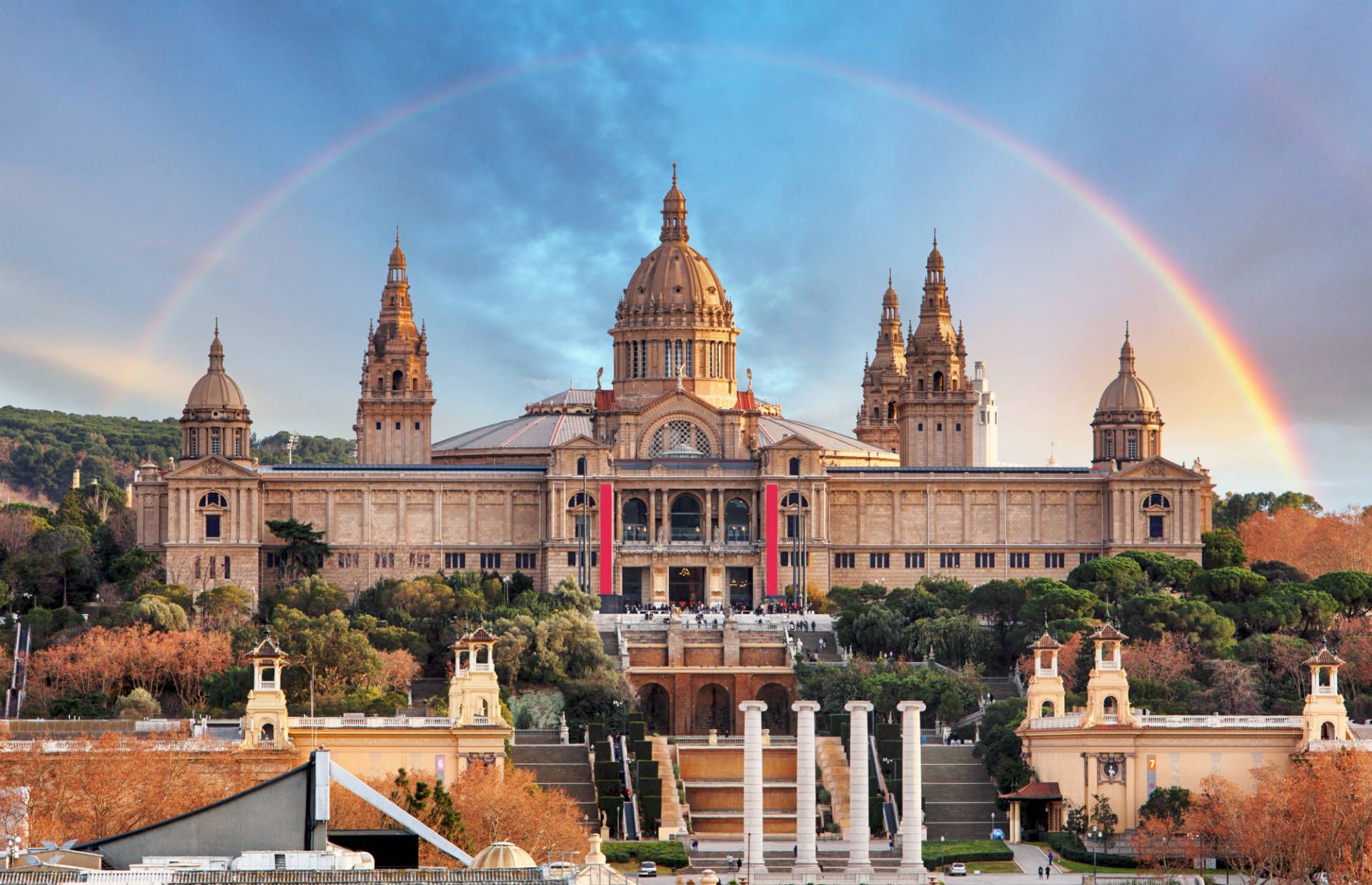
The towering Palau Nacional, centrepiece of Barcelona’s 1929 International Exhibition, is home to one of Spain’s great museums, the Museu Nacional d’Art de Catalunya (MNAC), showcasing a thousand years of Catalan art in stupendous surroundings. Its scope is such that it can be difficult to know where to start, but if time is limited it’s recommended you concentrate on the medieval collection, which you’ll be able to see in an afternoon. This is split into two main sections, one dedicated to Romanesque art and the other to Gothic – periods in which Catalunya’s artists were pre-eminent in Spain. The collection of Romanesque frescoes in particular is the museum’s pride and joy, while MNAC also has impressive holdings of European Renaissance and Baroque art, as well as an unsurpassed collection of “modern” (ie nineteenth- and twentieth-century) Catalan art up until the 1940s – everything from the 1950s and later is covered by MACBA. In addition, temporary blockbuster exhibitions (separate admission charge) change every two to four months.
Romanesque collection
The Romanesque collection is the best of its kind in the world. From the eleventh century, the Catalan villagers of the high Pyrenees built sturdy stone churches, which were then lavishly painted in vibrantly coloured frescoes. To save them from degradation, the frescoes were moved to the museum and now are imaginatively presented in reconstructions of their original church settings. Still luminescent after eight hundred years, the frescoes have a vibrant, raw quality, best exemplified by those taken from churches in the Boí valley in the Catalan Pyrenees – such as the work of the anonymous “Master of Taüll” in the church of Sant Climent; look out for details such as the leper, to the left of the Sant Climent altar, patiently suffering a dog to lick his sores.
Gothic collection
The evolution from the Romanesque to the Gothic period was marked by a move from murals to painting on wood, and by the depiction of more naturalistic figures in scenes of the lives of saints and royalty. By the time of fifteenth-century Catalan artists like Jaume Huguet and Lluís Dalmau, works showed the strong influence of contemporary Flemish painting, in the use of denser colours, the depiction of crowd scenes and a concern for perspective. The last Catalan Gothic-era artist of note is the so-called Master of La Seu d’Urgell, responsible for a fine series of six paintings (Christ, the Virgin Mary, Saints Peter, Paul and Sebastian, and Mary Magdalene) that once formed the covers of an organ.
Renaissance and Baroque collections
Major European artists displayed include Rubens, Goya, El Greco, Zurbarán and Velázquez, though the museum is keen to play up Catalan works of the period, which largely absorbed the prevailing European influences – thus Barcelona artist Antoni Viladomat (1678–1755), whose twenty paintings of St Francis, executed for a monastery, are shown here in their entirety. However, more familiar to most will be the masterpieces of the Spanish Golden Age, notably Velázquez’s Saint Paul.
Modern art collection
MNAC ends on a high note with its modern Catalan art collection, which is particularly good on modernista and noucentista painting and sculpture, the two dominant schools of the nineteenth and early twentieth centuries. Rooms highlight individual artists and genres, shedding light on the development of art in an exciting period of Catalunya’s history, while there are fascinating diversions into modernista interior design (with some pieces by Gaudí), avant-garde sculpture and historical photography.
Fundació Joan Miró
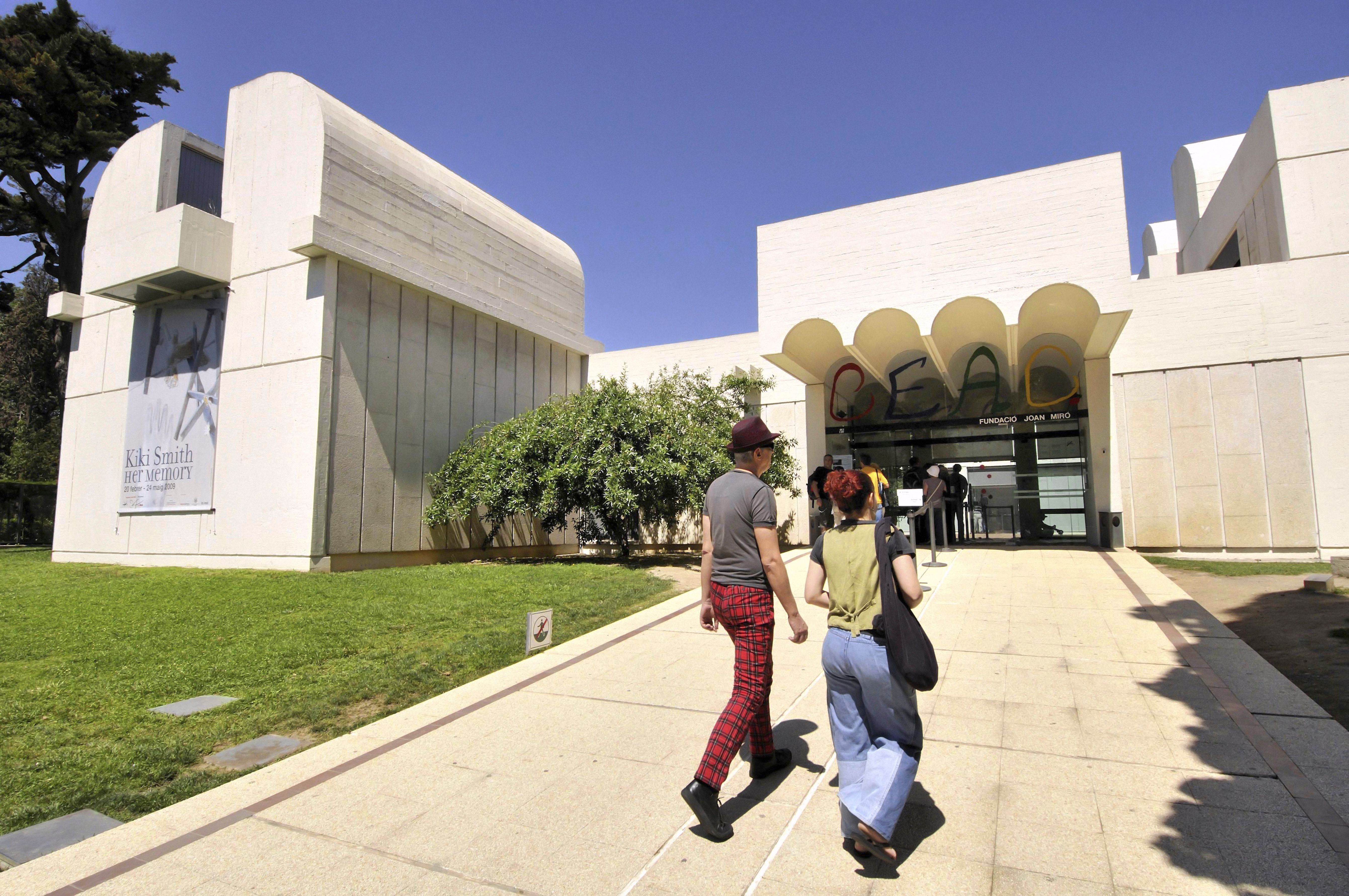
Montjuïc’s highlight for many is the Fundació Joan Miró, Barcelona’s most adventurous art museum, opened in 1975 and set among gardens overlooking the city. Joan Miró (1893–1983) was one of the greatest of Catalan artists, establishing an international reputation while never severing his links with his homeland. He showed a childlike delight in colours and shapes and developed a free, highly decorative style – the paintings and drawings, in particular, are instantly recognizable, among the chief links between Surrealism and abstract art. Miró had his first exhibition in 1918, and after that spent his summers in Catalunya (and the rest of the time in France) before moving to Mallorca in 1956, where he died.
Inside the museum
Miró’s friend, the architect Josep Lluís Sert, designed the beautiful building that now houses the museum, a permanent collection of paintings, graphics, tapestries and sculptures donated by Miró himself and covering the period from 1914 to 1978. For a rapid appraisal of Miró’s entire oeuvre, look in on the museum’s Sala K, whose 23 works are on long-term loan from a Japanese collector. Here, in a kind of potted retrospective, you can trace Miró’s development as an artist, from his early Impressionist landscapes (1914) to the minimal renderings of the 1970s. Other exhibits include his enormous bright tapestries (he donated nine to the museum), pencil drawings and sculpture outside in the gardens. Young experimental artists have their own space in the Espai 13 gallery. There’s also a bookshop, and a café-restaurant (lunch 1.30–3pm, otherwise drinks, pastries and sandwiches) with outdoor tables on a sunny patio – you don’t have to pay to get into the museum to use this.
The Olympics on Montjuïc
The main road through Montjuïc climbs around the hill and up to the city’s principal Olympic area, centred on the Estadi Olímpic. Built originally for the 1929 exhibition, the stadium was completely refitted to accommodate the 1992 opening and closing ceremonies, while to one side a vast terrace provides one of the finest vantage points in the city. Long water-fed troughs break the concrete and marble expanse, while the confident, space-age curve of Santiago Calatrava’s communications tower dominates the skyline. Around the other side, just across the road from the stadium, the history of the Games themselves – and Barcelona’s successful hosting – are covered in the Museu Olímpic i de l’Esport, Avgda. de l’Estadi 60 (Tues–Sat 10am–6pm April–Sept until 8pm, Sun & hols 10am–2.30pm; €4.50; t932 925 379, museuolimpicbcn.com; m Espanya then 25min walk, or bus #193 or #50 from Avgda. de la Reina María Cristina).
The 1992 Olympics were the second planned for Montjuïc’s stadium. The first, in 1936 – the so-called “People’s Olympics” – were organized as an alternative to the Nazis’ infamous Berlin Games of that year, but the day before the official opening Franco’s army revolt triggered the Civil War and scuppered the Barcelona Games. Some of the 25,000 athletes and spectators who had turned up stayed on to join the Republican forces.
Teatre Grec and the Barcelona Festival
Montjuïc takes centre-stage each year during Barcelona’s annual summer cultural festival (barcelonafestival.com), known locally as the Grec, when arias soar from the open-air stage of the Teatre Grec, a Greek theatre cut into a former quarry on the Poble Sec side of the hill. Starting in late June (and running throughout July and August), the festival incorporates drama, music and dance, with the opening sessions and some of the most atmospheric events staged in the theatre, from Shakespearean productions to shows by avant-garde performance artists. These can be magical nights – a true Barcelona experience – though you’ll need to be quick off the mark for tickets (which usually go on sale in May).
The Eixample
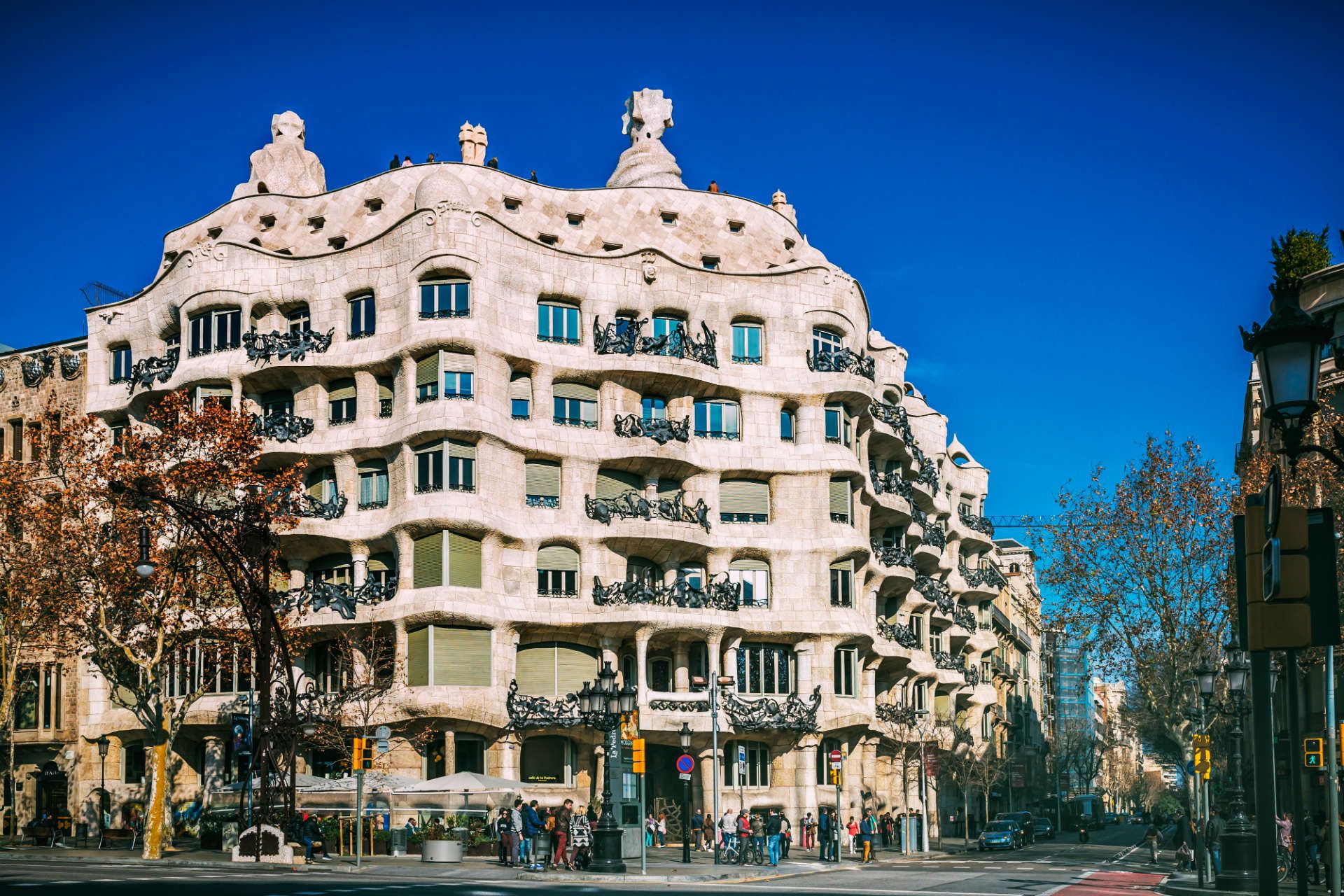
The vast nineteenth-century street grid north of Plaça de Catalunya is the city’s main shopping and business district. It was designed as part of a revolutionary urban plan – the Eixample in Catalan (pronounced aye-sham-pla, the “Extension” or “Widening”) – that divided districts into regular blocks, whose characteristic wide streets and shaved corners survive today. It’s not a neighbourhood as such – and, in fact, is further split into two distinct sections, namely the Dreta de l’Eixample (ie, the right-hand side) and Esquerra de l’Eixample (left-hand side), which fall either side of the two central parallel avenues, Passeig de Gràcia and Rambla de Catalunya. It’s on and around Passeig de Gràcia, above all, that the bulk of the city’s show-stopping modernista (Catalan Art Nouveau) buildings are found, along with an array of classy galleries and some of the city’s most fashionable hotels, shops and boutiques.
Building a designer city
As Barcelona grew more prosperous throughout the nineteenth century, it was clear that the city had to expand beyond the Barri Gòtic. A contest was held to design the city’s new quarters and the winning plan was that of utopian engineer and urban planner Ildefons Cerdà i Sunyer, who drew up a grid-shaped town marching off to the north, intersected by long, straight streets and cut by broad, angled avenues. Work started in 1859 and the Eixample immediately became the fashionable area in which to live, as the moneyed classes moved into luxurious apartments on the wide new avenues. As the money in the city moved north, so did a new class of architects who began to pepper the Eixample with ever more striking examples of their work, inspired by modernisme, the Catalan offshoot of Art Nouveau. Three architects in particular came to prominence in Barcelona and, in doing so, introduced a building style that has given the city a look like no other.
Antoni Gaudí i Cornet Born in Reus, near Tarragona, to a family of artisans, the work of Antoni Gaudí i Cornet (1852–1926) was never strictly modernista in style, but the imaginative impetus he provided was incalculable. Fantasy, spiritual symbolism and Catalan pride are evident in every building he designed, while his architectural influences were Moorish and Gothic, embellished with elements from the natural world. Gaudí rarely wrote a word about the theory of his art, preferring the buildings to demand reaction – no one stands mute in front of an Antoni Gaudí masterpiece.
Lluís Domènech i Montaner With Gaudí in a class of his own, it was Lluís Domènech i Montaner (1850–1923) who was perhaps the greatest pure modernista architect. Drawing on the rich Catalan Romanesque and Gothic traditions, his work combined traditional craft methods with modern technological experiments, seen to triumphant effect in his masterpiece, the Palau de la Música Catalana.
Josep Puig i Cadafalch Like other modernista architects, the work of Josep Puig i Cadafalch (1867–1957) also contains a wildly inventive use of ceramic tiles, ironwork, stained glass and stone carving. His first commission, the Casa Martí, housed the famous Els Quatre Gats tavern for the city’s avant-garde artists and hangers-on, while in various Eixample mansions Puig i Cadafalch brought to bear distinct Gothic and medieval influences.
Other modernista craftsmen Modernisme was often a true collaborative effort between the architects and their artisans. Antoni Gaudí, for example, always worked with skilled craftsmen, including his longtime collaborator – and a master of mosaic decoration – Josep María Jujol i Gilbert (1879–1949). The other significant name is that of Eusebi Arnau i Mascort (1864–1933), who provided meticulous carvings for all the main modernista architects – much loved is his tour-de-force carved fireplace in the Raval’s Hotel Espanya. Some projects brought together the cream of craft talent, so at Domènech i Montaner’s Palau de la Música Catalana, for example, the glorious stained glass by Antoni Rigalt and elaborate facade sculpture by Miquel Blay form an integral part of the whole.
Treasure-hunting at Els Encants Vells
At the city’s traditional open-air flea market, Els Encants Vells (c/del Dos de Maig; Mon, Wed, Fri & Sat 7am–3pm, plus same times Sun & hols from Dec 1–Jan 5; encantsbcn.com; mEncants/Glòries), you name it, you can buy it: old sewing machines, cheese graters, photograph albums, cutlery, lawnmowers, clothes, shoes, CDs, antiques, furniture and out-and-out junk. It’s best in the early morning, and haggling for any “old charms” (encants vells) you might fancy is de rigueur, but you’re up against experts. The market is due a new home with the completion of the Glòries renovations, so access, hours and location are subject to change over the next few years.
Gràcia
Gràcia – the closest neighbourhood to the Eixample – was a village for much of its early existence before being annexed as a city suburb in the late nineteenth century. There’s still a genuine small-town atmosphere here, very distinct from the old-town neighbourhoods, while Gràcia’s vibrant cultural scene and nightlife counters the notion that Barcelona begins and ends on the Ramblas. That said, there’s not that much to see, but wander the narrow, gridded streets, catch a film or hit one of the excellent local bars or restaurants, and you’ll soon get the feel of a neighbourhood that – unlike some in Barcelona – still has a soul. Most of the boutiques, galleries, cinemas and cafés are near pretty Plaça de la Virreina, with c/Verdi in particular always worth a stroll. A short walk to the southwest, Plaça del Sol is the beating heart of much of the district’s nightlife, while Plaça Rius i Taulet, the “clock-tower square”, a couple of minutes to the south, is another popular place to meet for brunch. However, the one unmissable attraction is just on the neighbourhood fringe, namely the surreal Parc Güell, by architectural genius Antoni Gaudí.
Parc Güell
Parc Güell, Antoni Gaudí’s extraordinary urban park on the outskirts of Gràcia, was originally planned as a private housing estate of sixty dwellings, furnished with ornamental paths, recreational areas and decorative monuments. Gaudí worked on the project between 1900 and 1914 but in the end only two houses were actually built, and the park was officially opened to the public instead in 1922.
Laid out on a hill, which provides fabulous views back across the city, the park is an almost hallucinatory expression of the imagination. Pavilions of contorted stone, giant decorative lizards, a vast Hall of Columns (intended to be the estate’s market), the meanderings of a huge ceramic bench – all combine in one manic swirl of ideas and excesses.
Casa Museu Gaudí
One of Gaudí’s collaborators, Francesc Berenguer, designed and built a turreted house within the park for the architect. In the Casa Museu Gaudí, his ascetic study and bedroom have been kept much as they were in his day, while other rooms display a diverting collection of furniture he designed for other projects – a typical mixture of wild originality and brilliant engineering.
Entrance to Parc Güell
Although you can freely enter and explore Parc Güell, if you wish to access the Monumental Core, you will need to purchase a ticket, as with the Gaudi House Museum. Tickets can be purchased on site, although there is also an option to buy online up to three months before your visit.
Les Corts and Pedralbes
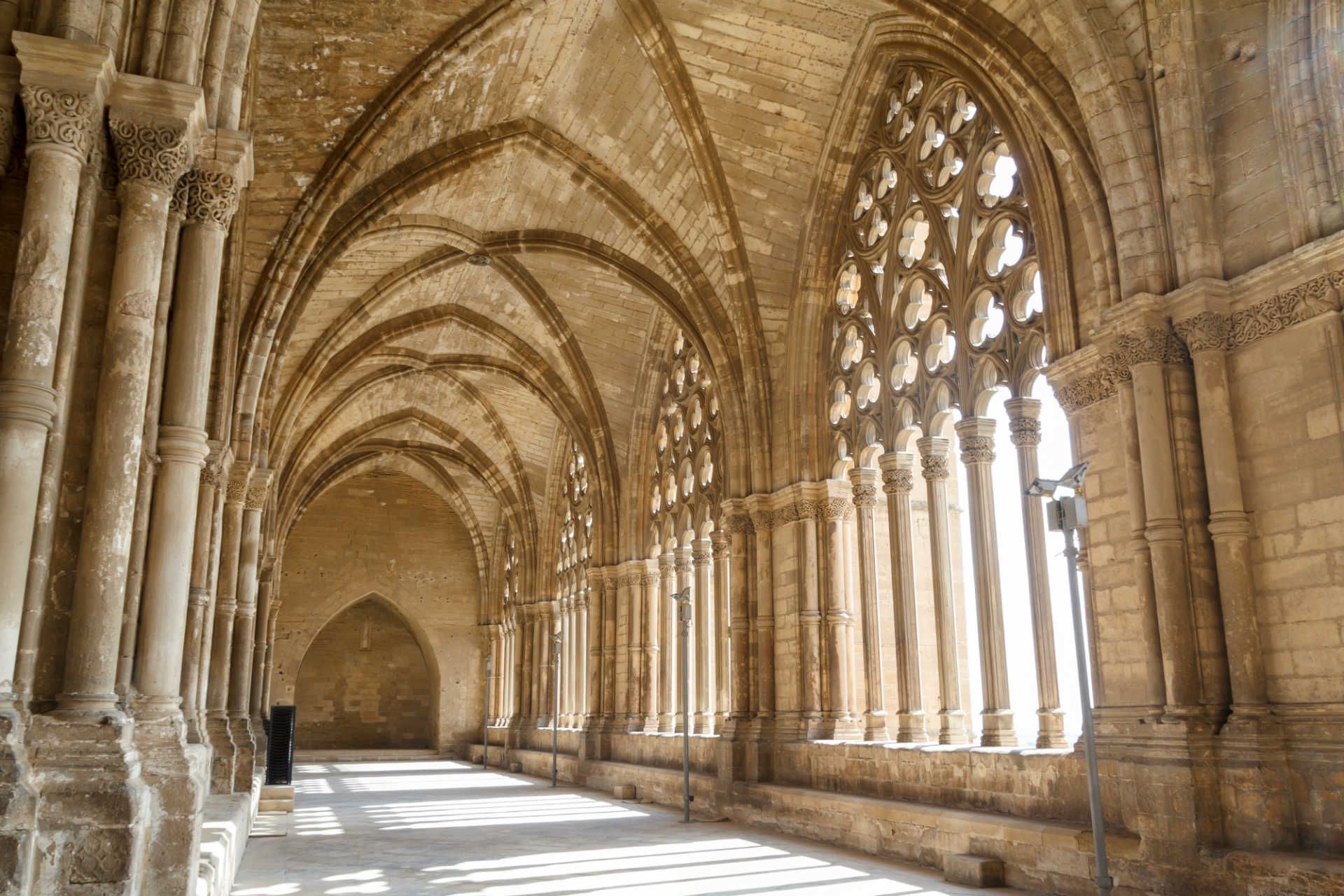
To the northwest of the city centre, what was once the village of Les Corts is now largely indistinguishable from the rest of the modern city, save for the hallowed precincts of Camp Nou, FC Barcelona’s stupendous football stadium. Nearby, across Avinguda Diagonal, the Palau Reial de Pedralbes combines the city’s applied art collections (of clothes and textiles, decorative arts and ceramics), while a half-day’s excursion can be made by walking from the palace, past the Gaudí dragon gate at Pavellons Güell to the calm cloister at the Gothic monastery of Pedralbes.
Camp Nou and FC Barcelona
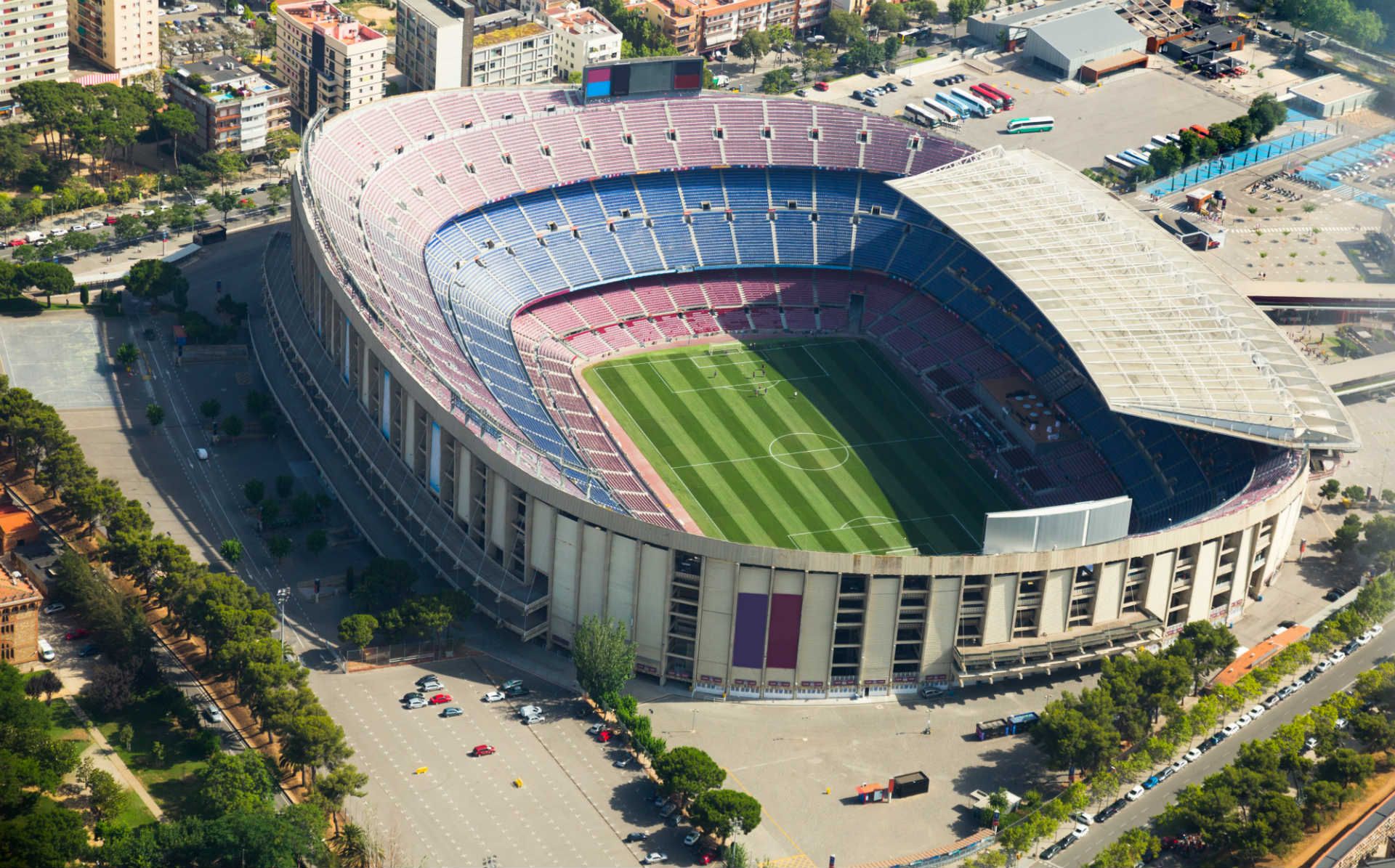
It’s no exaggeration to say that football in Barcelona is a genuine obsession, with support for the local giants FC Barcelona raised to an art form. “More than just a club” is the proud boast, and certainly during the dictatorship years the club stood as a Catalan symbol around which people could rally, a history that adds another layer to a Madrid and Barcelona trip. Arch rivals Real Madrid, on the other hand, were always seen as Franco’s club. The swashbuckling players in the famous blaugrana, or claret and blue, shirts have transcended national barriers to become every football fan’s second favourite team. Indeed, the four-time European champions, most recently in 2011, mercurial masters of the elegant tiki-taka, pass-and-move style, are often hailed as the world’s best team.
Museum and stadium tour
Together, the 98,000-seat stadium and museum – billed as the “Camp Nou Experience” – provide a magnificent celebration of Spain’s national sport. The self-guided tour, complete with audio-guide, winds through the changing rooms and players’ tunnel onto the pitch and up to the press gallery and directors’ box for stunning views. The museum is jammed full of silverware and memorabilia, including the six cups won in 2009 alone, Barcelona’s annus mirabilis, while a cracking multimedia zone profiles historic games and famous players and relives the match-day atmosphere. Finally, you’re directed into the FC Botiga megastore, where you can buy anything from a replica shirt down to a branded bottle of wine.