Southern Vietnam’s top cultural attractions
Seven of the best things to see and do from our Southern Vietnam Travel Guide.
Con Dao Archipelago
These islands once hosted Vietnam’s most feared prison, but now welcome divers, trekkers and beach bums alike.
Mui Ne
Stay in a fancy resort at Mui Ne and spend your time kitesurfing in the breezy bay.
Ca Na beach
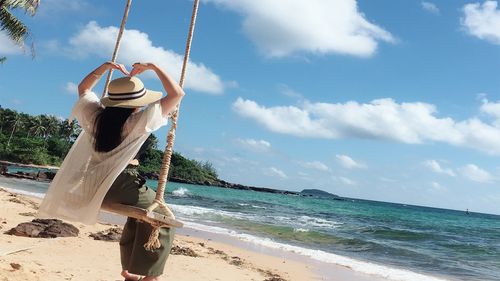
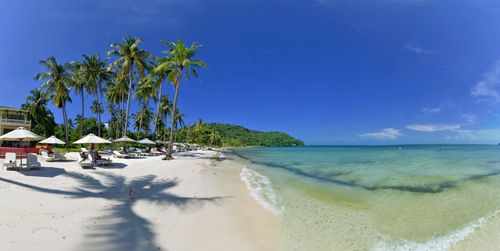
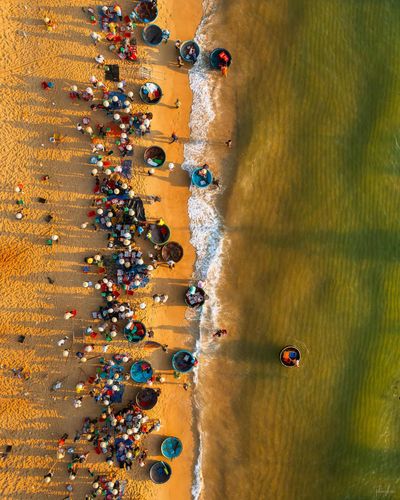
Everyone knows about Nha Trang and Mui Ne, but the southern coast still has a few virtually deserted beaches – this pristine stretch being one such example.
Cham architecture
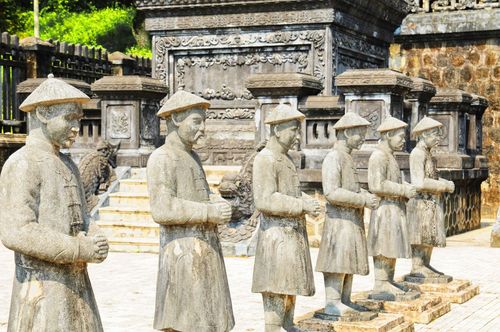
Get up close to the impressive Po Klong Garai towers, just outside Phan Rang, or check out the other Cham structures in the region.
Underwater activities
Snorkel or dive in the clear waters off the islands near Nha Trang.
Mud baths
Soak in a mud bath at the Thap Ba Hot Springs near Nha Trang.
Quy Nhon
Spend time exploring this unsung beach city, which has great seafood, some of the coast’s best Cham ruins and a chilled-out vibe.
Planning your trip to Vietnam’s Southern Coast
How long should you spend on Vietnam’s Southern Coast? If you’re short on time, stick to Nha Trang: its beaches, Hon Chong, and even Vinpearl Land if you’re up for something fun. If you can stretch your trip, head to Mui Ne for sand dunes and Phan Thiet for fresh seafood, or relax on the quieter beaches around Ninh Chu.
To help plan your Vietnam trip, we’ve created Vietnam itineraries with the help of local travel experts who know how to make every moment count:
What to see in Southern Vietnam
These days a few enclaves around Phan Thiet and Phan Rang are all that remain of the Cham people, but the remnants of the towers that punctuate the countryside – many of which have recently been restored – recall Champa’s former glory.
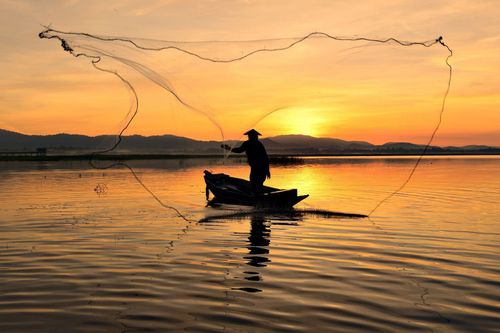
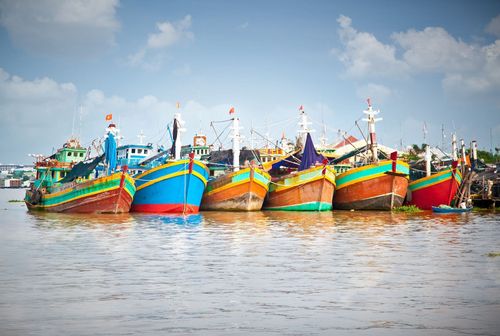
Despite the influx of tourism, sea fishing is the region’s lifeblood and provides a living for a considerable percentage of the population. Fleets of fishing boats jostle for space in the cramped ports and estuaries of the coastal towns, awaiting the turn of the tide, and fish and seafood drying along the road are a common sight. The fertile soil also blesses the coastal plains with coconut palms, rice paddies, cashew orchards, sugar cane fields, vineyards and shrimp farms. One of the most commonly seen fruits here, especially around Phan Thiet, is the dragon fruit, which grows on plants with distinctive, octopus-like tentacles.
Vietnam’s southernmost beaches are not on the southern coast at all, but on the former French prison islands of the Con Dao Archipelago. While many beaches elsewhere are now experiencing high-octane development, Con Dao retains a laidback, unhurried air that tempts many to stay far longer than they’d planned. Back on the mainland, the first place of note is Vung Tau, once a French seaside resort, and now a smart, oil-rich town with passable beaches – much better ones can be found further up the coast. In reality, few travellers have the time or inclination to meander along the beaches between Vung Tau and Mui Ne, but with your own transport and an adventurous spirit you’ll find somewhere to pace out a solitary set of footprints in the pristine sand. Other more secluded beaches that warrant an expedition further north include Doc Let, while Quy Nhon makes a useful halt above Nha Trang. The scars of war tend not to intrude too much along this stretch of the country, though many visitors make time to visit Quang Ngai, where Vietnam’s south-central arc of coastline culminates, and view the sombre site of the notorious My Lai massacre, perpetrated by US forces in 1968.
Just a short way up the coast, you’ll find it impossible to be alone in Mui Ne itself. It was almost unheard of until very recently, when its transition from being the country’s best-kept secret to one of its most high-profile resorts happened almost overnight. It’s perhaps a sign of things to come for Vietnamese tourism – slick resorts rubbing shoulders along a fine sweep of soft sand, looking out over aquamarine waters. This tourist enclave attracts a steady stream of overseas visitors, and also provides an idyllic short break for Ho Chi Minh City’s expats and growing middle-class. Those who feel that a day sunbathing is a day wasted will prefer to rest up around Phan Rang, site of Po Klong Garai, the most impressive of the many tower complexes erected by the once-mighty Champa empire.
The Con Dao Archipelago
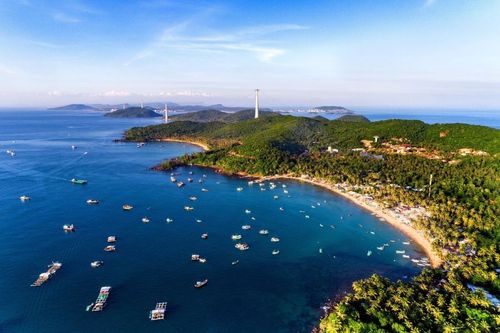
Vietnam is book-ended to the south by the admirably unspoilt Con Dao Archipelago, a confetti-like spray of sixteen emerald-green islands, cast adrift in the South China Sea some 185km south of Vung Tau. The sleepy nature of the archipelago belies some tumultuous history – under French occupation, Con Dao was home to the most feared prison in the country, and haunting remnants of that time are still visible. However, more come here to get away from such negative thoughts, and since regular flights began early this century, the archipelago has taken its first steps to welcoming tourists.
Con Son island, the largest in the group, is a laidback get-away with some striking colonial buildings, some of the best beaches in Vietnam and challenging treks in the rugged hills of the national park. Trekking in the national park, diving off the surrounding islands, watching sea turtles laying eggs and lounging on the uncrowded beaches are some of the alternative activities.
Brief history of Con Dao Archipelago
The British East India Company established a fortified outpost on Con Son in 1703. Had this flourished, the island may by now have been a more diminutive Hong Kong or Singapore, given its strategic position on the route to China. But within three years, the Bugis mercenaries (from Sulawesi) drafted in to construct and garrison the base had murdered their British commanders, putting paid to this early experiment in colonization. Known then as Poulo Condore, Con Son was still treading water when the American sailor John White spied its “lofty summits” a little over a century later, in 1819. White deemed it a decent natural harbour, though blighted by “noxious reptiles, and affording no good fresh water”.
The island finally found its calling when decades later the French chose it as the site of a penal colony for anti-colonial activists. Con Son’s savage regime soon earned it the nickname “Devil’s Island”. Prisoners languished in squalid pits called “tiger cages”, which featured metal grilles instead of roofs, from which guards sprinkled powdered lime and dirty water on the inmates. As the twentieth century progressed the colony developed into a sort of unofficial “revolutionary university”. Older hands instructed their greener cell-mates in the finer points of Marxist-Leninist theory, while the dire conditions they endured helped reinforce the lessons.
Hiking and Biking on Con Son
A hike along one of the island’s many trails in the national park may be more appealing than a tour of the prison. Some trails, such as one heading straight north to Ong Dung Beach, are well marked and can be followed independently, while others, such as to Thanh Gia Mountain, the island’s highest peak at 577m, require the services of a guide. Birdwatchers might be lucky enough to spot rare species such as the Red-billed Tropicbird or the Pied Imperial Pigeon. Make sure to take plenty of water and food, as there is nothing available outside the town. The Con Dao National Park headquarters are located north of the town centre at 29 Vo Thi Sau, and have information about hiking trails – it’s also possible to hire a guide here.
It’s also quite tempting to rent a scooter for the day, particularly if the relentless traffic elsewhere in Vietnam has so far put you off the idea. The roads are virtually empty, even in the middle of the village, for most of the day. You basically have two options: heading north from Con Son Town, you’ll pass the Six Senses resort and the airport before reaching Dam Trau beach, located down a side-trail branching off to the west. Alternatively, it’s an easy journey south to Ca Map Cape, at which point you’ll swing northwest towards the small settlement of Ben Dam where most of the fishing boats dock. Its population is an interesting mix of mostly sailors and prostitutes.
Vung Tau
Connected by hydrofoil to Ho Chi Minh City, and therefore a default weekend bolt-hole for its stressed-out inhabitants, Vung Tau is a scruffy, and slightly seedy, but likeable place. “The Bay of Boats”, as its name translates, is located some 125km southeast of Ho Chi Minh City on a hammerheaded spit of land jutting into the mouth of the Saigon River. Once a thriving riviera-style beach resort, the city’s offshore oil industry and steadily growing port have transformed it into a more business-oriented conurbation, though residents of Ho Chi Minh City still flock here on weekends, when hotel rates rise. Locals are fond of swimming on the town’s beaches, but they’re all second-rate despite recent attempts to clean them up. However, the boardwalk along Bai Sau, known to seasoned expats as “Back Beach”, remains a pleasant place for an evening stroll, and perhaps a light seafood meal; “Front Beach”, where the ferries arrive, has more traffic and less appeal.
Brief history of Vung Tau
Portuguese ships are thought to have exploited the city’s deep anchorage as early as the fifteenth century. By the turn of the twentieth, French expats, who knew the place as “Cap Saint-Jacques”, had adopted it as a retreat from the daily rigmarole of Saigon, and set to work carving colonial villas into the sides of Nui Lon and Nui Nho, two low hills near the coast. Shifts in Vietnam’s political sands duly replaced French visitors with American GIs. With them gone, and the Communist government in power, the city became a favoured launch pad for the vessels that spirited away the boat people in the late 1970s.
Activities in Vung Tau
There are several interesting ways to while away the time in Vung Tau.
Watersports
Vung Tau Beach Club - This team rents out watersports equipment, and also offers classes through their “Surf Station”.
Greyhound racing
If you enjoy a flutter and are in town on a Saturday or Sunday night, head for the Lam Son Stadium at 15 Le Loi, Vietnam’s only venue for greyhound racing.
Golf
The Paradise golf course is a decent 27-hole range off San Beach.
The Ba Ria Coast
As you move north along the Ba Ria coast from Vung Tau, the beaches become steadily more appealing.
The easiest stretches to reach from Ho Chi Minh City are popular with domestic travellers, especially at weekends and on public holidays. With a little more time, you can continue farther along the coast to find quieter sand and a more relaxed atmosphere.
This works well on 10-day Vietnam trips that include southern Vietnam, giving you a beach break without straying too far from the city.
Visit during the week and the same coastline can feel surprisingly peaceful, with fewer crowds and a much slower rhythm.
The southern Binh Thuan coast
Binh Thuan province boasts but one popular tourist draw – the sands and resorts of Mui Ne. Most bypass the southern Binh Thuan coast entirely, but for those with their own wheels – or willing to brave the scarce public transport – there are a few things to see. From the Ba Ria coast, Highway 55 follows the windswept coast to Ham Tan, passing through cashew orchards with glimpses of huge sand dunes to your right. This route is so far off the beaten track that ox carts are almost as common as motorized vehicles. Occasional dirt tracks lead down to some fantastic stretches of deserted beach, where a few coracles pulled up beyond the tide level hint at human habitation. After passing Ham Tan, the coast road continues eastward; the landscape is beautiful, with remote fishing villages sheltered by coconut palms, and dragon-fruit orchards lining the road. This eventually veers away from the coast in the form of Highway 712 to join the unrelenting traffic of Highway 1 about 30km before Phan Thiet, a bustling yet essentially uninteresting city that few give any regard to on their way to Mui Ne.
Ho Coc Beach
The new road continues to wind along the coast, fringed by casuarinas and sand dunes, until it reaches Ho Coc Beach. Ho Coc is a spellbinding, 5km stretch of wonderfully golden sand, dotted with coracles and large boulders, lapped by clear waters and backed by fine dunes. It’s still in the early stages of development, but you’ll be able to find a simple place to stay. As with most places around here, it gets crowded with day-trippers at the weekend but is practically deserted during the week.

 (1).jpg)