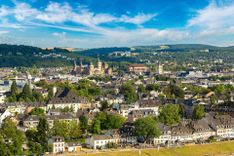
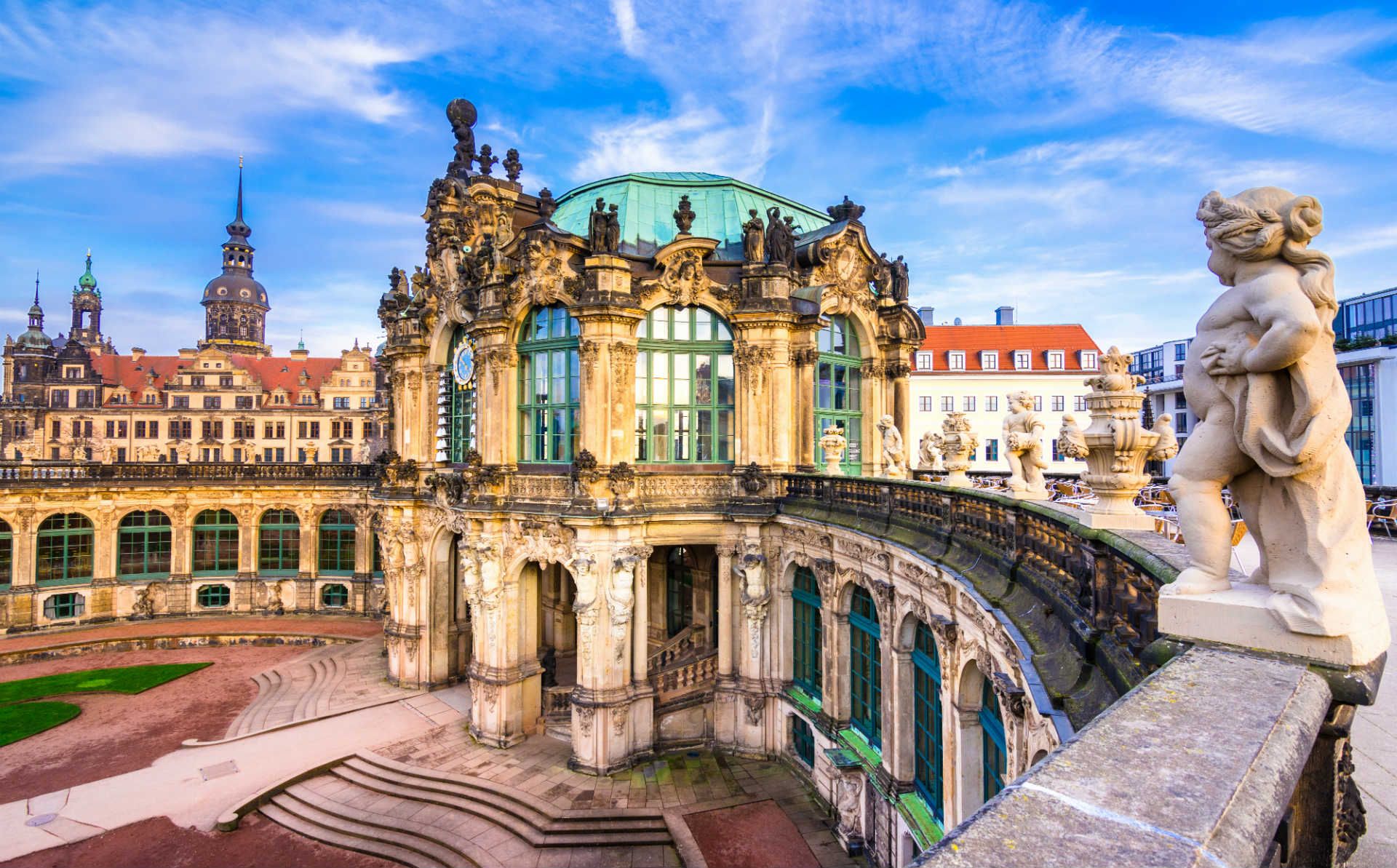
Many other cities have proud histories as independent city-states or as capitals in their own right: thus, there’s nothing remotely “provincial” about ancient, liberal Cologne, Dresden’s restored Baroque splendour or the proud Bavarian metropolis of Munich. The financial capital, Frankfurt, impresses with its dynamism and international spirit, while Bonn, the former West German capital, charms with its scenic setting and excellent museums.
Elsewhere, chic Düsseldorf and laidback Stuttgart embody aspects of the German economic miracle, while the eastern city of Leipzig fizzes with fresh energy. Mercantile Hamburg looks askance at the rest of the country, maintaining the worldliness of a great port, while Nuremberg evokes the triumphs and tragedies of Germany’s past.
Cultural attractions of capital city-quality are not limited to the bigger cities, and many of the most rewarding places are quite small: the cathedral cities of Bamberg and Regensburg; the Hanseatic ports of Lübeck, Stralsund and Wismar; the “Prussian Versailles” of Potsdam; and micro-capitals like Weimar, Schwerin and Eichstätt.
Germany has university towns as evocative as any: Heidelberg is the most famous, but Freiburg, Marburg and Tübingen are just as charming. As for the spa towns, at their best – in Baden-Baden, Bad Homburg or Wiesbaden – they combine health benefits with turn-of-the-century elegance and lovely natural settings.
Landscape, nature and road-trips in Germany
For a potted digest of Germany’s cultural riches the
Romantic Road is deservedly popular, a road journey linking Rococo churches with medieval cities and eccentric royal castles. Other
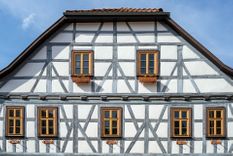
themed “roads” are devoted to fairy tales, half-timbering or wine. Often, the
most magical places – a fortress on a crag, a placid village rising above vineyards, an ancient market square of improbable quaintness – await discovery on such routes.
Nor should Germany’s undeniable natural beauty be overlooked. The Bavarian Alps, the Black Forest and the valleys of the Rhine and Mosel have long been celebrated. Still, the talcum-powder softness of Rügen’s beaches, the smart resorts of Sylt and the lonely splendour of Mecklenburg’s lakes have yet to make it onto the international travel agenda. A shame, but great for travellers who like to explore great outdoor places away from the crowd.
One unsung pleasure of a visit to Germany is the opportunity to meet its people. The officious neighbour who complains if you don’t hang your socks out to dry in alphabetical order may not be entirely fictional, but you’re far more likely to be struck by the warmth and open-mindedness of Germany’s people – and particularly its young people. You can have fun testing how liberal a place is by observing how the locals react to the red Ampelmann when crossing the street: the bigger and more laidback the city, the more likely they are to ignore the no-jaywalking rule. In contrast, the sight of upright citizens waiting patiently for the green light despite an absence of traffic as far as the eye can see is still one of the more comic pleasures of small-town Germany.