Explore Ecuador
Sitting on the equator between Colombia and Peru, Ecuador may be the smallest Andean nation but it’s packed with the most startling contrasts of scenery. With its astounding biodiversity, impressive historical legacy, stunning colonial architecture, bustling highland markets and diverse mix of people – blacks, whites, indigenous and mestizo – it’s easy to see why this friendly and exotic destination is regarded as a microcosm of South America. From the icy pinnacles of Chimborazo, to the tropical forests of vast reserves like Parque Nacional Yasuní, to the palm-fringed beaches of the Pacific coast, Ecuador hums with life – all within easy reach of Quito, its jewel of a capital.
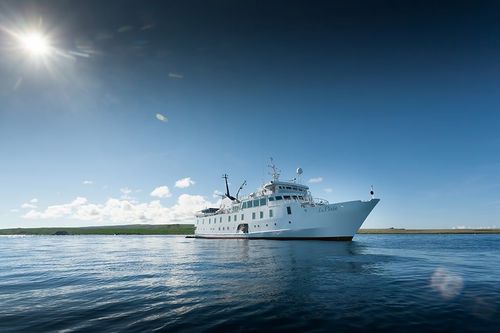
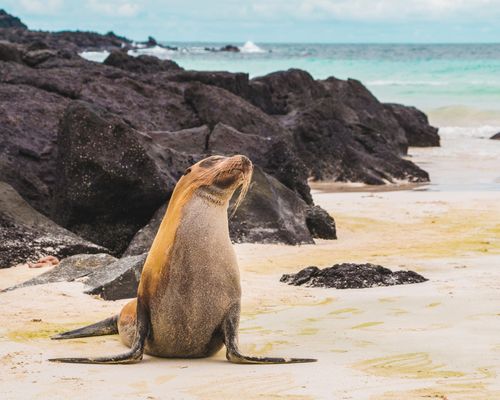
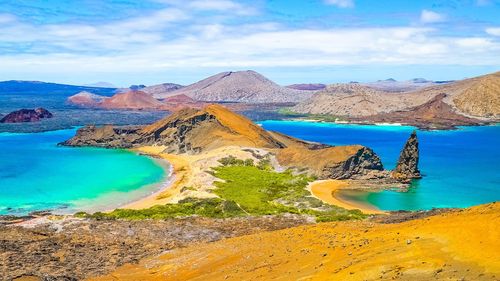
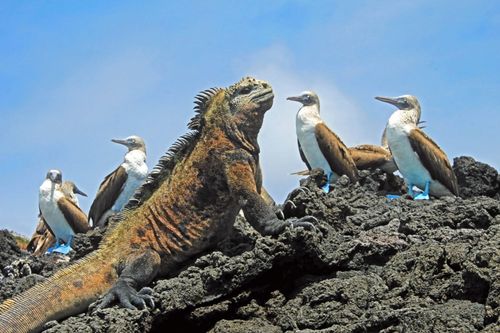
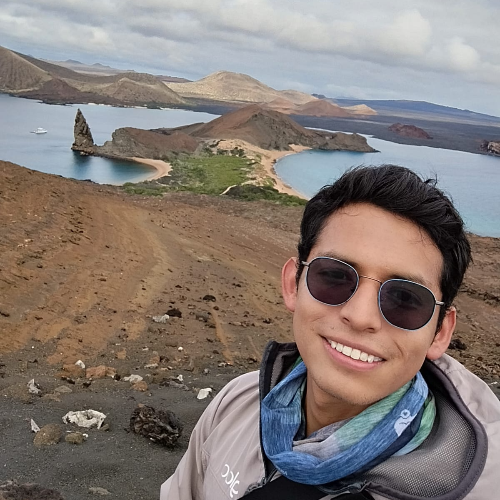
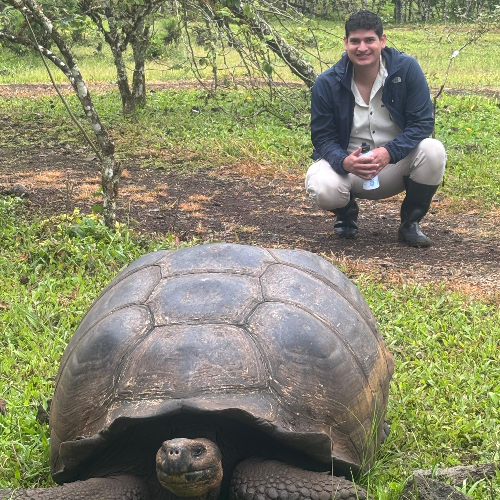
The steamy jungle wilderness of the Oriente and the mist-shrouded lowland cloudforests hold and protect just some of the country’s mind-boggling array of flora and fauna: there are more bird species per square mile in Ecuador than any other South American country and more orchids than anywhere else on the planet. The country’s greatest draw, though, are the captivating Galápagos Islands, nearly 1,0000km from the mainland, whose extraordinary wildlife inspired Charles Darwin and changed the world.
Ecuador’s mainland divides neatly into three distinct regions running the length of the country in parallel strips. In the middle is the sierra, formed by the eastern and western chains of the Andes, which are punctuated by more than thirty volcanoes and enclosed by a series of high plateaux at around 2800m above sea level, themselves divided by gentle nudos, or “knots” of hills. This is the agricultural and indigenous heartland of Ecuador, a region of patchwork fields, stately haciendas and remote farming villages, as well as the country’s oldest and most important cities, including Quito. East of the sierra is the Oriente, a large, sparsely populated area extending into the upper Amazon basin, much of it covered by dense tropical rainforest – an exhilarating, exotic region, though under increasing threat from the oil industry and colonization. West of the sierra, in the coastal region, banana, sugar, coffee, rice and cacao crops line a fertile alluvial plain that is bordered on its Pacific seaboard by a string of beaches, mangrove swamps, shrimp farms and ports. Almost a thousand kilometres of ocean separate the coastline from the Galápagos archipelago, famed for its wondrous endemic birds, mammals, reptiles and plants.
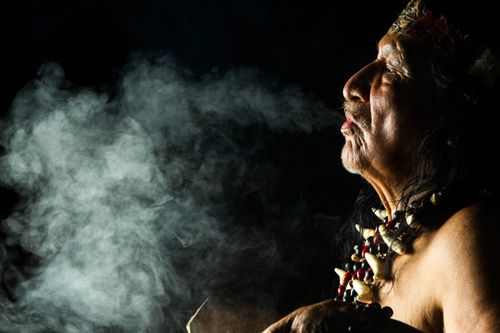
Ecuador’s regions provide a home to almost fifteen million people, the majority of whom live on the coast and in the sierra. For the most part, they are descendants of the various indigenous groups who first inhabited Ecuador’s territory twelve thousand years ago, Incas who colonized the land in the late fifteenth century, Spaniards who conquered the Incas in the 1530s and African slaves brought by Spanish colonists. Although the mixing of blood over the centuries has resulted in a largely mestizo (mixed) population, the indigenous element remains very strong, particularly among the Kichwa-speaking communities of the rural sierra and the various ethnic groups of the Oriente such as the Shuar, Achuar, Huaorani and Secoya, while on the north coast there’s a significant black population. As in many parts of Latin America, social and economic divisions between indígenas, blacks, mestizos and an elite class of whites remain deeply entrenched, exacerbated by a slew of recurrent economic and political crises. Despite this, the overwhelming majority of Ecuadorians remain resilient, remarkably cheerful, and very courteous and welcoming towards visitors.
Read More-
Volcanoes
Volcanoes
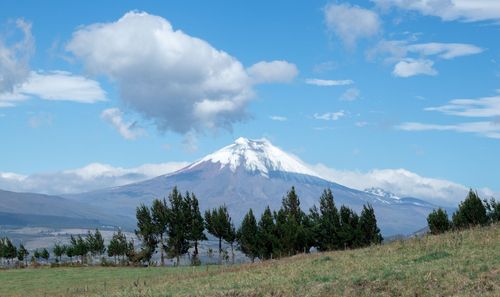
Ecuador is one of the most volcanically active areas on the South American continent, and the highlands are studded with snow-crested cones looming into the sky either side of a broad central valley, which the explorer Alexander von Humboldt grandly called the “avenue of the volcanoes”. Though many of the country’s 55 volcanic peaks are extinct, eight remain active, while another nine have erupted in the last few thousand years and are classified as “potentially active”. Anyone who stays for a few months is likely to feel a small tremor or see puffs of volcanic ash curling into the air from a summit on the horizon. Every now and then volcanoes near population centres, such as Guagua Pichincha above Quito or Tungurahua by Baños, rumble into life triggering civil safety precautions. Nevertheless, Ecuador’s volcanoes – which include the furthest point from the centre of the Earth (Chimborazo), the highest point on the equator (Cayambe), and one of the highest active peaks in the world (Cotopaxi) – are spectacular fixtures, attracting mountaineers from across the globe and awe in all who see them.
-
Flora and fauna
Flora and fauna
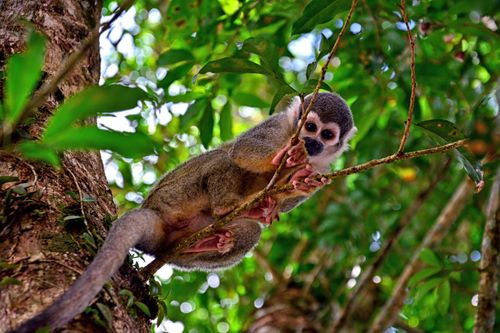
Unmatched by any country of its size, Ecuador’s considerable biodiversity includes more than 25,000 plant species, or ten percent of the world total, compared to around 17,000 for all of North America. Its 1600 types of birds are about twice as many as all of Europe, and half the total for all South America. The country also holds more species of mammals and amphibians per square metre than any other country on Earth.
This extraordinary concentration of wildlife is largely due to Ecuador’s unique geography, its position on the equator and the geologically recent appearance of Andean cordilleras, which divide the coastal and Amazonian basins and provide an array of habitats and isolated areas for the evolution of new species. The country’s highly varied terrain encompasses Andean mountains, parched semi-desert scrub, chilly high-altitude grasslands, subtropical cloudforests, tropical rainforests, dry forests, mangrove swamps, warm Pacific beaches and the unique environment of the Galápagos Islands.