Zamora and around
Zamora, 62km north of Salamanca and only 50km from the Portuguese border, is the quietest of the great Castilian cities, with a population of just 65,000. In medieval romances, it was known as la bien cercada (the well-enclosed) on account of its strong fortifications; one siege here lasted seven months. Its old quarters, still walled and medieval in appearance, are spread out along the top of a ridge that slopes down to the banks of the Río Duero, crossed at its widest point by a lovely sixteen-arched bridge. The city’s surviving Romanesque churches are its most distinctive feature, while the beguiling streets and squares of the old town make for an attractive overnight stay. When it’s time to move on, the obvious routes are east to Valladolid, with a stop in the small town of Toro, or north to León, via Benavente and its parador; Bragança, the first main town over the border in Portugal, is just over 100km away on a good, fast road.
Along the Río Duero to Soria
The Río Duero long marked the frontier between Christian and Arab territory. It meanders right across central Castile, between Zamora and Soria, with the eastern section in particular, from Valladolid, marked by a series of spectacular castles and old market towns, some restored as tourist attractions, others crumbling to dust. This part of the river is also at the heart of one of Spain’s greatest wine-producing areas, the Ribera del Duero. It’s a fine route to follow by car (N122), stopping off for lunch in rustic posadas and for walks in the beautiful surroundings. You can make the trip by bus, but if you do, realistically, you’ll only be able to see the major towns of Peñafiel and El Burgo de Osma.
El Burgo de Osma
There’s more of the almost absurdly picturesque Río Duero scenery at El Burgo de Osma, once a very grand place boasting both cathedral and university. Today, there are gleaming town walls, a lovely riverside promenade and ancient colonnaded streets overhung by houses supported on precarious wooden props. It’s quaint and gorgeous in equal measure, and while the dominant cathedral is the only actual sight, the town rewards a leisurely stroll up the arcaded main street to Plaza Mayor. On summer nights, as the temperature drops, the families of El Burgo use the main square, with its cafés and tree-shaded benches, as playground, exercise yard and social club. Out of town, there are easy drives to all sorts of fascinating destinations, from canyon park to mighty fortress, which makes El Burgo well worth a night’s stay.
The wines of the Ribera del Duero
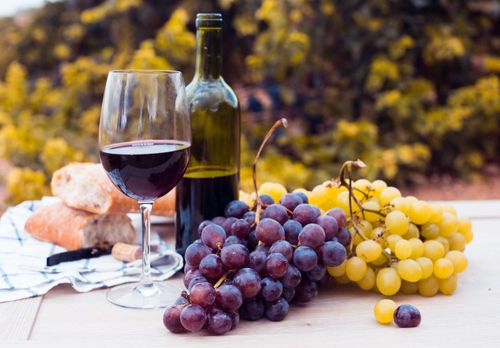
Some of Spain’s most celebrated red wines come from the demarcated region of Ribera del Duero, including the country’s best-known and most expensive wine, Vega Sicilia. Around 170 wineries are found along the Duero, with many of the bodegas concentrated between Peñafiel and Aranda del Duero, 40km to the east, making this stretch a natural focus for a Spain wine tour. If you’d like to make winery visits, not all are open for tours, including Vega Sicilia; the comprehensive website is a good place to start. Some wineries require reservations, though many have shops that are open to casual buyers mornings and afternoons. Bodegas Alejandro Fernandez makes its fabulous Tinto Pesquera at Pesquera de Duero, 4km north of Peñafiel, while the acclaimed Señorio de Nava is based at Nava de Roa, 13km to the east.
Soria and around
SORIA is a modest provincial capital of around 40,000 – an attractive place, despite encroaching suburbs, and the inspiration behind much of Antonio Machado’s best-loved verse (the Seville-born poet lived here from 1907 to 1912). It stands between a ridgeback of hills on the banks of the Duero, with a castle ruin above and a medieval centre dotted with mansions and Romanesque churches. You can see all the sights easily in a day, but a quiet night or two has its attractions, especially if you use the city as a base to explore some of Castile’s loveliest countryside. The Roman site of Numancia, in particular, is an easy side-trip, while to the northwest rises the Sierra de Urbión, the weekend getaway of choice for Soria’s inhabitants.
Logroño and La Rioja Province
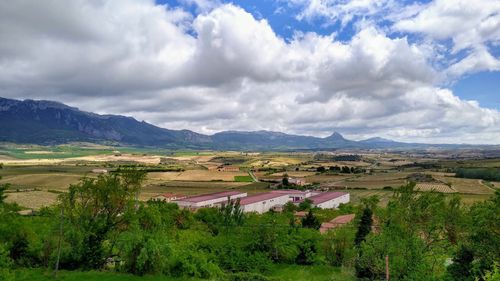
One of Spain’s most famous wine regions, La Rioja takes its name from the Río Oja, which flows from the mountains down to the Río Ebro, the latter marking the northern border of La Rioja province (lariojaturismo.com). Confusingly, the demarcated wine region and province are not quite the same thing, since many of the best vineyards are on the north bank of the Ebro, in the Basque province of Araba – Alava in Castilian, the so-called Rioja Alavesa. Nevertheless, the main wine towns are all in La Rioja proper, starting with the enjoyable provincial capital, Logroño, which is a great place to spend a couple of days eating and drinking. The province is traditionally divided further into two parts, with the busy little wine town of Haro being the mainstay of the Rioja Alta. This makes the best base for any serious wine touring, though there are casas rurales in many of the surrounding villages, too. It’s also here, west of Logroño, that the Camino de Santiago winds on towards Burgos. East of Logroño is the Rioja Baja, the southeastern part of La Rioja province, which has quite a different feel – there are vineyards, but the main attraction is following in the footsteps of La Rioja’s ancient dinosaurs.
Logroño is the hub for all local bus and train services, but if you want to do any more than see the towns of Nájera, Haro and Calahorra, it’s far better to have your own transport, as connections to the smaller villages are rarely convenient for day-trips.
The mountain monasteries of Suso, Yuso and Valvanera
Around 18km from Nájera (a little further from Santo Domingo), the stone village of San Millán de la Cogolla serves as gateway to the magnificent twin mountain monasteries known as Yuso and Suso. You can see these easily as a half-day diversion from the main Rioja route, while a third monastery, Valvanera, lies further south, off the LR-113, the trans-mountain road that provides a dramatic journey south and west between Nájera and Salas de los Infantes (90km; 2hr drive). This twists ever higher up the glorious, lush valley of the Rio Najerilla, hugging the sides of the huge hydroelectric Mansilla dam, before careering across the bare uplands of the Sierra de la Demanda to cross into Castilla y León. The route makes a great roundabout approach to Burgos, and you’ll emerge close to the equally magnificent monastery of Santo Domingo de Silos.
The immense lower Monasterio de Yuso dominates the valley, built in the sixteenth and seventeenth centuries to house the relics of the crowd-pulling sixth-century saint, San Millán. It’s at the centre of some fairly big tourist business, with one wing of the monastery housing a four-star hotel, a couple of big restaurants and enough parking to accommodate the entire Spanish nation, should it choose to all come at once.
The much older Monasterio de Suso lies a few hundred metres up in the hills, hidden from public view. You’re taken up by shuttle bus to see the beautiful, haunting building, the original site of Millán’s burial before he was sanctified in 1030 and later transferred down the hill into surroundings more in keeping with a patron saint.
There’s another wonderfully sited monastery, the Monasterio de Valvanera, 35km further south of San Millán de la Cogolla (and a 5km detour off the LR113 mountain road). If anything, the location is even more dramatic than Yuso and Suso – sited 1000m above a steep-sided valley, with the tidy terraces of the Benedictine monks’ vegetable gardens below. It’s worth stopping briefly for the views – there’s a bar and restaurant and some simple accommodation here – and to experience a monastic retreat with none of the crowds of more renowned counterparts.
La Rioja Baja
Forty kilometres from Logroño, Calahorra is the main town of La Rioja Baja, the southeastern part of the province. After the wine towns of the Rioja Alta it’s a disappointment, and there’s no pressing need to stop, though its parador brings some out this way. However, Calahorra does offer an attractive back-country route to Soria, via Arnedo, 12km southwest of town, where the scenery suddenly changes from cultivated flatland to vivid red rock, punctured by hundreds of caves, both natural and man-made, used in the past as houses and hermitages. From here – past attractive riverside Arnedillo, until reaching the tiny valley-bottom village of Yanguas, 30km southwest – the LR115 makes a twisting journey through the narrow Río Cidacos gorge, before climbing up over the bare tops for the sweeping run into Soria, another 50km to the south. It takes a couple of hours all told from Calahorra to Soria, though it’s much the best idea to break in the middle at Enciso for a spot of dinosaur-hunting. A hundred and twenty million years ago (in the early Cretaceous period), the southeastern part of La Rioja was a steamy marshland where dinosaurs roamed, leaving their footprints in mud that later fossilized, and you can spend an enjoyable day in the area tracking the tracks.
What’s yours?
Cosecha (which literally means “harvest”), when used on its own, refers to young wines in their first or second year, which tend to have a fresh and fruity flavour – you’ll also see these wines advertised as the vino de año. Crianzas are wines that are at least in their third year, having spent at least one year in an oak cask and several months in the bottle. Reservas are vintages that have been aged for three years with at least one year in oak; and gran reservas have spent at least two years in oak casks and three years in the bottle.
Touring bodegas in La Rioja
Wine is at the very heart of La Rioja’s identity (wriojawine.com), and few people will pass through without wanting to visit a bodega and taste a few vinos. In Haro, there are a dozen bodegas within walking distance of town, most clustered around the train station – they offer daily tours (usually in English in the mornings), but you have to make a reservation (Haro turismo can advise about current tour times). Some are free, some charge €3–5 for tours and tastings lasting from ninety minutes to two hours. Scores of other wineries lie within half an hour’s drive of Haro or Logroño, and tend to be open for drop-in visits without appointment. They’ve all got wine shops attached, and some have excellent restaurants. A good target is the striking village of San Vicente de la Sonsierra – you’ll see its hill-top church and castle on the drive across to Haro – which has no fewer than sixteen wineries in the vicinity, while some of the most celebrated vineyards lie close to the town of Laguardia, 19km northwest of Logroño or 26km east of Haro, in the Basque Rioja Alavesa region.
Bodegas Bilnaínast 941 310 147, wbodegasbilbainas.com. One of the oldest bodegas in Haro, established in 1901, home of the classic Viña Pomal wines and their flagship contemporary label, La Vicalanda.
Bodegas Muga t 941 311 825, wbodegasmuga.com. Muga has a good visitor centre in Haro where you can learn about its painstaking traditional methods, such as using egg whites to clean the wine of impurities.
La Encina, Bodegas y Viñedos t 941 305 630. Just to the north of Haro, overlooking the river at the pretty village of Briñas, is this classy, minimalist winery making wines under the Tobelos name.
López de Heredia t 941 310 244, wwww.lopezdeheredia.com. Stand out attraction at this Haro winery is the eye-catching Modernist wine shop designed by Zaha Hadid.
Rough Guides tip: For a more in-depth exploration of Spain, consider choosing one of our Northern Spain itineraries.