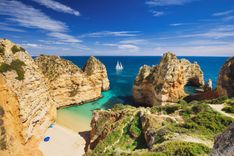
#4 Ria Formosa Natural Park
Stretching along the eastern Algarve, Ria Formosa is a shifting landscape of lagoons, salt marshes, and barrier islands. It’s a paradise for birdwatchers, especially during spring and autumn migrations when flamingos, spoonbills, and ospreys pass through. Ferries and water taxis from Faro, Olhão, and Tavira connect to islands like Armona and Culatra, each with long, uncrowded beaches and fishing communities where you can eat fresh clams by the shore.
The park also has gentle walking and cycling trails, ideal for escaping the busier resorts. Visit with a local guide to learn about the traditional shellfish harvesting that still sustains many families here, and to spot wildlife you might otherwise miss.
#5 Silves Castle and Old Town
Set inland along the Arade River, Silves was once the Moorish capital of the Algarve, and its red sandstone castle is the most impressive in the region. Climb the ramparts for sweeping views over the orange groves and rolling hills. Inside, an archaeological museum displays artifacts from Roman and Islamic periods, adding depth to your visit.
The old town below is a maze of cobbled streets, Gothic churches, and shaded cafés, perfect for a slow wander. Spring is especially beautiful when the citrus trees are in blossom, filling the air with fragrance. If you’re here in August, the annual Medieval Fair brings jousting, music, and market stalls to the castle grounds.
#6 Sagres and Cabo de São Vicente
The southwestern tip of Portugal feels like the edge of the world. Sagres has a laid-back surf town vibe, while nearby Cabo de São Vicente is marked by a lighthouse perched above towering cliffs. The views are dramatic, with waves crashing against the rock far below and seabirds riding the wind.
The fortress at Sagres offers insight into Portugal’s Age of Discovery, when this coast was a launching point for explorers. Sunsets here are famous, and so are the winds, so bring a jacket even in summer. Many visitors include Sagres as a highlight on a tour of Portugal's cities and beaches, combining it with a drive along the rugged west coast for more wild beaches and coastal viewpoints.
#7 Tavira
One of the Algarve’s prettiest towns, Tavira straddles the River Gilão with a Roman bridge linking its two halves. Whitewashed houses, tiled façades, and church towers give it an elegant, unhurried feel. From the town, ferries run to Ilha de Tavira, a long sandy beach backed by dunes. In the old town, visit the castle gardens for views over the rooftops, explore small museums, and linger at riverside cafés.
Tavira is especially atmospheric in the evening when the streetlights reflect off the water. It’s also a great base for exploring the eastern Algarve and the quieter stretches of Ria Formosa.


 Travel Expert