Explore Tuscany
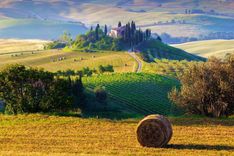
The tourist brochure view of Tuscany as an idyll of olive groves, vineyards, hill-towns and frescoed churches may be one-dimensional, but Tuscany is indeed the essence of Italy in many ways. The national language evolved from the Tuscan dialect, a supremacy ensured by Dante – who wrote the Divine Comedy in the vernacular of his birthplace, Florence – and Tuscan writers such as Petrarch and Boccaccio. And the era we know as the Renaissance, which played so large a role in forming the culture, not just of Italy but of Europe as a whole, is associated more strongly with this part of the country than with anywhere else. Florence was the most active centre of the Renaissance, flourishing principally through the all-powerful patronage of the Medici dynasty. Every eminent artistic figure from Giotto onwards – Masaccio, Brunelleschi, Alberti, Donatello, Botticelli, Leonardo da Vinci, Michelangelo – is represented here, in an unrivalled gathering of churches, galleries and museums.
The problem is, of course, that the whole world knows about the attractions of Florence, with the result that the city can be offputtingly busy in high season. Siena tends to provoke a less ambivalent response. One of the great medieval cities of Europe, it remains almost perfectly preserved, and holds superb works of art in its religious and secular buildings. In addition, its beautiful Campo – the central, scallop-shaped market square – is the scene of the Palio, when bareback horseriders career around the cobbles amid an extravagant display of pageantry. The cities of Pisa and Lucca have their own fair share of attractions and provide convenient entry points to the region, either by air (via Pisa’s airport) or along the coastal rail route from Genoa. Arezzo and Cortona serve as fine introductions to Tuscany if you’re approaching from the south (Rome) or east (Perugia).
Tucked away to the west and south of Siena, dozens of small hill-towns epitomize the region for many visitors. San Gimignano, the most famous, is worth visiting as much for its spectacular array of frescoes as for its bristle of medieval tower-houses, even if it has become a little too popular for its own good. Both Montepulciano and Pienza are superbly located and dripping with atmosphere, but the best candidates for a Tuscan hill-town escape are places such as Volterra, Massa Maríttima or Pitigliano, where tourism has yet to undermine local character. You may find lesser-known sights even more memorable – remote monasteries like Monte Oliveto Maggiore and San Galgano, or the sulphur spa of Bagno Vignoni. The one area where Tuscany fails to impress is its over-developed coast, with horrible beach-umbrella compounds filling every last scrap of sand. Elba, the largest of several Tuscan islands, offers great beaches and good hiking, but is busy in summer.
Finding accommodation can be a major problem in the summer, so you should definitely reserve in advance; w turismo.intoscana.it is a useful resource, and includes details of agriturismi, family-run places dotted around the countryside offering anything from budget rooms in a farmhouse to luxury apartments in restored castles.
Read More-
Regional food and wine
Tuscan cooking, with its emphasis on simple dishes using fresh, quality, local ingredients, has had a seminal influence on Italian cuisine. Classic Tuscan antipasti are peasant fare: bruschetta is stale bread, toasted and dressed with oil and garlic; crostini is toast and pâté. Olive oil is the essential flavouring, used as a dressing for salads, a medium for frying and to drizzle over bread or vegetables and into soups and stews just before serving.
Soups are very popular – Tuscan menus always include either ribollita, a hearty stew of vegetables, beans and chunks of bread, or zuppa di farro, a thick soup with spelt (a barley-like grain). Pappa col pomodoro (bread and tomato soup) is also good, while fish restaurants serve cacciucco, a spiced fish and seafood soup. White cannellini beans (fagioli) are another favourite, turning up in salads, with pasta (tuoni e lampo), with sausages in a stew (fagioli all’uccelletto), or just dressed with olive oil. Tuscany is not known for its pasta, but many towns in the south serve pici, thick, hand-rolled spaghetti with toasted breadcrumbs. Meat is kept plain, often grilled, and Florentines profess to liking nothing better than a good bistecca alla fiorentina (rare char-grilled steak), or the simple rustic dishes of arista (roast pork loin stuffed with rosemary and garlic) or pollo alla diavola (chicken flattened, marinated and then grilled with herbs). Hunters’ fare such as cinghiale (wild boar) and coniglio (rabbit) often turns up in hill-town trattorias.
Spinach is often married with ricotta and gnocchi, used as a pasta filling, and in crespoline (pancakes) or between two chunks of focaccia and eaten as a snack. Sheep’s milk pecorino is the most widespread Tuscan cheese (best in Pienza), but the most famous is the oval marzolino from the Chianti region, which is eaten either fresh or ripened. Dessert menus will often include cantuccini, hard, almond-flavoured biscuits to be dipped in a glass of Vinsanto (sweet dessert wine); Siena is the main source of sweet treats, including almond macaroons and panforte, a rich and very dense cake full of nuts and fruit.
Tuscany has some of Italy’s finest wines. Three top names, which all bear the exclusive DOCG mark (and price tags to match), are Chianti Classico, Brunello di Montalcino and Vino Nobile di Montepulciano – not the sort of thing you’d knock back at a trattoria. There are dozens of other Chianti varieties, most of them excellent, but it can be difficult to find a bargain. Both Montalcino and Montepulciano produce rosso varieties that are more pocket-friendly, and other names to look for include Carmignano and Rosso delle Colline Lucchesi. Two notable whites are dry Vernaccia di San Gimignano and the fresh Galestro.