Explore Rome and Lazio
Rome is the most fascinating city in Italy, which makes it arguably the most fascinating city in the world. An ancient place packed with the relics of over two thousand years of inhabitation, you could spend a month here and still only scratch the surface. Yet it’s so much more than an open-air museum: its culture, its food, its people make up a modern, vibrant city that would be worthy of a visit irrespective of its past. As a historic centre, it is special enough; as a contemporary European capital, it is utterly unique.
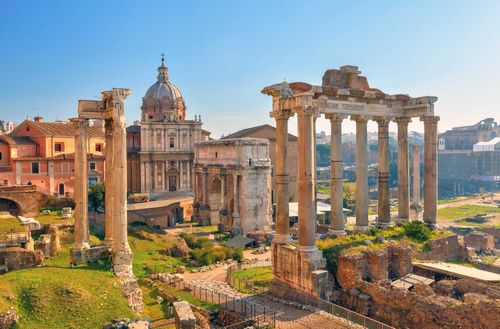
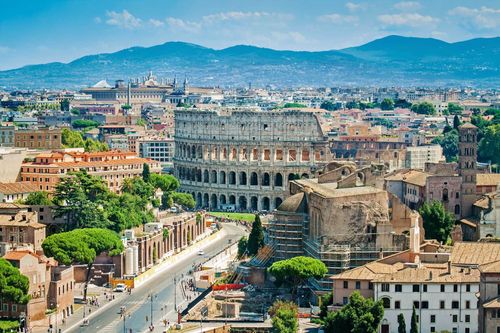
The former heart of the mighty Roman Empire, and still the home of the papacy, the city is made up of layers of history. There are Rome’s classical features, most visibly the Colosseum, and the Forum and Palatine Hill; but beyond these there’s an almost uninterrupted sequence of monuments – from early Christian basilicas and Romanesque churches to Renaissance palaces and the fountains and churches of the Baroque period, which perhaps more than any other era has determined the look of the city today. There is the modern epoch, too, from the ponderous Neoclassical architecture of the post-Unification period to prestige projects like Zaha Hadid’s MAXXI exhibition space. And these various eras crowd in on one another to an almost overwhelming degree, with medieval churches atop ancient basilicas above Roman palaces; houses and apartment blocks that incorporate fragments of eroded Roman columns, carvings and inscriptions; roads and piazzas which follow the lines of ancient amphitheatres and stadiums.
You won’t enjoy Rome if you spend your time trying to tick off things to do. However, there are some places that it would be a pity to leave the city without seeing. The Vatican is perhaps the most obvious one, most notably St Peter’s and the amazing stock of loot in the Vatican Museums; and the star attractions of the ancient city are worth a day or two in their own right. There are also the churches, fountains and works of art from the period that can be said to most define Rome, the Baroque, and in particular the works of Borromini and Bernini, whose efforts compete for space and attention throughout the city. Bernini was responsible for the Fountain of the Four Rivers in the city’s most famous square, Piazza Navona, among other things; but arguably his best sculptural work is in the Galleria Borghese, or in various churches, like his statue of St Theresa in Santa Maria della Vittoria. Borromini, his great rival at the time, built the churches of San Carlo alle Quattro Fontane and Sant’Ivo, both buildings intricately squeezed into small sites – Borromini’s trademark. Other great palaces are themselves treasure-troves of great art, like the Doria Pamphilj and Palazzo Barberini; and there are some unmissable museums, like the galleries of the Capitoline, and the main collections of the Museo Nazionale Romano in the Palazzo Altemps and Palazzo Massimo, all of which hold staggering collections of the cream of the city’s ancient art and sculpture. And finally there’s the city itself: stroll through the centro storico in the early morning, through Trastevere at sunset, or gaze down at the roofs and domes from the Janiculum Hill on a clear day, and you’ll quickly realize that there’s no place in Italy like it.
The city centre is divided neatly into distinct blocks. The warren of streets that makes up the centro storico occupies the hook of land on the left bank of the River Tiber, bordered to the east by Via del Corso and to the north and south by water. From here Rome’s central core spreads south and east: down towards Campo de’ Fiori; across Via del Corso to the major shopping streets and alleys around the Spanish Steps; to the major sites of the ancient city to the south; and to the expanse of the Villa Borghese park to the north. The left bank of the river is a little more distanced from the main hum of the city centre, home to the Vatican and St Peter’s, and, to the south of these, Trastevere – even in ancient times a distinct entity from the city proper, although nowadays as much of a focus for tourists as anywhere, especially at night.
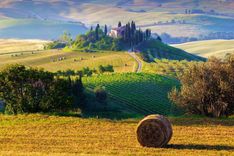
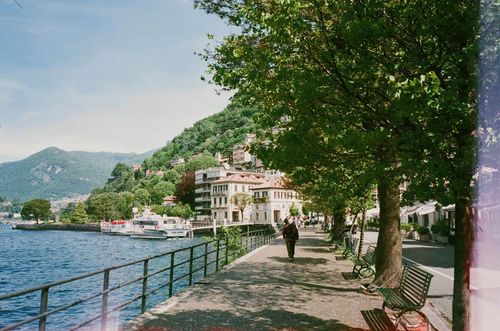
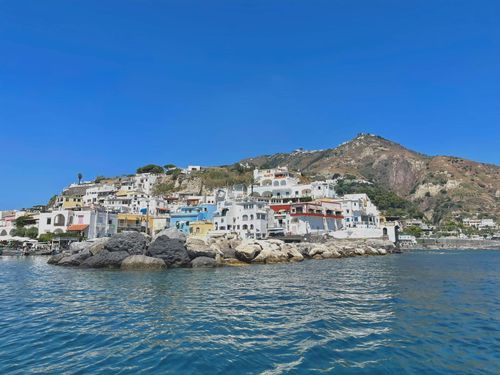
Beyond Rome, the region of Lazio inevitably pales in comparison, but there is plenty of things to do there, not least the landscape, which varies from the green hills and lakes of the northern reaches to the drier, more mountainous south. It’s a relatively poor region, its lack of identity the butt of a number of Italian jokes, but it’s the closest you’ll get to the feel of the Italian South without catching the train to Naples. Much of the area can be easily seen on a day-trip from the capital, primarily the ancient sites of Ostia Antica and the various attractions of Tivoli. Further afield, in northern Lazio, the Etruscan sites of Tarquinia and Cerveteri provide the most obvious tourist focus, as does the pleasant provincial town of Viterbo and the gentle beauty of lakes Bracciano, Vico and Bolsena. The south arguably holds Lazio’s most appealing enclaves, not least unpretentious resorts like Terracina and Sperlonga, and the island of Ponza – one of the most alluring spots on the entire western seaboard.
Read More-
Regional food and wine
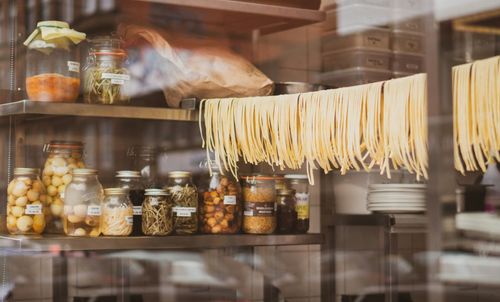
Roman cooking is traditionally dominated by the earthy cuisine of the working classes, with a little influence from the city’s centuries-old Jewish population thrown in. Although you’ll find all sorts of pasta served in Roman restaurants, spaghetti is common, as is the local speciality of bucatini or thick-cut hollow spaghetti (sometimes called tonarelli), served cacio e pepe (with pecorino and ground black pepper), alla carbonara (with beaten eggs, cubes of pan-fried bacon, and pecorino or parmesan), alla gricia (with pecorino and bacon), all’amatriciana (with tomato and bacon) and alle vongole (with baby clams).
Fish features most frequently in Rome as salt cod – baccalà – best eaten Jewish-style, deep-fried. Offal is also key, and although it has been ousted from many of the more refined city-centre restaurants, you’ll still find it on the menus of more traditional places, especially those in Testaccio. Most favoured is pajata, the intestines of an unweaned calf. Look out, too, for coda alla vaccinara, oxtail stewed in a rich sauce of tomato and celery; abbacchio, milk-fed lamb roasted to melting tenderness with rosemary, sage and garlic; abbacchio scottadito, grilled lamb chops eaten with the fingers; and saltimbocca alla romana, thin slices of veal cooked with a slice of prosciutto and sage on top. Artichokes (carciofi) are the quintessential Roman vegetable, served alla romana (stuffed with garlic and mint and stewed) and in all their unadulterated glory as alla giudea – flattened and deep-fried in olive oil. Another not-to-be-missed side dish is fiori di zucca – batter-fried courgette blossom, stuffed with mozzarella and a sliver of marinated anchovy. Roman pizza has a thin crust and is best when baked in a wood-fired oven (forno a legna), but you can also find lots of great pizza by the slice (pizza al taglio). Lazio’s wine is enjoying a bit of a resurgence and is often better than most people think. Nonetheless you’ll still mostly find wines from the Castelli Romani (most famously Frascati) to the south, and from around Montefiascone (Est! Est! Est!) in the north – both excellent, straightforward whites, great for sunny lunchtimes or as an evening aperitivo – but in the city’s better and more contemporary restaurants you’ll find wines from other regions and newer producers.
-
Roman history in brief
Rome’s early history is interwoven with legend. Rea Silvia, a vestal virgin and daughter of a local king, Numitor, had twin sons – the product, she alleged, of a rape by Mars. The two boys were abandoned and found by a wolf, who nursed them until their adoption by a shepherd. He named them Romulus and Remus, and they became leaders of the community and later laid out the boundaries of the city on the Palatine Hill. Before long it became apparent that there was only room for one ruler, and they quarrelled, Romulus killing Remus and becoming in 753 BC the city’s first monarch, to be followed by six further kings.
The Roman Republic and Empire
Rome as a kingdom lasted until about 507 BC, when the people rose up against the tyrannical King Tarquinius and established a Republic. The city prospered, growing greatly in size and subduing the various tribes of the surrounding areas. By the time it had fought and won the third Punic War against its principal rival, Carthage, in 146 BC, it had become the dominant power in the Mediterranean.
The history of the Republic was, however, also one of internal strife, marked by factional fighting among the patrician ruling classes, and the ordinary people, or plebeians. This all came to a head in 44 BC, when Julius Caesar, having proclaimed himself dictator, was murdered by conspirators concerned at the growing concentration of power into one man’s hands. A brief period of turmoil ensued, giving way, in 27 BC, to the founding of the Empire under Augustus, who transformed Rome, building arches, theatres and monuments of a magnificence suited to the capital of an expanding empire. Under Augustus, and his successors, the city swelled to a population of a million, its people housed in cramped apartment blocks or insulae; crime in the city was rife, and the traffic apparently on a par with today’s. But it was a time of peace and prosperity too, with the empire’s borders being ever more extended, reaching their maximum limits under the Emperor Trajan, who died in 117 AD.
The decline of Rome is hard to date precisely, but it could be said to have started with the Emperor Diocletian, who assumed power in 284 and divided the empire into two parts, East and West. The first Christian emperor, Constantine, shifted the seat of power to Byzantium in 330, and Rome’s period as capital of the world was over; the wealthier members of the population moved east and a series of invasions by Goths in 410 and Vandals about forty years later served only to quicken the city’s ruin.
The papal city
After the fall of the empire, the pope – based in Rome owing to the fact that St Peter (the Apostle and first pope) was martyred here in 64 AD – became the temporal ruler over much of Italy, and it was the papacy, under Pope Gregory I (“the Great”) in 590, that rescued Rome from its demise. By sending missions all over Europe to spread the word of the Church and publicize its holy relics, he drew pilgrims, and their money, back to the city, in time making the papacy the natural authority in Rome. The pope took the name “Pontifex Maximus” after the title of the high priest of classical times (literally “the keeper of the bridges”, which were vital to the city’s well-being).
As time went on, power gradually became concentrated in a handful of families, who swapped the top jobs, including the papacy itself, between them. Under the burgeoning power of the pope, churches were built, the city’s pagan monuments rediscovered and preserved, and artists began to arrive in Rome to work on commissions for the latest pope, who would invariably try to outdo his predecessor’s efforts with ever more glorious buildings and works of art. This process reached a head during the Renaissance; Bramante, Raphael and Michelangelo all worked in the city throughout their careers, and the reigns of Pope Julius II and his successor, Leo X, were something of a golden age. However, in 1527 all this was brought abruptly to an end, when the armies of the Habsburg monarch Charles V swept into the city, occupying it for a year, while Pope Clement VII cowered in the Castel Sant’Angelo.
The ensuing years were ones of yet more restoration, and perhaps because of this it’s the seventeenth century that has left the most tangible impression on Rome, the vigour of the Counter-Reformation throwing up huge sensational monuments like the Gesù church that were designed to confound the scepticism of the new Protestant thinking. This period also saw the completion of St Peter’s under Paul V, and the ascendancy of Gian Lorenzo Bernini as the city’s principal architect and sculptor. The eighteenth century witnessed the decline of the papacy as a political force, a phenomenon marked by the seventeen-year occupation of the city starting in 1798 by Napoleon, after which papal rule was restored.
The post-Unification city
Thirty-four years later a pro-Unification caucus under Mazzini declared the city a republic but was soon chased out, and Rome had to wait until troops stormed the walls in 1870 to join the unified country – symbolically the most important part of the Italian peninsula to do so. Garibaldi wasted no time in declaring the city the capital of the new kingdom – under Vittorio Emanuele II – and confining the by now quite powerless pontiff, Pius IX, to the Vatican. The Piemontese rulers of the new kingdom set about building a city fit to govern from, cutting new streets through Rome’s central core (Via Nazionale, Via del Tritone) and constructing grandiose buildings like the Altar of the Nation. In 1929 Mussolini signed the Lateran Pact with Pope Pius XI, a compromise which forced the Vatican to accept the new Italian state and in return recognized the Vatican City as sovereign territory, independent of Italy, together with the key basilicas and papal palaces in Rome which remain technically independent of Italy to this day.
The contemporary city
During World War II, Mussolini famously made Rome his centre of operations until his resignation as leader in July 1943. The city was liberated by Allied forces in June 1944. The Italian republic since then has been a mixed affair, regularly changing its government (if not its leaders) every few months until a series of scandals forced the old guard from office. Since then things have continued in much the same vein, with the city symbolizing, to the rest of the country at least, the inertia of their nation’s government. However, the city is looking sprucer, and more vibrant, than it has done for some time, and there are even plans afoot to deal with the city centre’s chronic traffic problem, with the construction of a third metro line well under way.
-
Accommodation
Accommodation
There’s plenty of accommodation in Rome, and overall the choice of hotels in the city centre has improved a lot over recent years, with lots of new boutique hotels and contemporary B&Bs opening up. But it’s always worth booking in advance, especially when the city is at its busiest – from Easter to the end of October, and over Christmas – and also because you can score much better rates online, sometimes as much as half the published rate.
-
Eating and drinking
Eating and drinking
Rome is a great place to eat: its denizens know a good deal about freshness and authenticity, and can be very demanding when it comes to the quality of the dishes they are served. Most city-centre restaurants offer standard Italian menus, with the emphasis on traditional Roman dishes, although a few more adventurous places have been popping up of late; plus there are numerous establishments dedicated to a variety of regional cuisines. The city is also blessed with an abundance of good pizzerias, churning out thin, crispy-baked Roman pizza from wood-fired ovens.
There are plenty of bars in Rome, and an Irish pub practically on every corner. There’s also been a recent upsurge in wine bars (enoteche or vinerie); the old ones have gained new cachet, and newer ones are springing up too, often with accompanying gourmet menus, or just plates of salami and cheese. Bear in mind that there is sometimes considerable crossover between Rome’s bars, restaurants and clubs. Campo de’ Fiori, Monti, Trastevere and Testaccio are the densest and most happening parts of town.
-
Nightlife and entertainment
Roman nightlife is a lot cooler and more varied than it used to be. There are a few smart clubs, principally in the centre of town, but also quite a few smaller and more alternative clubs and live music venues, mainly confined to the neighbourhoods of Testaccio and Ostiense, and in up-and-coming Pigneto and Prenestino to the east of Termini – though bear in mind that some clubs close during August or move to summer premises in Ostia or Fregene.
Even locals would admit that Rome is a bit of a backwater for the performing arts. Relatively few international-class performers put in an appearance here, and the current mayor has made significant cutbacks to the city’s cultural funds, playing down the film festival and eliminating some of his predecessor’s initiatives altogether. Nevertheless, the city does have a cultural life, and what the arts scene may lack in quality is made up for by the charm of the city’s settings. Rome’s summer festival, for example – westateromana.comune.roma.it – ensures a good range of classical music, opera, theatre and cinema throughout the warmer months, often in picturesque locations, and the summer opera performances at the Baths of Caracalla are resounding occasions – worth prolonging a stay for if you can.
-
Shopping
Shopping
At first glance, you may wonder where to start when it comes to shopping in a big, chaotic city like Rome. In fact the city promises a more appealing shopping experience than you might think, abounding with colourful shopping streets. There are some vibrant markets too: Porta Portese is chaotic but fun, while the market near Piazza Vittorio Emanuele (between Via Lamarmora and Via Ricasoli; Mon–Sat mornings) is great for foodie souvenirs. Fashion straight from the catwalk is well represented on the streets close to the Spanish Steps, where you’ll find all the major A-list designers; more mainstream and chain fashion stores cluster on Via del Corso, Via Cola di Rienzo, near the Vatican, and Via Nazionale; while the streets of the Monti district are home to an increasing number of stylish independent boutiques, as is Via del Governo Vecchio in the centro storico. Or just follow your nose – in Rome you’re almost bound to stumble across something interesting.