Explore Puglia
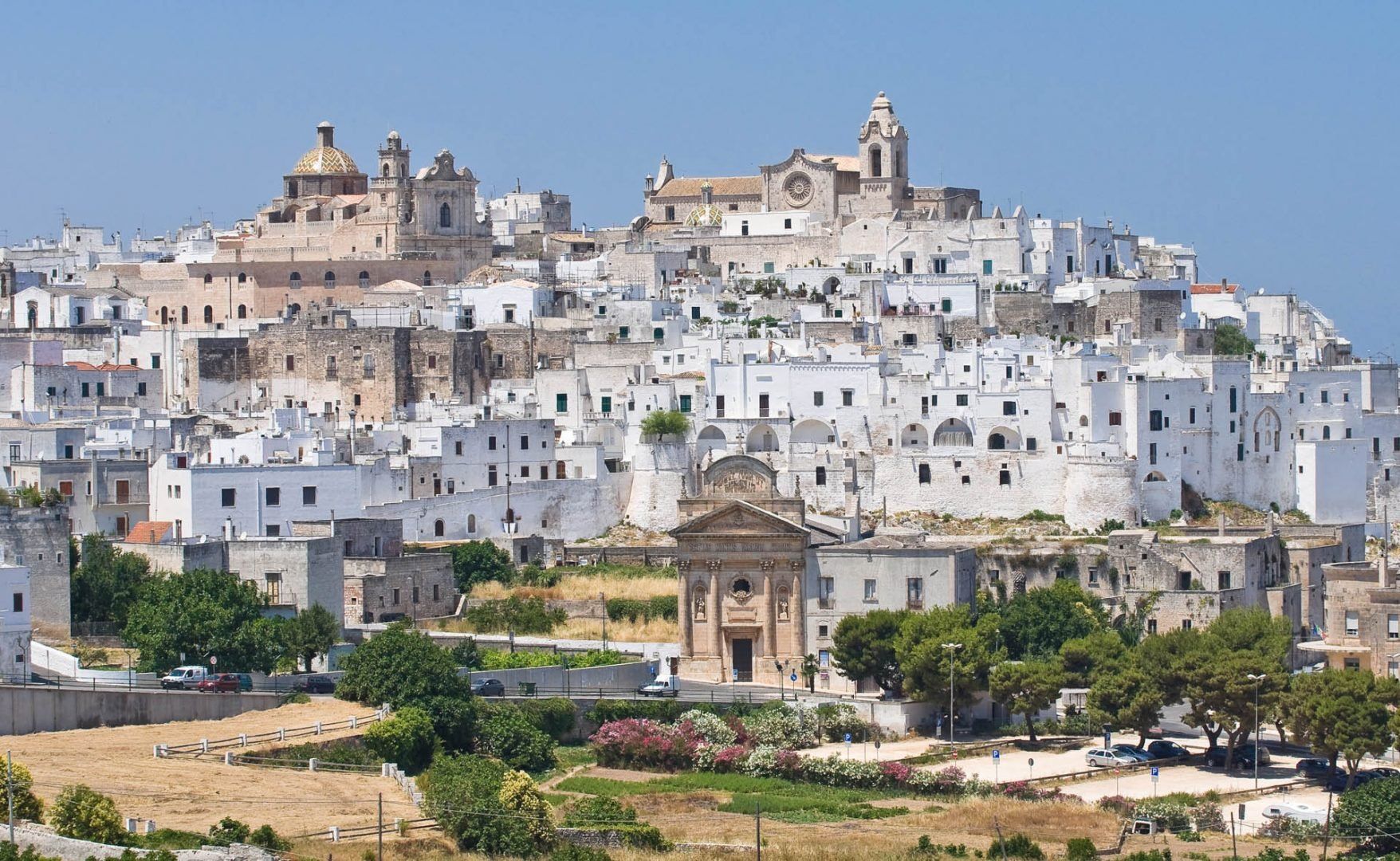
Puglia is the long strip of land, 400km from north to south, that makes up the heel of Italy. For centuries it was a strategic province, colonized, invaded and conquered by just about every major power of the day – from the Greeks through to the Spanish. These days clean seas and reliable sunshine are the draws for holiday-makers both Italian and foreign, and acres of campsite-and-bungalow-type tourist villages stud the shoreline, though there are still quiet spots to be found. Low-cost flights to Bari and Brindisi have opened up the area to British tourists, many of whom have been buying and doing up trulli (ancient storehouses) and masserie (farm estates) as holiday accommodation. There’s a brisk air of investment in many resorts, from the new top-of-the-range spa hotels in converted masserie to agriturismo places, where you can holiday among olive groves and orchards and go horseriding or mountain biking. B&Bs have been springing up everywhere, often in the historic centres of towns, some simple, some splendid, all of them better value for money than most hotels.
There’s plenty of architectural interest in Puglia, as each ruling dynasty left its own distinctive mark on the landscape – the Romans their agricultural schemes and feudal lords their fortified medieval towns. Perhaps most distinctive are the kasbah-like quarters of many towns and cities, a vestige of the Saracen conquest of the ninth century – the one at Bari is the biggest and most atmospheric. The Normans endowed Puglia with splendidly ornate cathedrals, while the Baroque exuberance of towns like Lecce and Martina Franca are testament to the Spanish legacy. But if there’s one symbol of Puglia that stands out, it’s the imposing castles built by the Swabian Frederick II all over the province – foremost of which are the Castel del Monte (immortalized on the Italian five-cent euro coin) and the remnants of the palace at Lucera.
Puglia’s cities, generally visited only as transport hubs, merit some exploration nevertheless. Taranto and its surroundings have fought a losing battle with the local steel industry, but Lecce is worth a visit of a day or two for its crazed confection of Baroque churches and laidback café life. Though Bari is not a traditional tourist destination, reinvestment in its maze-like old city is drawing visitors in-the-know for its ambience and excellent restaurants; while Brindisi, best known for its ferry connections with Greece, lies just 15km away from the beautiful Torre Guaceto nature reserve, a long stretch of uncontaminated sand dunes, macchia and clear water where you can cycle, walk or scuba dive.
Puglia is geographically diverse, though it has to be said that the Tavoliere (tableland) of the north with mile upon mile of wheatfields, is hardly the most exciting of landscapes. More alluring is the hilly, forested Gargano promontory jutting out to the east, fringed by gently shelving, sandy beaches, seaside hotels and campsite villages that make good places for a family holiday – though you’ll need to catch a ferry to the Tremiti islands for the clearest sea. The best escape is to the southernmost tip, the Salentine peninsula where the terrain is rocky and dry, more Greek than Italian, and there are some beautiful coves and sea caves to swim in.
Read More-
Regional food and wine
Puglia is known as the breadbasket of Italy. It’s the source of 80 percent of Europe’s pasta and much of Italy’s fish; it produces more wine than Germany and more olive oil than all the other regions of Italy combined. It’s famous for olives (from Cerignola), almonds (from Ruvo di Puglia), dark juicy tomatoes (often sun-dried), cime di rapa (turnip tops), fava beans, figs (fresh and dried), cotognata (a moulded jam made from quince) and for its melons, grapes and green cauliflower. The influence of Puglia’s former rulers is still evident in the region’s food. Like the Greeks, Pugliesi eat lamb and goat spit-roast over herb-scented fires and deep-fried doughnut-like cakes steeped in honey; and like the Spanish they drink almond milk, latte di mandorla.
The most distinctive local pasta is orecchiette, ear-shaped pasta that you will still see women making in their doorways in the old part of Bari. Look out, too, for panzarotti alla barese, deep-fried pockets of dough stuffed with tomato or prosciutto and ricotta. Otherwise, there is a marked preference for short, stubby varieties of pasta, which you’ll find served with peppers, cauliflower and cime di rapa. Not surprisingly, fish and shellfish dominate coastal menus. There are some good fish soups (zuppe di pesce) whose ingredients and style vary from place to place – the Brindisi version, for example, is dominated by eel. Vegetarians are well catered for with a range of meat-free antipasti, and combining pasta and vegetables is a typically Pugliese trait.
A local meat dish is gnummerieddi: resembling haggis, it’s made by stuffing a lamb gut with minced offal, herbs and garlic – best grilled over an open fire. There is little beef or pork eaten in Puglia, poultry is uncommon, aside from small game birds in season; as a result, horsemeat is popular, especially in the Salento area. To confound your prejudices, go for pezzetti di cavallo, bits of horsemeat stewed in a rich tomato sauce.
Cheeses are a strong point, including ricotta, cacioricotta, canestrato (sheep’s-milk cheese formed in baskets) and burrata (cream encased in mozzarella, a speciality of Andria). Pair these products with the local durum-wheat breads, the most famous of which, pane di Altamura, carries the DOP seal of quality.
There have recently been immense improvements in Puglia’s wines. While historically the inclination was towards mass production, yields have been reduced and grapes are now picked at precisely the right moment. Look for the formidable reds Primitivo di Manduria (aka red Zinfandel), Salice Salentino, and Negroamaro. Locorotondo is a straightforward, fresh white from Salento, a region known also for its rosati (rosé) called Salento Rosato, and dessert wine called Aleatico.