Explore Campania
The region immediately south of Lazio, Campania, marks the real beginning of the Italian South or mezzogiorno. It’s the part of the South too, perhaps inevitably, that most people see, as it’s easily accessible from Rome and home to some of the area’s (indeed Italy’s) most notable features – Roman sites, spectacular stretches of coast, tiny islands. It’s always been a sought-after region, first named by the Romans, who tagged it the campania felix, or “happy land” (to distinguish it from the rather dull campagna further north), and settled down here in villas and palatial estates that stretched right around the Bay of Naples. Later, when Naples became the final stop on northerners’ Grand Tours, its bay became no less fabled, the relics of its heady Roman period only adding to the charm for most travellers.
Naples is the obvious focus, an utterly compelling city that dominates the region in every way. Taking one of the fastest trains, you can reach it now in a little over an hour from the capital, and there’s no excuse for not seeing at least this part of Campania – though of course you need three or four days to absorb the city properly. The Bay of Naples, too, is dense enough in interest to occupy you for a good week: there are the ancient sites of Pompeii and Herculaneum just half an hour away – arguably Italy’s best-preserved and most revealing Roman remains; there is the amazing, volcanic Campi Flegrei area to the northwest of the city; and of course there are the islands, Capri, Ischia and Procida. Capri swarms with visitors but is so beautiful that it’s a shame to come to the area and miss it, while Ischia, which is the largest island and absorbs tourists more readily, is a lively and attractive place in which you could while away an entire holiday.
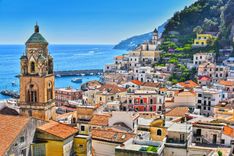
Inland Campania is, by contrast, a poor, unknown region for the most part, though the giant palace and gardens of Caserta are worth visiting, while Benevento, an old stop on the Roman route to Brindisi, has a flavour that’s quite distinct from the coastal regions. The area south of Naples has more immediate appeal. Sorrento, at the far southeast end of the bay, is a major package-holiday destination, and as cheery and likeable a resort as you’ll ever visit; and the Amalfi Coast, across the peninsula, is perhaps Europe’s most dramatic stretch of coastline, whose enticing and sometimes exclusive resorts – Positano and Amalfi – need little introduction. Further south, the lively port of Salerno gives access to the Hellenistic site of Paestum and the relatively uncrowded coastline of the Cilento just beyond.
Read More-
Regional food and wine
The flavour of Naples dominates the whole of Campania. It’s the true home of the pizza, rapidly baked in searingly hot wood-fired ovens and running with olive oil, as well as fantastic street food, served in numerous outlets known as friggitorie – sample delicacies such as fried pizzas (pizzette or panzarotti), heavenly crocchè (potato croquettes), arancini (rice balls) and fiorilli (courgette flowers in batter).
Naples is also the home of pasta and tomato sauce, made with fresh tomatoes and basil, and laced with garlic. Aubergines and courgettes turn up endlessly in pasta sauces, as does the tomato–mozzarella pairing (the regions to the north and east of Naples are the home of mozzarella), the latter particularly good with gnocchi. Seafood is excellent all along the coast: clams combine with garlic and oil for superb spaghetti alle vongole; mussels are often prepared as zuppa di cozze (with hot pepper sauce and croutons); fresh squid and octopus are ubiquitous.
There are loads of great pastries: not to be missed is the sfogliatella, a flaky triangular pastry-case stuffed with ricotta and candied peel, and the fragrant Easter cake, pastiera, made with ricotta and softened wheat grain. Further to the south, the marshy plains of the Cilento produce fabulous strawberries, artichokes and mozzarella cheese – much of the mozzarella that comes from here is made from pure buffalo milk, unmixed with cow’s milk.
The volcanic slopes of Vesuvius are among the most ancient wine-producing areas in Italy, but despite that the region doesn’t have a great reputation for wine. The best choices for a Campanian white are Greco di Tufo, Fiano di Avellino and Falanghina – all fruity yet dry. Ischia also produces good whites, notably Biancolella, while Lacryma Christi, from the slopes of Mount Vesuvius, is available in red and white varieties and is enjoying a resurgence after years of being considered cheap plonk. Among pure reds, there’s the unusual but delicious Gragnano, a red sparkling wine that’s best served slightly chilled, and Taurasi – like the best wines of the region made from the local Aglianico grape.