Ecotourism in Crete
Crete has an incredibly diverse landscape, flora and fauna, and a number of environmentally aware locals have set about preserving its natural and cultural heritage. A range of retreats and lodges has sprung up across the island, offering the chance to experience sustainable, eco-friendly living and participate in everything from hiking to making the local firewater tsikoudhiá.
Central Crete
The hub of central Crete is Iráklion, a busy but convenient base for visiting the nearby Minoan palace of Knossos. The area around the city is less touristy than you might expect, largely because the adjacent coast has few substantial beaches. To the west, mountains drop steeply towards the sea almost all the way to Réthymnon, with only a couple of notable coastal settlements, including Ayia Pelayia and the more attractive Bali.
East of Iráklion, the main resorts begin around Hersónissos and beyond, though development stretches along much of the coast. Inland, the landscape shifts to some of Crete’s richest agricultural country, with vineyards, prosperous villages, and a more local rhythm. Further south, the archaeological sites of Gortys, Phaestos, and Ayía Triádha can be combined in a day, with time for a lunchtime swim on the south coast at Mátala or Léndas.
Central Crete fits naturally into 9-day Greece trips that include a few nights in Iráklion, giving enough time for Knossos, inland wine country, and a south-coast archaeological day without rushing the wider island route.
Iráklion
Crete’s biggest city, IRÁKLION (Heraklion) is a hectic place, a maelstrom of bustle, noise and traffic-congested thoroughfares. On the positive side, though, the city does have superb fortifications, a fine market, atmospheric old alleys and some interesting lesser museums. Virtually everything you’re likely to want to see lies within the northeastern corner of the walled city. The most vital thoroughfare, 25-Avgoústou, links the harbour with the commercial city centre. Further up 25-Avgoústou, Kalokerinoú leads down to Haniá Gate and westwards out of the city; straight ahead, Odhós-1821 is a major shopping street, and adjacent Odhós-1866 is given over to the animated street market, perhaps the best on the island. To the left, Dhikeosínis heads for the city’s main square, Platía Eleftherías, paralleled by the pedestrian alley, Dedhálou, lined with many of the city’s swankier fashion stores and the direct link between the two squares.
Inland from Iráklion
Heading south from Knossos, the zone around Arhánes and Péza is one of Crete’s major wine-producing areas. Nearby are some more Minoan sites at Anemospiliá and Vathýpetro, plus a few diverting villages. The main inland route southwest from Iráklion climbs through the mountains before winding down to Áyii Dhéka and the Messará plain. Here on the Messará, all within a 40km range of each other, lie the three major archeological sites of Phaestos, Ayía Triádha and Gortys. Once you get this far south you’re within a short drive of the coastal resorts of Mátala and (accessed via a mountain road) Léndas.
East of Iráklion: the package-tour coast
East of Iráklion, the main package-tour resorts are at least 30km away, at Hersónissos and Mália, although there is a string of rather unattractive developments all the way there; the merest hint of a beach is an excuse to build hotel and apartment complexes. That said, there are one or two highlights amid the dross, which are well worth a visit: the impressive Cretaquarium at Goúrnes, the old villages in the hills behind Hersónissos, and, beyond the clubbing resort of Mália, a fine Minoan palace that will transport you back three and a half millennia.
Mount Psilorítis
Mount Ida, also now known as Mount Psiloritis, is the highest mountain in Crete, with the highest summit being Timios Stavros. Mount Ida may be the highest mountain on the mystical island of Crete, but only by a mere 3 m, beating Pachnes, the highest summit of Lefka Ori. Mount Ida holds legends that date back to prehistory and makes an ideal landscape for hiking and exploring higher altitudes.
Hiking routes on Mount Ida
The easiest route to the summit is part of the E4 trail starting at the Ideon Andron cave. Beginning in the Nida Plateau at around 1500 metres high, the way to the summit from here is only about 3 hours. The Nida Plateau is on the east side of the mountain and around 15 km from the village of Anogeia, where there is a road in good condition leading from Heraklion.
For more experienced hikers, there is a trail to the summit from the village of Fourfouras or Kouroutes, with an ascent for more than 2000 metres. The trip typically takes around 8 - 10 hours. All trails and routes are marked with dots of coloured paints and the occasional sign, but be sure to take a map with you for safe measure!
Getting to Mount Ida
Heading for the mountains from Anóyia, a smooth road ascends 21km to an altitude of 1400m on the Nídha Plateau at the base of Mount Psilorítis. Here, at the end of the road and opposite the Taverna Nida, is the path up to the celebrated Idean cave (about a 15min walk) and the start of the way to the top of Mount Psilorítis (2456m).
History of Mount Ida
In Greek mythology, Mount Ida is sacred to the Goddess Rhea and holds the legendary Idaean cave in which the Greek God Zeus was supposedly born.
Climbing Mount Psilorítis
Climbing to the summit of Mount Psilorítis, for experienced and properly equipped hikers, is not at all arduous. The route, which diverts from the path to the Idean Cave just beyond a small chapel, forms a stretch of the E4 Pan-European footpath and is marked with the red arrows and the E4 waymarkers. It should be a 6–8hr return journey to the summit, although in spring, thick snow may slow you down. Don’t attempt the walk alone as you could face a very long wait should you run into trouble, and mobile phones may not have a signal in places.
If you’re prepared to camp on the Nídha plateau (it can be very cold), or rent a room at the Taverna Nida, you could continue on foot the next day down to the southern slopes of the range. It’s a beautiful hike and also relatively easy, four hours or so down a fairly clear path to Vorízia where there is no food or accommodation, although Kamáres, 4km west, has both.
Eastern Crete
Eastern Crete is dominated by Áyios Nikólaos, a small cosmopolitan town and resort, and its close neighbour Eloúnda, the home of luxury hotel and villa complexes, and the gateway to the mysterious islet of Spinalónga. Inland from Áyios Nikólaos, Kritsá with its famous frescoed church and textile sellers and the imposing ruins of ancient Lato make for good excursions. Further inland, the extraordinary Lasíthi Plateau is worth a night’s stay if only to observe its abidingly rural life. Far fewer people venture beyond the road south to Ierápetra and east to Sitía, where only the famous beach at Váï ever sees anything approaching a crowd.
Áyios Nikólaos
ÁYIOS NIKÓLAOS, known simply as “Áyios” to the locals, is set around a supposedly bottomless salt lake, now connected to the sea to form an inner harbour. It is supremely picturesque and has some style and charm, which it exploits to the full. The excellent archeological museum (Tues–Sun 8.30am–3pm; €3) on Paleológou north of the lake, and an interesting Folk Museum (Tues–Sun April–Oct 10am–2pm and 5–7pm; €3) near the tourist office are both worth seeking out. Both the lake and the harbour area are surrounded by charming restaurants and bars.
The small and busy Kitroplatía beach lies just around the southwest corner of the port and is lined with tavernas and cafés, while 1km beyond here, past the marina, lies the much larger, and well-kept, municipal beach. There are further swimming opportunities to the north around Eloúnda, and some great backcountry inland – perfect to explore on a scooter.
Lasíthi Plateau
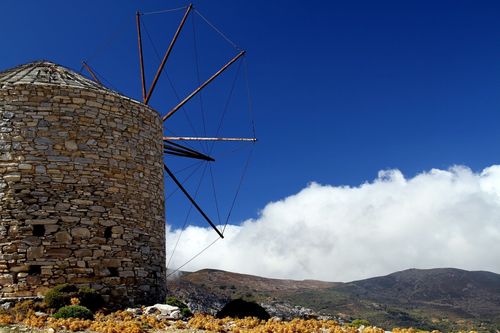
Scores of daily tour buses visit the LASÍTHI PLATEAU to view the “thousands of white-cloth-sailed windmills” which irrigate the high plain. In fact there are very few working windmills left, although most roadside tavernas seem to have adopted many of those made redundant as marketing features. The drive alone is worthwhile, however, and the plain is a fine example of rural Crete at work, every inch devoted to the cultivation of potatoes, apples, figs, olives and a host of other crops; stay in one of the villages for a night or two and you’ll see real life return as the tourists leave.
Sitía
SITÍA is the port and main town of the relatively unexploited eastern edge of Crete. It’s a pleasantly scenic, offering a plethora of waterside restaurants, a long sandy beach and a lazy lifestyle little affected even by the thousands of visitors in peak season. The town attracts a number of French, Italian and Greek tourists, and it grows on you, perhaps inviting a longer stay than intended. For entertainment there’s the town beach, providing good swimming, windsurfing and diving. In town there’s a small folklore museum (Mon–Fri 10am–1pm; €2), an excellent archeological museum (Tues–Sun 8.30am–3pm; €2) and a Venetian fort to explore. A colourful weekly market takes place on Tuesdays between 7am and 2pm along Odhós Itanou near the archeological museum.
Island escape: Gaidhouronísi
One way to escape the urban hubbub for a few hours is to take a boat to the island of Gaidhouronísi (aka Donkey Island or Chrissi Island ) some 10km out to sea from Ierápetra. No one seems to know how the 5km-long island got its name as there are no donkeys; instead you’ll find a cedar forest, the fabulous “Shell Beach” covered with millions of multicoloured mollusc shells, some good sandy beaches and a couple of tavernas. Excursion boats (May–Sept daily 10.30am & 12.30pm out, 4pm & 7pm return; €24, under-12s €12) leave from Ierápetra seafront harbour, and you can buy tickets on the boat or at any of the town travel agents in advance. The voyage to the island takes fifty minutes and the boats have an on-board bar.
Réthymnon and around
The province of Réthymnon reaches to Mount Psilorítis in the east and towards the White Mountains in the west. The fertile Amari Valley, with its pretty villages, lies in the central plain, while on the south coast, in particular around Plakiás, there are beaches as fine as any Crete can offer.
Réthymnon itself is an attractive and lively city, with some excellent beaches nearby, although the coastline to the east has seen a great influx of tourists, with the development of a whole series of large hotels extending almost 10km along the beach.
Réthymnon
RÉTHYMNON remains one of the most beautiful of Crete’s major cities, with only Haniá as a serious rival, and has an enduringly provincial air. A wide sandy beach and palm-lined promenade border the old town, a labyrinthine tangle of Venetian and Turkish houses where ancient minarets lend an exotic air to the skyline. Dominating everything from the west is the superbly preserved outline of the fortress built by the Venetians after a series of pirate raids devastated the town, adding historic depth to a Crete food-and-wine heritage tour.
Hiking the Amári valley
A good base for touring the Amári valley is Thrónos, a sizeable village at the valley’s northern end with an inviting place to stay, Rooms Aravanes. The proprietor here – Lambros Papoutsakis – is a keen walker and conducts guided treks to the peak of Mount Psilorítis, which at 2456m is Crete’s highest. Although he does guide groups up in the daytime, his preferred approach is during the full moons of June, July and August, which avoids the extreme summer temperatures. Phone in advance for details; it’s not a difficult climb, but you’ll need sturdy footwear and a sleeping bag. The summit is reached at around dawn, and the sunrise is always spectacular: on clear days the mountain offers a breathtaking view of the whole island and its four seas spreading in all directions.
Other hikes from Thrónos include a relatively easy path leading north through the foothills in a couple of hours to themonastery of Arkádhi, while south from Thrónos is an easy stroll on a paved road running back into the main valley via Kalóyerosa. A map detailing these walks is available from Rooms Aravanes.
Picked Crete as your island for a vacation in Greece? Explore our Crete itineraries for inspiration.