Explore Guatemala
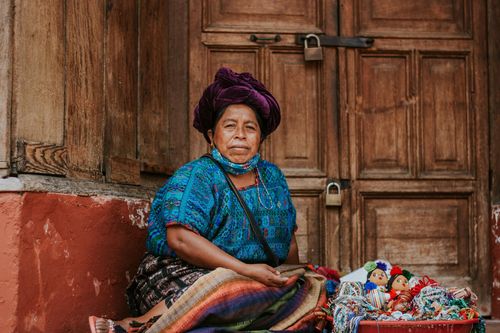
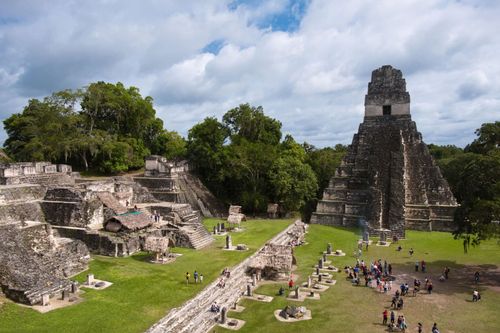
Spanning a mountainous slice of Central America immediately south of Mexico, Guatemala is loaded with incredible natural, historical and cultural appeal. As the birthplace and heartland of the ancient Maya, the country is in many ways defined by the legacy of this early civilization. Their rainforest cities were abandoned centuries ago, but Maya people continue to thrive in the Guatemalan highlands, where traditions and religious rituals, mingled with Catholic practices, endure to form the richest and most distinctive indigenous identity in the hemisphere.
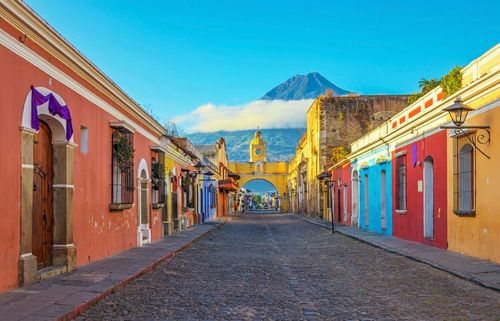
Guatemala today is very much a synthesis of Maya and colonial traditions, fused with the omnipresent influences of twenty-first century Latin and North American culture. Baroque churches dating back to the Spanish Conquest coexist with pagan temples that have been sites of worship for millennia. Highland street markets prosper alongside vast glitzy shopping malls, and pre-Columbian festival dances are performed by teenage hip-hop fans.
Guatemala is still a developing nation, a young democracy with a turbulent and bloody history that’s beset by deep-rooted inequalities. And yet, despite alarming levels of poverty and unemployment, most Guatemalans are extraordinarily courteous and helpful to travellers, and only too eager to help you catch the right bus or practise your Spanish.
It’s this genuine and profound hospitality combined with the country’s outstanding cultural legacy and astonishing natural beauty that makes Guatemala such a compelling place for travellers.
Read More-
Volcanoes
Volcanoes
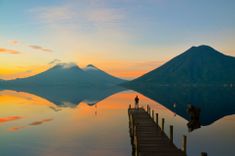
Overshadowing the southern half of the country, a chain of volcanoes extends in an ominous arc from 4220m-high Tajumulco on the Mexican border to the frontier with Honduras. Depending on how you define a volcano – some vulcanologists do not classify lateral cones in the folds of a larger peak to be volcanoes for example – Guatemala has somewhere between 33 and 40. Three of these, Pacaya, Fuego and Santiaguito are highly active, regularly belching soaring plumes of smoke and ash. An ascent up Pacaya rarely fails to disappoint as it’s usually possible to get up close and personal with the orange lava flows, but there are myriad other incredible climbs.
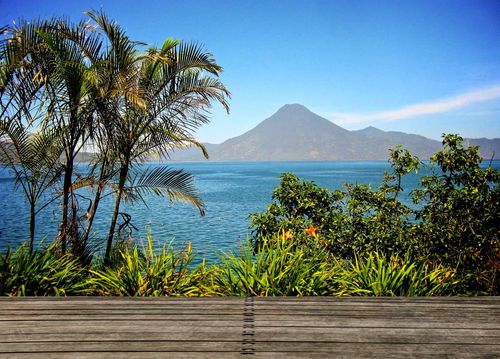
Lago de Atitlán is actually the former caldera of a giant volcano that cataclysmically blew its top some 85,000 years ago. So much magma was expelled that most of the vast cone collapsed, and centuries of rainwater filled the depression, creating today’s lake.
-
Addresses
Addresses
Almost all addresses are based on the grid system, with avenidas (Av) running in one direction (north to south) and calles east to west, often numbered. All addresses specify the street first, then the block, and end with the zone. For example, the address “Av la Reforma 3–55, Zona 10” means that house is on Avenida la Reforma, between 3 and 4 calles, at no. 55, in Zona 10. In Antigua calles and avenidas are also divided according to their direction from the central plaza – north, south, east or west (norte, sur, oriente and poniente). Diagonales (diagonals) are what you’d expect – a street that runs in an oblique direction.
-
Guatemala’s best fiestas
Easter Week
Semana Santa processions Antigua.
Easter Week
Maximón confronts Christ in Santiago Atitlán.
July 31–August 6
National Fiesta of Folklore, Cobán.
August 12–15
Marimba-playing marathon Nebaj, in the Ixil region.
September 15
Independence Day nationwide, particularly impressive in Guatemala City
October 31
Pagan skull-bearing procession San José, Petén.
November 1
Kite-flying festival, Santiago, Sacatepéquez and Sumpango.
November 1
Drunken horse race, Todos Santos Cuchumatán.
November 26
Garífuna day, Lívingston.
December 21
Maya-style bungy jump in Chichicastenango.