The hill country around Kandy
Occupying the island’s southern heartlands, the sublime green heights of the hill country are a world away from the sweltering coastal lowlands. Nothing encapsulates the scenic diversity of Sri Lanka as much as the gradual ascent through winding mountain trails and misty highland paths from the humid urban melee of Colombo to the cool altitudes of Kandy or Nuwara Eliya, making this region a natural focus for a Sri Lanka hiking tour.
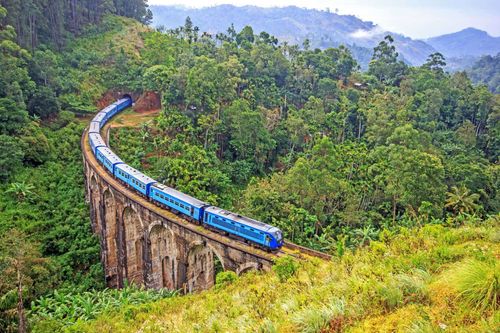
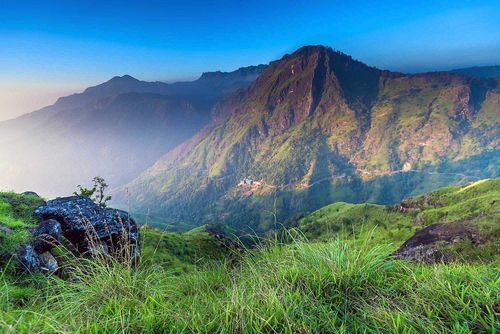
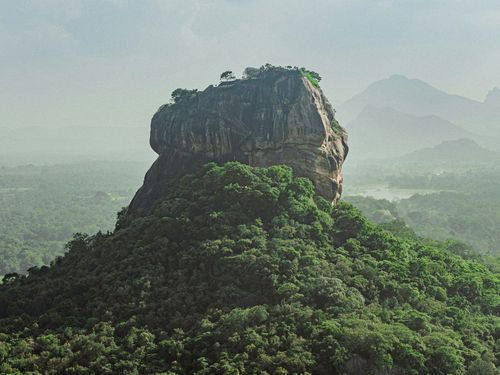
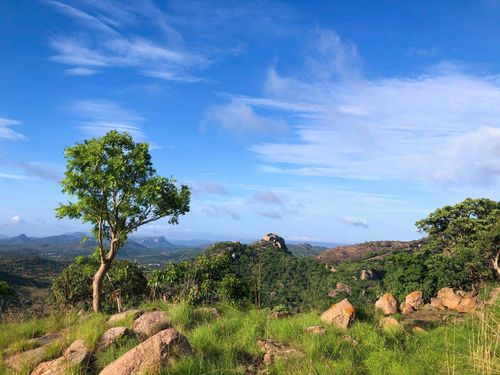
The landscape here is a beguiling mixture of nature and nurture. In places, the mountainous green hills rise to surprisingly rugged and dramatic peaks. In others, the slopes are covered in carefully manicured tea gardens whose neatly trimmed lines of bushes add a toy-like quality to the landscape, while the mist and clouds, which frequently blanket the hills, add a further layer of mystery.
Northern hill country
The hill country has been shaped by two very different historical forces. The northern portion, around the historic city of Kandy, was home to Sri Lanka’s last independent kingdom, which survived two centuries of colonial incursions before finally falling to the British in 1815. The cultural legacy of this independent Sinhalese tradition lives on today in the city’s distinctive music, dance and architecture, encapsulated by the Temple of the Tooth, home to the island’s most revered Buddhist relic, and the exuberant Kandy Esala Perahera, one of Asia’s most spectacular festivals.
Southern hill country
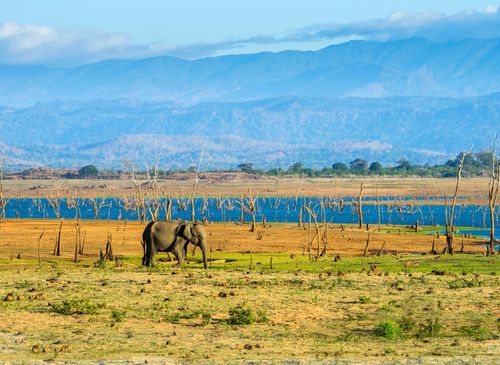
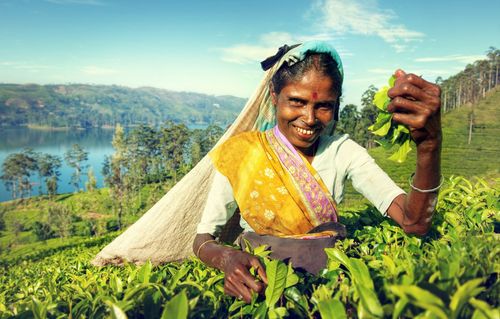
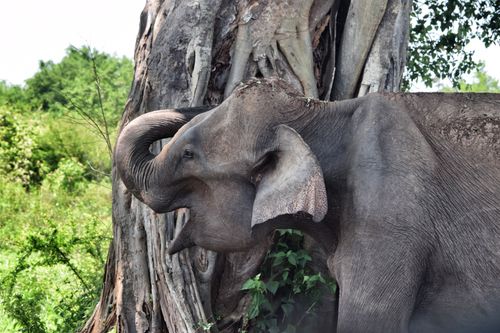
In contrast, the character of the southern hill country is largely a product of the British colonial era, when tea was introduced to the island, an industry which continues to shape the economy and scenery of the region today. At the heart of the tea-growing uplands lies the town of Nuwara Eliya, which preserves a few quaint traces of its British colonial heritage and provides the best base for visiting the misty uplands of Horton Plains and World’s End. To the south, in Uva Province, a string of small towns and villages – Ella, Bandarawela and Haputale – offer marvellous views and walks through the hills and tea plantations. At the southwestern corner of the hill country lies the town of Ratnapura, the island’s gem-mining centre and a possible base for visits to the Sinharaja reserve, a rare and remarkable pocket of surviving tropical rainforest, Uda Walawe National Park, home to one of the island’s largest elephant populations, and Adam’s Peak, whose rugged summit, imprinted with what is claimed to be the Buddha’s footprint, remains an object of pilgrimage for devotees of all four of the island’s principal religions.
Kandyan dancing and drumming
All genres of dance are accompanied by drumming, which can reach extraordinary heights of virtuosity – even if the finer points pass you by, the headlong onslaught of a Kandyan drum ensemble in full flight leaves few people unmoved,. The archetypal Sri Lankan drum is the geta bera (literally “boss drum”), a double-headed instrument carried on a strap around the drummer’s waist and played with the hands. Geta bera are made to a fixed length of 67cm, with different types of skins (monkey and cow, for example) at either end of the drum to produce contrasting sounds. The double-headed daule drum is shorter but thicker, and is played with a stick in one hand and the palm of the other. The tammettana bera is a pair of tiny drums (a bit like bongos) which are tied together and played with a pair of sticks. A horanava (a kind of Sri Lankan oboe) is sometimes added to the ensemble, providing a simple melodic accompaniment.
Like the dancers they accompany, Kandyan drummers perform in traditional costume, dressed in a large sarong, a huge red cummerbund and a white tasselled turban – significant musical points are marked by a toss of the head, sending the tassel flying through the air in a delicate accompanying flourish.
The Esala Perahera
Kandy’s ten-day Esala Perahera is the most spectacular of Sri Lanka’s festivals, and one of the most colourful religious pageants in Asia. Its origins date back to the arrival of the Tooth Relic in Sri Lanka in the fourth century AD, during the reign of Kirti Siri Meghawanna, who decreed that the relic be carried in procession through the city once a year. This quickly developed into a major religious event – the famous Chinese Buddhist Fa-Hsien, visiting Anuradhapura in 399 AD, described what had already become a splendid festival, with processions of jewel-encrusted elephants.
Occasional literary and artistic references suggest that these celebrations continued in some form throughout the thousand years of upheaval which followed the collapse of Anuradhapura and the Tooth Relic’s peripatetic journey around the island. Esala processions continued into the Kandyan era in the seventeenth century, though the Tooth Relic lost its place in the procession, which evolved into a series of lavish parades in honour of the city’s four principal deities: Vishnu, Kataragama, Natha and Pattini, each of whom had (and still has) a temple in the city.
The festival took shape in 1775, during the reign of Kirti Sri Rajasinha, when a group of visiting Thai clerics expressed their displeasure at the lack of reverence accorded to the Buddha during the parades. To propitiate them, the king ordered the Tooth Relic to be carried through the city at the head of the four temple processions: a pattern that endures to this day. Sri Rajasinha’s own enthusiastic participation in the festivities, and that of his successors, also added a political dimension – the Nayyakar kings of Kandy (who were from South India) probably encouraged the festival in the belief that by associating themselves with one of Buddhism’s most sacred relics, they would reinforce their dynasty’s shaky legitimacy in the eyes of their Sinhalese subjects. The Tooth Relic itself was last carried in procession in 1848, since when it’s been considered unpropitious for it to leave the temple sanctuary – its place is now taken by a replica.
The festival
The ten days of the festival begin with the Kap Tree Planting Ceremony, during which cuttings from a tree – traditionally an Esala tree, though nowadays a Jak or Rukkattana are more usually employed – are planted in the four devales, representing a vow (kap) that the festival will be held. The procession (perahera) through the streets of Kandy is held nightly throughout the festival: the first five nights, the so-called Kumbal Perahera, are relatively low-key; during the final five nights, the Randoli Perahera, things become progressively more spectacular, building up to the last night (the Maha Perahera, or “Great Parade”), featuring a massive cast of participants including as many as a hundred brilliantly caparisoned elephants and thousands of drummers, dancers and acrobats walking on stilts, cracking whips, swinging fire pots and carrying banners, while the replica casket of the Tooth Relic itself is carried on the back of the Maligawa Tusker elephant.
Following the last perahera, the water-cutting ceremony is held before the dawn of the next day at a venue near Kandy, during which a priest wades out into the Mahaweli Ganga and “cuts” the waters with a sword. This ceremony symbolically releases a supply of water for the coming year (the Tooth Relic is traditionally believed to protect against drought) and divides the pure from the impure – it might also relate to the exploits of the early Sri Lankan king, Gajabahu (reigned 114–136 AD), who is credited with the Moses-like feat of dividing the waters between Sri Lanka and India in order to march his army across during his campaign against the Cholas.
After the water-cutting ceremony, at 3pm on the same day, there’s a final “day” perahera, a slightly scaled-down version of the full perahera. It’s not as spectacular as the real thing, though it does offer excellent photo opportunities.
The procession
The perahera is a carefully orchestrated, quasi-theatrical event – there is no spectator participation here, although the astonishing number of performers during later nights give the impression that most of Kandy’s citizens are involved. The perahera actually comprises five separate processions, which follow one another around the city streets: one from the Temple of the Tooth, and one from each of the four devales – a kind of giant religious conga, with elephants. The exact route changes from day to day, although the procession from the Temple of the Tooth always leads the way, followed (in unchanging order) by the processions from the Natha, Vishnu, Kataragama and Pattini devales (Natha, as a Buddha-to-be, takes precedence over the other divinities). As its centrepiece, each procession has an elephant carrying the insignia of the relevant temple – or, in the case of the Temple of the Tooth, the replica Tooth Relic. Each is accompanied by other elephants, various dignitaries dressed in traditional Kandyan costume and myriad dancers and drummers, who fill the streets with an extraordinary barrage of noise. The processions each follow a broadly similar pattern, although there are slight differences. The Kataragama procession – as befits that rather unruly god – tends to be the wildest and most freeform, with jazzy trumpet playing and dozens of whirling dancers carrying kavadis, the hooped wooden contrivances, studded with peacock feathers, which are one of that god’s symbols. The Pattini procession, the only one devoted to a female deity, attracts mainly female dancers. The beginning and end of each perahera is signalled by a deafening cannon shot.
The Temple of the Tooth
Posed artistically against the steep wooded hills of the Udawattakele Sanctuary, Sri Lanka’s most important Buddhist shrine, the Temple of the Tooth, or Dalada Maligawa, is a key stop on 16-day Sri Lanka trips that include time in Kandy rather than simply passing through the hill country. The temple sits on the lakeshore just east of the city centre and houses the legendary Buddha’s Tooth, which arrived here in the sixteenth century after various peregrinations around India and Sri Lanka, although nothing remains of the original temple, built around 1600. The main shrine of the current temple was originally constructed during the reign of Vimala Dharma Suriya II (1687–1739) and was rebuilt and modified at various times afterwards, principally during the reign of Kirti Sri Rajasinha (1747–81). It was further embellished during the reign of Sri Wickrama Rajasinha, who added the moat, gateway and Pittirippuva; the eye-catching golden roof over the relic chamber was donated by President Premadasa in 1987.
The temple was badly damaged in 1998 when the LTTE detonated a massive truck bomb outside the entrance, killing over twenty people and reducing the facade to rubble. Restoration work was swift and thorough, however, and there’s little visible evidence left of the attack, although crash barriers now prevent vehicular access to the temple, and all visitors have to pass through stringent security checks.
Hares in the moon
The paintings of hares in the moon shown on the exterior of the Tooth Relic shrine refer to one of the most famous of the Jataka stories, describing the previous lives of the Buddha before his final incarnation and enlightenment. According to the Jataka story of the Hare in the Moon, the future Buddha was once born as a hare. One day the hare was greeted by an emaciated holy man, who begged him – along with a fox and a monkey, who also happened to be passing – for food. The fox brought a fish, the monkey some fruit, but the hare was unable to find anything for the holy man to eat apart from grass. Having no other way of assuaging the ascetic’s hunger, the hare asked him to light a fire and then leapt into the flames, offering his own body as food. At this moment the holy man revealed himself as the god Indra, placing an image of the hare in the moon to commemorate its self-sacrifice, where it remains to this day.
The Jataka fable may itself be simply a local version of a still more ancient Hindu or Vedic myth – traditions referring to a hare in the moon can be found as far away as China, Central Asia and even Europe, while the story also appears, in slightly modified form, in one of the Brothers Grimm fairy tales.
The Buddha’s Tooth
Legend has it that when the Buddha was cremated in 543 BC at Kushinagar in North India, various parts of his remains were rescued from the fire, including one of his teeth. In the fourth century AD, as Buddhism was declining in India in the face of a Hindu revival, the Tooth was smuggled into Sri Lanka, hidden (according to legend) in the hair of an Orissan princess. It was first taken to Anuradhapura, then to Polonnaruwa, Dambadeniya and Yapahuwa. In 1284, an invading Pandyan army from South India captured the Tooth and took it briefly back to India, until it was reclaimed by Parakramabahu III some four years later.
During these turbulent years the Tooth came to assume increasing political importance, being regarded not only as a unique religious relic but also as a symbol of Sri Lankan sovereignty – it was always housed by the Sinhalese kings in their capital of the moment, which explains its rather peripatetic existence. After being reclaimed by Parakramabahu III, it subsequently travelled to Kurunegala, Gampola and Kotte. In the early sixteenth century, the Portuguese captured what they claimed was the Tooth, taking it back to Goa, where it was pounded to dust, then burnt and cast into the sea (Buddhists claim either that this destroyed Tooth was simply a replica, or that the ashes of the Tooth magically reassembled themselves and flew back to Sri Lanka). The Tooth finally arrived in Kandy in 1592 and was installed in a specially constructed temple next to the palace, later becoming the focus for the mammoth Esala Perahera.
The exact nature and authenticity of the Tooth remains unclear. Bella Sidney Woolf, writing in 1914 when the Tooth was still regularly displayed to the public, described it as “a tooth of discoloured ivory at least three inches long – unlike any human tooth ever known,” unconsciously echoing the sentiments of an earlier Portuguese visitor, a certain de Quezroy, who in 1597 claimed that the Tooth had actually come from a buffalo. Whatever the truth, the Tooth remains an object of supreme devotion for many Sri Lankans. Security concerns mean that it is no longer taken out on parade during the Esala Perahera, though it is put on display in the Temple of the Tooth for a couple of weeks once or twice every decade.