The Cameron Highlands
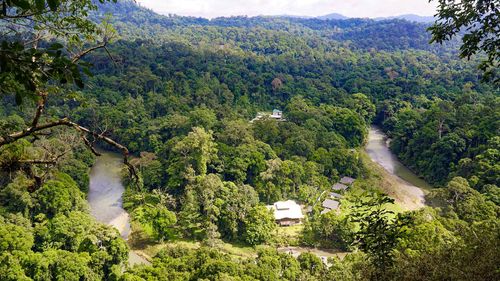
Around 200km north of Kuala Lumpur, surrounded by the dark blue, forested peaks of the Banjaran Titiwangsa, the Peninsula’s main mountain range, the Cameron Highlands form Malaysia’s most extensive hill station. The area took its name from William Cameron, a government surveyor who stumbled across it in 1885, though it was not until forty years later that civil servant Sir George Maxwell proposed developing a hill station here.
Indian tea planters, Chinese vegetable farmers and wealthy landowners in search of a weekend retreat soon moved in, establishing tea plantations and leaving a swathe of mock-Tudor buildings in their wake. The Cameron Highlands add a cool, green contrast to 5-day Malaysia trips, especially for travellers who want a short escape from Kuala Lumpur’s heat without heading to the coast. Though it can get packed at times, particularly during the March to May hot-season school holidays, it offers excellent nature walks, fresh air, locally grown strawberries, and the chance to relax over tea and scones.
The Highlands cover around 700 square kilometres, cut by the twisting Route 59, which links the three main townships. Southerly Ringlet is a busy little marketplace surrounded by modern housing estates, close to a couple of attractions but otherwise forgettable. Some 15km northeast, Tanah Rata is the Highlands’ main town and favoured base, at the core of walking trails and flush with places to stay and eat; 5km further north, scruffier Brinchang offers more of the same, plus several nearby fruit and vegetable farms.
With hills in every direction, the weather in the Cameron Highlands is unpredictable, and you can expect rainstorms even in the dry season. It makes sense to avoid the area during the monsoon itself (Nov–Jan), and at major holiday times if you want to avoid the crowds. Given the 1000m-plus altitude, temperatures drop dramatically at night – whatever the season – so you’ll need warm clothes, as well as waterproofs.
Brinchang
Some 5km north of Tanah Rata, BRINCHANG is a more compact, built-up, busier and less attractive township; with additional places to stay and eat, it makes a decent alternative to Tanah Rata if the latter is full, and a lively night market takes place uphill from the centre on Fridays and Saturdays. Brinchang also sits at one end of the walking trail up to the summit of Gunung Brinchang.
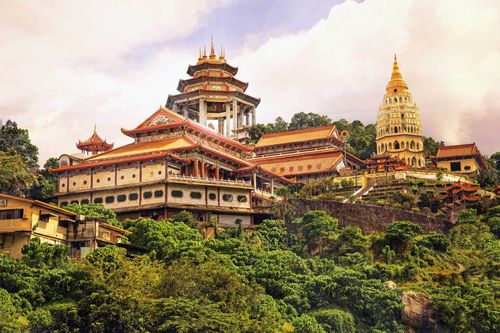
Sights on Brinchang’s outskirts include the modern Sam Poh Temple, 1km southeast, a Buddhist affair whose gaudy red concrete halls and terraces offer views over the area. Just north past the night market, the quirky Time Tunnel Memorabilia Museum (daily 9am–6pm; RM5) is a private collection of photos, toys, shop signs and bric-a-brac dating back to the 1950s. Five minutes’ walk west lands you at the Big Red Strawberry Farm (daily 8.30am–6pm; wbigredstrawberryfarm.com), where you can pick your own strawberries and tomatoes, or drop in for tea and scones at the café.
North of Brinchang
All over the Cameron Highlands – but especially north of Brinchang – you’ll pass small sheds or greenhouses by the roadside, selling cabbages, leeks, cauliflowers, mushrooms and strawberries. These are the produce of the area’s various fruit and vegetable farms, where narrow plots are cut out of the sheer hillsides to increase the surface area for planting, forming giant steps all the way up the slopes; over forty percent of the produce is for export to Singapore, Brunei and Hong Kong. Sungai Palas tea plantation is out this way too, along with the vehicle road up Gunung Brinchang.
Tanah Rata
The tidy town of TANAH RATA, the Highlands’ most developed settlement, is a bustling place festooned with hotels, white-balustraded buildings, flowers and parks. It comprises little more than one 500m-long street (officially called Jalan Besar, but usually just known as “Main Road”), full of stores, services and restaurants; most of the accommodation lies off down the handful of side lanes. Since the street also serves as the main thoroughfare into the rest of the Highlands, it suffers from daytime traffic noise, but at night becomes the centre of the Cameron Highlands’ social life, with restaurant tables spilling out onto the pavement.
Tanah Rata is an ideal base to explore the Cameron Highlands, with many walks starting nearby, a couple of waterfalls, and three reasonably high mountain peaks all within hiking distance.
Tea and tours
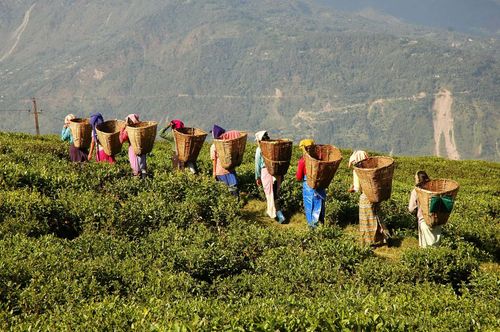
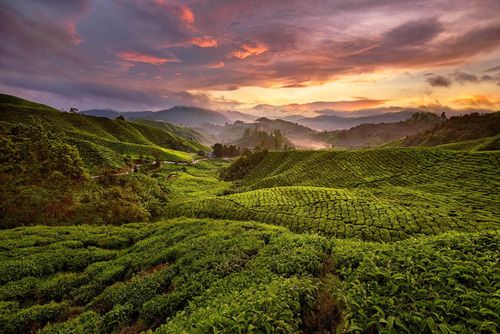
Tea is such a feature of the Cameron Highlands that it would be perverse not to visit a plantation during your stay, making one an essential stop on a Cameron Highlands tour, where you can investigate the growing process and enjoy a local cuppa. Despite the romantic imagery used on packaging, handpicking is now far too labour-intensive to be economical; instead, the small, green leaves are picked with shears. Once in the factory, the leaves are withered by alternate blasts of hot and cold air for sixteen to eighteen hours; this removes around fifty percent of their moisture. They are then rolled by ancient, bulky machines that break up the leaves and release more moisture for the all-important process of fermentation. Following ninety minutes’ grinding, the soggy mass is fired at 90°C to halt the fermentation, and the leaves turn black. After being sorted into grades, the tea matures for three to six months before being packaged and transported to market.
Plantations
The following plantations are open to the public, and offer varying attractions:
Boh 8km northeast of Ringlet via Habu (wboh.com.my). See the whole production process – from picking to packing of the tea – at Malaysia’s largest tea producer. Some areas of the tour are extremely dusty, so take a handkerchief to cover your mouth and nose. There’s also a pleasant café on the premises.
Bharat between Ringlet and Tanah Rata (wbharattea.com.my). No tours, but the café serves a range of local teas along with scones and other snacks, and enjoys views out over the tea terraces.
Sungai Palas 6km north of Brinchang (wboh.com.my). The northern Highlands’ branch of the Boh estates, though tea drinking, not tours, is offered here.
Walking in the Cameron Highlands
A network of walking trails makes the Cameron Highlands’ forests uniquely accessible, with prolific flora against a tremendous canopy of trees – ferns, pitcher plants, bird’s nest ferns, orchids and thick moss – through which you can sometimes glimpse spectacular views of misty mountain peaks. Some of the walks are no more than casual strolls through secondary growth woodland, while others are romps through what seems like the wild unknown, giving a sense of real isolation. Despite the presence of large mammals in the deep forest, such as honey bears and monkeys, you’re unlikely to see more than insects and the odd wild pig or squirrel.
Unfortunately, the trails are often badly signposted and poorly maintained, though despite their apparent vagueness, the various sketch maps sold in Tanah Rata (RM3–4) and at many of the hotels do make some sort of sense on the ground. The Cameronian Inn and Father’s Guest House in Tanah Rata are good contacts for current trail information and hiring guides.
The official trails are varied enough for most tastes and energies. You should always inform someone, preferably at your hotel, where you are going and what time you expect to be back. On longer hikes, take warm clothing, water, a torch and a cigarette lighter or matches for basic survival should you get lost. If someone doesn’t return from a hike and you suspect they may be in trouble, inform the District Office immediately. It’s not a fanciful notion that hiking can have its dangers – mudslides after rain, for example, are not uncommon.
Kedah and Perlis
The northernmost third of the west coast is filled by the states of Kedah and Perlis, the latter being Malaysia’s smallest state at just 800 square km. These are the country’s agricultural heartlands, the landscape dominated by lustrous, bright green paddy fields stretching off in all directions. That wealth has seen the region (ruled by Malay sultans since the fifteenth century) invaded over the centuries by the Thais, the British, the Thais again, and the Japanese in World War II. Indeed, Kedah only reluctantly joined the Federated Malay States in 1948.
Neither state’s capitals– Kedah’s Alor Star, or Kangar in Perlis – demands a trip in its own right, but the major resort island of Pulau Langkawi, with its fine beaches and forested interior, makes an attractive (if expensive) place to pull up for a few days, perhaps en route to the Thai border – which you can cross by boat from the island, or by road and rail through Perlis. Less visited local sights include Ulu Muda Eco Reserve, and the important archeological remains outside tiny Sungai Petani.
Alor Star (Alor Setar)
The tidy state capital of Kedah, Alor Star is a thoroughly Malay city, very conservative in feel for the west coast, with a prominent mosque and former sultan’s palace right in the centre. This traditionalism is doubtless partly a reaction to the proximity of the Thai border, just 45km north; the town has been through a century of Thai rule since its foundation as a royal capital in 1735. A compact place that can be easily seen in a day, Alor Star holds enough architectural and cultural interest to make a worthwhile pause on your way to or from Thailand, Ulu Muda Eco Park or the ferry to Langkawi. Be sure to dress appropriately, given its largely Muslim population.
Kangar
KANGAR, the Perlis state capital, is an unremarkable town whose compact city centre, a shabby mix of old shophouses and concrete box architecture focused around the Kangar Square D’Mara shopping complex, sits immediately north of the little Sungai Perlis. It’s really only somewhere to change buses, most likely if you’re heading between the Thai border and Langkawi. About 10km east, ARAU is the least interesting of all Malaysia’s royal towns – the Royal Palace on the main road is closed to the public and looks like little more than a comfortable mansion – but it’s the nearest train station to Kangar.
Pulau Langkawi
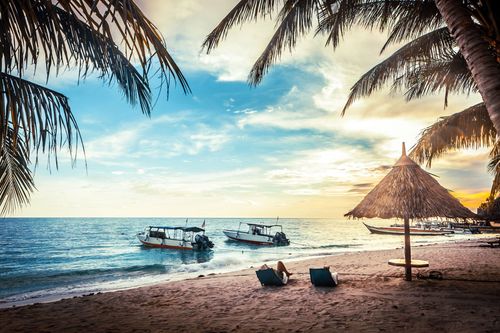
Situated 30km off the coast, just south of the Thai border, Pulau Langkawi is at 500 square kilometres the largest of an archipelago of mostly uninhabited islands. Its white-sand beaches are easily the best along the entire west coast of Peninsular Malaysia, and Langkawi’s charms consist largely of lazing around on the sand, perhaps taking time off for a mangrove cruise after sea eagles, to snorkel or scuba dive south at Pulau Payar Marine Park, or to ride the Langkawi Cable Car over the interior forests to the top of Gunung Mat Cincang.
Once a haven for pirates, Langkawi has in recent years been converted into an upmarket resort destination aimed at Saudis and Europeans, complete with its own airport and some of the country’s priciest hotels. That said, there’s relatively little high-density development, and a growing sprinkle of budget-end accommodation means that the island is fairly affordable for a couple of days, even if your funds are limited. It’s also popular with Western yachties, as a cheaper place to hang out than Phuket in Thailand – and Langkawi’s special duty-free status means a case of beer costs only RM25.
There’s no reason to stay longer in Langkawi’s main port, Kuah, than it takes to arrange transport west to the beaches and mid-range developments at Pantai Tengah and Pantai Cenang, or the exclusive, self-contained resorts scattered around the island’s northwest. Well-formed roads circuit Langkawi, though with no bus service, exploring further than walking distance from your hotel can be costly. If you are on a budget, don’t come anywhere near Langkawi during national or school holidays, when room rates can double.
Sungai Petani
SUNGAI PETANI, 35km north of Butterworth, is the jumping-off point for the archeological site of Bujang Valley, and Gunung Jerai, the state’s highest peak. Both lie northwest from town, on separate roads; without your own vehicle, you can’t visit both in a single day. The town itself has nothing to detain you beyond its transport terminals and handful of places to stay. A clock tower dominates Jalan Ibrahim, the main north–south road through town; from here, a side road directly to the east leads to the train station. One block south of the clock tower, another side road branching east, Jalan Kuala Ketil, crosses over the tracks and leads to the express bus stop – little more than an open yard and some food stalls. A further block south and west is Jalan Petri, which continues west past the local bus station, taxi stand and some budget hotels.
Ulu Muda Eco Park
Hidden away in Kedah’s northeastern corner, up against a remote section of the Thai border, Ulu Muda Eco Park is thick with salt licks, old-growth rainforest and wildlife. As well as birds and reptiles galore, it offers a reasonable chance of encountering elephants and tapir, though sightings of the resident tigers and sun bears are far less likely. The park also encloses a man-made lake, Tasik Muda, and the only way in is by boat from Gubir, not much more than a jetty and resort 75km east of Alor Star; a two-hour sampan ride from here lands you deep inside the park at the Earth Lodge Field Research Centre. Hiking tracks link the lodge to limestone caves, hot springs (which many animals visit early in the morning or at night, when the temperatures drop), and wildlife hides.
Despite the threat of logging that hangs over the area, Ulu Muda remains genuinely remote, so getting here is both time-consuming and expensive. The only practical way to see the park is on a tour, but if you want to experience less touristed jungle than that at Taman Negara, this might be the place to come. Note that August to December can see heavy rainfall, but the park is still accessible; in the dry season, you might have to push your boat over a few sandbanks to reach the lodge.
Perak
Most visitors whisk through Perak State, which occupies most of the area between KL and Penang, and is crossed by the rail line and fast expressway. Between the sixteenth century and the 1960s, tin kept Perak wealthy, causing fisticuffs at various times between Dutch, British, Thai and Malay factions, funding a royal seat outside modern Kuala Kangsar and leaving the cities of Taiping and Ipoh awash with solid colonial and Chinese architecture. These, along with the Cameron Highlands remain interesting places to step off the tourist trail for a day or two and take in ordinary life in modern Malaysia, though Perak’s most popular attraction is the laidback resort island of Pulau Pangkor, accessed from Ipoh via the port of Lumut.
Bukit Larut (Maxwell Hill)
Up in the hills 13km northeast of Taiping, BUKIT LARUT – known in colonial times as Maxwell Hill – is Malaysia’s smallest and oldest hill station. The climate is wonderfully cool, and on a clear day there are spectacular views down to the west coast. This is the wettest place in Malaysia, however, so the top is often atmospherically shrouded in cloud. A scattering of elderly bungalows offer accommodation, but for many visitors the stiff walk up here through the forests, with the chance to do some birdwatching, is the main draw; you’ll need a full day for this, even if you manage to catch the limited Land Rover service up to the top and then walk back to town.
Kuala Kangsar
While Ipoh is the administrative capital of Perak, KUALA KANGSAR, 50km northwest, is its royal town, home to the sultans of Perak since the fifteenth century and later the seat of Perak’s first Resident, Hugh Low. Built at a grandiose sweep of Sungai Perak, it’s a small, workaday town, with a colonial monument in the Malay College on Jalan Tun Razak, its elegant columns and porticoes visible as you approach the centre from the train station. Founded in 1905 as an “Eton of the East”, it was a training ground for the sons of Malay nobility, with its discipline and traditions more English than in England, even if the schoolboys were required to wear formal Malay dress, as they still do today.
Matang Mangrove Forest Reserve
The Matang Mangrove Forest Reserve is Peninsular Malaysia’s largest surviving spread of mangrove forest, most of which has been extensively cleared for development, or in more manageable quantities for charcoal production (still practised nearby). However, since the 2004 tsunami off Sumatra killed over 200,000 people across Southeast Asia, there’s been a lot of interest in preserving mangroves; the trees’ mesh of aerial support roots form a natural breakwater, absorbing some of the force of tsunamis and thus protecting coastlines from inundation. They’re also rich breeding grounds for small marine creatures from jellyfish to fiddler crabs, mudskippers and archer fish (and, sadly for visitors, sandflies and mosquitoes), meaning plenty of food for larger animals – including rare marine otters and river dolphins.
Over a century old, Matang Mangrove Reserve is reckoned to be a model of environmental protection. Extensive boardwalks lead above the black mud through a forest of tall, thin trunks and mangrove ferns; keep eyes peeled for monkeys, wild pigs and swimming snakes. You can also stay here in basic, self-catering cabins – contact the reserve for details.
Pulau Pangkor
With some of the best beaches on this side of the Malay Peninsula, the laidback island of PULAU PANGKOR, though barely 10km long, makes a thoroughly pleasant place to spend a weekend, and an increasingly popular retreat with Malaysian families up for an easy break from KL. Its mountainous centre remains thickly forested and largely inaccessible, so there’s little distraction from enjoying beach life. There are a couple of fishing towns on the east coast, developing tourist enclaves across the island at Pasir Bogak and hornbill-infested Teluk Nipah, and not really that much in between. Surprisingly then, Pulau Pangkor played an important part in Malaysian history when the Pangkor Treaty was signed here in 1874, which led to the creation of the Resident System.
Pangkor is an easy ferry ride from mainland LUMUT, a small port and Malaysian Navy base 80km southwest of Ipoh. The only time things get really busy on the island is during school holidays and the Hindu festival of Thaipusam, celebrated on the full moon in mid-February or early March. The unmissably gruesome spectacle lasts two days; processions start out on the beach at Pasir Bogak, and end at the Sri Pathirakaliaman Temple on the east coast.
The Resident System
In 1873, Rajah Abdullah of Perak invited the new Governor of the Straits Settlements, Andrew Clarke, to appoint a Resident (colonial officer) to Perak, in exchange for recognizing Abdullah as the Sultan of Perak instead of his rival. This held some appeal for the British, whose involvement in Malay affairs had hitherto been unofficial, so on January 20, 1874, the two men signed the Pangkor. The idea was that the Resident – each state would have its own – would play an advisory role in Malay affairs in return for taking a sympathetic attitude to Malay customs and rituals.
The interpretation of the newly created post was in the hands of Hugh Low, whose jurisdiction of Perak (1877–89) was based in Kuala Kangsar. The personable Low lived modestly by British standards and his linguistic skills won him favour with local chiefs. Having spent nearly thirty years in Borneo, Low was great friends with Charles and James Brooke, and sought to emulate their relatively benign system of government.
The approval of the Malay nobility, vital to the success of the Residency scheme, was secured by compensating them for the income lost from taxes and property. This suited the sultans; they obtained financial security through healthy stipends, and also got political protection from rivals. As time went on, lesser figures were given positions within the bureaucracy, thus weaving the Malays into the fabric of the administration, of which the cornerstone was the State Council. Although the sultan was its ceremonial head, the Resident chose the constituent members and set the political agenda, in consultation with his deputies – the district officers – and the governor.
It is doubtful that the Malays understood the treaty’s long-term consequences, as initially the decision-making process was collective, much like the Malays’ own courts. As the power of central government increased, however, fewer meetings of the council were held, and the British involvement became less advisory and more reformatory. Sultan Abdullah, bent on acquiring local power and status, thereby inadvertently allowed the British a foot in the door, which ultimately led to their full political intervention in the Peninsula.
Taiping
Set against the backdrop of the mist-laden Bintang Hills, TAIPING – like so many places in Perak – owes its existence to the discovery of tin in the first decades of the nineteenth century. The name is Chinese; it could mean either “Great Plain” or “Great Peace”, though the latter is unlikely given the numerous violent clan wars here between rival Cantonese and Hakka factions during the 1860s. Despite this, mining wealth helped fund many Malaysian firsts at a time when Kuala Lumpur was barely on the map: the first English-language school in 1878; the first hospital in 1880, established by the Chinese; the first rail line in 1882, built to facilitate tin exports; and the first museum in 1883. As Perak state’s capital until 1937, and with the nearby hill station of Bukit Larut (formerly Maxwell Hill) serving as a retreat for its administrators, Taiping was at the forefront of the colonial development of the Federated Malay States.
Nowadays, bypassed by the North–South Expressway and replaced in administrative importance by Ipoh, Taiping is declining gracefully, its streets lined with tattered architectural mementoes of its glory days. Even so, it’s a pleasant place to spend a few hours at leisure, exploring the small, walkable centre and green Lake Gardens, though you’ll need a full day to ascend Bukit Larut or take in the nearby mangrove reserve.
Penang
Way up the west coast, 370km from KL and 170km from the Thai border, PENANG is a confusing amalgam of state and island. Mainland roads and the rail line converge at unattractive Butterworth, jumping-off point for the brief ferry ride over to Pulau Pinang, Britain’s first toehold on the Malay Peninsula. The island’s lively “capital”, Georgetown, sports a fascinating blend of colonial, Indian, Malay and – especially – immigrant Chinese culture. Along with Melaka and Singapore, Georgetown is also considered a centre for Peranakan heritage, the Chinese-Malay melange frequently known as “Straits Chinese” or “Baba-Nyonya”, though – aside from some food and a splendid mansion – there’s little evidence of this. What does survive, however, are spectacular Chinese temples and guildhalls, built by merchants and clan societies to display their wealth, alongside a whole central quarter of shophouses, many being thoughtfully restored after they helped the city become a UNESCO World Heritage site in 2008.
Georgetown is likely to be your base on Pulau Pinang, and three days would be enough to cover its main sights. A day or two extra spent touring the rest of the island – all 285 square kilometres of it – will turn up minor beach resorts, a coastal national park where you might see nesting turtles, a couple of unusual temples, plus plenty of renowned food stalls.
If you’re headed towards Thailand, you can catch direct ferries from Pulau Pinang to Langkawi, and change there for cross-border boats to Satun.
Brief history of Penang
Pulau Pinang was ruled by the sultans of Kedah until the late eighteenth century. But increasing harassment by Thai and Burmese raiding parties encouraged the sultan to seek military protection from Francis Light, a plausible British adventurer searching for a regional trading base to counter the Dutch presence in Sumatra. After a decade of wrangling, a deal was struck: Light would provide military aid through the British East India Company and the sultan would receive 30,000 Spanish dollars a year. There was one snag – the East India Company’s Governor-General, Charles Cornwallis, refused to be party to the plans. Concealing the facts from both parties, Light went ahead anyway and took possession of Penang on August 11, 1786, then spent five years assuring the sultan that the matter of protection was being referred to authorities in London. The sultan finally caught on but failed to evict the British, ending up with an annuity of 6000 Spanish dollars and no role in the island’s government.
Penang thus became the first British settlement in the Malay Peninsula. Within two years, four hundred acres were under cultivation and the population – many of them Chinese traders quick to grasp the island’s strategic position in the busy Straits of Melaka – had reached ten thousand. Francis Light was made superintendent and declared the island a free port, renaming it “Prince of Wales Island” after the British heir apparent. Georgetown took its name from the British king, George III, and retained its colonial label even after the island’s name reverted to Penang.
For a time, all looked rosy for Penang, with Georgetown proclaimed as capital of the Straits Settlements (incorporating Melaka and Singapore) in 1826. But the founding of Singapore in 1819 was the beginning of the end for Georgetown, as the new colony overtook its predecessor in every respect. This had one beneficial result: with Georgetown stuck in the economic doldrums well into the twentieth century, no significant development took place within the city, and consequently many of its colonial and early Chinese buildings survive to this day.
Festive Penang
Pulau Pinang is the focus of several important festivals and events throughout the year, starting with the riotous Hindu celebration Thaipusam. Perhaps the best known of the rest is the November Penang Bridge Run (wpenangmarathon.gov.my), when thousands of competitors run a pre-dawn marathon via the bridge to Butterworth. June sees the International Dragonboat Race (wpenangdragonboat.gov.my), a nominally Chinese event commemorating the death of a patriotic poet in 278 BC, while the July Cultural Festival (wgeorgetownfestival.com) provides a showcase for Penang’s ethnic groups, with a three-day food festival, art events and traditional Chinese opera performances at the temples. In November or December, Batu Ferrenghi also hosts the Penang Jazz Festival (wpenangjazz.com), attracting local and international performers.
Kongsi and clan mansions
In modern Chinese, kongsi simply means “a company”, but in former times each was more like a clan or regional association providing help and protection for nineteenth-century immigrants, who naturally tended to band together according to the district in China from which they came. Formerly a focus for community rivalry, the kongsis have now reverted to their supportive role, helping with the education of members’ children, settling disputes between clan members, or advancing loans.
Many of the kongsi buildings in Penang are excellent examples of traditional southern Chinese architecture: there is generally a spacious courtyard in front of the clan house, opposite which is a stage for theatrical performances, and two halls in the main building itself, one for the shrine of the clan deity, the other for the display of the ancestral tablets (the equivalent of gravestones).
The Penang Riots
Chinese immigrants to Penang brought their traditions with them, including secret societies, which provided mutual aid and protection for the Chinese community – bolstered in Georgetown by alliances with similar Malay religious groups.
As the societies grew in wealth and power, gang warfare and extortion rackets became commonplace. Matters came to a head in the Penang Riots of 1867: for nine days Georgetown was shaken by fighting between the Tua Peh Kong society, supported by the Malay Red Flag, and the Ghee Hin, allied with the Malay White Flag. Police intervention resulted in a temporary truce, but on August 1, 1867, the headman of the Tua Peh Kong falsely charged the Ghee Hin and White Flag societies with stealing cloth belonging to Tua Peh Kong dyers. All hell broke loose, and fighting raged around Lebuhs Armenian Church and Chulia. Barricades were erected around the Khoo Kongsi, where some of the fiercest skirmishes occurred – you can still find bullet holes in the surrounding shops and houses.
The fighting was eventually quelled by sepoys (Indian troops) brought in from Singapore by the Governor-General, but by then hundreds had been killed and scores of houses burned. A penalty of RM5000 was levied on each of the secret societies, some of which was later used to finance the building of four police stations to deal with any future trouble.
Butterworth
Sitting 94km north of Taiping, the dusty, industrial port of BUTTERWORTH looks over a narrow strait to a far more attractive Pulau Pinang from an intricate concrete mesh of flyovers, highways and rail lines. With ferries crossing to the island every few minutes from early morning until late into the evening, the only reason to spend any time here is in transit. The bus station, ferry pier, long-distance-taxi stand and train station are all next door to each other, so this shouldn’t take long – just follow the signed pedestrian overpasses to whichever you need.
 (1).jpg)