Explore Cambodia
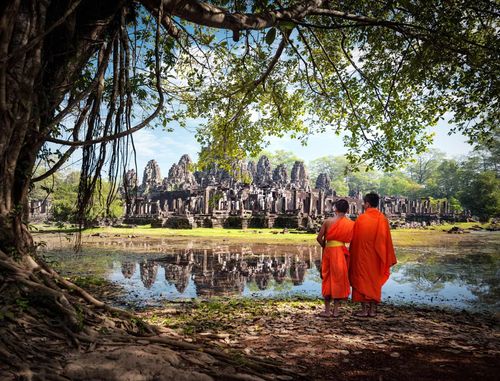
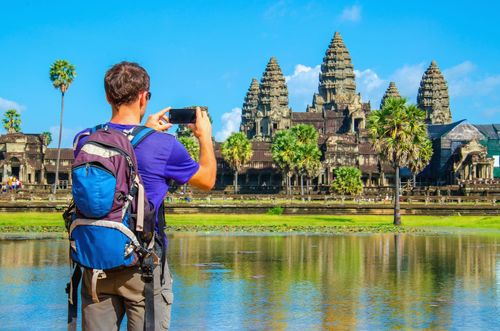
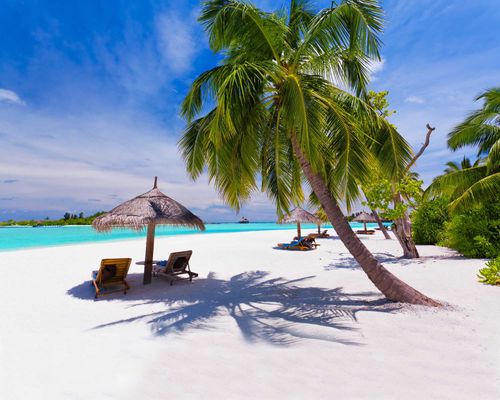
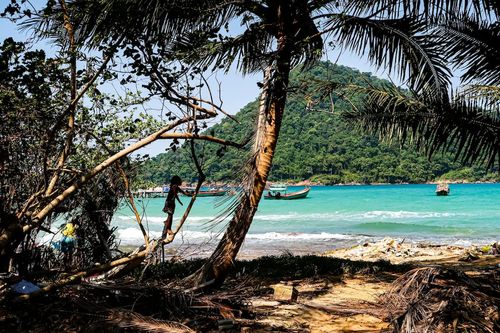
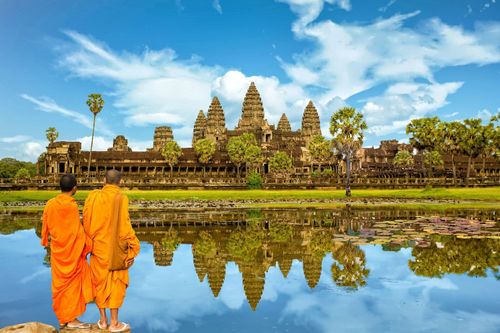
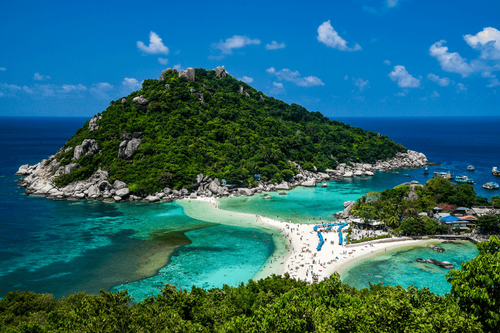
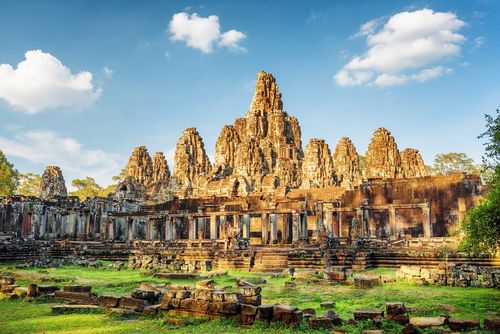
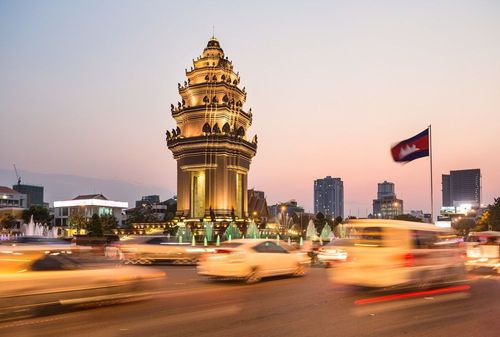
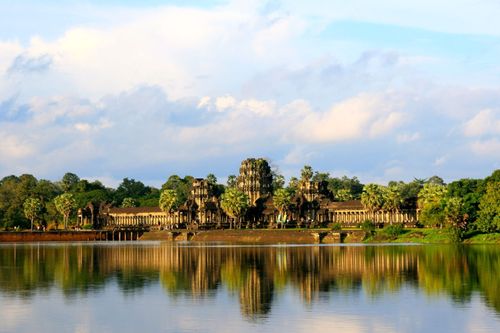
Thanks to the stunning temples of Angkor, Cambodia is now firmly established on the Southeast Asian tourist trail. Many visitors head straight to the temples, staying in the country just a few days, but those who delve deeper find that Cambodia, with its balmy climate and laid back attitude to life has much more to offer: white-sand beaches and relaxed off-shore islands, forest-clad hills and impenetrable jungle, a dynamic, yet beguiling, capital and sleepy provincial towns, in many of which colonial houses and shophouse terraces are now slowly being restored.
For a small country, Cambodia encompasses a surprisingly diverse range of terrain and scenery. Rice fields may be the quintessential feature of this predominantly flat and agricultural land, but there are also significant highland areas and 440km of coastline, as well as the massive Tonle Sap, Southeast Asia’s largest freshwater lake, which dominates the heart of the country. In the east, the mighty Mekong River forms a natural divide, beyond which rise the mountains of Rattanakiri and Mondulkiri, where the last of Cambodia’s jungle can be found. In the southwest, the heavily forested Cardamom Mountains run down to the sea, while parts of the southeast are regularly inundated, as the Mekong and its sister river, the Bassac, overflow their banks.
For all its natural beauty and rich heritage, Cambodia is still probably best known in the West for its suffering at the hands of the fanatical Khmer Rouge, who came to power in the 1970s with a programme of mass execution that resulted in the death of a fifth of the population. Their three-year terror was followed by a protracted guerrilla war that ended only in 1998 and left much of the country in ruins. Nowadays, however, Cambodia is at peace, and visitors will find it a safe place to travel.
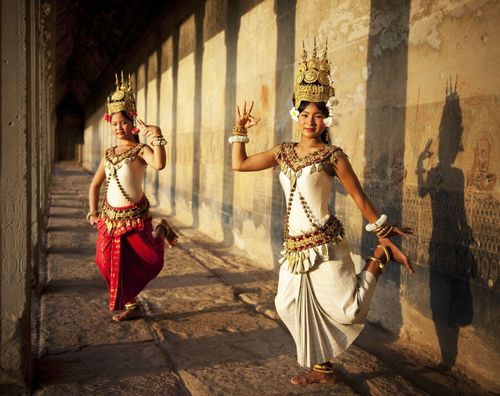
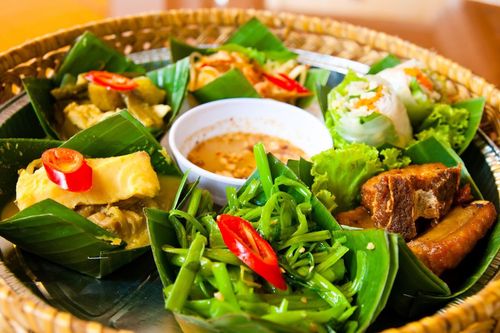
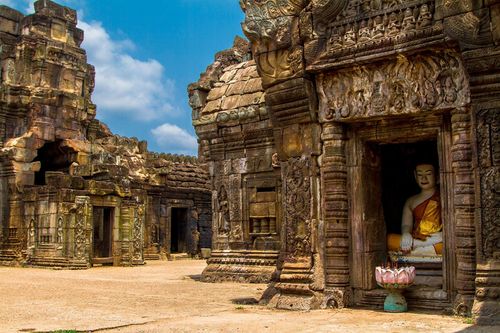
Supported by Western aid, the infrastructure has at last improved; new roads now connect all but the most remote provincial centres, rendering most air and river routes redundant, and enterprise is booming, attested to in the capital, Phnom Penh, and major towns by thronging markets, restored colonial villas newly opened as boutique hotels and the re-emergence of a modest middle class. Cambodian food, influenced by the cuisines of both China and Thailand, is delicately flavoured and quite delicious; while the country’s long tradition of artisanship has been revived, with weaving, stone-carving and silversmithing much in evidence. Temple sites, some dating back to the sixth century, dot the countryside – several have only recently become accessible and many are now being restored. The majority of the country’s towns still retain some old-world charm, preserving quaint shophouse terraces and colonial architecture dating back to the period of French rule – though perhaps their most tangible colonial legacy is the piles of crusty baguettes heaped up in baskets and hawked around the streets in the early morning.
Though much still has to be done before Cambodia is properly back on its feet, and before most of the population see a substantial improvement in their standard of living, the recovery of the country is largely down to the Cambodians themselves, eternally optimistic, tenacious and tirelessly hospitable.
Read More-
Sugar palms
Sugar palms
Peppering rice paddies with their distinctive mops of spiky leaves, sugar-palm trees are of great importance to the rural Cambodian economy, since every part of the tree can be put to good use. Arguably the most significant product is the juice, extracted by climbing a rickety ladder lashed to the trunk, cutting the stalk bearing the flowers and fixing in place a container to collect the juice. This tends to be a dry-season occupation, as high monsoon winds and wet trunks make the climb hazardous at other times of year. The cloudy liquid is cleared by first smoking the collection tube with burning palm fronds and then adding bark from the popael tree (of the honeysuckle family). Both the sweet, fresh juice and fermented, alcoholic palm beer, are sold by hawkers from containers suspended either from a shoulder pole or from bicycle or moto handlebars. These days a sanitized version, nicely packaged, can be found in tourist centres and supermarkets. Palm sugar, much used by sweet-toothed Cambodians for cooking, is made by thickening the juice in a cauldron and then pouring it into cylindrical tubes to set, after which it resembles grainy honey-coloured fudge. Nearly as important as the juice are the leaves, which are collected two or three times a year for use in thatch, wall panels, woven matting, baskets, fans and even packaging. Until quite recently, specially treated leaves were used to record religious teachings by inscribing them with a metal nib.
Palm fruits, slightly larger than a cricket ball, have a tough, fibrous black coating containing juicy, delicately flavoured kernels, which are translucent white and have the consistency of jelly; they’re eaten either fresh or with syrup as a dessert. The root of the tree is used in traditional medicine as a cure for stomach ache and other ailments. Perhaps because the trees furnish so many other products, they are seldom cut for their wood, which is extremely durable. However, palm-wood souvenirs can be found in Phnom Penh and Siem Reap, easily identifiable by their distinctive light-and-dark striped grain. Palm-wood furniture has become à la mode in one or two of the country’s trendy boutique hotels.
-
What’s a wat – and what’s not
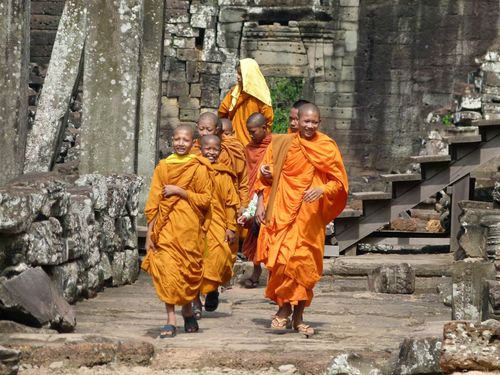
Cambodia’s wats are Buddhist monasteries, often generically referred to as pagodas, although they bear no resemblance to their Chinese namesakes. Wats are easily identified by the bright orange tiled roof of the principal building, the vihara, and can be vibrant, even wacky, affairs; the wealthier the foundation that runs the pagoda, the more extravagant the decoration, both inside and outside, with buildings painted in the most garish of primary colours, and courtyards featuring abundant and cartoonish statues of mythical beasts.
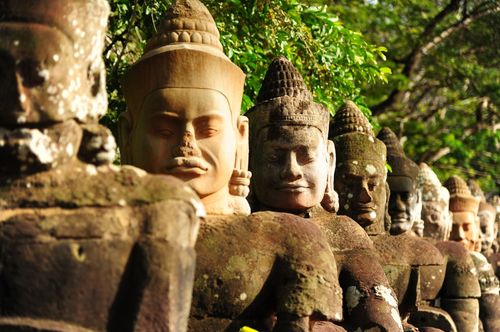
The term temple, on the other hand, is usually reserved for ancient Khmer monuments, dating from the sixth to the thirteenth centuries. Temples were generally built by kings to honour their ancestors or to serve as their state-temple – an image of the devaraja god associated with the king could be housed in a sanctuary tower. State-temples were seldom reused by successive kings, though occasionally they gained a new lease of life as monasteries.