Explore Kenya
Lapped by the Indian Ocean, straddling the equator, and with Mount Kenya rising above a magnificent landscape of forested hills, patchwork farms and wooded savanna, Kenya is a richly rewarding place to travel. The country’s dramatic geography has resulted in a great range of natural habitats, harbouring a huge variety of wildlife, while its history of migration and conquest has brought about a fascinating social panorama, which includes the Swahili city-states of the coast and the Maasai of the Rift Valley.
Kenya’s world-famous national parks, tribal peoples and superb beaches lend the country an exotic image with magnetic appeal. Treating it as a succession of tourist sights, however, is not the most stimulating way to experience it. If you get off the beaten track, you can enter the world inhabited by most Kenyans: a ceaselessly active scene of muddy farm tracks, corrugated-iron huts, tea shops and lodging houses, crammed buses and streets wandered by goats and children. Both on and off the tourist routes, you’ll find warmth and openness, and an abundance of superb scenery – rolling savanna dotted with Maasai herds and wild animals, high Kikuyu moorlands grazed by cattle and sheep, and dense forests full of monkeys and birdsong. Of course Kenya is not all postcard-perfect: start a conversation with any local and you’ll soon find out about the country’s deep economic and social tensions.
Read More-
Kenya’s peoples
Kenya’s peoples
For Kenya’s forty-plus ethnic groups, the most important social marker is language and the best definition of a tribe (a term with no pejorative connotation) is people sharing a common first language. It’s not uncommon for people to speak three languages – their own, Swahili and English – or even four if they have mixed parentage.
The largest tribe, the Kikuyu, based in the central highlands, make up about 20 percent of the population; the Kalenjin from the Rift Valley 15 percent; the Luhya of western Kenya 14 percent; the Luo from the Nyanza region around Kisumu 12 percent; and the Kamba from east of Nairobi 11 percent. Many people from these big ethnic groups have had a largely Westernized orientation for two or three generations and their economic and political influence is considerable. Which isn’t to say you won’t come across highly educated and articulate people from every tribal background. “Tribes” have never been closed units and families often include members of different ethnic background, nowadays more than ever. Politics still tends to have an ethnic dimension, however: people retain a strong sense of whether they are locals or newcomers. Inter-tribal prejudice, although often regarded as taboo, or at best an excuse for humour, is still quite commonplace and occasionally becomes violent.
Smaller ethnic groups include the closely related Maasai and Samburu peoples, who make up little more than two percent of the population. Well known for their distinctive and still commonly worn traditional dress and associated with the national reserves named after them, they herd their animals across vast reaches of savanna and, when access to water demands it, drive them onto private land and even into the big towns. Many Turkana and some of the other remote northern groups also retain their traditional garb and rather tooled-up appearance, with spears and other weapons much in evidence.
Kenya has a large and diverse Asian population (perhaps more than 100,000 people), predominantly Punjabi- and Gujarati-speakers from northwest India and Pakistan, mostly based in the cities and larger towns. Descendants in part of the labourers who came to build the Uganda railway, they also include many whose ancestors arrived in its wake, to trade and set up businesses. There’s also a dispersed Christian Goan community, identified by their Portuguese surnames, and a diminishing Arabic community, largely on the coast.
Lastly, there are still an estimated 30,000 European residents – from British ex-servicemen to Italian aristocrats – and another 30,000 temporary expats. Some European Kenyans maintain a scaled-down version of the old farming and ranching life, and a few still hold senior civil service positions. Increasingly, however, the community is turning to the tourist industry for a more secure future.
-
Kenya’s wildlife websites
East African Wildlife Society eawildlife.org. Influential Kenya-based group, centrally involved in the movement to ban the ivory trade. Publishes the excellent Swara magazine.
Ecotourism Society of Kenya ecotourismkenya.org. This local organization promotes sustainable tourism by awarding ratings to lodges, tented camps and tour operators.
Friends of Nairobi National Park fonnap.wordpress.com. Works to keep open the migration route into the park, and raise awareness about the remarkable environment on Nairobi’s doorstep.
Green Belt Movement greenbeltmovement.org. Grassroots conservation and women’s movement founded by the Nobel Peace Prize winner Wangari Maathai, who died in 2011.
Kenya Forests Working Group kenyaforests.org. Promotes sound forest management and conservation.
Nature Kenya naturekenya.org. The website of the East African Natural History Society organizes regular activities and has a good online newsletter.
Wildlife Direct wildlifedirect.org. Chaired by Richard Leakey, this is where conservation fundraising meets a network of conservationists, including more than 50 bloggers from the field in Kenya.
-
Elephants and the environment
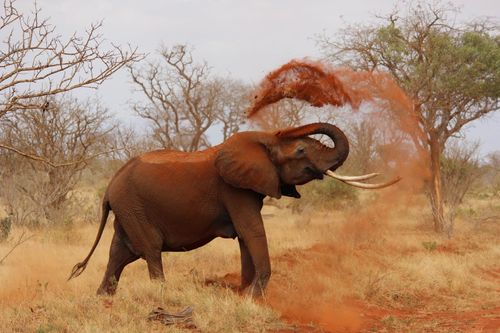
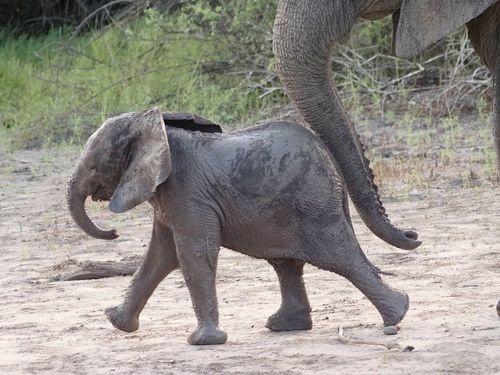
Local overpopulation of elephants is usually the result of old migration routes being cut off, forcing the elephants into reserves – like the Maasai Mara and its neighbouring conservancies – where their massive appetites can appear destructive. Adults may consume up to 170kg of plant material daily, so it’s estimated that several thousand tonnes of foliage pass through the Maasai Mara elephant population’s collective gut each month. This foliage destruction puts new life into the soil, however, as acacia seeds dunged by elephants are released when dung beetles tackle the football-sized droppings, breaking them into pellets and pulling them into their burrows where the seeds germinate. Elephants also dig up dried-out waterholes with their tusks, providing moisture for other animals. Elephants are architects of their environment, setting the inter-species agenda by knocking over trees, creating deadwood habitats for invertebrates and causing hundreds of other impacts, all of which are natural functions in a dynamic ecosystem. The jury is still out on how it works when the wildlife corridors are closed, or the parks fenced in. What is not in doubt is that their ivory is increasingly valuable and poaching is on the rise again. And when they are closely managed and secured in safe sanctuaries, the elephant populations quickly reach unsustainable levels. The Kenya Wildlife Service is getting proficient at translocating elephants, moving them around to balance the numbers.