Explore Peru
Few of the world’s countries can offer anything remotely as varied, rugged and stunningly beautiful as Peru when it comes to ecotourism, trekking, mountain biking and river rafting. Apart from possessing extensive areas of wilderness, Peru has the highest tropical mountain range in the world, plus the Amazon rainforest and a long Pacific coastline, all offering different opportunities for outdoor activities and adventure.
Trekking and climbing
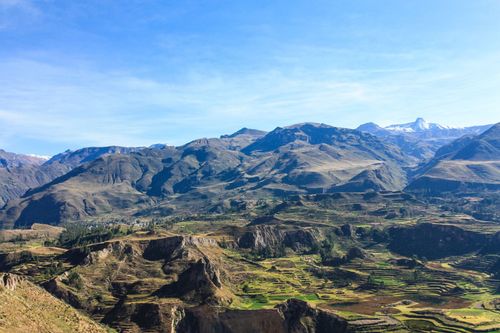
The most popular areas for trekking and climbing are: north and south of Cusco; the Colca Canyon; and the Cordillera Blanca. But there are many other equally biodiverse and culturally rich trekking routes in other departamentos: Cajamarca and Chachapoyas both possess challenging but rewarding mountain trekking, and the desert coast, too, has exceptional and unique eco-niches that are most easily explored from Lima, Trujillo, Chiclayo, Nasca, Pisco, Ica and Arequipa, where there is some tourism infrastructure to support visits.
The main tours, treks and climbs have been listed throughout the Guide in their appropriate geographical context. Chapter Six, which includes Huaraz and the Cordillera Blanca, contains further information on climbing, mountaineering and trekking in the Andes, or Andinismo, as it’s long been known. The Cusco and Arequipa chapters also contain extensive listings of tour and trek operators as well as camping and climbing equipment rental.
Canoeing and whitewater rafting
Peru is hard to beat for canoeing and whitewater rafting. The rivers around Cusco and the Colca Canyon, as well as Huaraz and, nearer to Lima, at Lunahuana, can be exciting and demanding, though there are always sections ideal for beginners. Cusco is one of the top rafting and canoeing centres in South America (see Activities around Cusco), with easy access to a whole range of river grades, from 2 to 5 on the Río Urubamba (shifting up grades in the rainy season) to the most dangerous whitewater on the Río Apurimac (level 6). On the Río Vilcanota, some 90km south of Cusco, at Chukikahuana, there’s a 5km section of river that, between December and April, offers constant level-5 rapids. One of the most amazing trips from Cusco goes right down into the Amazon Basin. It should be noted that these rivers can be very wild and the best canoeing spots are often very remote, so you should only attempt river running with reputable companies and knowledgeable local guides.
The main companies operating in this field are listed in the relevant chapters. Trips range from half-day trips to several days of river adventure, sometimes encompassing both mountain and jungle terrain. Transport, food and accommodation are generally included in the price where relevant; but the costs also depend on levels of service and whether overnight accommodation required.
Cycling
In Peru, cycling is a major national sport, as well as one of the most ubiquitous forms of transport available to all classes in towns and rural areas virtually everywhere. Consequently, there are bike shops and bicycle-repair workshops in all major cities and larger towns. Perhaps more importantly, a number of tour companies offer guided cycling tours which can be an excellent way to see the best of Peru. Huaraz and Cusco are both popular destinations for bikers. For further information check the relevant chapter sections or contact the Federación Peruana de Ciclismo, Estadio Nacional, Lima Centro (Mon–Fri 9am–1pm & 2–5pm; 01 4336646, fedepeci.org).
Surfing
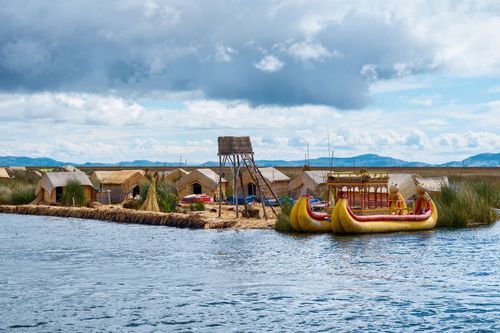
People have been surfing the waves off the coast of Peru for thousands of years and the traditional caballitos de totora (cigar-shaped ocean-going reed rafts) from the Huanchaco and Chiclayo beach areas of Peru are still used by fishermen who ride the surf daily. Every year around twelve thousand surfers come to Peru whose best beaches – Chicama, Cabo Blanco, Punta Rocas – rival those of Hawaii and Brazil. Good websites to find out more about the scene include: perusurfguides.com, peruecosurf.com and
vivamancora.com/english/surf.htm.
Diving and fishing
For information on diving and fishing contact the Federación Peruana de Caza Submarina y Actividades Acuaticas, Estadio Nacional, Lima Centro (01 4336626,
[email protected]). The private company Aquasport, Av Conquistadores 645, San Isidro, Lima (01 2211548), is worth contacting.
-
National parks and reserves
Almost ten percent of Peru is incorporated into some form of protected area, including seven national parks, eight national reserves, seven national sanctuaries, three historical sanctuaries, five reserved zones, six buffer forests, two hunting reserves and an assortment of communal reserves and national forests.
The largest of these protected areas is the Reserva Nacional Pacaya-Samiria, an incredible tropical forest region in northern Peru. This is closely followed in size by the Manu Biosphere Reserve, another vast and stunning jungle area, and the Reserva Nacional Tambopata and Parque Nacional Bahuaja-Sonene, again an Amazon area, with possibly the richest flora and fauna of any region on the planet. Smaller but just as fascinating to visit are the Parque Nacional Huascarán in the high Andes near Huaraz, a popular trekking and climbing region, and the lesser-visited Reserva Nacional Pampas Galeras, close to Nasca, which was established mainly to protect the dwindling but precious herds of vicuña, the smallest and most beautiful member of the South American cameloid family.
Bear in mind that the parks and reserves are enormous zones, within which there is hardly any attempt to control or organize nature. The term “park” probably conveys the wrong impression about these huge, virtually untouched areas, which were designated by the National System for Conservation Units (SNCU), with the aim of combining conservation, research and, in some cases (such as the Inca Trail) recreational tourism.
In December 1992, the Peruvian National Trust Fund for Parks and Protected Areas (PROFONANPE) was established as a trust fund managed by the private sector to provide funding for Peru’s main protected areas. It has assistance from the Peruvian government, national and international nongovernmental organizations, the World Bank Global Environment Facility and the United Nations Environment Program.
Visiting the parks
There’s usually a small charge (usually around S/30 a day) to visit the national parks or nature reserves; this is normally levied at a reception hut on entry to the particular protected area. Sometimes, as at the Parque Nacional Huascarán, the cost is a simple daily rate; at others, like the Reserva Nacional Paracas on the coast south of Pisco, you pay a fixed sum to enter, regardless of how many days you might stay. For really remote protected areas, like Pacaya-Samiria, or if for some reason you enter an area via an unusual route, it is best to check on permissions – for Pacaya-Samiria you would need to contact the SERNANP office in Iquitos. Most frequently visited National Parks will have an official hit for registration and paying of entry fees (which range from S/4 up to S/30 a day). For details check with the protected areas national agency SERNANP at Calle Diecisiete 355, Urb. El Palomar, San Isidro, Lima (01 7177500, sernanp.gob.pe), the South American Explorers’ Club in Lima or at the local tourist office.
-
A walk on the wild side: ecotourism in Peru
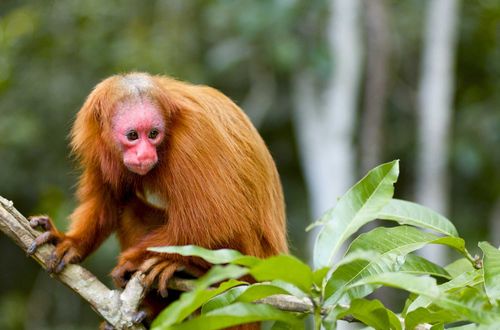
Ecotourism is most developed in the Amazon rainforest region of Peru, particularly around Manu, which is considered one of the most biodiverse regions on Earth; Iquitos in the northern jungle and the Tambopata region around Puerto Maldonado are similar ecotourism hotspots. These areas, and others in Peru’s extensive rainforest, all offer a wide choice of operators leading tours up rivers to jungle lodges, which themselves function as bases from which to explore the forest on foot and in smaller, quieter canoes. Naturally, the focus is on wildlife and flora; but there are often cultural elements to tours, including short visits to riverside communities and indigenous villages, and sometimes even mystical or healing work with jungle shamans. Prices vary and so does the level of service and accommodation, as well as the degree of sustainability of the operation.
Ecotourism is very much alive in the Peruvian Andes too, with several tour operators offering expeditions on foot or on horseback into some of the more exotic high-Andes and cloudforest regions.