Building Cusco
It wasn’t until Pachacuti assumed leadership of the Incas in 1438 that Cusco became the centre of an expanding empire and, with the Inca army, took religious and political control of the surrounding valleys and regions. As Pachacuti pushed the frontier of Inca territory outwards, he also masterminded the design of imperial Cusco, canalizing the Saphi and the Tullumayo, two rivers that ran down the valley, and built the centre of the city between them. Cusco’s city plan was conceived in the form of a puma, a sacred animal: Sacsayhuaman, an important ritual centre and citadel, is the jagged, tooth-packed head; Pumachupan, the sacred cat’s tail, lies at the junction of the city’s two rivers; between these two sites lies Q’orikancha, the Temple of the Sun, reproductive centre of the Inca universe, the loins of this sacred beast; the heart of the puma was Huacapata, a ceremonial square approximate in both size and position to the present-day Plaza de Armas. Four main roads radiated from the square, one to each corner of the empire.
The overall achievement was remarkable, a planned city without rival, at the centre of a huge empire; and in building their capital the Incas endowed Cusco with some of its finest structures. Stone palaces and houses lined streets which ran straight and narrow, with water channels to drain off the heavy rains. It was so solidly built that much of ancient Cusco is still visible today, particularly in the stone walls of what were once palaces and temples.
The Spanish Conquest
In 1532, when the Spanish arrived in Peru, Cusco was a thriving city, and capital of one of the world’s biggest empires. The Spaniards were astonished: the city’s beauty surpassed anything they had seen before in the New World; the stonework was better than any in Spain; and precious metals, used in a sacred context across the city, were in abundance throughout Q’orikancha. They lost no time in plundering its fantastic wealth. Atahualpa, the emperor at the time, was captured by Spanish conquistadors in Cajamarca while en route to Cusco, returning from bloody battles in the northern extremity of the empire. Hearing from the Emperor Atahualpa himself of Cusco’s great wealth as the centre of Inca religious and political power, Francisco Pizarro reached the native capital on November 15, 1533.
The Spanish city was officially founded on March 23, 1534. Cusco was divided up among 88 of Pizarro’s men who chose to remain there as settlers. Manco Inca, a blood relative of Atahualpa – who was murdered by Pizarro – was set up as a puppet ruler, governing from a new palace on the hill just below Sacsayhuaman. After Pizarro’s departure, and following twelve months of power struggles, his sons Juan and Gonzalo came out on top and were then free to abuse Manco and his subjects, which eventually provoked the Incas to open resistance. In April 1536 Manco fled to Yucay, in the Sacred Valley, to gather forces for the Great Rebellion.
Within days, the two hundred Spanish defenders, with only eighty horses, were surrounded in Cusco by over 100,000 rebel Inca warriors. On May 6, Manco’s men laid siege to the city. After a week, a few hundred mounted Spanish soldiers launched a desperate counterattack on the Inca base in Sacsayhuaman and, incredibly, defeated the native stronghold, putting some 1500 warriors to the sword as they took it.
Spanish-controlled Cusco never again came under such serious threat from its indigenous population, but its battles were far from over. By the end of the rains the following year, a rival conquistador, Almagro, had seized Cusco for himself until Francisco Pizarro defeated the rebel Spanish troops a few months later, and had Almagro garrotted in the main plaza. Around the same time, a diehard group of rebel Incas held out in Vilcabamba until 1572, when the Spanish colonial viceroy, Toledo, captured the leader Tupac Amaru and had him beheaded in the Plaza de Armas.
Post-Conquest Cusco
From then on the city was left in relative peace, ravaged only by the great earthquake of 1650. After this dramatic tremor, remarkably illustrated on a huge canvas in La Catedral de Cusco, Bishop Mollinedo was largely responsible for the reconstruction of the city, and his influence is also closely associated with Cusco’s most creative years of art. The Cusqueña school, which emerged from his patronage, flourished for the next two hundred years, and much of its finer work, produced by native Quechua and mestizo artists such as Diego Quispe Tito Inca, Juan Espinosa de los Monteros, Fabian Ruiz and Antonio Sinchi Roca, is exhibited in museums and churches around the city.
The modern age
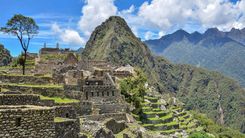
In spite of this cultural heritage, Cusco only received international attention after the discovery of Machu Picchu by Hiram Bingham’s archeological expedition in 1911. With the advent of air travel and global tourism, Cusco was slowly transformed from a quiet colonial city in the remote Andes into a major tourist centre.
Accommodation in Cusco
While there are relatively inexpensive and reasonable mid-range hostels and hotels in most corners of the city, Peru accommodation in Cusco is centered in three main zones: east, west, and south of the Plaza de Armas. To the west of the Plaza, along calles Plateros, Procuradores, and Saphi (note that Procuradores and Plateros can be particularly noisy at night), there are plenty of busy budget hostels — a popular choice for travelers searching for affordable Peru accommodation in the heart of the city. Slightly pricier and more stylish Peru accommodation options can be found east of the Plaza in the artists’ quarter around San Blas and Choquechaca, where boutique hotels and colonial guesthouses line the cobbled streets. To the south of the Plaza, the San Pedro area near the central market and the Machu Picchu train station has seen a steady rise in quality, now offering comfortable and safe Cusco accommodation options. Closer to the Plaza, along Calle Quera and around Avenida Sol, a more varied mix of Peru accommodation is available, from backpacker stays to well-rated hotels.
Activities around Cusco
The Cusco region and nearby cloudforest and lowland Amazon provide a fantastic range of activities, from river-based ecotourism and whitewater kayaking to mountain biking, hiking and horseriding, not to mention white-knuckle experiences of the spiritual variety.
Hiking and horseriding
The mountains to the south and the north of Cusco are full of amazing trekking trails, some of them little touched, most of them still rarely walked (see Alternative treks to the Inca Trail). Less adventurous walks or horse rides are possible to Qenko, Tambo Machay, Puca Pucara and Chacan, in the hills above Cusco and in the nearby Sacred Valley. Many jungle trip operators are based in Cusco.
Whitewater rafting
Cusco is also a great whitewater rafting centre, with easy access to classes 2 to 5 (rivers are generally rated from class 1 – very easy – to class 5 – very difficult/borderline dangerous) around Ollantaytambo on the Río Urubamba and classes 1 to 3 between Huambutio and Pisac, on the Río Vilcanota. From Calca to Urubamba the river runs classes 2 to 3, but this rises to 5 in the rainy season. Calca to Pisac (Huaran) and Ollantaytambo to Chilca are among the most popular routes, while the most dangerous are further afield on the Río Apurimac. The easiest stretch is from Echarate to San Baray, which passes by Quillabamba. Costs range from around $40 to about $200 a day, with price usually reflecting quality, but it’s always recommended to use a reputable and well-established rafting company such as Mayuc. Remember that most travel insurance policies exclude this kind of adventure activity, and always ensure that you are fully equipped with a safety kayak, helmets and lifejackets.
Bungee jumping and hot-air balloon trips
Bungee jumping is big in Cusco. The tallest bungee jump facility in the Americas (122m) is offered by Action Valley Cusco, Santa Teresa 325 (240835, actionvalley.com), just a fifteen-minute walk from the plaza in Poroy (buses run here from block 8 of Avenida Sol). Equally breathtaking but slightly less scary is the option of a hot-air balloon adventure (from $400, shared between groups of 5 to 10 people) in the Cusco or Sacred Valley areas.
Psychedelic tourism
Psychedelic tourism is popular in Cusco these days, though not as developed as in Iquitos. This doesn’t involve taking drugs and wandering around the Andes: essentially, psychedelic tourism is based on traditional healing techniques that tend to focus on inner consciousness and well-being through often highly ritualized ceremonies. San Pedro and ayahuasca, the two principal indigenous psychedelic plants that have been used ceremonially in Peru for over 3500 years, can be experienced with the assistance of Etnikas Travel and Shamanic Healing (C Herrajes 148; 244516) or Another Planet (Triunfo 120; 2445168, anotherplanetperu.net), who also lead organized spiritual tours.
Most of the touristy artesanía and jewellery shops are concentrated in streets like Plateros around the Plaza de Armas and up Triunfo, though calles Herraje (first right as you head towards San Blas) and San Agustín have slightly cheaper but decent shops with leather and alpaca work. It’s worth heading off the beaten track, particularly around San Blas or the upper end of Tullumayo, to find outlets hidden in the backstreets.
The main street-market day for artesanía is Sat (10am–6pm). The central market, selling fresh produce, is at San Pedro. Out of town there are good markets for artesanía at Pisac and Chinchero, market days being Sun and Thurs, respectively.
Craft-shopping in Cusco
Crafts and artesanía are Cusco’s stock in trade, with the best value and range of alpaca clothing in Peru, apart perhaps from Puno. It’s an ideal place to pick up weavings or antique cloths, traditional musical instruments like panpipes, and colourful bags and leather crafts. There are artesanía (craft shops) all over the centre, but the best prices and fullest range are found at the Centro Artesanal Cusco (Mon–Sat 8am–10pm, with most stalls open 9am–6pm, Sun 9am–5pm) at the corner of Huanchac and Tullumayo, close to the huge sun-disc fountain on Avenida Sol. This large building brings together arguably the largest and best-value collection of artesanía under one roof in Peru; it’s a nice, clean and relatively hassle-free shopping environment very close to the train ticket office at Huanchac station.
Another good part of town for quality artesanía is the barrio of San Blas. This is the traditional artisan area of Cusco, home to a number of jewellers and art and antique shops. The Cuesta San Blas itself contains some of the finest artesanía, selling new and old oil paintings, while Hathun Rumiyoq has more good shops at its bottom end. There are some funky shops around the San Blas plazoleta too. The main street-market day for artesanía is Saturday (10am–6pm).