Argentina //

Where to go

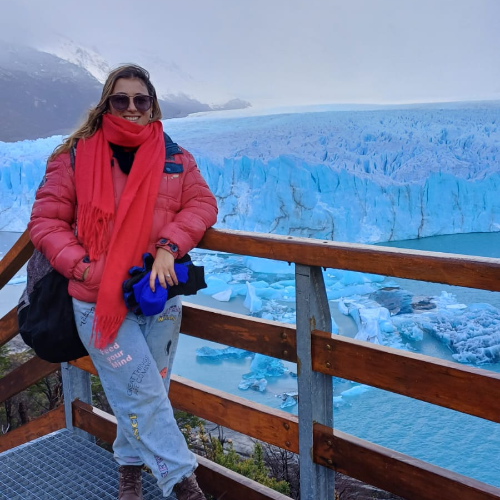
Argentina has many attractions that could claim the title of natural wonders of the world: the majestic waterfalls of Iguazú; the spectacular Glaciar Perito Moreno; fascinating whale colonies off Península Valdés; or the mountains around the holiday resort of Bariloche – indeed, Patagonia in general. Yet many of the country’s most noteworthy sights are also its least known, such as the Esteros del Iberá, a huge reserve of floating islands offering close-up encounters with all sorts of birds and mammals; or Antofagasta de la Sierra, a remote village set amid frozen lagoons mottled pink with flamingoes; or Laguna Diamante, a high-altitude lake reflecting a wondrous volcano. In any case, weather conditions and the sheer size of the country will rule out any attempt to see every corner; it’s more sensible and rewarding to concentrate on a particular section of the country.

Unless you’re visiting Argentina as part of a South American tour, Buenos Aires is likely to be your point of entry, as it has the country’s only bona fide international airport, Ezeiza. Only inveterate city-haters will be able to resist the capital’s charms. Buenos Aires is one of the world’s greatest urban experiences, with an intriguing blend of architecture and a vernacular flair that includes houses painted in the colours of a legendary football team. The city’s museums are eclectic enough to suit all interests – Latin American art, colonial silverware, dinosaurs and ethnography are just four subjects on offer – and you can round off a day’s sightseeing with a tango show, a bar tour or a meal at one of the hundreds of fabulous restaurants.

Due north stretches the Litoral, an expanse of subtropical watery landscapes that shares borders with Uruguay, Brazil and Paraguay. Here are the photogenic Iguazú waterfalls and Jesuit missions whose once-noble ruins are crumbling into the jungle – with the exception of well-preserved San Ignacio Miní. Immediately west of the Litoral stretches the Chaco, one of Argentina’s most infrequently visited regions, a place for those with an ardent interest in wildlife. Be prepared for fierce heat and a poor tourism infrastructure here. Up in the country’s landlocked Northwest is the Quebrada de Humahuaca, a fabulous gorge lined with rainbow-hued rocks; it winds up to the oxygen-starved altiplano, where llamas and their wild relatives graze. In the Valles Calchaquíes, a series of stunningly scenic valleys, high-altitude vineyards produce the delightfully flowery torrontés wine along with some subtle reds.

Stretching across Argentina’s broad midriff to the west and immediately south of Buenos Aires are the Pampas, arguably the country’s most archetypal landscape. Formed by horizon-to-horizon plains interspersed with low sierras, this subtly beautiful scenery is punctuated by small towns, the odd ranch and countless clumps of pampas grass (cortaderas). Part arid, part wetland, the Pampas are grazed by millions of cattle and planted with soya and wheat fields of incomprehensible size. The Pampas are also where you’ll glimpse signs of traditional gaucho culture, most famously in the charming town of San Antonio de Areco. Here, too, are some of the classiest estancias, offering a combination of luxury and horseback adventures. On the Atlantic Coast are a string of fun beach resorts, including longstanding favourite Mar del Plata.

The further west you go, the larger the Central Sierras loom: the mild climate and bucolic woodlands of these ancient mountains have attracted Argentine tourists since the late nineteenth century, and within reach of Córdoba, the country’s vibrant second city, are some of the oldest resorts on the continent. In the Cuyo, further west still, with the highest Andean peaks as a backdrop, you can discover one of Argentina’s most enjoyable cities, the regional capital of Mendoza, also the country’s wine capital. From here, the scenic Alta Montaña route climbs steeply to the Chilean border, passing Cerro Aconcagua, now well established as a fantasy challenge for mountaineers. Just south, Las Leñas is a winter resort where celebrities are out in force, while the nearby black-and-red lava wastes of La Payunia, one of the country’s hidden jewels, are all but overlooked. Likewise, San Juan and La Rioja provinces are relatively uncharted territories, but their marvellous mountain and valley landscapes reward exploration, along with their underrated wineries. Their star attractions are a brace of parks: Parque Nacional Talampaya, with its giant red cliffs, and the nearby Parque Provincial Ischigualasto, usually known as the Valle de la Luna on account of its intriguing moonscapes.

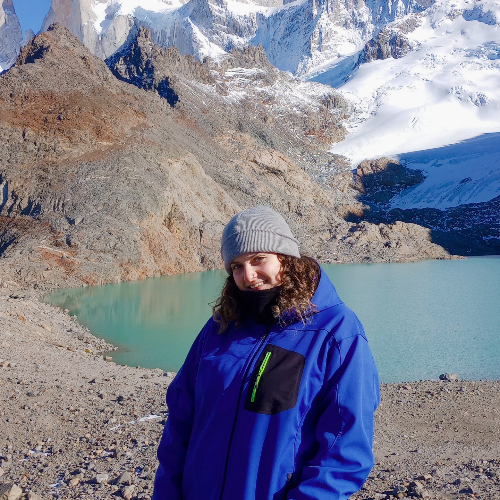
Argentina has the lion’s share of the wild, sparsely populated expanses of Patagonia (shared with Chile) and boasts by far the more interesting half of the remote archipelago of Tierra del Fuego. These are lands of seemingly endless arid steppe hemmed in for the most part by the southern leg of the Andes, a series of volcanoes, craggy peaks and deep glacial lakes. An almost unbroken chain of national parks along these Patagonian and Fuegian cordilleras makes for some of the best trekking anywhere on the planet. You should certainly include the savage granite peaks of the FitzRoy massif in Parque Nacional Los Glaciares in your itinerary, but also the less frequently visited araucaria, or monkey puzzle, forests of Parque Nacional Lanín or the trail network of Parque Nacional Nahuel Huapi. For wildlife enthusiasts, Peninsula Valdés is a must-see. If you have a historical bent, you may like to trace the region’s associations with FitzRoy and Darwin in the beautiful Beagle Channel off Ushuaia, or track down the legacy of Butch Cassidy, who lived near Cholila, or of the Welsh settlers whose influence can still be felt in communities like Gaiman and Trevelin.

Read More