

Explore The Bajío
Scattered with enchanting colonial towns and rugged, dust-blown hills, the fertile valleys of the Bajío spread across Mexico’s central highlands almost from coast to coast and as far south as the capital. This has long been the most heavily populated part of the country, providing much of the silver and grain that supported Mexico throughout the years of Spanish rule. Indeed, the legacy of Spanish architecture remains at its most impressive here, in meticulously crafted towns that – at their cores at least – have changed little over the centuries.
The Bajío grew rich on just one thing – silver – but in time the region also grew restive under the heavy-handed rule of Spain. The wealthy Creole (Spanish-blooded but Mexican-born) bourgeoisie were free to exploit the land and its people, but didn’t control their own destinies; lucrative government posts and high positions in the Church were reserved exclusively for those actually born in Spain, while the indigenous peoples and poor mestizos were condemned either to landless poverty or to near-fatal labour. Unsurprisingly, then, the Bajío was ripe for revolution. This land is La Cuna de la Independencia (the Cradle of Independence), where every town seems to claim a role in the break with Spain. In Querétaro the plotters held many of their early meetings, and from here they were warned that their plans had been discovered; and in Dolores Hidalgo the famous Grito was first voiced by Father Hidalgo, proclaiming an independent Mexico.
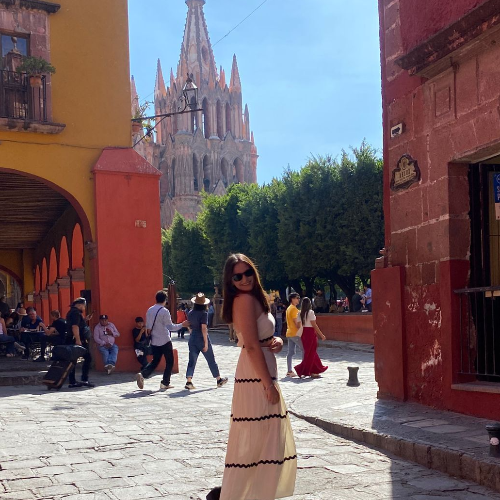
Approaching the Bajío from the north you cross several hundred kilometres of desert landscape punctuated only by the occasional ranch, or defunct mining towns, such as the wonderfully strange semi-ghost-town of Real de Catorce, where decades of abandonment are gradually being reversed. Only then do you reach the colonial cities of Zacatecas and San Luis Potosí – both eponymous state capitals – that mark a radical change in landscape and architecture. San Luis, a large modern metropolis, has its share of monuments, but Zacatecas is far more exciting, an oasis of culture and sophistication built with the bounty of the silver mines that riddle the landscape hereabouts. Further south and crazily ranged up the sides of a ravine, Guanajuato is quite simply one of the country’s richest and most scenic colonial towns, with one of its finest Baroque churches, a thriving student life and, for good measure, a ghoulish museum of mummies. The beguiling hillside town of San Miguel de Allende also has its advocates, as much for its wonderful setting as for the comforts of home, ensured by a large population of foreign artists, gringo retirees and language students. Dolores Hidalgo, in particular, is a point of pilgrimage for anyone with the least interest in Mexico’s independence movement, as is, to a lesser extent, Querétaro, a large and industrial city that preserves an underrated colonial quarter at its heart. Querétaro also serves as a good base for exploring the Sierra Gorda, particularly the concrete fantasy sculptures of Las Pozas near Xilitla.
Read More


