
Turkey //

Sports and outdoor activities

Whether you want to stand alongside some of the most passionate football fans in the world, hike a long-distance trail, climb up or ski down a mighty peak, raft the rapids of a mountain torrent, or paraglide over/dive beneath the warm waters of the Mediterranean, Turkey is the place to do it.

Football

Football is hugely popular in Turkey, with most Turks professing allegiance to one of the “Big Three” İstanbul sides Galatasaray, Beşiktaş or Fenerbahçe. The one exception is the Black Sea coastal town of Trabzon, whose citizens support their local team, Trabzonspor – a club which ranks up there with the İstanbul big boys.

Turkey has produced plenty of home-grown footballing talent (some now playing in England, Germany and Spain) and many Turkish teams now include international players, particularly from Africa and South America. The managers of the İstanbul giants are often recruited from abroad (with mixed results; Spain’s successful national coach Arragones lasted only a year at Fenerbahçe). Although the teams qualifying for the European Cup usually fall at the first hurdle, Galatasaray became the first Turkish team to win the UEFA Cup (in 2000; beating Arsenal 4–1 on penalties).

Matches are usually on weekend evenings between September and May. Obtaining tickets for provincial teams is usually both cheap and easy, with tickets available at the ground on match day for as little as 10TL, but prices rise sevenfold or more when one of the İstanbul “giants” is in town. Many bars show games on big screens, and can be very atmospheric, especially for derby games.

Football violence is not uncommon here (in 2000, two English Leeds United fans were stabbed to death in İstanbul during running street-fighting with Galatasaray fans) though it’s unlikely the average foreigner will get caught up in trouble. While a losing team occasionally gets attacked by its own supporters, more likely you’ll witness delirious celebrations, with flag-waving fans leaning on the horns of cruising cars embroiled in massive traffic jams.

Hiking and mountaineering

The small (though increasing) number of Turkish hikers means foreign visitors have virtually free-rein in this most mountainous of countries. The absence of decent maps (with a few exceptions) makes hiking a real adventure here, but the unspoilt quality of the countryside, the hospitality of rural Turks, the fascination of the yaylas (summer pastures) and the friendliness of other mountaineers more than compensate.

The alpine Kaçkar Dağları, paralleling the Black Sea, are the most rewarding mountains in Turkey for trekking and a number of companies organize expeditions there. Next up in interest are the Toros (Taurus) ranges, which form a long chain extending from central Turkey to above the main Turquoise Coast resort areas. The southwestern terminus of this range boasts the wonderful way-marked Lycian Way long-distance trail and the nearby but more challenging St Paul Trail

Aside from this, high-altitude mountaineering in Turkey consists mostly of climbing the volcanos of the central plateau. Serious trekkers may not find these mountains quite as interesting as the more conventional ranges, but all offer superb views from their summits. Most famous is 5137m Ağrı Dağ (Ararat) on the eastern borders of Turkey, though this requires a special permit (see Access to Mount Ararat) because of its sensitive location. By contrast, Erciyes and Hasan Dağı near Cappadocia are excellent for winter ascents, without any of the expense or bureaucracy prevalent at Ararat. Süphan Dağı (4058m) Turkey’s second highest volcanic peak, stands in splendid isolation north of Lake Van. Unfortunately the magnificent Cilo–Sat mountains south of Lake Van are sometimes a battleground between the Kurdish separatists and Turkish security forces so are currently closed to outsiders.

Hiking equipment and safety

Alpine huts are nonexistent, so you’ll need to carry full camping gear to trek in the mountains. It’s best to bring your own as only İstanbul and Ankara have European-standard mountaineering shops. Water can be a problem in the limestone strata of the Toros and on the volcanos, detailed maps are very difficult to obtain and trails (when present) are seldom marked.

Rescue services are no match for those in more developed mountain areas in Europe and the US, but things are improving. The local jandarma will turn out in an emergency, and AKUT (Search and Rescue Association; wwww.akut.org.tr) have established some eight centres across western, southern and central Turkey (though not yet in the popular Kaçkar range).

You’ll find details on specific hiking routes through the Kaçkar Dağları and a selection of walks on Bursa’s Uludağ and along the Turquoise Coast, in the Guide, but if you’re daunted at the prospect of going alone, contact one of the adventure-travel companies listed in the “Getting there” section. The various guides to mountaineering and trekking in Turkey are reviewed.

Trekking maps

Except for the Lycian Way, Kaçkar mountains and St Paul Trail, it is virtually impossible to obtain large-scale topographical maps of specific areas for trekking (though usable enough maps for the most popular trekking areas can be found in Trekking in Turkey (o/p). The only (medium-scale) maps available are 1:250,000 topographic sheets from the Turkish Mapping Ministry (Harita Genel Müdürlügu t0312/595 2072) in the Dikmen district of Ankara. You will need to speak reasonable Turkish to get in the door – it’s best to have a local get them on your behalf. Omni Resources in the US (t910/227-8300, wwww.omnimap.com) stock 1980s-vintage, 1:50,000 Soviet topographic maps for the entire country although given their cost – nearly $2000 for the full, 162-sheet set (or $50 per single sheet) – they are only really aimed at well-funded expeditions.

Skiing

Few foreigners come to Turkey specifically to ski but it is growing in popularity and if you are travelling around the country between December and April it’s well worth considering a day or more on the piste. If you’re willing to forego doorstep skiing, it’s surprisingly easy and cheap to do it based in towns like Erzurum or Bursa that are near to resorts. The Turkish State Meteorological Service gives information on snow heights at the various resorts (wwww.meteor.gov.tr).

Best known of Turkey’s ski resorts is Uludağ, above Bursa, with easy and intermediate runs, but the slopes are prone to mist and snow turns slushy after February. The Saklıkent complex in the Beydarlağı near Antalya would seem potentially ideal for an early spring sea-cum-ski holiday, but snow cover tends to be thin and runs limited. Close by is much better Davraz, near İsparta. Snow conditions here are more reliable and there is plentiful accommodation in the nearby lakeside town of Eğirdir as well as at the resort. Roughly midway between İstanbul and Ankara, near Bolu, Kartalkaya is better than any of the foregoing, despite a modest top altitude of 2223m; facilities now nearly match those of Uludağ, plus there are several red and black runs and, most importantly, in recent years there has been plentiful snow. The longest season and best snow conditions are usually at Palandöken, near Erzurum, where the top lift goes over 3000m and the Turkish Olympic team trains; there are three chairlifts, one T-bar and a three-kilometre-long gondola car to service a mix of blue and red runs. At Tekir Yaylası on Erciyes Dağı near Kayseri, the season is nearly as long, the snow almost as powdery, and the top lift is 2770m (one to 3100m is planned), though thus far runs are only green and red grade, served by two chairlifts and two T-bars. Sarıkamış, near Kars has two chairlifts and one T-bar to service a handful of runs (mostly red and blue grade); top lift is 2634m.

Watersports and other activities

Waterskiing and its offspring, parasailing, are available at most medium to large resorts; the even more exciting thrill of kite-surfing is centred on Alaçatı, near Çeşme, whilst wind surfers head for the Bodrum peninsula.

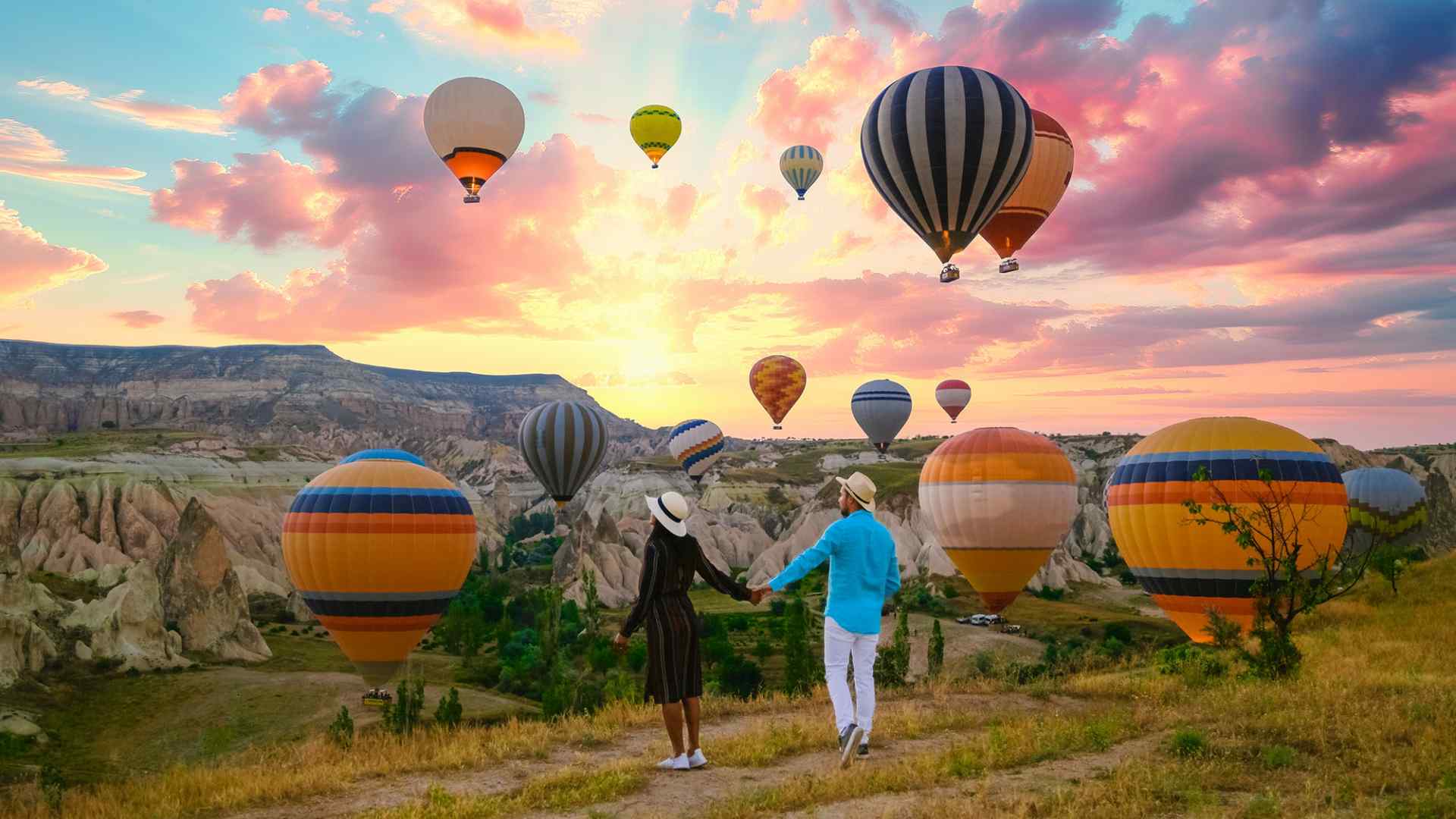
Other activities including scuba-diving and rock climbing, canyoning, paragliding and ballooning.

Read More