Day-hikes from Grövelsjön
Grövelsjön fjällstation makes an ideal base for hikes (summer only) out into the surrounding countryside, with a variety of routes available, some lasting a day, others several days.
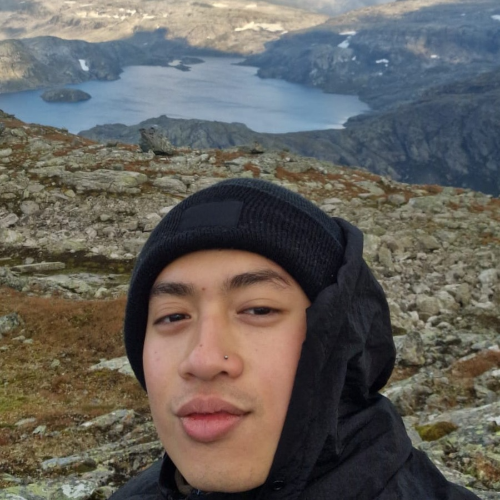
Among the established day-hikes is the clearly marked route (16km round-trip) from the fjällstation up to Storvätteshågnen (1183m), with fantastic views over the surrounding peaks and across the border into Norway. Another worthwhile hike starts with a short walk from the fjällstation to Sjöstugan on Lake Grövelsjön (roughly 1.5km away), from where you take the morning boat to the northern (Norwegian) end of the lake. You can return along the lake shore to the fjällstation (9km) by way of the Linné path, following in the footsteps of the famous botanist who walked this route in 1734. It’s possible to do the whole route in the opposite direction, heading out along the Linné path in the morning and returning by boat in the late afternoon; ask at the fjällstation for details of boat departure times. A third option is to strike out along the path leading northwest from Sjöstugan, heading for the Norwegian border and Salsfjellet (1281m) on the other side of it (16km round trip). There’s no need to take your passport as the border is all but invisible; people wander back and forth across it quite freely.
Härjedalen
From Mora and Orsa, the Inlandsbanan trundles through the northern reaches of Dalarna before crossing the provincial border into Härjedalen, a sparsely populated fell region stretching north and west to the Norwegian border, and containing some of the best scenery anywhere in Sweden. The region belonged to Norway until 1645, and the influence of the Norwegian language is still evident today in the local dialect.
From the comfort of the Inlandsbanan, you’ll be treated to a succession of breathtaking vistas of vast forested hill and mountainsides (Härjedalen boasts more than thirty mountains of over 1000m) – these are some of the emptiest tracts of land in the whole country, also home to the country’s largest population of bears. Although the sleepy provincial capital, Sveg, holds little of appeal, it’s from here that buses head northwest to the remote mountain village of Funäsdalen and Tänndalen; both have easy access to excellent and little-frequented hiking trails through austere terrain that's home to a handful of shaggy musk oxen which have wandered over the border from Norway. Nearby, across the lonely Flatruet plateau, with its ancient rock paintings, tiny Ljungdalen is the starting point for treks to Sweden’s southernmost glacier, Helags, on the icy slopes of Helagsfjället (1797m).
Härjulf Hornbreaker
Härjedalen got its name from the unfortunate Härjulf Hornbreaker, a servant to the Norwegian king, who mistakenly killed two of the king’s men and was banished from the court. He fled to Uppsala, where he sought protection from King Amund, but after falling in love with Amund’s cousin, Helga, and arousing the king’s fury he was forced to make another hasty exit. It was then he came across a desolate valley in which he settled and which he named after himself: Härjulf’s dale, or Härjedalen, as it’s known today.
Hiking around Sälen
The route taken by skiers on the first Sunday in March during the annual Vasaloppet race, the 90km-long Vasaloppsleden from Sälen to Mora is equally rewarding to explore on foot. The path starts just outside Sälen, in Berga, and first runs uphill to Smågan, then downhill all the way to Mora via Mångsbodarna, Risberg, Evertsberg, Oxberg, Hökberg and Eldris. For accommodation, there are eight cabins along the route, each equipped with a stove and unmade beds.
Another hike to consider is the little-known southern Kungsleden ( which starts at the Högfjällshotellet in the resort of Högfjället, a few kilometres west of Saälen, and leads to Drevdagen, a 30min drive west of Idre off Route 70 (bus #395 runs once daily Mon–Fri between Idre and Drevdagen), where it continues to Grövelsjön and all the way north to Storlien. There’s no accommodation on the Högfjället–Drevdagen stretch.