What to see in Trentino-Alto Adige
As its double-barrelled name suggests, the region is made up of two areas: Trentino, the southern part, is 98 percent Italian-speaking and the cuisine and architecture belong predominantly to the south rather than the Alps. By contrast, the mountainous terrain around Bolzano – known both as the Südtirol (South Tyrol) and Alto Adige – was only annexed to Italy at the end of the World War I. Here, onion-domed churches dot vineyards and forests, street signs are in German and Italian and the landscape is redolent of illustrations from the Brothers Grimm. German is the dominant tongue though immigrants from Italy’s south rarely speak anything other than Italian. Both Trentino and Alto Adige enjoy autonomy from central government, along with one of the highest standards of living in Italy.
The region is dominated by the barren, jagged rock walls of the Dolomites. Some of the most eye-catching peaks in Europe, these vast massifs have been eroded over the last 200 million years into a weird and wonderful array of needles, towers and pinnacles. In 2009 the range was added to the UNESCO World Natural Heritage List for their unique geology – they began life around 250 million years ago as a giant coral reef beneath the ancient Tethys Ocean – and for their diverse ecosystem abundant in rare flora and fauna. Numerous cable cars rise from the region's small resorts enabling you to hike at 2000–3000m, with a web of well-marked trails lasting from a gentle day-hike to a two-week trek. Views of this spectacular landscape can also be savoured from the comfort of luxurious spa hotels, with first-rate regional cuisine and a unique selection of treatments from bathing in thermal water to "dry baths" involving lying swaddled in sheep's wool or mountain hay.
Down in the valleys, Trentino-Alto Adige has a flourishing cultural scene, with cutting-edge galleries and museums, such as Trento's MUSE science museum and Bolzano’s Museion gallery. The regional capital Trento has an atmospheric old centre and an enviable quality of life, while Bolzano, Alto Adige’s chief town, with its star attraction the famous “Ice Man”. Verdant hillsides planted with vineyards can be visited as part of the Strada del Vino wine-tasting route, and the valley floor is carpeted with apple trees which produce the principal ingredient for Südtirol’s delicious strudel.
Both Trento and Bolzano are transport hubs, reachable by train via Verona and Innsbruck, and by bus from Bergamo and other airports. The scenic Great Dolomites Road links Bolzano with Cortina d’Ampezzo. Merano, in the northwest, is another hub, serving the Val Venosta (Vinschgau) and its side valleys which take you deep into the mountains of the Parco Nazionale dello Stelvio, straddling the border with Lombardy.
The Italianization of the Tyrol
The South Tyrol (Südtirol) was Italy’s reward for cooperating with the Allies during World War I. But when Mussolini’s Fascists came to power in 1923 the region was renamed Alto Adige after the upper reaches of the Adige River, and despite the fact that German speakers outnumbered Italian speakers by around ten to one, a process of sometimes brutal Italianization was imposed on the area. Cartographers remade maps, substituting Italian place names (often made up) for German; people were forced to adopt Italian names; the teaching of German in schools was banned and stonemasons even chipped away German inscriptions from tombstones. World War II then intervened, and by 1946, Austria and Italy came to an agreement ratified under the Paris Peace Treaty that Austria would give up its claim to the region on condition that Italy took steps to redress some of the cultural damage perpetrated under Fascism.
Successive governments have channelled funds into the area allowing the region more independence than ever before and much greater say in local law. Over the last few years, Italy has moved closer into the European Union, and its central and regional governments have become more tolerant of ethnic diversity and, increasingly, German is the language of preference in Südtirol.
The cuisine of Trentino-Alto Adige
Alto Adige cuisine has Germanic traditions, while Trentino cooking blends mountain influences with Italian flavours. The hearty traditional food is great for refuelling after a day of hiking or skiing and the quality of produce is exceptional, even in the simplest mountain hut. For finer dining, adventurous chefs are reworking old recipes to fashion much lighter dishes, and it is well worth trying out some of the pricier restaurants we list for a new take on local specialities.
A traditional meal starts with some kind of salami (lucaniche in local dialect), often paper-thin slices of salt beef, or Tyrolean canederli – bread dumplings spiked with speck (smoked ham) often served in broth (brodo). You’ll also see strangolapreti (bread and spinach gnocchi) and schlutzkrapfen (spinach-filled pasta) on the menu. Fresh lake and river fish, game and rabbit are popular as secondi, as are venison goulash or boiled cured pork with sauerkraut. Desserts are often based on apples, pears or plums, readily available from the local orchards. Other sweet treats include apfelstrudel, sachertorte and kaiserschmarren, a scrambled pancake with raisins.
A highlight of the year for food- and wine-lovers is the autumn Törggelen season, when everyone heads for the hills to sample the new vintage and snack on mountain ham and roast chestnuts, followed by a walk.
Vines have been cultivated here since before Roman times, and Trentino-Alto Adige produces more DOC wines than any other region in Italy. Most famous are the Pinot Grigios and Chardonnays, which are bright and aromatic from being grown at high altitudes and in cool conditions. These also provide wine makers with the raw material for some outstanding traditional-method sparkling wines, often marketed under the spumante Trentino Classico label. Despite the excellence of the whites, including the aromatic slightly sweet Gewürztraminer, local wine makers actually make more reds often with local varieties like Teroldego and Schiava (known as Vernatsch in German-speaking areas). Red wines made from Schiava are good when young: look out for the pale red Kalterersee (Caldaro) and the fuller, fruitier St Magdalene (Santa Maddalena); those made from the Lagrein grape variety are more robust, such as the strong, dark Lagrein Dunkel, or the Kretzer rosé from Bolzano’s vineyards at Gries. Also worth seeking out is the rare vino santo (not to be confused with vin santo from Tuscany) from Trentino’s Valle dei Laghi – a luscious dessert wine made from local Nosiola grapes.
Activities in Trentino-Alto Adige
Festivals and events in Trentino-Alto Adige
Wine-related festivities abound across the region with almost every village celebrating its vintages, harvest or related traditions – ask local tourist offices for details. The biggest wine bash, the Festa in Vino takes place in the sixteen towns along the South Tyrolean Wine Road from mid-May to mid-June, with tours, music, tastings and myriad other events. The month of events comes to a climax with the Night of the Cellars when wine producers throw open their doors on the final night.
There are plenty of summer concerts, but possibly the best event is the Suoni delle Dolomiti series of jazz, folk and world music concerts by artists from all over the world: the concept is an original one – you hike (sometimes with the artists) to the chosen location, which may be a wood, perhaps, or a rocky gully, then listen to the concert. Performances are in the early afternoon and sometimes at dawn. In the best Central European tradition, vast Christmas markets take over the historic centres of Trento and Bolzano, as well as most towns in the region.
Hiking
This section of the italian Alps offers some exhilarating hiking, often subject to snow, ice and scorching sun in the same day. There are plenty of opportunities for day-walks in stunning scenery that are within average capabilities, and routes are well established and well signposted. Alternatively, consider tackling one of the longer trails known as alte vie (literally “high ways”). Four of these run north–south between the Val pusteria (pustertal) and the Veneto; four from the Val d’isarco (eisacktal) south; and two from Bolzano, with plenty of mountain huts along the way for meals and overnight accommodation. Some of the initial ascents are strenuous, but once you are up on the ridges the paths level out and afford stupendous views across the valleys and glaciers. parts of the trails are exposed, or have snowfields across them, but there are usually detours you can take to avoid these. In Trentino two well-planned circuits provide spectacular views, the Dolomiti Panorama Trek and the Dolomiti Brenta Trek.
Rovereto
Some 20 km to the south of Trento and a mere 13 km from Lago di Garda, Rovereto is a small picturesque town, with stylish palazzi containing university faculties which give the town a youthful, lively atmosphere. Its main attraction is the outstanding mart gallery, though it's also home to the world's largest ringing bell, at Colle di Miravalle, which tolls a hundred times daily to honour those who died in the war. The bell is in a little park, where there are lovely views which you can admire while listening to the bell toll.
Things to do in Rovereto
Despite Rovereto having a population of only 40,000 this sleepy town still has a surprising amount of things to do. Not to miss spots are Piazza Rosmini, Palazzo Pretorio and Palazzo Sbardellati. The highlight of Rovereto is Rovereto Castle, considered to be the best example of alpine fortification. Built in the 14th Century, the castle has progressed with history and has been used for various purposes throughout time.
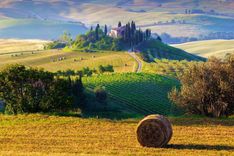
The vineyards, as with most places in Italy, are picture-perfect. Bike rides and walks are the best way to immerse yourself, especially if you wish to stop off for tasters along the way. For Mozart fans, visit St. Marks Church, where the young Mozart held his first public concert.
MART
Designed by Mario Botta, MART (Museo di Arte Moderna e Contemporanea) hosts world-class exhibitions and is one of Trentino's unmissable experiences. The spectacular building, with spacious galleries wrapped around a central circular atrium flooded with light, is impressive enough even before you view the art inside. Skilfully curated, themed exhibitions use works loaned from institutions and individuals around the world as well as drawing on the gallery’s collection of 30,000 paintings, design pieces and sculptures by names including Lichtenstein, Rauschenberg and Warhol (as well as lesser-known locals such as Italian Futurist Fortunato Depero, Giorgio de Chirico and Giorgio Morandi). A smaller branch nearby, the Casa d'Arte Futurista Depero displays Depero's large cloth collages, tapestries, furniture and other design pieces.