What to see in Liguria
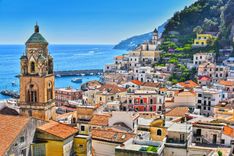
The chief city of the region is Genoa, an ancient, sprawling port with a fascinating, labyrinthine old quarter complemented by a newly energized dockside district and a vibrant and ethnic mix. Genoa straddles the apex of Liguria's arching coast and marks the midway point of the Italian Riviera, dividing it in two distinct halves. The Riviera di Ponente to the west is the more developed stretch, a long ribbon of hotels and resorts packed in summer months – particularly with Italian families. San Remo, the grande dame of Riviera resorts, is flanked by hillsides covered with glasshouses, and is a major centre for the worldwide export of flowers; Albenga and Noli are attractive medieval centres that have also retained a good deal of character; while Finale Ligure is a pleasantly laidback seaside town with plenty of outdoor activities.
On Genoa’s eastern side is the more rugged Riviera di Levante, a mix of mountains and fishing villages, originally accessible only by boat. Drawn by its remoteness, the Romantics “discovered” the Riviera in the early nineteenth century, preparing the way for other artists and poets and the first package tourists. It’s still wild and extremely beautiful in places, although any sense of remoteness has long gone. Resorts like Portofino are among the most expensive in the country, although nearby Santa Margherita Ligure and Rapallo make great bases for exploring the surrounding coastline by train or car, as does the pretty fishing village of Camogli. Walks on Monte di Portofino and through the dramatic coastal scenery of the Cinque Terre take you through scrubland and vineyards for memorable views over broad gulfs and jutting headlands. At the far end of the Riviera is the bustling mercantile port and naval base of La Spezia, its shimmering Golfo dei Poeti bookended by the picturesque coastal towns of Portovenere and Lerici.
Getting around Liguria
In a car, the shore road is overall a disappointment as the coast is extremely built up, but you can get a much better sense of the region's beauty by taking the east-west autostrada which cuts through the mountains a few kilometres inland by means of a mixture of tunnels and viaducts. Fleeting bursts of daylight between tunnels give glimpses of the string of resorts along the coast, silvery olive groves and a brilliant sea. It’s ten times quicker, too. However, the real plus of Liguria is that so many of the coastal resorts are easily accessible by train, with regular services stopping just about everywhere, and, because the track is forced to squeeze along the narrow coastal strip, the views are wonderful and the stations invariably located in the centre of town.
Liguria food and drink
Liguria may lie in the north of Italy, but its benign Mediterranean climate, and to some extent its cooking, belong further south. Traditionally, the recipes from this region make something out of nothing, and the best-known Ligurian speciality is pesto, the simplest of dishes. Invented by the Genoese to help their long-term sailors fight off scurvy, it's made with chopped basil, garlic, pine nuts and grated sharp cheese (pecorino or Parmesan) ground together in olive oil. It’s used as a sauce for pasta (often flat trenette noodles, or knobbly little potato-flour shapes known as trofie), or served with a few boiled potatoes and green beans, or stirred into soup to make minestrone alla genovese. Look out also for pasta, usually Pansotti, served with a creamy hazelnut sauce – salsa di noci; and other typical dishes like cima alla genovese (cold, stuffed veal); tomaxelle (veal meatballs); tortapasqualina (a spinach and cheese pie with eggs); sardenaira (a Ligurian pizza made with tomatoes, onions and garlic); and, of course, the ubiquitous golden focaccia bread, often flavoured with olives, sage or rosemary, or covered with toppings. There are lots of things with chickpeas too, which grow abundantly along the coast and crop up most regularly in farinata, a kind of chickpea pancake displayed in broad, round baking trays.
Otherwise, fish dominates – not surprising in a region where more than two-thirds of the population lives on the coast. Local anchovies are a common antipasto, while pasta with a variety of fish and seafood sauces appears everywhere (mussels, scampi, octopus and clams are all excellent); you’ll find delicious polpo (octopus), usually served cold with potatoes, good swordfish, and dishes like ciuppin or fish soup, burrida di seppie (cuttlefish stew), fish in carpione (marinated in vinegar and herbs), or just a good fritto del Golfo (mixed fish fry-up). Salt cod (baccalà) and wind-dried cod (stoccofisso) are also local favourites. Many restaurants in Rapallo and along the Tigullio coast serve bagnun, a dish based on anchovies, tomato, garlic, onion and white wine, and in Cinque Terre and Levanto you’ll often see gattafin – a delicious deep-fried vegetable pasty. Liguria’s soil and aspect aren’t well suited to vine-growing, although plenty of local wine – mainly white – is quite drinkable. The steep, terraced slopes of the Cinque Terre are home to some decent eponymous white wine and a sweet, expensive dessert wine called Sciacchetrà, made from partially dried grapes. From the Riviera di Ponente, look out for the crisp whites of Pigato (from Albenga) and Vermentino (from Imperia), as well as the acclaimed Rossese di Dolceacqua, Liguria’s best red.
The Riviera di Ponente
Tracing a slow arc southwest of Genoa, the Riviera di Ponente (Coast of the Sunset), is Liguria’s most built-up stretch, home to practical, unpretentious resorts, functional towns and the occasional attractive medieval quarter. The beaches are sandy and the prices relatively low, making it a popular holiday spot for Italian families. Almost every settlement along the coast from Genoa to San Remo is a resort of some kind, and extremely busy during July and especially August, when prices are at their highest. But there are some gems among the run-of-the-mill holiday towns, not least the likeable resort of Finale Ligure, nearby Noli, with its alley-laden old centre, the medieval centre of Albenga and the grand old resort of San Remo, which can also make a good base for exploring sections of the Alta Via dei Monti Liguri.
The Alta Via dei Monti Liguri
The Alta Via dei Monti Liguri is a long-distance high-level trail covering the length of Liguria, from Ventimiglia in the west across the ridgetops to Ceparana on the Tuscan border above La Spezia in the east – a total distance of some 440km. The mountains, which form the connection between the Alps and the Apennines, aren’t high – rarely more than 1500m – meaning that the scenic route, which makes full use of the many passes between peaks, is relatively easy-going. The whole thing would take weeks to complete, but has been divided up into 43 stages of between two and four hours each, making it easy to dip in and out of. Trail support and maintenance is good, with rifugi dotted along the path and distinctive waymarks (red-white-red “AV” signs).
Unfortunately, access to most parts of the Alta Via from the main coastal towns can be tricky, and requires juggling with route itineraries and bus timetables. For information on the Alta Via, the Associazione Alta Via dei Monti Liguri produces a full-colour wall-map of the route, along with detailed English descriptions and timings of all 43 stages (plus hotels and restaurants along the way). Club Alpino Italiano offices in the major towns have information on rifugi, and the Federazione Italiano Escursionismo (FIE) publishes detailed guides to all the inland paths of Liguria.
Finale Ligure
Finale Ligure, half an hour from Savona, is a full-on Italian resort, in summer crowded with Italian families who pack the outdoor restaurants, seafront fairground and open-air cinema, or take an extended passeggiata along the promenade and through the old alleys. It’s a thoroughly enjoyable place for all that, with a long sandy beach that stretches the entire length of the town and a busy, buzzy vibe that lasts long into the evening.
At its centre is Finalmarina, with a palm-lined promenade and a small quarter of narrow shopping streets set back from the seafront, focused on the arcaded Piazza Vittorio Emanuele II. At the eastern end of town, Finalpia is a small district on the other side of the River Sciusa, with the twelfth-century church of Santa Maria di Pia (rebuilt in florid, early eighteenth-century style) and the adjacent sixteenth-century cloistered abbey at its centre. Finalborgo, 2km inland, is perhaps the most attractive part of Finale, a medieval walled quarter overlooked by bare rock faces that are a favourite with free climbers who gather at Bar Centrale in Finalborgo’s Piazza Garibaldi at weekends. It's also become a thriving hub for mountain bikers. Finalborgo has quite a chichi air, and is a nice place to eat, shop, wander the old streets, or take a look at the array of prehistoric remains and other local artefacts at the Museo Archeologico del Finale in the cloisters of the convent of Santa Caterina.
Albenga
The small market town of Albegna is one of the most attractive places along this part of the Ligurian coast, an ex-port whose estuary silted up long ago but left a wanderable old quarter, still within medieval walls and following the grid pattern of its ancient Roman predecessor, Albingaunum.
In the centre of town, Piazza San Michele is home to the elegant cathedral, the main part of which was built in the eleventh century and enlarged in the early fourteenth. Just beyond, in the Torre Comunale, the Museo Civico Ingauno is home to an array of Roman masonry and fragments, including a patch of first-century mosaic floor. Around the corner from the museum, the ingenious fifth-century baptistry combines a ten-sided exterior with an octagonal interior. Inside are fragmentary mosaics showing the Apostles represented by twelve doves. Behind the baptistry to the north, the archbishop’s palace houses the diverting Museo Diocesano, Via Episcopio 5, where there are paintings by Lanfranco and Guido Reni. The archbishop’s partially frescoed bedchamber, next door to his private chapel, is also decorated with fifteenth-century frescoes. A few metres from here, at the junction of Via Medaglie d’Oro and Via Ricci, the thirteenth-century Loggia dei Quattro Canti marks the centre of the Roman town, while some 500m further north, beyond Piazza Garibaldi and along Viale Pontelungo, is the elegant, arcaded Pontelungo bridge. Built in the twelfth century to cross the river, which shifted course soon afterwards, it now makes an odd sight.
In the opposite direction, five minutes’ walk beyond the train station, lies Albenga’s seafront and beaches – mostly sandy and with a couple of reasonable free sections.