

Explore Lower Saxony and Bremen
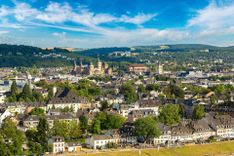
Welcome to the happiest town in Germany. Last decade a nationwide poll found citizens of OSNABRÜCK, the largest city in western Lower Saxony, more content than those anywhere else in Germany, inspiring a marketing campaign in Stern magazine that declared “Ich komm zum Glück aus Osnabrück” (I’m lucky to be from Osnabrück). A friendly small-scale city of modest charm and with a university to prevent it stagnating, it has much to be happy about.
In 1648 after more than four years of negotiations here and in Münster 60km south, Catholic and Protestant signatures dried on the Peace of Westphalia and the political and religious inferno of the Thirty Years’ War was finally doused. Osnabrück has treasured its diplomacy of peace ever since. Her two great sons, Justus Möser and Erich Maria Remarque, dreamed of ennobled, free workers and railed against war’s insanity respectively, and today Osnabrück proudly declares herself “Die Friedenstadt” (Peace City), host of Nobel Peace Prize-winners Henry Kissinger and the Dalai Lama, home of the German Foundation for Peace Research and the national branch of child-relief agency Terre des Hommes. Perhaps it’s no surprise that its finest museum-gallery pays homage to a Jewish artist murdered at Auschwitz.
Read More-
The poor swordsmiths and the Peace of Westphalia
Protestant factions met in Osnabrück’s Rathaus for over four years to broker their half of the Peace of Westphalia (the Catholics were in Münster) and unpick the knotted conflicts of the Thirty Years’ War that had brought German cities to their knees. Once signed by both, city fathers stood on the Rathaus steps on October 25, 1648, and proclaimed the carnage over, a declaration greeted at first with disbelief by the crowd, then by tears and a spontaneous outburst of hymns. As a contemporary pamphlet relates: “Osnabrück and all the world rejoices, the joyful people sing, Flags fly bravely … I am only sorry for the poor swordsmiths for they have nothing to do.”