





Explore Lower Saxony and Bremen
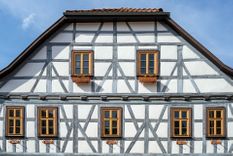
Like Bremen with its town musicians, HAMELN must say a daily prayer in praise of fairytales. The rat-turned-child-catcher not only gave the small town international fame but a ready-made promotional angle. A Piper fountain gushes rodents and the tale is re-enacted weekly in summer. Even the Marktkirche has a Pied Piper window. Whatever the yarn would have you believe, the town has more than its fair share of children, too, because the ploy works. Such is its popularity – the town receives over 3.5 million tourists per year – that Hameln isn’t always the “pleasanter spot you never spied” as American Robert Browning describes in his poem of the tale. It is a good-humoured place, however, with few pretentions to greatness other than its historic Altstadt. It also serves as gateway to the lovely hill-and-river country of the Weserbergland south.
Read More-
The Pied Piper legend
Hameln, June 1284: a stranger in multicoloured clothes strikes a deal with the town council over payment to lift a plague of rats that has infested the town. He pipes the rodents to their deaths in the Weser, yet the council renege on payment. The stranger returns while the citizens are in church, and, dressed in a hunter’s costume, exacts his revenge – 130 children follow his pipe from the town and are never seen again. Just two boys remain, one lame, the other deaf. Germany’s most famous legend was recognized in a stained-glass panel in the church as early as 1300. Academics agree the yarn is rooted in history – it is surely not coincidence that Hameln town records commence with the tragedy, which is reported as straight news a century later in a manuscript and given a date – June 26, 1284 – but hard facts remain elusive. The most plausible theory proposes nothing more fantastical than an exodus of citizens, Hameln “children” all, during colonization of eastern nations such as Pomerania and Prussia – the finger is often pointed at Count von Schaumberg who moved to Olmutz, now Chechnya. In the Grimm Brothers’ account, compiled from eleven sources, the children found a town in Transylvania. However, the presence of rats has led some scholars to propose a mass migration during the Black Death, a baton taken up by a theory that suggests the tale remembers an early plague in which the piper represents Death.