What to do in Paris
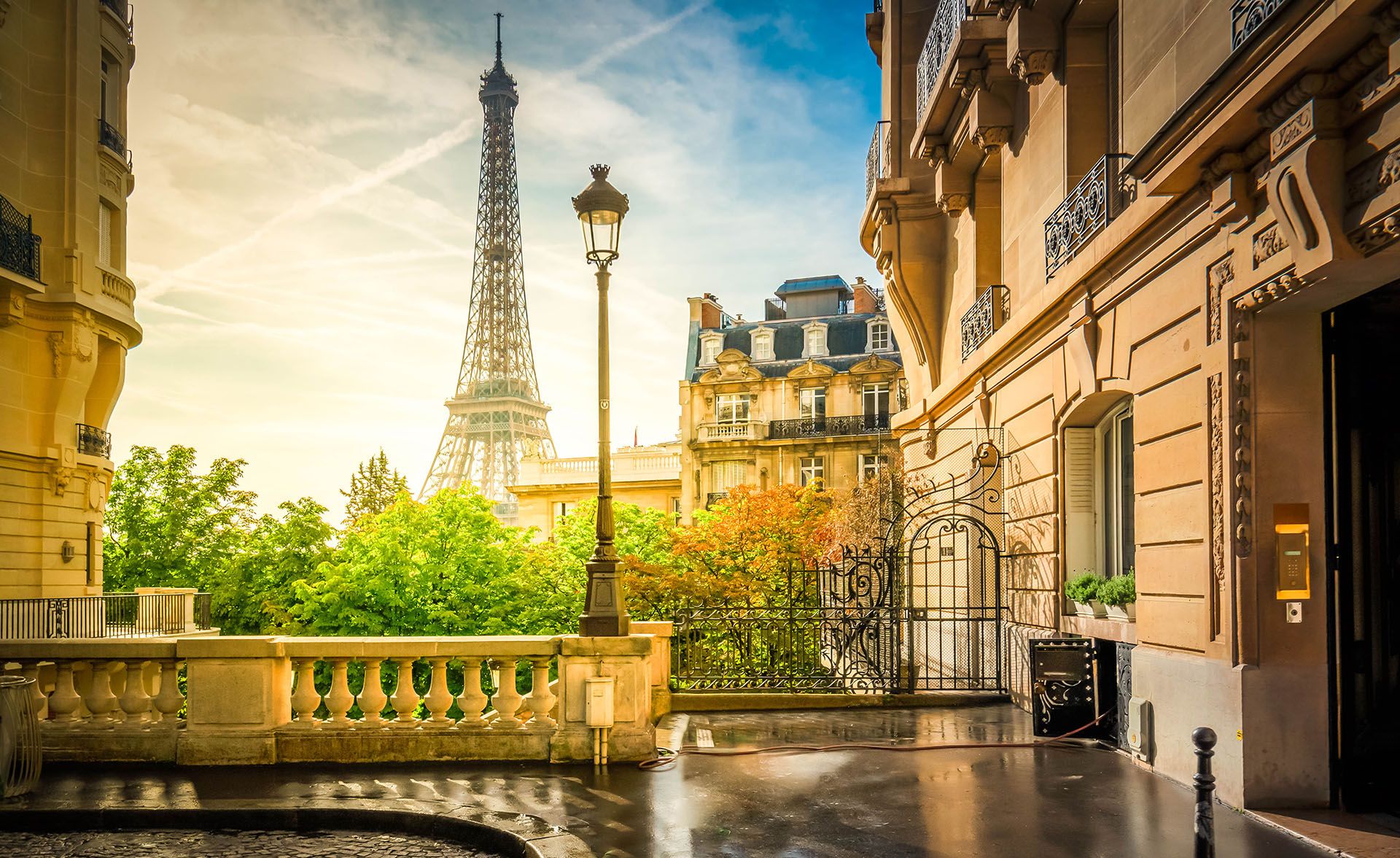
1. Climb the Eiffel Tower
It may seem familiar from afar, but close up the Eiffel Tower is still an excitingly improbable structure; an ascent to the top is an unforgettable experience. You can skip the line with priority access.
2. Wander around the Parc Rives de Seine or take a cruise on the Seine
Join the joggers and cyclists, have a picnic or just soak up the wonderful views on the Parc Rives de Seine, a scenic riverside loop that takes in both the Right and Left banks. Better still, enjoy a cruise on the river itself.
3. Marvel at Sainte-Chapelle
Sainte-Chapelle's stunning stained-glass windows rank among the greatest achievements of French High Gothic.
4. See amazing art at the Museé Picasso
A fabulously restored Marais mansion is the setting for this unrivalled collection of Picasso's paintings, sculptures, drawings and ceramics. Book priority entrance to bypass the queues.
5. Discover the Musée d'Orsay
France's greatest collection of Impressionist (and pre- and post-Impressionist) art is found at the Musée d'Orsay, housed in a beautiful converted railway station.
6. Check out cutting-edge modern art at the Centre Pompidou
The Pompidou's radical "inside-out" architecture looks just as ground-breaking as it did when it first opened in the 1970s, and its modern art museum is a knockout.
7. Appreciate stunning sculptures at the Musée Rodin
Rodin's stirring sculptures are shown off to their best advantage in the sculptor's elegant eighteenth-century mansion and garden.
8. Love the Louvre
You could easily spend a whole day (and more) exploring the world-class Louvre's collections, including famous Italian Renaissance paintings and ancient Greek and Roman sculpture.
9. Explore the Foundation Louis Vuitton
Frank Gehry's astonishing "cloud of glass" in the Bois de Boulogne holds an inspiring collection of contemporary art. Premium access will allow you to use a separate entrance and covers entrance to temporary exhibitions.
10. Take the train to Versailles
The ultimate French royal palace, awesome in its size and magnificence, and boasting exquisite gardens that are free to visit. Go by train for a stress-free trip.
11. Take a boat trip in Paris
Most tourists are keen, rightly, to take a boat trip on the Seine. One good option is the Batobus; otherwise Bateaux-Mouches is the best-known operator. Leaving from the Embarcadère du Pont de l’Alma on the Right Bank in the 8e, boats take you past the major Seine-side sights, such as Notre-Dame and the Louvre, complete with commentary. Night-time cruises use dazzling lights to illuminate the streetscapes – much more fun for people on board than passing pedestrians. The pricey lunch and dinner trips are best avoided. Bateaux-Mouches has many competitors, all much of a muchness, including Bateaux Parisiens, Vedettes de Paris and Bateaux-Vedettes du Pont-Neuf.
Another option, which takes you past less-visited sights, is to take a canal boat trip. Canauxrama offers a number of narrated cruises on the St-Martin, Ourcq and St-Denis canals, along with the Seine and the River Marne. Paris Canal is the company to offer cruises that ally the charm of Canal Saint Martin, and its locks, to the majesty of the major monuments on the Seine. With Paris Canal, you can Cruise Paris differently, from Musée d’Orsay to Bassin de la Villette.
Thinking about a French holiday? Start planning your trip by finding out how to get there.
What are the best places to visit in Paris?
Paris has an emotional gravity that’s hard to resist. Parisians rarely feel the urge to escape, while visitors almost always find themselves longing to return. The city's pull comes from its rare beauty, effortless style, and rich history as Europe’s cultural heartbeat for centuries.
How long to stay in Paris? Give yourself at least three to four days to experience its magic— wander its historic streets, take in world-famous art, and soak up the café culture that makes the city so unforgettable.
The best places to visit in Paris range from grand monuments to exquisite, secretive little nooks and defined communities revolving around the local boulangerie and café. There are nearly 150 art galleries and museums on offer, brasseries and restaurants line the streets, and after dark, the city’s theatres, concert halls and churches host world-leading productions of theatre, dance, cinema and classical music.
Lying in its shallow river basin, Paris is still confined within its historic city limits and divided into twenty arrondissements, centred on the royal palace and museum of the Louvre, which spiral outwards in a clockwise direction. At its widest point, the city is only about 12km across – roughly two hours’ walk.
At the hub of the circle, in the middle of the River Seine, is the island from which all the rest grew: the Ile de la Cité, defined by its Gothic cathedral of Notre-Dame.
On the north or Right Bank (rive droite) of the Seine, which is the more bustling and urban of the city’s two halves, the longest and grandest vista of the city runs west from the Louvre: this is La Voie Triomphale – comprising the Tuileries gardens, the glamorous avenue of the Champs-Elysées and the Arc de Triomphe.
North of the Louvre is the commercial and financial quarter, where you can shop in the department stores on the broad Grands Boulevards, in the little boutiques of the glass-roofed passages, or in the giant, underground mall of Les Halles.
East of the Louvre, the elegant Marais and Bastille quarters are alive with trendy shops, cafés and bars. Further east, the Canal St-Martin and Ménilmontant are good places to go for cutting-edge bars and nightlife.
The south bank of the river, or Left Bank (rive gauche), is quieter and less commercial. The Quartier Latin is the traditional domain of the intelligentsia – from artists to students – along with St-Germain, which becomes progressively more chichi until it hits the grand district of ministries and museums that surrounds the Eiffel Tower. As you move south towards Montparnasse and the southern swathe of the Left Bank, however, high-rise flats start to alternate with charming bourgeois neighbourhoods.
Back on the Right Bank, many of the outer arrondissements were once outlying villages. Hilly Montmartre, with its rich artistic associations and bohemian population, is the most picturesque, but Belleville and Passy, have also retained village-like identities – working-class in the east, wealthy in the west.
Central Paris has lots of wonderful gardens, notably the Jardin du Luxembourg, but the best big parks are the Bois de Vincennes and the Bois de Boulogne, at the eastern and western edges of the city, respectively.
The region surrounding the capital, beyond the boulevard périphérique ring road, is known as the Ile-de-France. It’s dotted with cathedrals and châteaux. Nearby sights, such as the Gothic cathedral at St-Denis and the astonishing royal palace at Versailles, out in the suburbs, are easy to get to, while full day-trip destinations include the stunning cathedral town of Chartres and Monet’s lovely garden at Giverny.
An equally accessible outing from the capital, and practically a must-see on a Disneyland Paris family trip, is that most un-French of French attractions, Disneyland Paris.
Looking for vacation ideas in France? Check out our 7-day France itinerary - you might like it!
Paris Guide - Southern Paris
The entertainment nexus of Montparnasse, with its evocative literary and artistic associations, divides the well-heeled opinion-formers and powerbrokers of St-Germain and the 7e from the relatively anonymous populations to the south. The three arrondissements to the south of Montparnasse have suffered from large-scale housing developments, most notably along the riverfronts to both east and west, but villagey areas such as rue du Commerce in the 15e, Pernety in the 14e and the Buttes-aux-Cailles in the 13e are worth a foray. On the fringes of the city proper, hard up against the périphérique ring road, are three fantastic parks: André Citroën, Georges-Brassens and Montsouris.
Montparnasse
Like other Left Bank quartiers, Montparnasse trades on its association with the wild characters of the interwar artistic and literary boom. Many were habitués of the cafés Select, Coupole, Dôme, Rotonde and Closerie des Lilas. The cafés are all still going strong on boulevard du Montparnasse, while the glitterati have mostly ended up in the nearby Montparnasse cemetery. The quarter’s artistic traditions are maintained in a couple of fascinating art museums, while elsewhere you can ascend the Tour Montparnasse, Paris’s first and ugliest skyscraper, and descend into the bone-lined catacombs.Paris Guide - The 12e arrondissement
South of Bastille, the relatively unsung 12e arrondissement offers an authentic slice of Paris, with its neighbourhood shops and bars and traditional markets, such as the lively Marché d’Aligre. Among the area’s attractions are the Promenade Plantée, an ex-railway line turned into an elevated walkway running from Bastille to the green expanse of the Bois de Vincennes, and Bercy, once the largest wine market in the world, its handsome old warehouses now converted into cafés and shops.
Paris Guide - Bastille
A symbol of revolution since the toppling of the Bastille prison in the 1789, the Bastille quarter was a largely working-class district up until the construction of the new opera house in the 1980s. Since then, it has attracted artists, fashion folk and young people, who have brought with them stylish shops and an energetic nightlife, concentrated on rue de Lappe and rue de la Roquette.