What to do in Guatemala City
You won’t find yourself feeling bored in the capital. Here’s our rundown of the best things to do in Guatemala City, with the best places to shop, where to catch a film or show and spots to head to for a drink and dance. While it may not be renowned for its culture scene, the capital is also home to some excellent museums.
Shopping in Guatemala City
For souvenirs, foodstuffs and everyday items check out Zona 1’s Mercado Central. Fontabella Plaza is a classy shopping centre, with boutiques and restaurants scattered around little courtyards. Head to Sopho’s bookstore for English titles, Saúl for fashion and Flights de Vinoteca for a glass of wine.
Oakland Mall Diagonal and Paseo are both upmarket malls with stores including Diesel, Apple and Zara, food courts and cinemas. For a mid-range mall, head to Los Próceres, where you’ll find more than two hundred stores, including many budget clothes, electrical and phone shops, some food stalls, a multi-screen cinema, a café or two and a good spa.
Entertainment in Guatemala City
To catch a film, you can’t beat Centro Cultural de España. It’s a spectacular location inside an Art Deco cinema, showcasing an innovative selection of arthouse, European and independent Latin American movies, plus occasional classics. The venue also hosts plays and concerts.
Cinépolis Oakland Mall is a multiplex and has the best-quality audiovisuals in the city. It even offers “butler service” tickets, which get you a leather seat and drinks brought to your seat.
The Teatro Nacional complex has several theatres, including an amphitheatre, and stages some prestigious events including symphony orchestras and ballet.
Drinking and nightlife in Guatemala City
Nightlife in Guatemala City essentially it comes down to two choices: gritty Zona 1, which has some atmospheric old bars and raucous student places, or Zona 10’s Zona Viva, largely the domain of wealthy Guatemaltecos, with upmarket bars and clubs.
It’s best not to stroll around Zona 1 late at night, but Zona 10 is considered safe enough. For information on Guatemala’s clubbing and DJ scene, consult the electronik.net Facebook page.
Top places to visit in Guatemala City
Here are some of our favourite places to visit in Guatemala City.
1. The Museo Nacional de Arqueología y Etnología
The Archeological and Ethnological Museum has a world-class selection of Maya artefacts. The collection includes prehistoric sections, a re-creation of a royal tomb from Río Azul, and spectacular jade masks from Takalik Abaj. However, it’s the exhibits collected from Piedras Negras, one of the most remote sites in Petén, that are most impressive.
2. Museo Ixchel
The capital’s best-organized museum, the Museo Ixchel is dedicated to Maya culture, with an emphasis on traditional weaving. It contains a stunning array of handwoven fabrics, including some very impressive examples of ceremonial costumes. Weavers can usually be seen in action and there’s a permanent exhibition of paintings by Guatemalan artists.
3. Mercado Central
Picture a huge, colourful flea market selling everything from souvenirs to snacks housed in a building seemingly modelled on a nuclear bunker and you’ll start to get an idea of what it’s like to shop at the Mercado Central. Practically speaking, you’ll find textiles, leatherware, ceramics and basketry as well as fruit, vegetables and flowers. In the basement there’s a selection of cheap and authentic food stalls, snack stands and juice bars.
4. Stroll around the centro histórico
Take some time to wander around the hub of the old city, a world of low-slung, crumbling nineteenth-century town houses and faceless concrete blocks, car parks, noise and dirt. Signs of regeneration are emerging, particularly along newly pedestrianized Sexta Avenida as once-grand buildings are renovated and clusters of cafés are opening.
5. People watch at the Parque Centrale
An imposing plaza that forms the country’s political and religious centre, the Parque Central is flanked by the grand Palacio Nacional and cathedral and was originally the scene of a huge central market. Today, it’s a good place to absorb city life as ladino and indigenouscapitaleños stroll, chat and snack and pigeons, shoe-shiners and raving Evangelicals jostle for space. Marimba and classical music performances are staged twice weekly on the west side of the square.
6. Take part in a Sunday fiesta in Zona 13
Head to Zona 13 on a Sunday and you’ll find Avenida La Reforma and Avenida Las Américas closed to traffic as joggers, cyclists, skateboarders and street performers flood the streets in a fiesta-esque atmosphere. The scheme, called Pasos y Pedales (Steps and Pedals) attracts 15,000 people most weeks.
7. Visit the Kaminaljuyú ruins
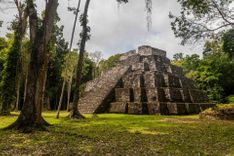
The modest ruins of Kaminaljuyú are all that’s left of a Maya city that once housed around fifty thousand people and thirteen ball courts. Today, the archeological site is little more than a series of earth-covered mounds - visit the Miraflores museum nearby to get an idea of Kaminaljuyú’s former scale and splendour.
8. Museo Popol Vuh
The city’s third excellent museum, the Museo Popol Vuh has a small but outstanding collection of artefacts from archeological sites all over the country. The Preclassic room contains some Olmec ceramics and sculptures from Kaminaljuyú, while highlights of the Classic section include an altar from fellow Maya city Naranjo and some demonic-looking incense burners.
Gay Guatemala City
Guatemala City’s small gay scene is mostly underground, though there is an annual Pride march in June. Nightlife is concentrated around a few (almost entirely male) venues. “In” places change quickly: consult Gay Guatemala Internacional for the latest info.
Black and White
In the heart of the city since 2006, this bar-club is an intimate space with classy decor and attracts a lively crowd with themed nights, go-go dancers and strippers.
Eclipse
A long running gay club where DJs spin house and latin music. Arrive early and the happy hour all-you-can-down drinks specials (US$6) certainly get the party started.
Genetic
This is the city’s largest (mainly) gay club with three floors and a VIP section, and plays pumping trance and house music. There are themed nights and go-go dancers.
Around Guatemala City
The countryside around Guatemala City – a delightful landscape of volcanoes, pine forests, milpas and coffee farms – also begs to be explored. Looming over the capital is Volcán de Pacaya, one of the most active peaks in Latin America. You’ll also find countless interesting villages to visit in this area, including San Andrés Itzapa, where there is a pagan shrine to the “evil saint” San Simón, and Jocotenango which boasts museums dedicated to coffee production and Maya music.
The one sight that really warrants a day-trip from the capital is Volcán de Pacaya, a highly active cone. From Guatemala City, the highway to the Pacific passes through endless suburbs, a swathe of new housing projects and giant maquila (clothing assembly) factories until you glimpse the waters of Lago de Amatitlán nestling at the base of the Pacaya volcano.
To the northwest of the capital lies Mixco Viejo, ruins that enjoy the most dramatic setting of any archeological site in Guatemala. Like all the highland sites, the structures are fairly low – the largest temple reaches only about 10m in height – and are devoid of decoration. Mixco Viejo is, however, an interesting site in a spectacular setting, and during the week you’ll probably have the ruins to yourself, which gives the place all the more atmosphere.
If you find yourself in Guatemala City in November, it’s worth making the trip to nearby Santiago. The town’s local fiesta to honour the Day of the Dead on November 1 is one of the nation’s most spectacular, with massive kites flown from the cemetery to release the souls of the dead from their agony.