Explore The Mekong Delta
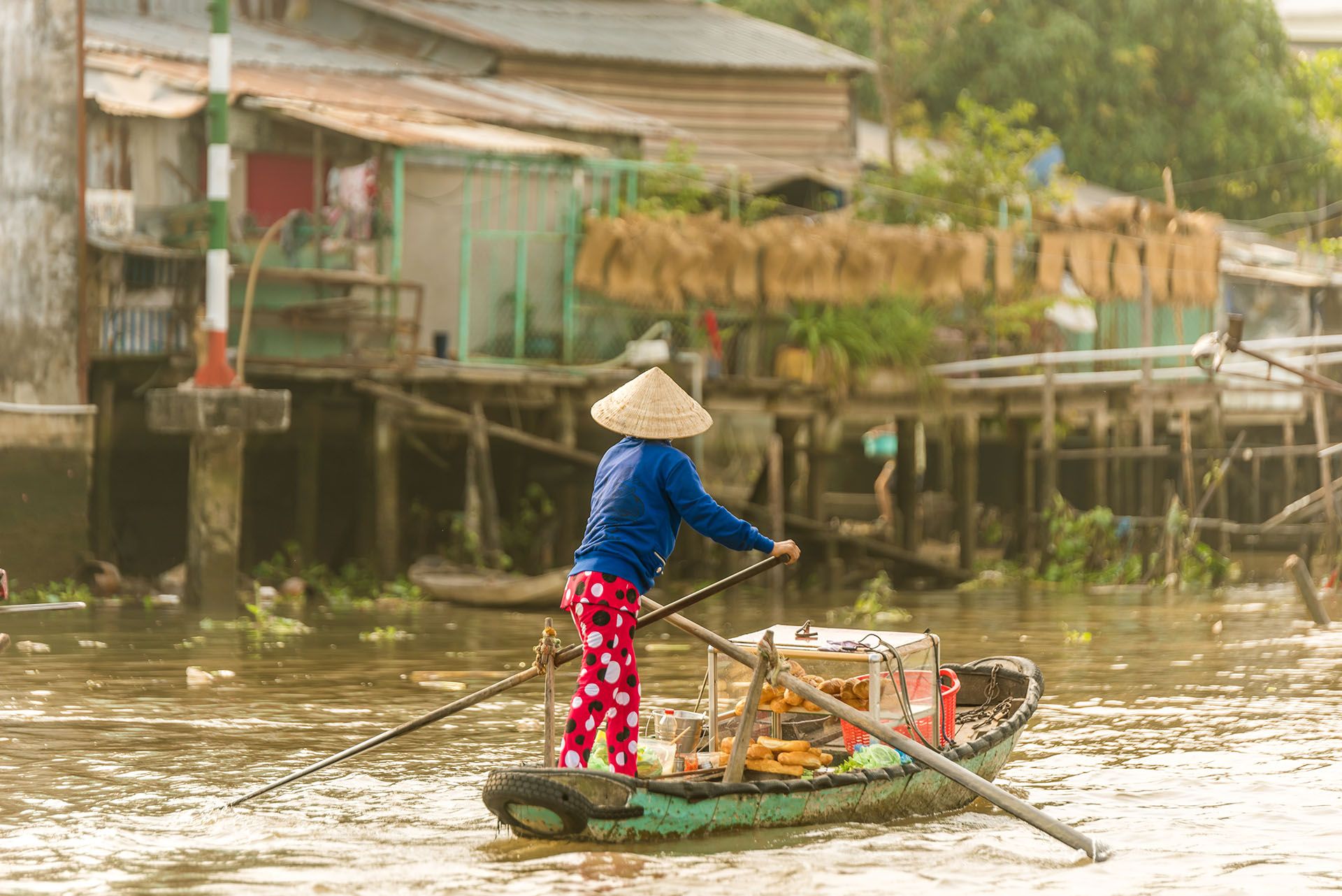
With its left shoulder braced against the Bac Lieu Canal, Highway 1 heads westwards from Bac Lieu towards the Ca Mau Peninsula, which constitutes not only the end of mainland Vietnam but of Southeast Asia as well. In this part of the country, waterways are the most efficient means of travel – a point pressed home by the slender ferries moored in all the villages the road passes. Much of this pancake-flat region of the delta is composed of silt deposited by the Mekong, and the swamplands covering portions of it are home to a variety of wading birds. In addition to rice cultivation, shrimp farming is a major local concern – along the way you’re sure to spot shrimp ponds, demarcated by mud banks that have been baked and cracked crazily by the sun.
CA MAU itself, Vietnam’s southernmost town of any size, has a frontier feel to it, though rapid development is changing that fast. Things have changed since 1989 when travel writer Justin Wintle described it as a “scrappy clutter…a backyard town in a backyard province”, though there are still pockets of squalor between the glitzy new buildings. Ca Mau sprawls across a vast area, with broad boulevards connected by potholed lanes and a couple of busy bridges spanning the Phung Hiep Canal that splits the town in two. To the west, the town is bordered by the Ganh Hao River, which snakes past as though trying to wriggle free before the encroaching stilthouses squeeze the life from it.
Although few Western travellers currently visit Ca Mau, there are now speedboats to Rach Gia that cover the journey in less than three hours, and improvements to Highway 63 make the journey by road less arduous, so incorporating Ca Mau in a circular tour of the delta is now a tempting possibility, as it takes you off the tourist trail and through classic delta scenes.
Read More-
Around Ca Mau
Around Ca Mau
The marshes circling Ca Mau form one of the largest areas of swampland in the world, covering about 150,000 hectares. The Ca Mau Peninsula was a stronghold of resistance against France and America, and for this it paid a heavy price, as US planes dumped millions of gallons of Agent Orange over it to rob guerrillas of jungle cover. Further damage has been done by the shrimp-farm industry, but pockets of mangrove and cajeput forests remain, inhabited by sea birds, wading birds, waterfowl and also honey bees, attracted by the mangrove blossoms.
Mui Ca Mau National Park
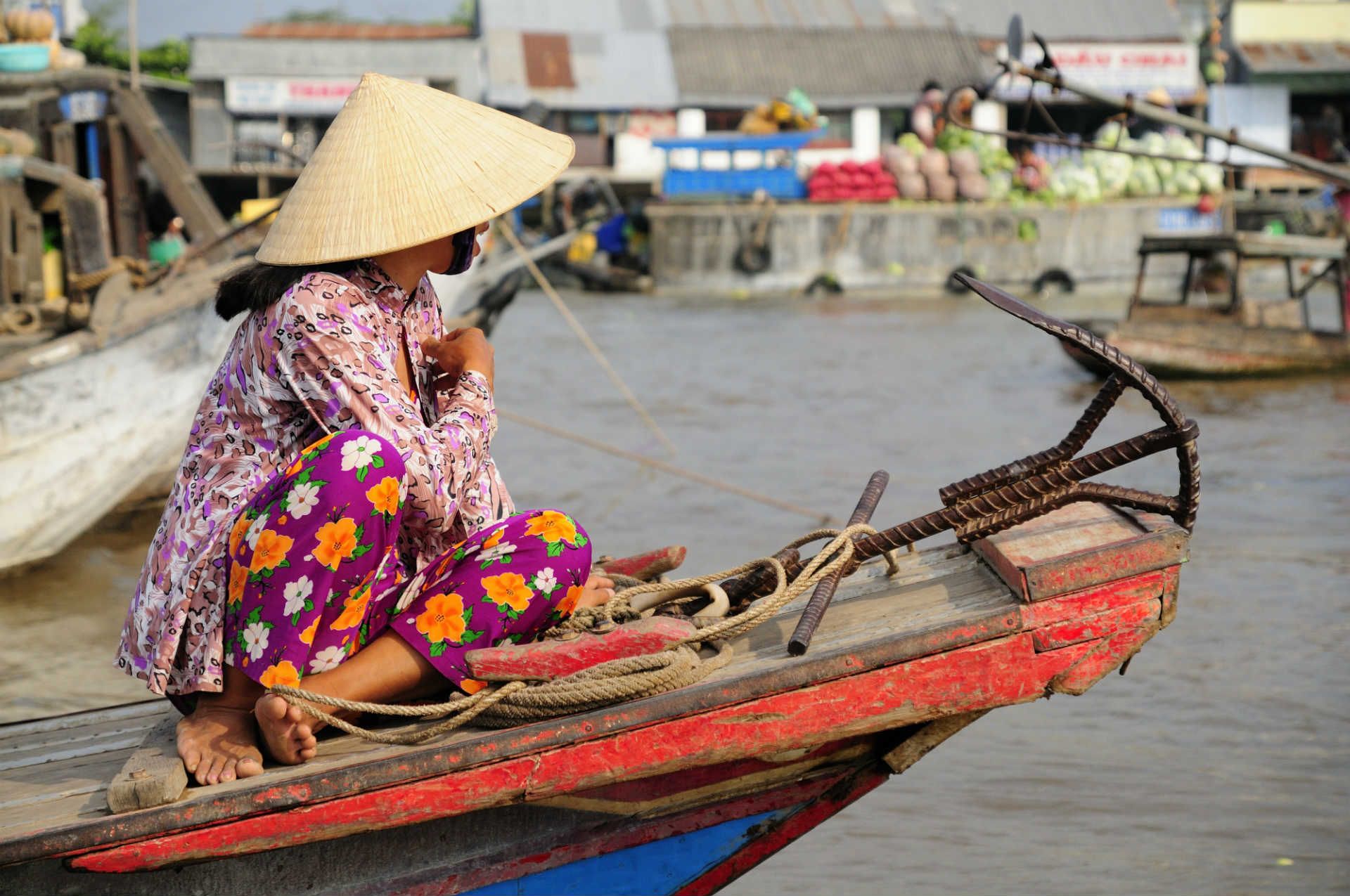
This voyage to the end of the earth may not quite be a Jules Verne epic, but it’s a fun and satisfying way to pass a day, as you get to visit not only the southernmost point of Vietnam but also the end of mainland Southeast Asia. The speedboats that take you through the throng of life in the delta can get pretty crowded, but if you’re lucky you might get a window seat to look out on the houses, shacks and boats that line the river.
Once inside the national park, you can take a photo of yourself standing beside a boat-shaped monument marking the latitude (8 degrees north) and longitude (104 degrees east) of this remote location, then gaze out over the endless ocean and the mountainous Khoai Island just off the coast. There’s even a look-out tower from where you can get good views over the mangrove forests, and a restaurant on stilts over the water.
U Minh Forest and National Park
U Minh is famous for its cajeput forests. Lining the nearby canals are water palms, modest groves of cajeput and fish traps consisting of triangles of bamboo sticks driven into the riverbed. The slender white trunks of the cajeput thrive in U Minh’s marshy, coffee-coloured waters, and gliding through them in a boat would be a truly tranquil experience if it were not for the racket of the boat engine. Along the way, you may spot bright blue birds flitting over the water, or, depending on the season, apiarists collecting honeycombs from the trees, which attract bees in huge numbers when they are in flower.
-
Get your kicks on highway 63
Of all the roads that crisscross the Mekong Delta, few have such a strong sense of what this watery world is all about as Highway 63, which zigzags north from Ca Mau to Minh Luong, just south of Rach Gia – a distance of a little over 100 kilometres. The road is sealed all the way, though it’s often no wider than a single track road, and for most of its journey it follows narrow canals that carry a real hotchpotch of vessels going about their business. At Vinh Tuan it crosses a wide canal, allowing great views of river life, though parking on the bridge is illegal, so park near and walk on to it. There are also several monkey bridges across the canals – fragile structures consisting of narrow tree trunks, which require the assured balance of a monkey to cross them (thus the name). Like many other aspects of local culture, monkey bridges are disappearing fast, but Highway 63 still offers a fascinating glimpse of traditional life in the delta. Near the end of the highway, you need to cross a wide river by ferry at Tac Cau, where you’ll see huge fishing ships loading ice to freeze their catch. If you don’t have your own transport, take a bus from Ca Mau to Rach Gia to follow this highway.