Explore Mindanao
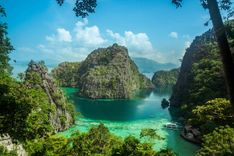
The southeast is home to Mindanao’s largest city, Davao, a diverse and friendly place best known for its fresh fruit. Davao itself is not a city of legendary sights, but the nearby countryside and coast harbour plenty of attractions, from idyllic Samal Island to crocodile parks, zip lines and the Philippine Eagle Center. Davao is also the gateway to Mount Apo, the nation’s highest peak and a magnet for trekkers and climbers. Further south, the tuna port of General Santos is the closest city to enigmatic Lake Sebu.
Read More-
Museo Dabawenyo
Museo Dabawenyo
To get an overview of Davao’s turbulent history and ethnic make-up, visit the Museo Dabawenyo (082/222-6011, www.museodabawenyo.com), housed in the restored court building opposite Osmeña Park on A. Pichon Street. It’s small but well presented, and though there are more objects on display at the Davao Museum, this one is easier to reach (and it’s free). The main impression you’ll be left with is that Davao’s history is incredibly complex; its indigenous tribes are described in detail, as is the fateful struggle between Datu Bago and conquistador Don José Uyanguren in the 1840s. Panels also throw light on the American occupation boom years in the early twentieth century, the massive migrations that took place from the Visayas thereafter and the arrival of Japanese settlers in the 1930s – hard to believe this was once “Little Tokyo”.
-
Samal Island
Samal Island
Just across the narrow Pakiputan Strait from Davao, Samal Island is graced with lovely coves, beaches, excellent scuba diving and huge bat caves – there are also plenty of resorts to choose from. You can arrange diving trips at many resorts on Samal and also in Davao.
Most tourists visit Samal on organized tours but it’s also easy to arrange a trip independently. You can choose to spend time at one of the resorts (most of which allow day guests for a fee), or jump on a habal-habal and tour the island by motorbike.
-
Mount Apo National Park
Looming over all Davao, Mount Apo (2954m) is the highest mountain in the country: the name Apo means “grandfather of all mountains”. Apo is actually a volcano, but is certified inactive and has no recorded eruptions. What it does have is enough flora and fauna to make your head spin – thundering waterfalls, rapids, lakes, geysers, sulphur pillars, primeval trees, endangered plant and animal species and a steaming blue lake. Then there are exotic ferns, carnivorous pitcher plants and the queen of Philippine orchids, the waling-waling. The local tribes, the Bagobos, believe the gods Apo and Mandaragan inhabit Apo’s upper slopes; they revere it as a sacred mountain, calling it Sandawa or “Mountain of Sulphur”.
Climbing Mount Apo is not as hard as it sounds. The summit can be approached via two main routes: the Kidapawan Trail on the Cotabato side features hot springs, river crossings and a steep forested trail that leads to the peak via swampy Lake Venado, while the Kapatagan Trail on the Davao side is tougher but cuts through more stereotypically volcanic terrain, culminating in a boulder-strewn slope up to the crater.
In both cases you’ll need to buy a permit and to hire a guide from one of the local tourist offices in charge of each route. They’ll also do a required equipment check and arrange an orientation laying out all the usual rules (no rubbish, no swimming, stick to the trail, no picking anything etc). These offices will recommend a three- to four-day expedition, but experienced climbers could tackle the hike in two days with early starts. Climbing is generally permitted November through May only (dry season), but even so, you’ll need rainproof clothes and a small tent as rain is possible anytime and it gets cold at night. It’s a tough trek, but well worth it: the trail is lined with flowers and the views are mesmerizing, with the whole of Mindanao spread out before you.
-
General Santos
General Santos
Around 140km southwest of Davao on Sarangani Bay, GENERAL SANTOS – or “Jen-san” – is the Philippines’ southernmost city, a dense, noisy metropolis of over half a million that isn’t a significant tourist destination; it’s something of a frontier town, founded by General Paulino Santos and 62 pioneers from Luzon in 1939, and best known as the centre of the tuna industry. It’s also the gateway to Lake Sebu.
-
Lake Sebu
Lake Sebu
To the west of General Santos, the small town of T’Boli sits on the shores of enchanting Lake Sebu, in a natural bowl surrounded by wooded hills and rolling plantations. This is the ancestral homeland of the T’boli tribe, whose members often wear traditional woven clothes and eye-catching handmade jewellery. It’s a great place to see T’Boli culture at first hand; you can also rent a boat and take a trip on the lake itself and shop in the weekly Saturday market for brassware, beads and fabric. The main sights around the lake are the Seven Falls, a series of plunging cascades you hike up to or fly over on what is probably the most thrilling zip line in the Philippines (P250). The annual Lem-Lunay T’boli festival is held here every year on the second Friday of November and concludes with traditional horse fights.
-
Samal Island
Samal Island
Just across the narrow Pakiputan Strait from Davao, Samal Island is graced with lovely coves, beaches, excellent scuba diving and huge bat caves – there are also
plenty of resorts to choose from. You can arrange diving trips at many resorts on Samal and also in Davao.
Most tourists visit Samal on organized tours but it’s also easy to arrange a trip independently. You can choose to spend time at one of the resorts (most of which allow day guests for a fee), or jump on a habal-habal and tour the island by motorbike.