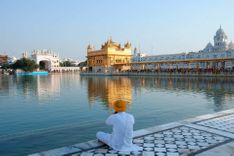
Places to visit in Uttar Pradesh
Western UP, which adjoins Delhi, has always been close to India’s centre of power. Its main city, Agra, once the Mughal capital, is home to the Taj Mahal, and a short hop from the abandoned Mughal city of Fatehpur Sikri. Central UP constituted the Kingdom of Avadh, the last centre of independent Muslim rule in northern India until the British unceremoniously took it over, fuelling the resentment that led to the 1857 uprising, in which its capital Lucknow (now UP’s state capital) played such a celebrated role.
In eastern UP lies Hinduism’s holiest city, the tirtha (crossing-place) of Varanasi, where it’s believed death transports the soul to final liberation. Sacred since antiquity, it was frequented by Mahavira, the founder of Jainism, and also by Buddha, who preached his first sermon in nearby Sarnath.
Although UP was once a thriving centre of Islamic jurisprudence and culture, many Muslims departed during the years after Independence, and the Muslim population now comprises just eighteen percent. As the heart of what is known as the “cow belt” (equivalent to America’s “bible belt”), UP has been plagued by caste politics and was for some years dominated by the Hindu sectarian BJP. It acquired an unfortunate reputation as the focus of bitter communal tensions, most notoriously in the wake of the 1992 destruction of the Babri Masjid mosque in Ayodhya (east of Lucknow, near Faizabad), which sparked off sectarian riots across India. In recent years, state politics have been dominated by two largely local left-wing parties, the socialist Samajwadi party (SP) and the mainly low-caste Bahujan Samaj party (BSP), but in the 2014 Lok Sabha election, the BJP made an almost clean sweep in UP.
Best time to visit Uttar Pradesh
The best time to visit Uttar Pradesh is October, just after the monsoon, when the climate is fresh and pleasantly warm. By the end of November it’s getting chilly at night, and quite cold in December and January, when fog may cause train delays. By mid-January it starts to warm up, and by April it can be uncomfortably hot, with dusty dry winds. The arrival of the monsoon in June breaks the heat but can itself impede travel and other activities, with the possibility of flooding.
Festivals in Uttar Pradesh
- Magh Mela (Jan/Feb)
Bathing festival held in Allahabad. In 2019 this will be the peripatetic, triennial Kumbh Mela.
- Taj Mahotsav (Feb)
Cultural festival put on by the tourist board in Agra’s Shipgram craft market to showcase UP handicrafts.
- Ramayan Mela (Feb/March)
Celebration of the events in the Ramayana epic, held in Chitrakoot.
- Dhrupad Mela (Feb/March)
Classical music festival in Varanasi, centred on Tulsi Ghat.
- Urs (May–June)
Celebration of the life of the sufi saint Sheikh Salim Chisti, held in the Muslim month of Ramadan at Fatehpur Dikri’s Jama Masjid.
- Muharram (Aug/Sept)
Lucknow sees particularly big processions to celebrate the Islamic new year.
- Ganga Mahotsav (Oct/Nov)
Celebration in Varanasi with candles lit along the ghats to pay homage to the River Ganges, held two weeks after Diwali, which is itself a major celebration in Varanasi.
Fatehpur Sikri
The ghost city of Fatehpur Sikri, former imperial capital of the great Mughal emperor Akbar, straddles the crest of a rocky ridge on the Agra–Jaipur highway, 45km southwest of Agra and 21km east of Bharatpur. The city was built here between 1569 and 1585 as a result of the emperor’s enthusiasm for the local Muslim divine Sheikh Salim Chishti, though the move away from Agra may also have had something to do with Akbar’s weariness of the crowds and his desire to create a new capital that was an appropriate symbol of imperial power. The fusion of Hindu and Muslim traditions in its architecture says a lot about the religious and cultural tolerance of Akbar’s reign.
Fatehpur Sikri’s period of pre-eminence was brief, however, and after 1585 it would never again serve as the seat of the Mughal emperor. The reasons for the city’s abandonment remain enigmatic. The theory that the city’s water supply proved incapable of sustaining its population is no longer widely accepted – even after the city had been deserted, the nearby lake to its northwest still yielded good water. A more likely explanation is that the city was simply the victim of the vagaries of the empire’s day-to-day military contingencies. Shortly after the new capital was established, the empire was threatened by troubles in the Punjab, and Akbar moved to the more strategically situated Lahore to deal with them. These military preoccupations kept Akbar at Lahore for over a decade, and at the end of this period he decided, apparently for no particular reason, to return to Agra rather than Fatehpur Sikri. You, on the other hand, might decide to do the opposite: an increasing number of tourists are using Fatehpur Sikri as a base and travelling into Agra on day-trips.
The Royal Palace
Shunning the Hindu tradition of aligning towns with the cardinal compass points, Akbar chose to construct his new capital following the natural features of the terrain, which is why the principal thoroughfare, town walls, and many of the most important buildings face southwest or northeast. The mosque and most private apartments do not follow the main axis, but face west towards Mecca, according to Muslim tradition, with the palace crowning the highest point on the ridge.
There are two entrances to the Royal Palace and court complex. Independent travellers mostly use the one on the west side, by Jodhbai’s Palace; organized tours tend to use that on the east, by the Diwan-i-Am. Official guides offer their services at the booking office. There’s nowhere to buy drinks in the palace, so take water in with you; you’re not allowed to eat inside.
Diwan-i-Am
A logical place to begin a tour of the palace complex is the Diwan-i-Am, where important festivals were held, and where citizens could exercise their right to petition the emperor. Unlike the ornate pillared Diwan-i-Am buildings at the forts in Agra and Delhi, it is basically just a large courtyard, surrounded by a continuous colonnaded walkway with Hindu-style square columns and capitals, and broken only by the small pavilion, flanked by elaborately carved jali screens, in which the emperor himself would have sat – the position of the royal platform forced the emperor’s subjects to approach him from the side in an attitude of humility.
The Diwan-i-Khas courtyard
A doorway in the northwest corner of the Diwan-i-Am leads to the centre of the mardana (men’s quarters), a large, irregularly shaped enclosure dotted with a strikingly eclectic range of buildings. At the far (northern) end of the enclosure stands the tall Diwan-i-Khas (“Hall of Private Audience”), topped with four chhatris and embellished with the heavily carved Hindu-style brackets, large overhanging eaves and corbelled arches which are typical of the architecture of Fatehpur Sikri.
The interior of the building consists of a single high hall (despite the impression, from the outside that this is a two-storey building) centred on an elaborately corbelled column known as the Throne Pillar, supporting a large circular platform from which four balustraded bridges radiate outwards. Seated upon this throne, the emperor held discussions with representatives of diverse religions, aiming to synthesize India’s religions into one. The pillar symbolizes this project by incorporating motifs drawn from Hinduism, Buddhism, Islam and Christianity.
Next to the Diwan-i-Khas lies the three-roomed Treasury, its brackets embellished by mythical sea creatures, guardians of the treasures of the deep; it’s also known as Ankh Michauli, meaning hide and seek, which it’s said was played here. In fact, both names are probably just fanciful inventions, and the building most likely served as a multipurpose pavilion which could be used for a variety of functions, as could most buildings in Mughal palaces. Attached to it is the so-called Astrologer’s Seat, a small pavilion embellished with elaborate Jain carvings.
In the middle of the courtyard, separating the Diwan-i-Khas from the buildings on the opposite (south) side of the complex is the Pachisi Court, a giant board used to play pachisi (similar to ludo). Akbar is said to have been a fanatical player, using slave girls dressed in colourful costumes as live pieces. Abu’l Fazl, the court chronicler, related that at “times more than two hundred persons participated, and no one was allowed to go home until he had played sixteen rounds. This could take up to three months. If one of the players lost his patience and became restless, he was made to drink a cupful of wine. Seen superficially, this appears to be just a game. But His Majesty pursues higher objectives. He weighs up the talents of his people and teaches them to be affable.”
House of the Turkish Sultana
Diagonally opposite the pachisi board, the House of the Turkish Sultana (or Anup Talao Pavilion) gained its name from the popular belief that it was the residence of one of Akbar’s favourite wives, the Sultana Ruqayya Begum – though this seems unlikely given its location in the centre of the men’s quarters. The name was probably made up by nineteenth-century guides to titillate early tourists, and the building is more likely to have served as a simple pleasure pavilion. Its superbly carved stone walls are covered with a profusion of floral and geometrical designs, plus some partially vandalized animal carvings.
South of here is the Anup Talao (Peerless Pool), a pretty little ornamental pond divided by four walkways connected to a small “island” in the middle – a layout reminiscent of the raised walkways inside the Diwan-i-Khas.
The Daulat Khana
Facing the Turkish Sultana’s house from the other side of the Anup Talao are Akbar’s former private sleeping and living quarters, the Daulat Khana (“Abode of Fortune”). The room on the ground floor with alcoves in its walls was the emperor’s library, where he would be read to (he himself was illiterate) from a collection of fifty thousand manuscripts he allegedly took everywhere with him. Behind the library is the imperial sleeping chamber, the Khwabgah (“House of Dreams”), with an enormous raised bed in its centre.
Panch Mahal
One of Fatehpur Sikri’s most famous structures, the Panch Mahal or “Five-Storeyed Palace”, looms northwest of here, marking the beginning of the zenana (women’s quarters) which make up the entire western side of the palace complex. The palace tapers to a final single kiosk and is supported by 176 columns of varying designs; the ground floor contains 84 pillars – an auspicious number in Hindu astrology. The open spaces between the pillars were originally covered with latticed screens, so that ladies of the zenana could observe goings-on in the courtyard of the mardana below without themselves being seen.
The women’s quarters
Directly behind the Panch Mahal, a courtyard garden was reserved for the zenana (harem). The adjoining Sunahra Makan (Golden House), also known as Mariam’s House, is variously thought to have been the home of the emperor’s mother or of Akbar’s wife Mariam. It is enlivened by the faded remains of paintings on its walls (whose now vanished golden paint gave the pavilion its name), by the lines of verse penned by Abu’l Fazl, inscribed around the ceiling in blue bands, and by the quaint little carvings tucked into the brackets supporting the roof, including several elephants and a tiny carving of Rama attended by Hanuman (on the north side of the building, facing the zenana courtyard garden).
Solemnly presiding over the whole complex is the main harem, known as Jodhbai’s Palace. The residence of several of the emperor’s senior wives, this striking building is the grandest and largest in the entire city, and looks decidedly Hindu even in the eclectic context of Fatehpur Sikri, having been modelled after Rajput palaces such as those at Gwalior and Orchha.
On the north side of the palace, the Hawa Mahal (“Palace of the Winds”), a small screened tower with a delicately carved chamber, was designed to catch the evening breeze, while a raised covered walkway, lined with five large chhatris, leads from here to a (now vanished) lake.
Northwest of Jodhbai’s Palace lies a third women’s palace, known as Birbal’s Palace – though this is another misnomer, as Birbal, Akbar’s favourite courtier, was a man and would have been most unwelcome in the middle of the zenana. It’s more likely to have been the residence of two of Akbar’s senior wives.
Akbar’s harem
Although remembered primarily for his liberal approach to religion, Akbar was typically Mughal in his attitudes to women, whom he collected in much the same way as a philatelist amasses stamps. At its height of splendour, the royal harem at Fatehpur Sikri held around five thousand women, guarded by a legion of eunuchs. Its doors were closed to outsiders, but rumours permeated the sandstone walls and several notable travellers were smuggled inside the Great Mughals’ seraglios, leaving for posterity often lurid accounts of the emperors’ private lives.
The size of Akbar’s harem grew in direct proportion to his empire. With each new conquest, he would be gifted by the defeated rulers and nobles their most beautiful daughters, who, together with their maidservants, would be installed in the luxurious royal zenana. In all, the emperor is thought to have kept three hundred wives; their ranks were swollen by a constant flow of concubines (kaniz), dancing girls (kanchni) and female slaves (bandis), or “silver bodied damsels with musky tresses” as one chronicler described them, purchased from markets across Asia. Screened from public view by ornately pierced stone jali windows were women from the four corners of the Mughal empire, as well as Afghans, Turks, Iranians, Arabs, Tibetans, Russians and Abyssinians, and even one Portuguese, sent as presents or tribute.
The eunuchs who presided over them came from similarly diverse backgrounds. While some were hermaphrodites, others had been forcibly castrated, either as punishment following defeat on the battlefield, or after having been donated by their fathers as payment of backdated revenue – an all too common custom at the time.
Akbar is said to have consumed prodigious quantities of Persian wine, araq (a spirit distilled from sugar cane), bhang and opium. The lavish dance recitals held in the harem, as well as sexual liaisons conducted on the top pavilion of the Panch Mahal and in the zenana itself, would have been fuelled by these substances. Over time, Akbar’s hedonistic ways incurred the disapproval of his highest clerics – the Ulema. The Koran expressly limits the number of wives a man may take to four, but one verse also admits a lower form of marriage, known as muta, more like an informal pact, which could be entered into with non-Muslims. Akbar’s abuse of this long-lapsed law was heavily criticized by his Sunni head priest during their religious disquisitions.
What life must actually have been like for the women who lived in Akbar’s harem one can only imagine, but it is known that alcoholism and drug addiction were widespread, and that some also risked their lives to conduct illicit affairs with male lovers, smuggled in disguised as physicians or under heavy Muslim veils.
In fact, the notion that the harem was a gilded prison whose inmates whiled their lifetimes away in idle vanity and dalliance is something of a myth. Many women in the zenana were immensely rich in their own right, and wielded enormous influence on the court. Jahangir’s wife, Nur Jahan, virtually ran the empire from behind the screen of purdah during the last five years of her husband’s ailing reign, while her mother-in-law owned a ship that traded between Surat and the Red Sea, a tradition continued by Shah Jahan’s daughter, who grew immensely wealthy through her business enterprises.
Partly as a result of the money and power at the women’s disposal, jealousies in the harem were also rife, and the work of maintaining order and calm among the thousands of foster mothers, aunties, the emperor’s relatives and all his wives, minor wives, paramours, musicians, dancers, amazons and slaves, was a major preoccupation. As Akbar’s court chronicler wryly observed, “The government of the kingdom is but an amusement compared with such a task, for it is within the (harem) that intrigue is enthroned.”
Archeological Museum
Housed in Akbar's old Treasury Building, the Archeological Museum has a small display of artefacts found in excavations on the site. Although the city itself is Mughal, there were settlements here going back some four thousand years, though all you’ll see of the earliest ones are a few potshards. There was also evidently a Jain temple here in the ninth to twelfth centuries AD, and remains from that are rather more impressive, including a fine statue of Srutidevi Jaina Saraswati.
Buland Darwaza
The neck-cricking Buland Darwaza (Great Gate), a spectacular entrance scaled by an impressive flight of steps, was added around 1576 to commemorate Akbar’s military campaign in Gujarat. Flanked by domed kiosks, the archway of the simple sandstone memorial is inscribed with a message from the Koran: “Said Jesus Son of Mary (peace be on him): The world is but a bridge – pass over without building houses on it. He who hopes for an hour hopes for eternity; the world is an hour – spend it in prayer for the rest is unseen.” The numerous horseshoes nailed to the doors here date from the beginning of the twentieth century – an odd instance of British folk superstition in this very Islamic place.
Tomb of Sheikh Salim Chishti
The gate leads into a vast cloistered courtyard, far larger than in any mosque previously built in India. The prayer hall, on the west side, is the focus of the mosque, punctuated by an enormous gateway. More eye-catching is the exquisite Tomb of Sheikh Salim Chishti, directly ahead as you enter the courtyard. Much of this was originally crafted in red sandstone and only later faced in marble: the beautiful lattice screens – another design feature probably imported from Gujarat, though it would later become a staple of Mughal architecture – are unusually intricate, with striking serpentine exterior brackets supporting the eaves.
Jhansi
Despite its seventeenth-century fort, the rail- and road-junction town of Jhansi, in an anomalous promontory of UP that thrusts south into Madhya Pradesh, is not much visited by tourists. Most stop only long enough to catch a connecting bus to Khajuraho, 175km southeast in Madhya Pradesh, but Jhansi is worth a visit in its own right. Like Avadh, Jhansi was an independent state until the British summarily annexed it in 1854, and was consequently a major centre of support for the 1857 uprising, under the leadership of Rani Lakshmibai, its last ruler’s widow, and the uprising’s great heroine.